CADW.
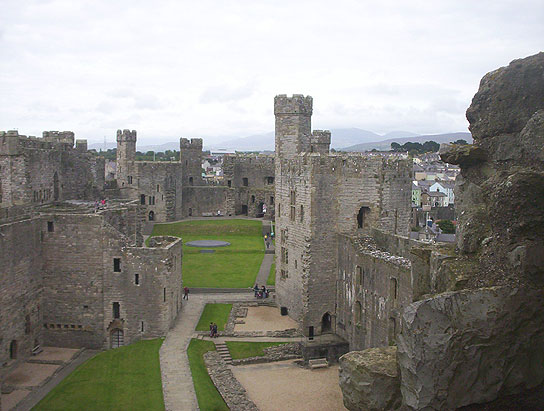
Caernarfon castle was built for Edward I by his gifted castle designer, Master James of St George, starting in 1283. The walls of the castle and the connected new English town were substantially complete by 1285. It was built to include a royal residence. The Welsh over-ran town and castle in 1294, the lack of wall between town and castle proving a fatal omission. The English re-took it, and by 1330 work to complete the castle had ceased. It last saw action in the Civil War, and repairs were carried out in the 19th century.
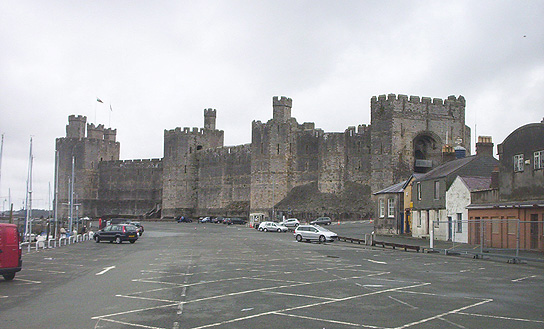
The castle is huge, and towers to an impressive height over the town and harbour, still looking fairly complete. Like Beaumaris, it has walls honeycombed with passages which can be explored. At the site of the kitchens, the remains of ovens and piped water supplies can be seen. Some towers have been re-roofed and contain exhibitions. I climbed to top of one of the several watch-towers for a vertiginous view of the surroundings. Inside one of the thick walls, a chapel can be seen.
This is one of the finest of the Welsh castles. Well worth a visit if you are interested in castles.
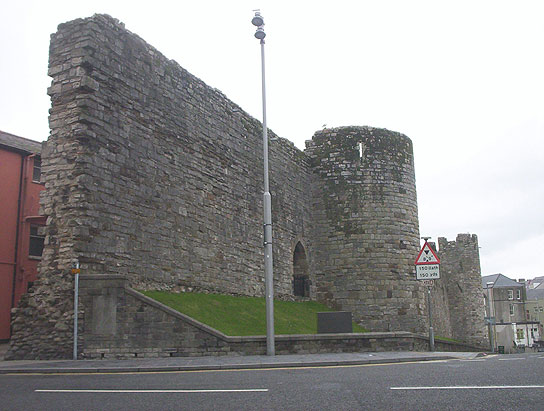
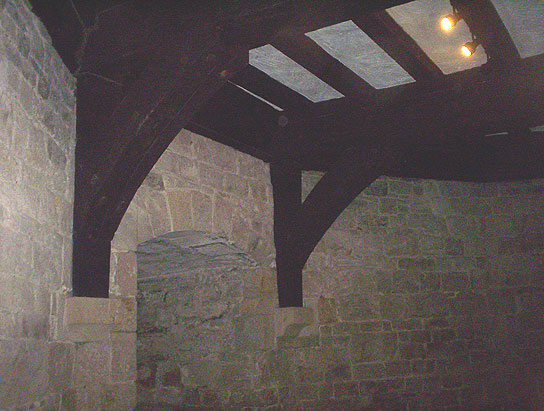
What next? There are sections of the Caernarfon town wall nearby, also the Welsh Highland railway terminus, and the Roman fort of Seguntum is on the outskirts. Town WallFloor beam detailCastle bailey
Caernarfon terminus
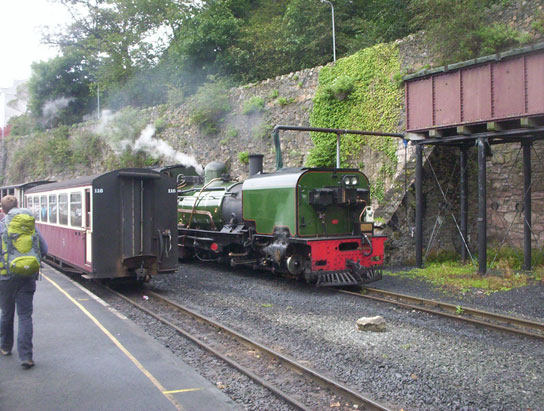
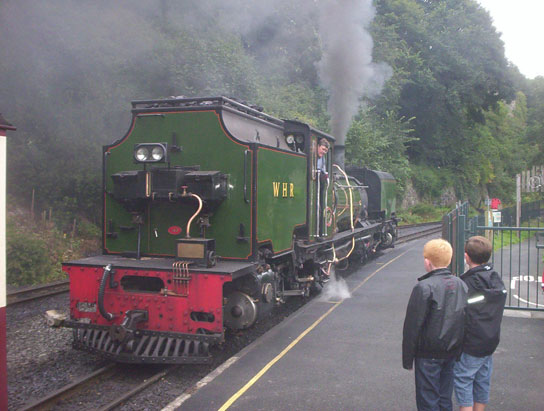
The Welsh Highland Railway is a narrow-gauge railway that runs from Caernarfon to Porthmadog, a distance of 25 miles. Part of the journey is over a former standard gauge trackbed, the rest over the original narrow-gauge trackbed. The steam engines are from a South African narrow-gauge line. At Porthmadog, tourists can transfer to the sister Ffestiniog railway.
I booked a ticket for the first trip of the day for: Caernarfon – Pont Croesor- Caernarfon. I could have gone to Porthmadog, but that trip, at an extra 2 ½ hours, including a lengthy stopover in the coastal town, did not fit in with my plans for the day.
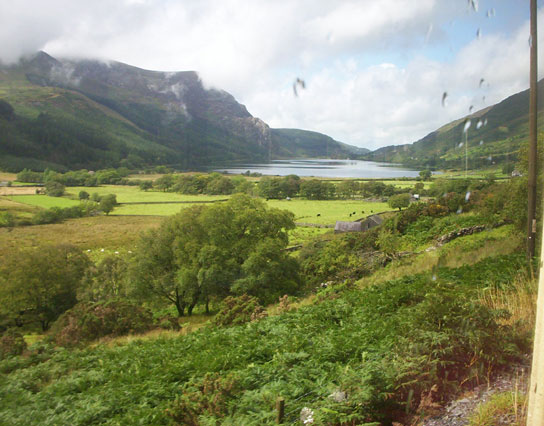
I had a walk around the outside of Caernarfon castle before catching the train, which was pulled by a 2ft gauge articulated South African steam loco. The trip out took just over 2 hours. The first bit of the journey is dull, but once up in the hills the views are spectacular. The track curves a lot, so that one can look out on the bends and see the far end of the train almost side on. That train actually terminated at Pont Croesor for some operational or timetabling reason, with a diesel shuttle covering the last leg of the journey to Porthmadog. I waited at the station around 20 mins, and caught the same train back. There was a technical failure of brakes on one coach at around Beddgelert on the return. After a lengthy delay the last two coaches were disconnected and the train proceeded.
At my hotel I met a party of train buffs who were visiting all the narrow-gauge railways of Wales. You don’t have to be that dedicated to enjoy a trip on this line. Even if you are not interested in steam trains, the Welsh mountain scenery and the sharp curves and gradients of the line are a sufficient reason to travel. South African locoLlyn Cwellyn
CADW.
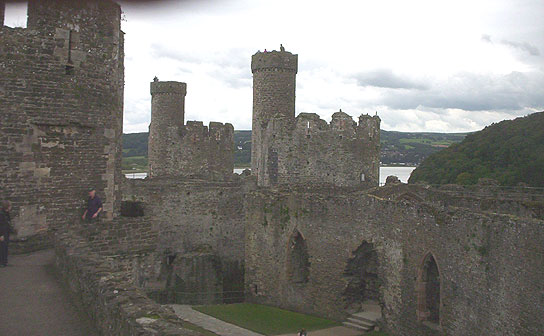
Conwy was designed by Edward I’s master builder James of St George, and is one of the most impressive of all the Welsh castles. The eight towers and curtain wall surround an inner and outer ward, and there is a barbican at each end. Conwy was beseiged in 1295 and 1403, and last saw action in the Civil War.
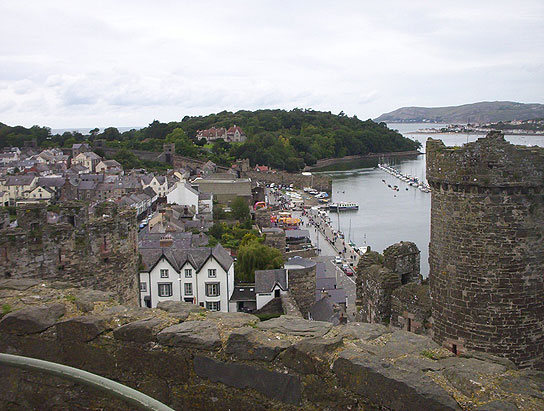
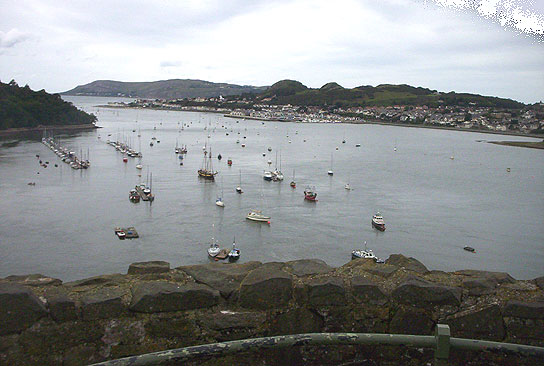
Conwy castle is huge and hard to miss – the attached town wall and gateway makes it seem even bigger from a distance as one approaches from the direction of Chester. The castle itself is remarkably complete, with 8 full-height towers, spiral stairs, and walkways around the walls. There are many rooms and passages to explore. It’s hard not to be excited by it all. Even its towers have smaller watch towers which you can climb, if you are not petrified by heights. There are great views over the town and estuary, and the two historic bridges (turnpike and rail).
Close up, the castle can be annoyingly difficult to reach by car, owing to vague signage. In fact, there is a small parking area inside the town walls, near the castle ticket office, and a large parking area outside the walls and below the castle. The brown signs lead to the latter, or rather the trail peters out just before the anonymous car park appears on your right. The huge castle, meanwhile, looms above, completely hidden by the car roof.
What next? On no account miss exploring the town walls, which still encircle the old town. Much of the town wall still stands and there is a walkway along the top of several sections. Telford’s old suspension bridge is in the care of the National Trust. View from castleView from castle
Gwrych Castle was built between 1812 and 1822 for Lloyd Hesketh Bamford-Hesketh. Various architects and designers were involved. The Craches had a hand in furnishing the interiors. Between 1909 and 1914, Arts and Crafts architect, Detmar Blow, in conjunction with Charles Ernest Elcock, added the famous yet theatrical Italian marble staircase and renovated the state apartments.
During WWII, Gwrych was requisitioned by the Government and housed two hundred Jewish refugees. Leslie Salts then bought the building in 1948 and successfully opened Gwrych to the public for twenty years. The Castle was nicknamed ‘The Showplace of Wales’ and attracted nearly ten million visitors.
Between 1968 and 1989 the Castle had many owners and many different uses. Gwrych finally closed to the public during the winter of 1985, never to reopen. Up until 2005, the weather, heartless vandals and New-age travelers had looted and ravaged the building to the point of near dereliction. Recent photos make it clear that large parts are no more than roofless shells. Since then, there have been efforts to consolidate the building and the current owners hope to convert it into a luxury hotel.
While travelling to Conwy to see the castle there, I saw from my car a huge unknown castle on a hillside – which I eventually identified as Gwrych, near Abergele. My schedule did not permit me to investigate further on the return leg of my trip, but you can find out more here: http://www.gwrychtrust.co.uk/index.html The Gwrych Castle Preservation Trust would welcome your support. This is a sad example of what can happen to a historic listed building when its owners run out of cash. For obvious reasons you cannot visit the castle, but the Gwrych preservation trust claim there are public rights of way through the estate (disputed in comment). Anyway, Google Streetview indicates that the A547 runs within yards of the castle outer wall and gates. (pic Wikimedia, CC-SA, Dot Potter)
National Trust.
On a trip to Wales I could not resist temptation to follow the National Trust sign to Shugborough. Not such a great idea – it’s really an all-day destination, and too far from the M6 for a coffee stop. £3 fee for parking. 2 hours later, rejoined the M6.
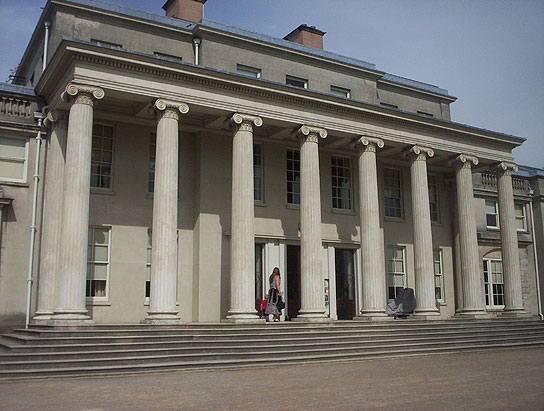
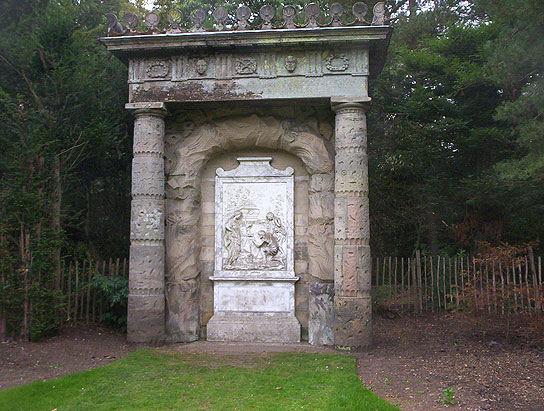
There’s plenty to see and do – I just had a coffee and walked around the grounds. I managed to see almost all the Grade 1 listed garden monuments. The Hall has a columned portico, which looks impressive. There is also a courtyard with museums, and a walled garden. The size of the park is such that a shuttle service is laid on to transport visitors from the vicinity of the reception to the house.
Visitors should note that the estate is managed by Staffordshire County Council. Only the house and gardens are free to NT members.
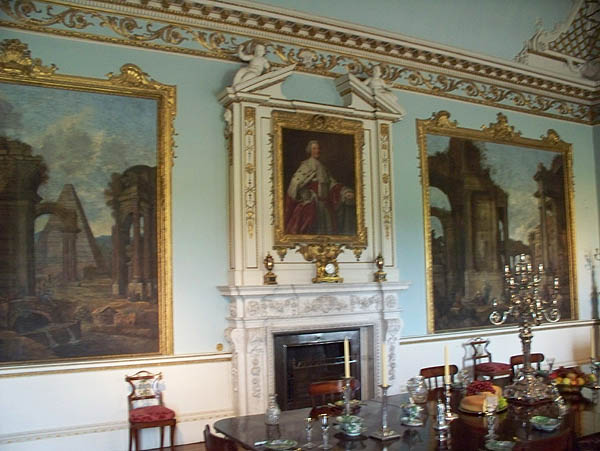
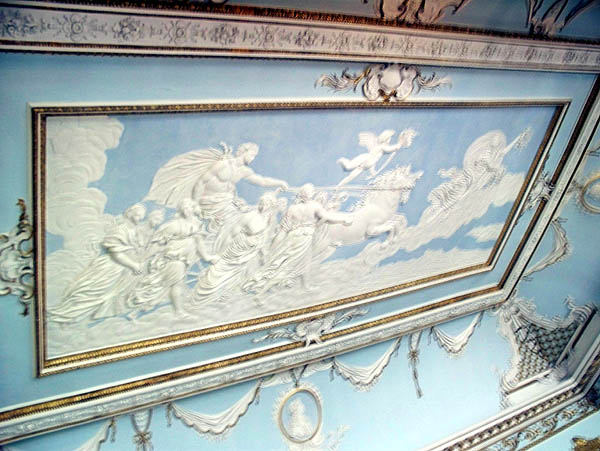
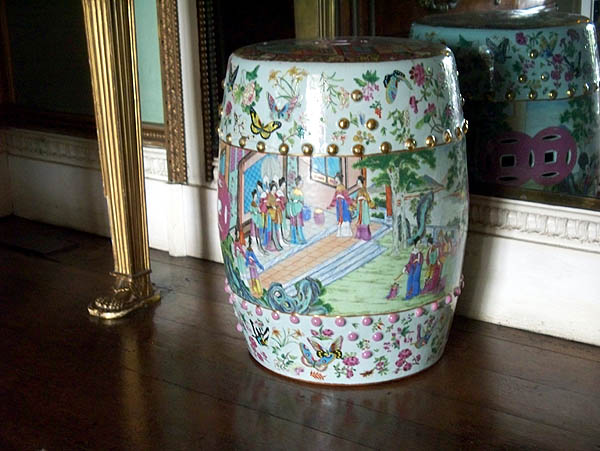
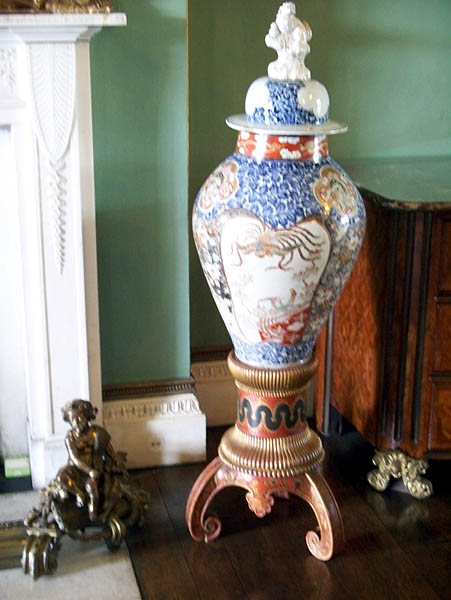
In June 2013 I made a second visit – this time to the house only. The central section of the mansion was built in 1694 with the wings added in 1748. Further extensions were made in 1790-1806. The ground floor contains some fine interiors, also a number of interesting artefacts from China and elsewhere. The State Dining Room is one of the most impressive Rococo rooms in England, with a set of wall paintings of ruins, and an elaborate plasterwork ceiling. The Blue Drawing Room contains some significant china collected by George Anson, including a pair of very fine barrel seats, intended to be filled with pot-pourri. The Red Drawing Room contains fine furnishings including large mirrors and pier glasses.
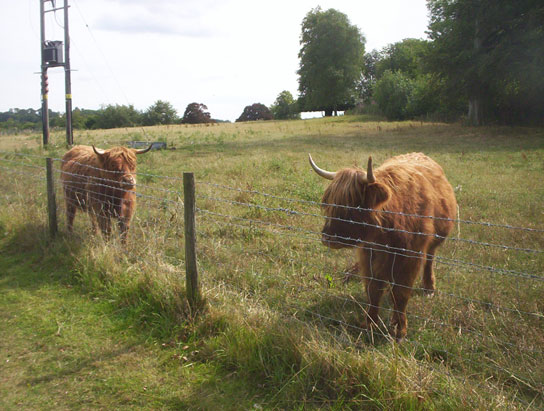
Upstairs a number of rooms are being refitted to commemorate the connection of Lord Lichfield (Patrick Lichfield), the famous society photographer. Many examples of his photographs are on show as is some of his equipment. Gargen monumentEstate cattleDining RoomDining RoomBarrel seatVase, Blue DR.
Rockingham Castle was founded by the Normans, and beseiged in the Civil War. The castle was later demolished. The surviving buildings are based on the castle domestic buildings and outer bailey. The present house was repaired and extended at various times in the 17th and 19th centuries, the most conspicuous addition being the Victorian tower. The Castle stands on the edge of an escarpment giving dramatic views over the Welland Valley and several counties.
There is a complex of old buildings inside what used to be the castle’s outer defended area. Despite the imposing medieval gateway, which appears on the publicity photos, there’s less castle here than the publicity might suggest. There’s a self-guided tour of some old interiors, mostly on the ground floor, and if you climb the (Victorian) tower, there is a superb view over two or three counties. The interiors exude a comforting oldness, rather than offering spectacular treasures or jaw-dropping interiors.
The old service buildings around the courtyards are of some interest. The 18 acres of gardens include some notable areas, including the circular gardens on the site of the original castle, and the great yew hedge.
Opening dates are somewhat restricted. Worth a visit if you are in the area.
National Trust.
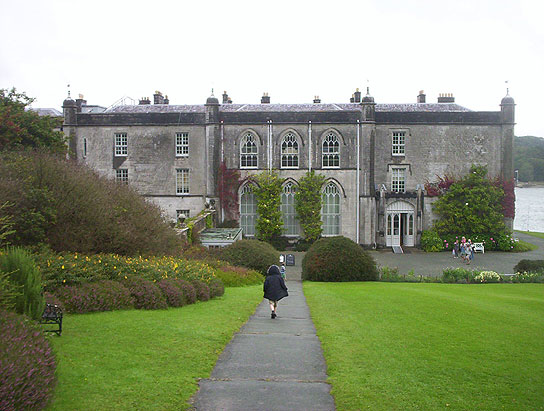
Plas Newydd originated in the 14th century, but was greatly remodelled in the 18th century by James Wyatt, the noted architect, who refaced it, blended the towers into the building front, and substantially made it into the building that stands today. The building has various Gothic features introduced by Wyatt. The interior was updated in the 1930’s and has Rex Whistler associations, including his largest painting and an exhibition.
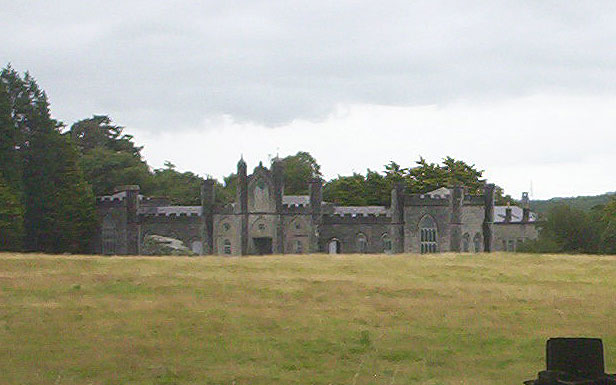
On making a lengthy hike from the entrance, car park etc, one sees an impressive Gothick building, which one would assume is the house. In fact it’s the stable block. (Note the megalithic stone in front of the left side of the stables in the photo below.) The house only comes into view in the last few hundred yards, as one descends towards the south end & entrance. Also, the water beside the house isn’t a lake, it’s the Menai Straits. The Britannia Bridge is visible. The interior of Plas Newydd is fairly interesting, and notable for a large mural by Rex Whistler. He was also a friend of the Pagets (particularly the daughters). James Wyatt reworked the house in 1793-99. There are also substantial gardens in which the visitor can stroll, with a marine walk along the Menai Strait.
This is an interesting place to visit, and there are spectacular views from the park. Stables
CADW.
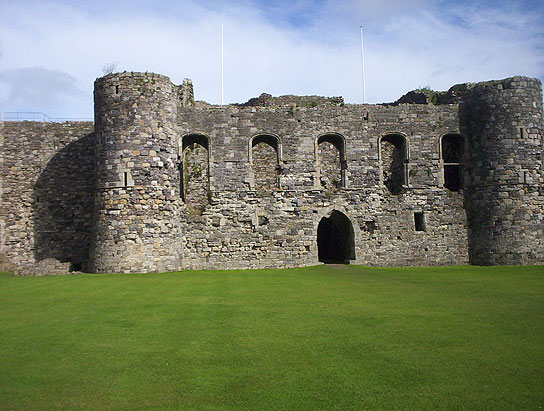
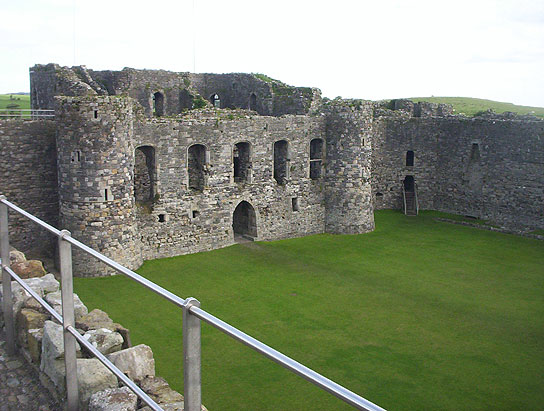
Beaumaris is one of the great castles of North Wales built by the English monarch Edward I, to stamp his authority on the Welsh. In the 13th century, its concentric walls within walls design was the state of the art in military technology. It is said to be the most technically perfect of all Welsh castles. It was the last of the great castles to be undertaken by the King’s designer Master St George, and remains in a relatively good state of preservation.
Beaumaris Castle is situated near the coast, and at sea level. It looks unexpectedly squat, partly because of its low siting, but mainly because the towers were never completed to the originally planned height (the King ran out of money). It is surrounded by a moat, an outer defensive wall, and an outer bailey, before one reaches the main walls and towers. Inside, the inner bailey looks big enough for a football pitch. The inner walls are honeycombed with defensive passages, and the inner and outer walls have walkways on top, some still accessible. You can spend a couple of hours exploring it all.
Well worth a visit if you like castles. Pay car parking is available nearby.
Also in Beaumaris town, the old gaol is worth a visit, as is the old courthouse. Together they vividly recall the harshness of Victorian justice. In the jail, inmates were properly fed and given medical attention as required, (which was much better than most of them got outside) but to prevent them liking jail too much, the regime was very harsh. Sentencing was also very harsh, especially for property crimes.
National Trust.
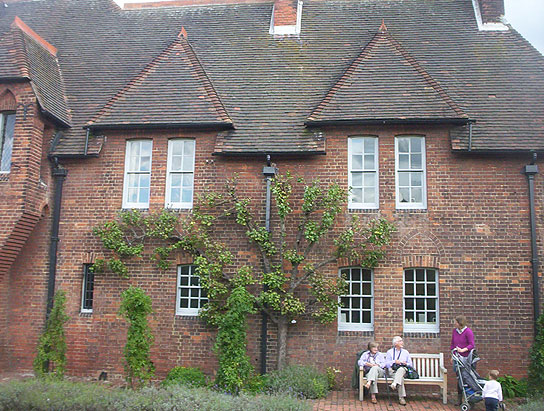
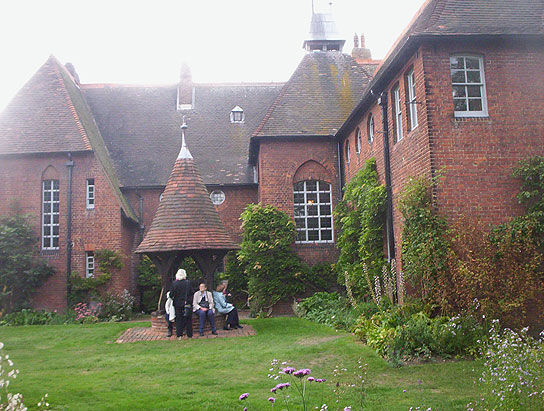
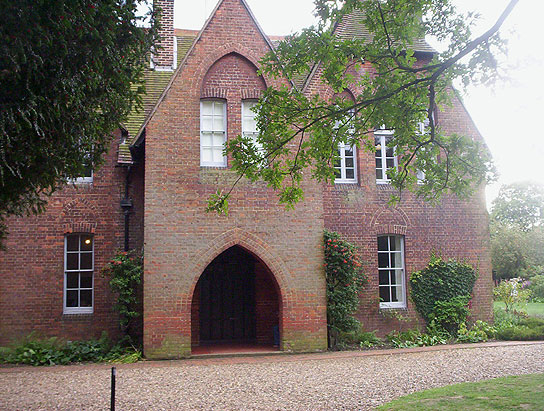
The house, rather vaguely signposted, lies near Upton Road in the Bexleyheath area of SE London, near the A207 and Bexleyheath railway station. B11 and other buses run nearby. The building is smaller than I imagined before seeing it – not a mansion but a substantial suburban gentleman’s residence. It’s of interest essentially as the only house built for William Morris, the famous Arts & Crafts movement designer. The architect was Morris’ friend Philip Webb. Few of the original moveable contents remain, but the architecture, windows and some items of decoration are much as built. There is a pleasant and quite large garden, laid out in several sections – itself an innovation at the time. Surprisingly, Morris only lived in the house from 1860-1865, but later owners were sympathetic to his creation. Morris tried to found an artistic community at Red House, but sold it when this failed.
It doesn’t take long to go around the house and gardens – I arrived after 3pm and had seen everything by about 4pm. Fewer than half the rooms are open to the public. On arrival you should note that visitor reception is away from the house, in the old stables hidden behind trees to your left.
Curious facts: Morris disliked industrial production and wanted to re-instate the craft traditions of an earlier era, but his creations, popular with some of the middle classes, were too expensive to be bought by the craft workers he admired. Morris himself was quite well-off – his house cost £4000, which was twice what my parents’ house cost a century later. The house, which originally had murals and wall-hangings and no wallpaper, is now partially papered with Morris & Co designs. When I visited, there was an exhibition about Morris & Co designs in a room downstairs.
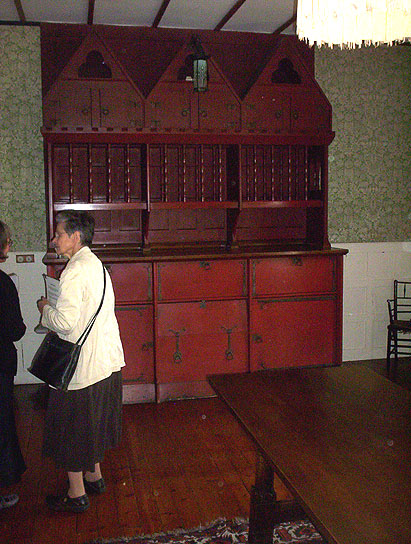
And don’t put your stuff on the table in the dining room – the NT don’t like anyone to touch it. This table, designed by Philip Webb, was bought recently for £130,000 !
Nearest railway station is Bexleyheath (3/4 mile) . There is no car park at the house. Recommended parking is at Danson Park leisure facilities – which is no closer than the railway station. Buses run along the A207 nearby. On foot from A207, walk down Upton Rd, which is almost opposite the road from the station.
Done here and looking for something else to do? Danson Park and its historic house (0.8 mile)look really interesting. Webb dresserGarden sideFront
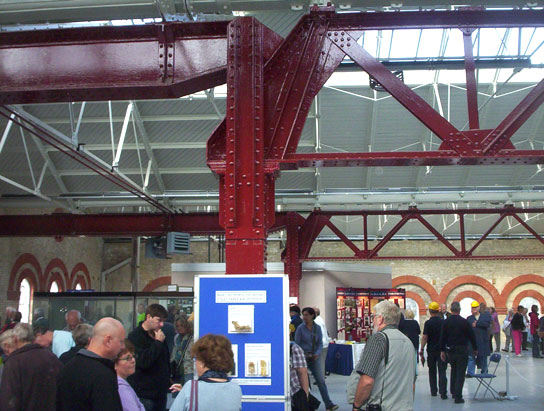
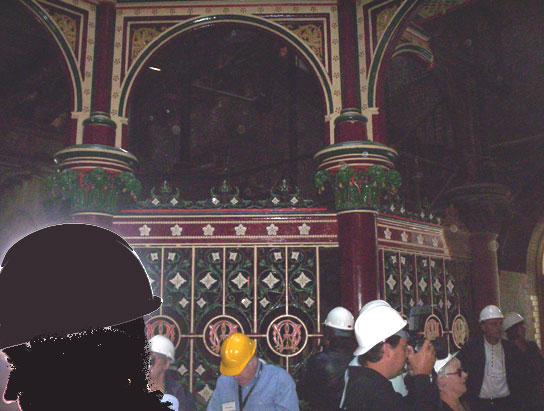
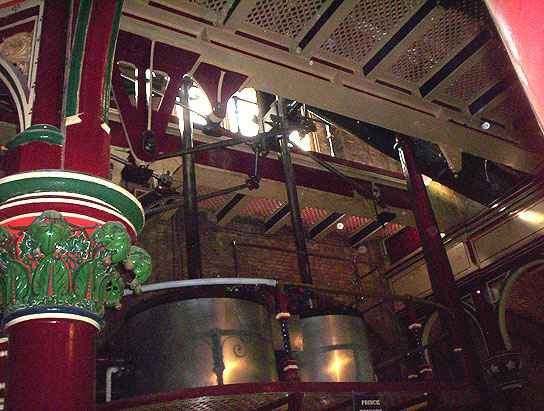
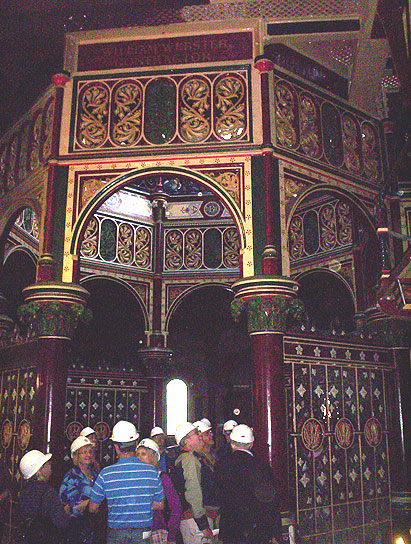
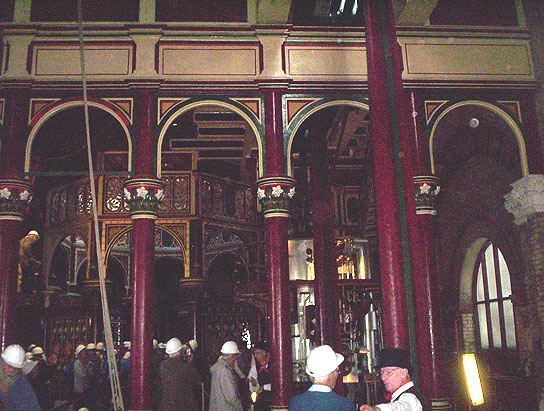
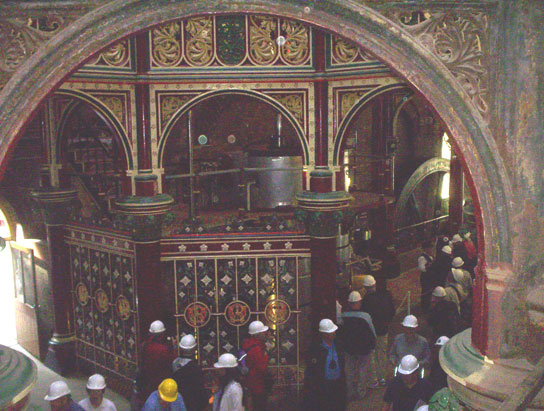
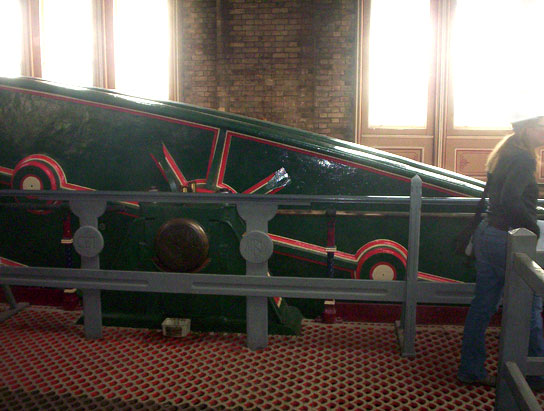
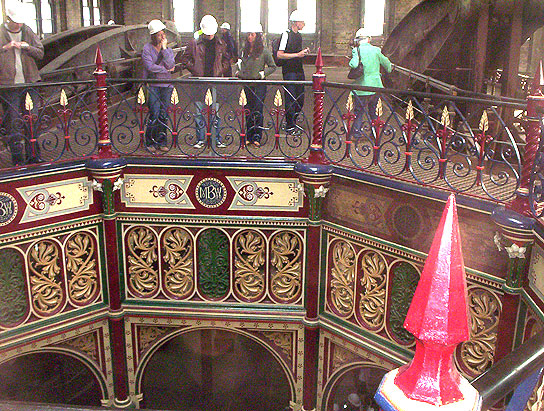
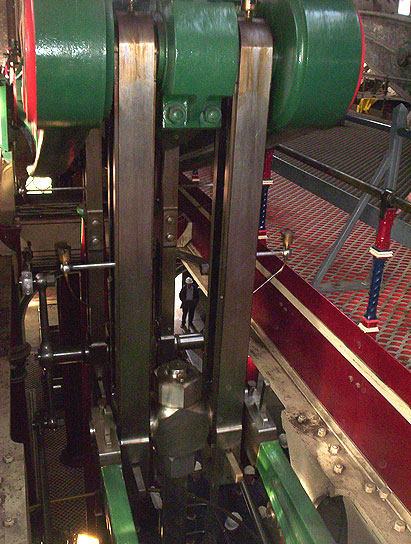
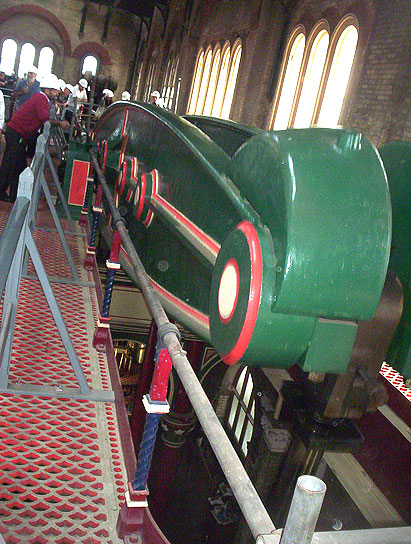
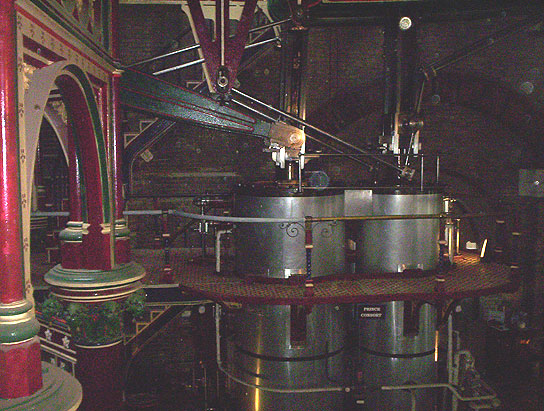
The Crossness Pumping Station was built by Sir Joseph Bazalgette as part of Victorian London’s urgently needed main sewerage system. It pumps sewage from a low intercepting sewer up to the level of the tidal Thames. The Beam Engine House is a Grade 1 Listed Industrial Building constructed in the Romanesque style and features some of the most spectacular ornamental Victorian cast ironwork to be found today. It also contains the four original pumping engines (although the cylinders were upgraded in 1901), which are possibly the largest remaining rotative beam engines in the world, with 52 ton flywheels and 47 ton beams.
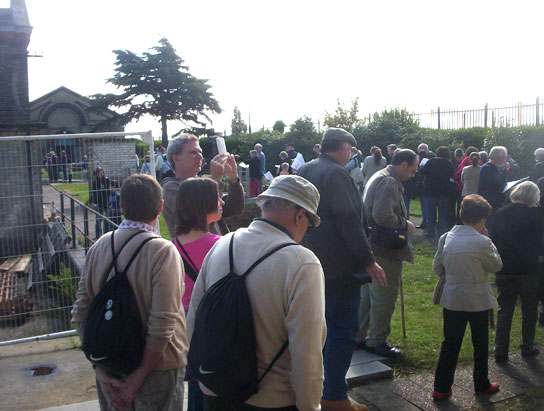
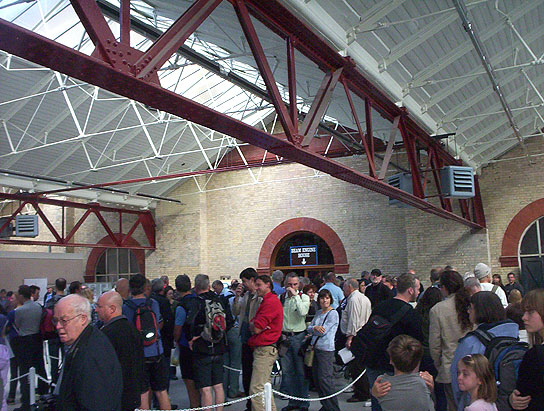
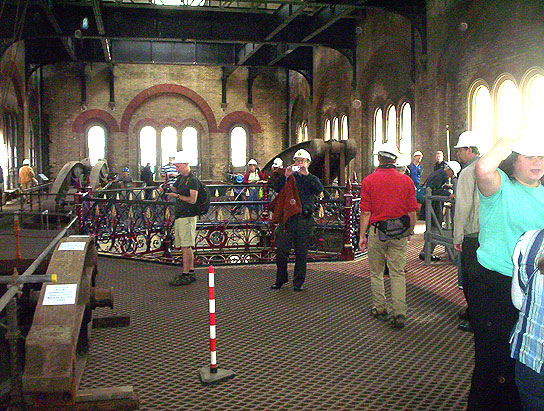
The journey there underlinined the advisability of getting up early if one wants to visit Cross Ness. It was a chapter of delays. I left the house at 7.30 AM, but the first train had a fault so got the next half an hour later, which was late at Euston because of speed restrictions. Got to Abbey Wood station at 10.40am, but found a long queue waiting for the courtesy minibus and could not get on one till over half an hour later. At the site there was a long queue to get into the buildings, then another queue to pick up a hard hat and enter the Pump Engine House, so didn’t get in there till 12.30.
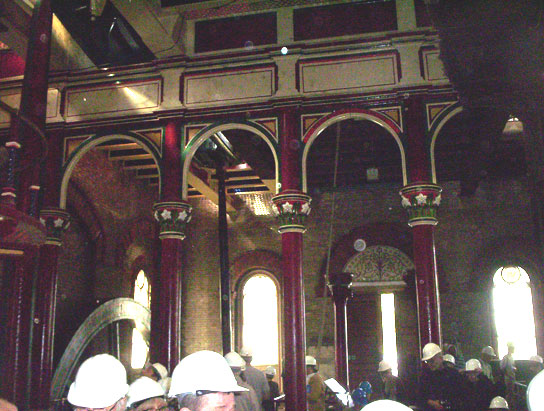
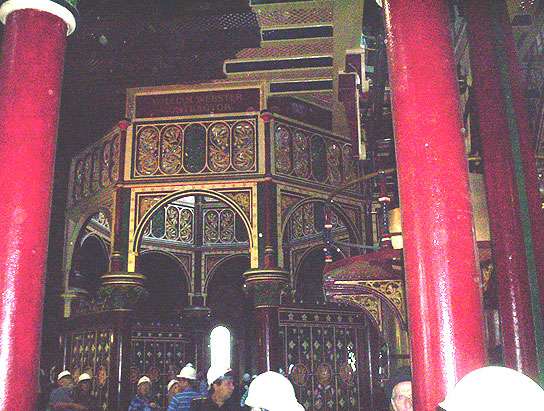
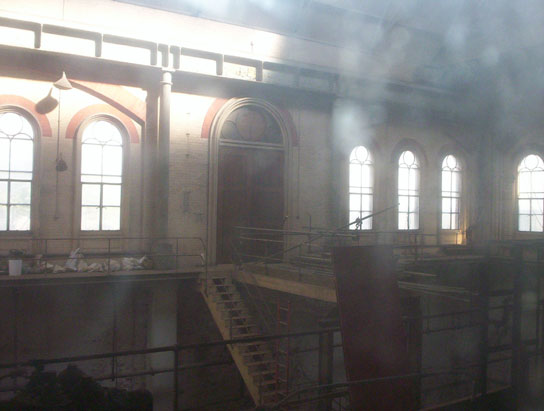
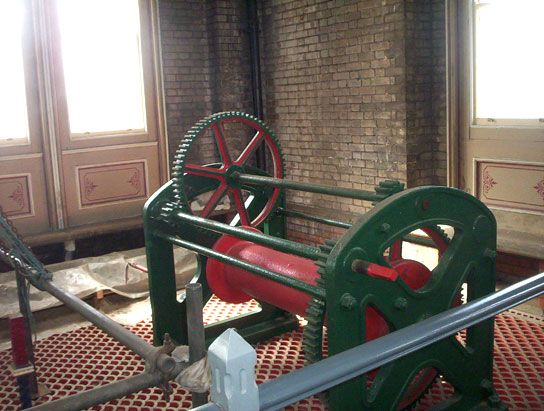
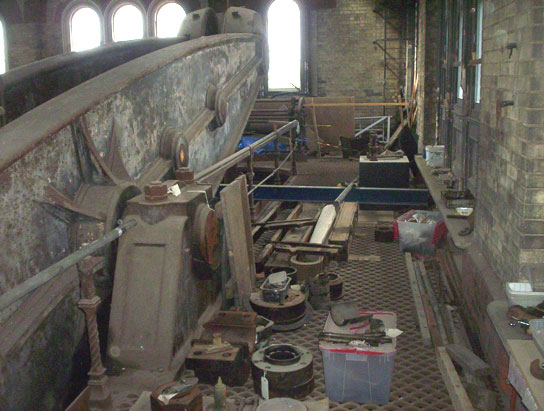
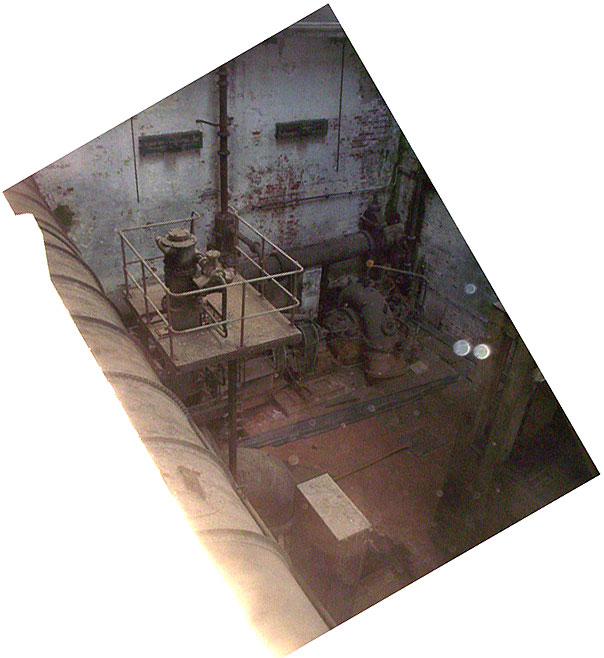
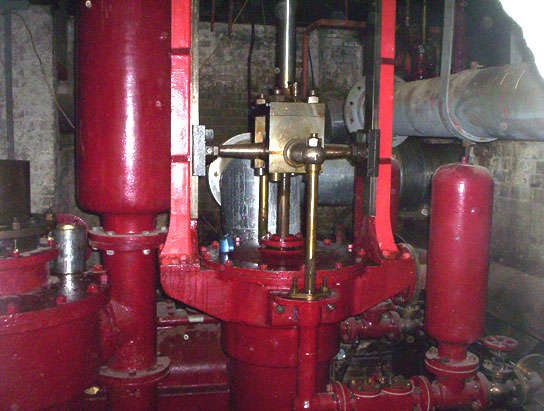
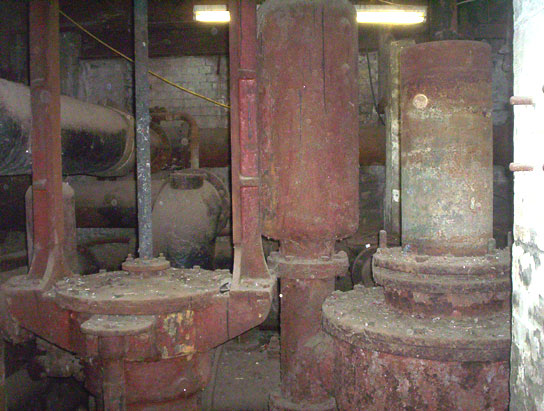
The interior is impressive, with four huge engines in place and accessible from three levels. The octagon of painted ironwork only encloses a small part of the floor area, by the way. One engine is completely restored and running on steam, another in bits and the other two untouched. Some ironwork is re-painted in bright colours, while some sections have been left dull and rusty. The beam floor runs the whole length and width of the building and allows access to all the engine beams and the top of the Octagon. There are views out over the site and the Thames. There isn’t so much to see in the basements asides from some very rusty pipes and some shiny parts of the restored engine, Prince Consort. To one side is the Triple Expansion Engine House, which now is mostly empty. From the Beam Engine floor level and old entrance, it looks like an alarmingly big and deep hole with some rusting pipes and machinery in the bottom. Apparently two old diesel pumps are down there.
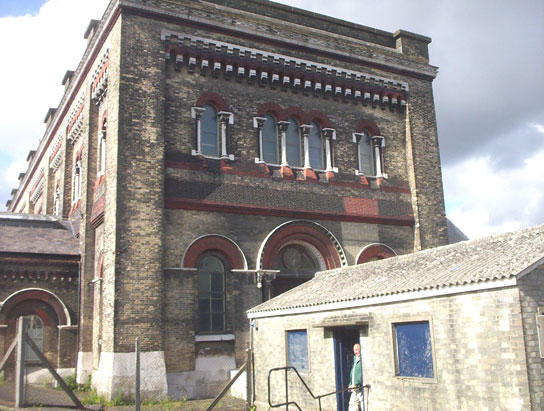
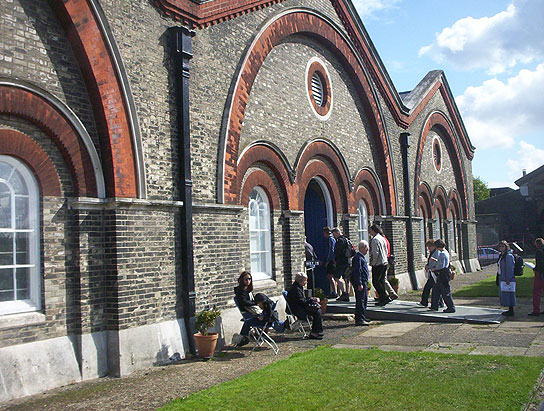
I came out after an hour, having seen and tried to photograph everything, and to let someone else in. I had a coffee and roll in the unusually cheap cafe, before visiting the workshop building and the former valve house, and taking some more photos. The brick architecture of the whole complex is quite worth seeing, with its arches and milticoloured bricks.
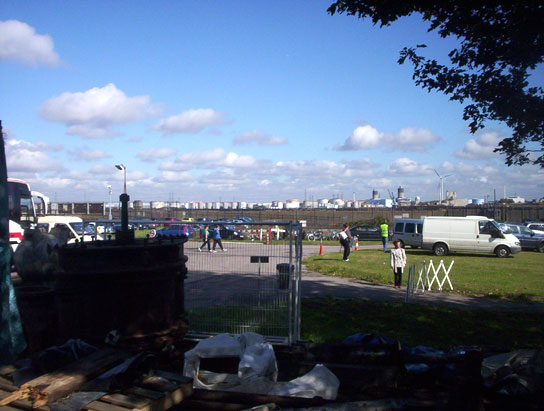
There are/were a few steaming days in 2011 when the site was open to the public. I visited Cross Ness pumping station on Open House London day, 18 Sept 2011. The engine house is on the far side of the large Thames Water site, 2Km from Abbey Wood railway station. A courtesy minibus is laid on, or you can drive there. Adequate car parking is provided. Watch the website http://www.crossness.org.uk/
Done here and wondering what else you could do? There are some abbey ruins near the railway station, or you could take a B11 bus to the NT’s “Red House” in Bexleyheath.
View from Cross NessQueue to get inBoiler House entrance frontBoiler House - queue for hard hatsBoiler House roof girder detail
Crossness main floor - OctagonPrince Consort cylinder topsMain Floor - archesMain Floor - OctagonMain Floor - OctagonMain Floor - archesTriple Expansion Engine House Main Floor - Octagon seen from StaircaseBeam of Prince ConsortTop of Octagon from ConsortUpper OctagonBeam - Prince ConsortBeam - Prince ConsortBeam - Prince ConsortBeam Floor - Prince ConsortBeam Floor - Victoria bitsPrince Consort cylindersTriple Expansion HouseBasement A - Consort partsBasement A