Rhythm Festival 2011 – Logistics Report.
I bought a day ticket in advance for the Sunday of this 3-day festival. The ticket arrived in good time by post. On arriving at Old Warden on the Sunday morning I found there was no festival traffic, so had to cruise through the village looking for the festival entrance. There wasn’t any trail of temporary signs. There was adequate parking on a field close to the arena entrance.
The festival boasted five stages: the primary outdoor stage, a second outdoor stage, an indoor stage in a marquee, and two more inside buildings. The land in the arena is unusually hilly, which provided complete visual and sound separation between the primary, second and marquee stages. If you want to sit, bring a folding chair. There was a huge beer tent (a handy place to retreat to during a rain shower), and the provision of toilets and catering was also adequate. Interestingly, on the ridge at the back of the primary stage spectator area was a line of tented booths for privileged spectators (corporates or paid extra). In case you needed something else to do there was a cinema marquee and a funfair on site as well.
As for the music, I’m no music reviewer but I enjoyed the music which, headlined by Toots and the Maytals, was clearly aimed at older rock fans. Attendance was of the order of 5000.
Month: October 2011
Warwick Folk Festival 2008
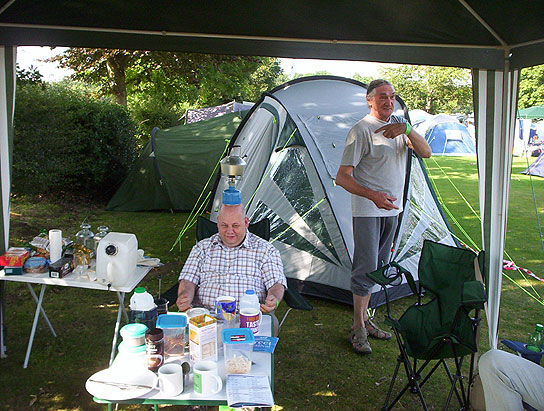
The festival is held yearly in the grounds of Warwick School – a private fee-paying school. The school has lots of green space and other facilities – halls, a small theatre, and even a swimming pool, all available to the festival. Camping and parking is on the same site, about a mile from the centre of the town.
The festival is quite popular and the camping areas correspondingly large, so if you have arranged to meet friends onsite and camp beside them, finding them could be something of a trial. All organised music performances are under cover with seating, the main stage being in a marquee. There are some off-site events (sessions, dance performances) in the town itself. Catering and toilet facilities were adequate, and there was floodlighting at night.
As for the music, Warwick attracts some leading folk acts each year, and there is a full programme of support acts and workshops, not to mention the informal camp-site sessions.
If you want something else, Warwick Castle offers special festival deals.
Rhythms of the World Festival 2010, Herts
Rhythms of the World Festival 2010 – Logistics report.
The festival was held at the Priory Park in Hitchin, a green space near the centre of the town. Note that this is a day festival (2 days) and you can buy a ticket for either day, or both. There is no camping.
Parking is an issue here, and the organisers encourage attendees to come by public transport. Hitchin railway station is a mile from the site. There is no on-site parking, and even drop-off outside could be a problem, because of the narrow streets. The official parking was at Butt’s Close, another large green space in the town some 10 mins walk away. For your future reference, the vehicle entrance to Butt’s Close is from Fishponds Road. You will exit on foot from the far end of the parking area. Of course, there are also pay car parks around the town centre.
Before you get in, there is a bag check for excess alcohol, etc.
Once inside, there are at least five stages to choose from. The “World Music” acts all appeared on the main stage, and were generally of a high standard. I saw a Touraeg band from North Africa – wish I could have got a CD of them. Supporting acts on the other stages were a variety of rock, pop, folk, or unclassifiable, and mainly of local, i.e. home counties, origin. Only one of the stages (the church-sponsored one) had seating or cover for spectators.
Considering the quality World Music and the ticket price of under £10 per day, superb value for money. Toilet and catering facilities were adequate.
Cropredy Festival 2011
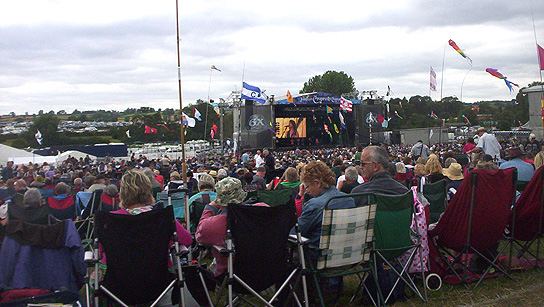
I decided to go to this festival at the last moment. Unusually, it takes place over a Thursday/Friday/Saturday, with the main acts being concentrated on the Saturday. I reached the village without any trouble despite the closure of the A361. In fact, having started a bit late on the Saturday morning, I drove through the village and into no.7 day car park without being held up at all, a complete contrast to the mile-long queues and axle-deep mud I had braced myself to expect.
Next I had a lengthy walk through the outer areas to find the ticket booth and hand over £70 for a Saturday ticket, and an equally lengthy walk back to find the arena entrance. Inside, I soon realised what important thing I’d forgotten to bring – a folding chair! The attendance was of the order of 20,000, and it looked like at least 90% of them were seated on folding chairs, in massed rows. I’d never seen anything like it. Unfortunately, without a chair one had to stand for hours or sit on the ground and suffer a view restricted by the seated, or people walking by every few seconds, or worse still stopping in front of one to jaw to some friend they hadn’t seen since last year.
Toilet and catering facilities were adequate. The beer came in by tanker lorry (no joke). As you can see from the photo, many attendees were as old as the Fairports. I’m no music critic, but the final Fairport & friends set and the support acts were really good.
At the end, it took a while to get out of the arena and reach no.7 car park in the dark, but once in the car I was able to get on my way without much trouble.
Dartmoor Prison Museum, Devon
The Museum is about 150 yards from Dartmoor Prison, and housed in a building that used to be the prison dairy. It is the only museum run by HM Prison Service to be open to the public. The Museum narrates the history of the prison, and also includes the “Black Museum” of weapons and other items confiscated from prisoners, a collection of manacles and weapons, details of famous prisoners, insignia and uniforms, and the Prison today.
I recall that this was quite an interesting visit.
There is a small admission charge. Free car parking. Note that the Museum closes for lunch.
Cowper and Newton Museum, Bucks
The Museum is situated in a large 17th century house facing the marketplace in Olney. It was the home from 1768-1786 of the poet William Cowper and his companion Mary Unwin. The Rev John Newton, slave trader turned abolitionist and hymn writer, lived nearby at the Vicarage. The building contains two separate houses, known as Gilpin House and Orchard Side, and there are a Georgian walled flower garden and a Victorian kitchen garden at the rear. Today, the building contains museum displays devoted to both men and to local history.
The museum makes an interesting visit,as the displays inform one about both men and about the slave trade, and local history including the local lace-making industry. The 17th century house itself, with its slightly uneven floors and its mezzanine rooms at the back, is an interesting object. The gardens are also worth investigating, and when I visited there was some sort of historical re-enactment going on in the rear one.
Admission charge.
Holkham Hall, North Norfolk
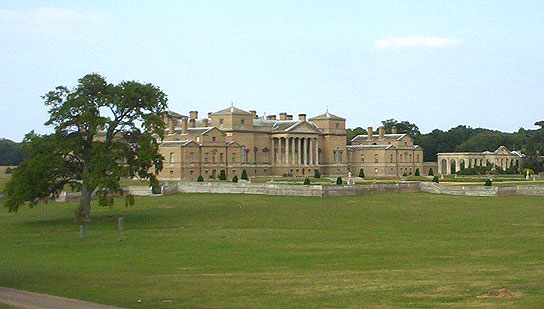
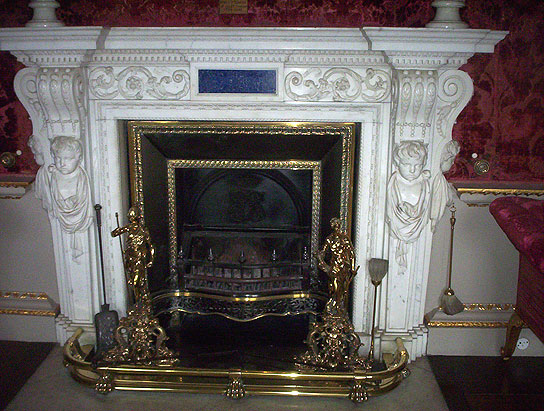
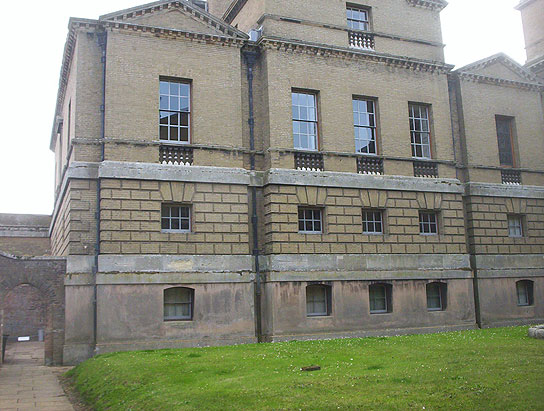
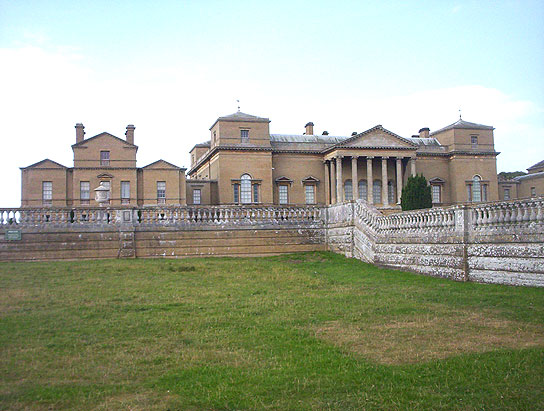
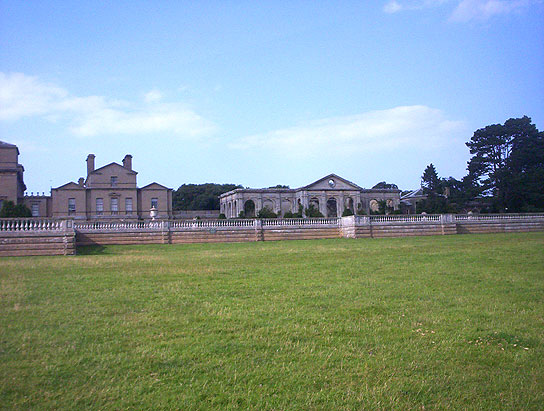
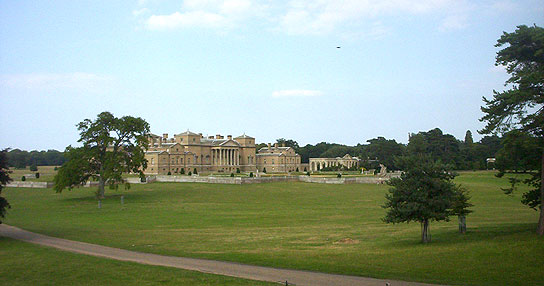
The house opening hours are quite restricted, and it can take 2 hours to go around the interior, so it’s as well not to be distracted by any outside exhibits, walks, tea-rooms etc. On entering, the visitor’s reaction is likely to be Gosh!! Look at that!! rather than “nice room”. This is said to be the most impressive hall in England, with alabaster walls, Roman columns, a double staircase, coffered cieling, semicircular vaults, bas-reliefs, side balconies, plasterwork, and lots and lots of gold-leaf. Several of the other rooms carry on the same theme, such as the sculpture gallery (with ancient Roman sculpture), the libraries (with Birds of America and scores of huge volumes of the Cosmographica, a medaeval world atlas, on the shelves), and the Drawing Room, Saloon and South Dining room all built and furnished to impress.
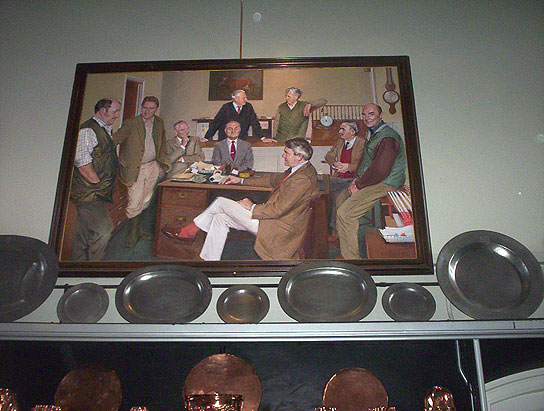
If you stand in the right spot in the saloon you can see an enfilade right from one end of the house to the other, and at 90 degrees to that, a monument out in the parkland to the north, and another to the south, both on the axis you’re standing on. Paintings are well represented, and some are by famous artists, and some are big (or both). The tour ends in the Old Kitchen, in one of the wings – a room big enough to swallow the whole of my house, and probably some of yours as well.
Unusually, the hall has never suffered major alterations, or sales of contents, and still belongs to the Cokes, descendants of the builder.
Outside, there’s the the park and the estate, which stretches to the sea, a walled garden (which I didn’t see), and outbuildings, and some private gardens. Around the service courtyard are the ticket office, tea-rooms and some exhibitions. The Bygones exhibition (a chargeable extra) containing various artefacts and vehicles, is interesting, but could be skipped if you’ve seen that sort of thing elsewhere or are short of time. The history of farming exhibition (free) is quite interesting. It’s worth asking what discounts are available, as with parking (£2.50), guidebook (£6) etc a visit can become quite expensive.
I arrived arround mid-day, but Holkham is a suitable destination for an all-day visit.
Felbrigg Hall, North Norfolk
National Trust.
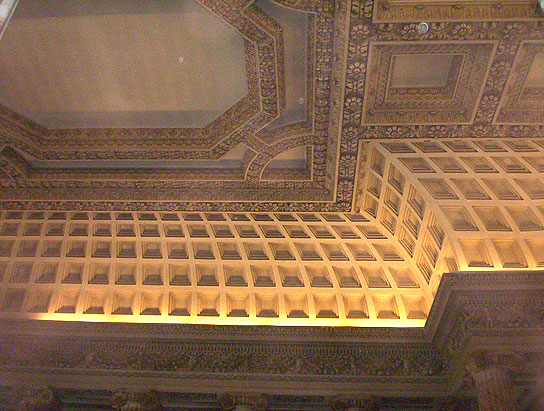
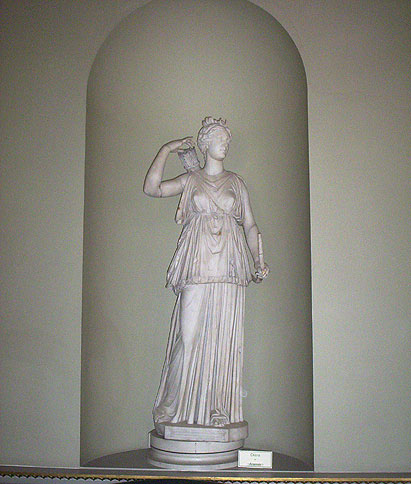
Felbrigg is an old Jacobean house with a later extension, and attached service buildings built around a service courtyard. It is noticeable that the older wing is built of a patchwork of brick, flint and limestone, with a largely weathered coating of plaster, while the newer Classical wing around the corner is in immaculate brick with sash windows. The Jacobean wing has a parapet pierced with the giant-sized lettering GLORIA DEO IN EXCELSIS. Inside, many of the principal rooms have fine plasterwork by Edward Gouge.
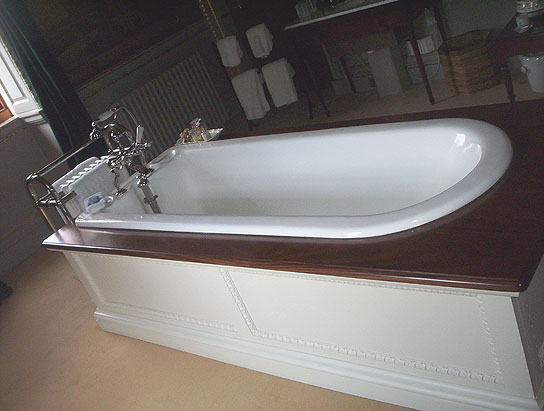
A tour of the interior starts with the grand rooms on the ground floor and proceeds upstairs to the principal bedrooms and the Chinese Room, passing the bathroom and descending by the back stairs to the service areas and a corridor with taxidermy collection. The tour continues along one side of the square of service buildings to exit near the reception. There are a number of attractive rooms and interesting contents.
Outside, I had a look at gardens near the house and the Orangery, before making my way through a mini woodland behind the house towards the walled garden. The large walled garden (next to the car park) is worth seeing. There are several walled sections, some mainly grassed and some highly planted, and a Dove-house here. An un-documented feature is that the grassed section nearest the gate shows the ghost of a previous formal planting on the aerial view.
Parking is free (for NT members).
It’s possible to visit Blickling Hall and the nearby Felbrigg in one day. If so doing, it’s advisable to start with the Blickling gardens at around 10am, and to devote more time to Blickling, which is larger and has more to look at.
Blickling Hall and Estate, North Norfolk
National Trust.
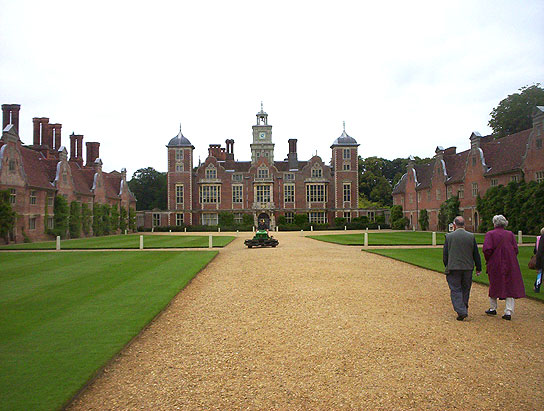
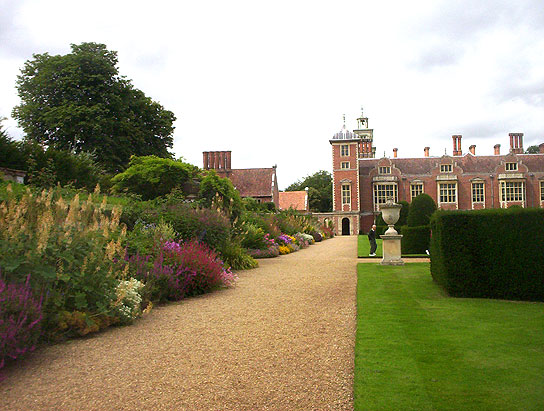
There was a house here in the 15th century, but the current Blickling Hall was built on the ruins of the old Boleyn property in the reign of James I, by Sir Henry Hobart. It is a large Jacobean red-brick house with two internal courtyards. The library at Blickling Hall contained and still contains historically significant collections of manuscripts and books.
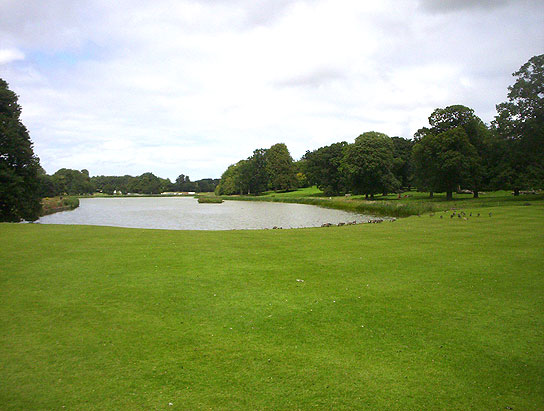
Outside, there is a formal parterre to the east, and elsewhere a Wilderness garden, a Secret garden, lawns, a kitchen garden, and a large yew hedge on the approach to the house. The wider Park comprises 450 acres of parkland, and beyond that is an estate of 3500 acres of farmlands.
Unusually the service wings, attractively constructed in red brick, are in front of the house, and to either side of the large front lawn. It looks quite impressive, and there is a lot to see inside, with about 18 rooms open to visitors, and quite a lot of interesting contents and impressive plaster ceilings. The Long Gallery is 123 ft long. Outside, I explored the large informal gardens with trees and an Orangery etc, and the formal garden. The large park was big enough to completely lose the preparations for an open-air concert scheduled for the evening of the day I visited. I didn’t see the RAF exhibition. Parking is free (for NT members).
It’s possible to visit Blickling Hall and the nearby Felbrigg in one day. If so doing, it’s advisable to start with the Blickling gardens at around 10am, and to devote more time to Blickling, which is larger and has more to look at.
Segontium Roman Fort, Gwynedd
I didn’t quite manage to see this, but it’s in the outskirts of Caernarfon, on the A4085 Beddgelert road. When I got there, the main part was locked up. There’s also a museum building, (not NT). The seasonal opening hours were Tue-Sun 12.30 to 16.30. Another part of the site is across the road, and IIRC can be accessed anytime.
Looks like it would be worth a look if you are in Caernarfon. You can park in the road.