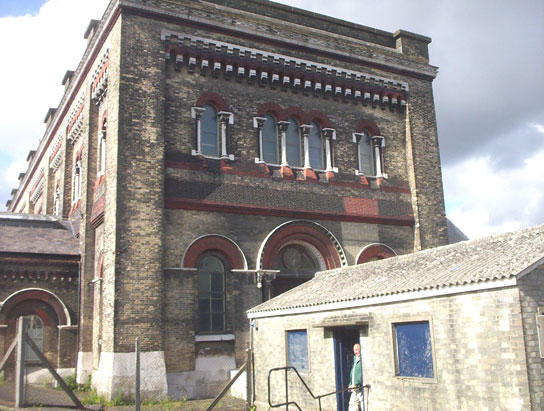
Crossness pumping station, London

Beam Engine House
Beam Engine House

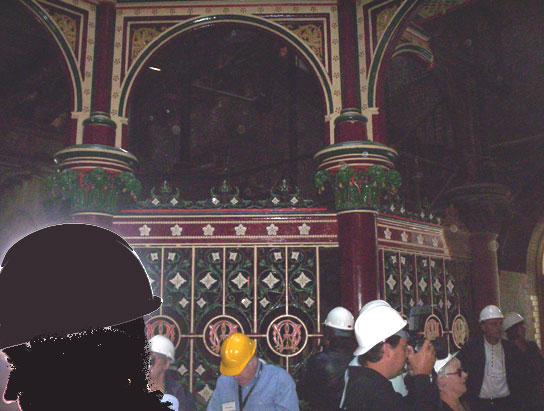
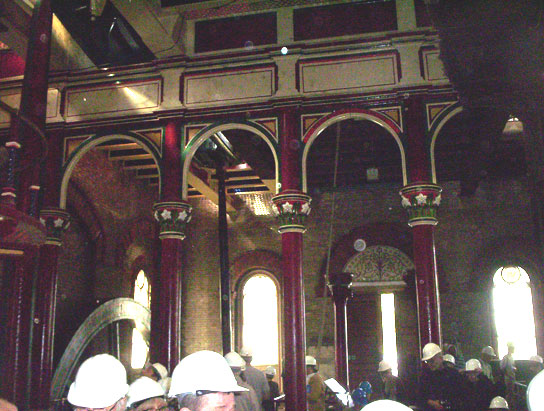
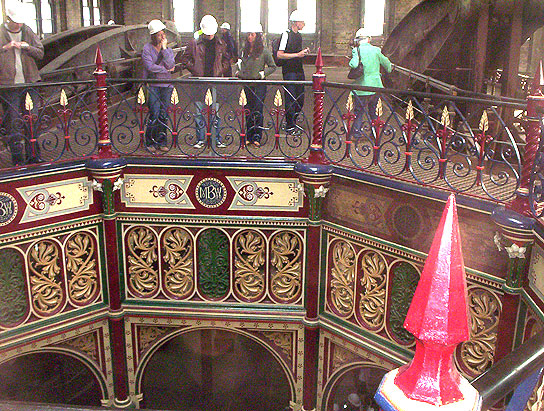
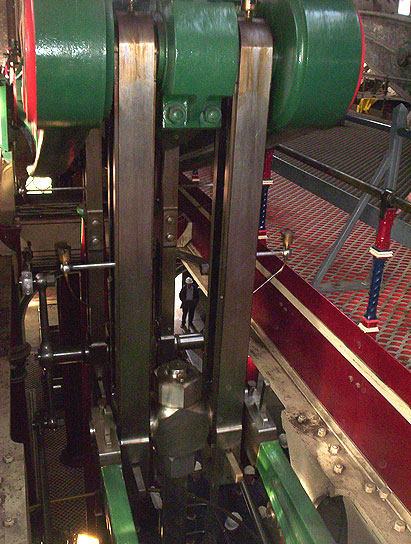
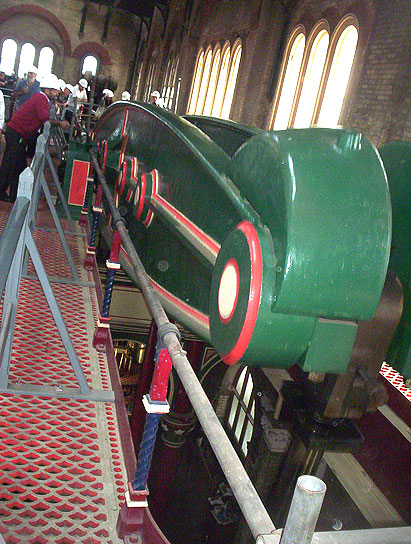
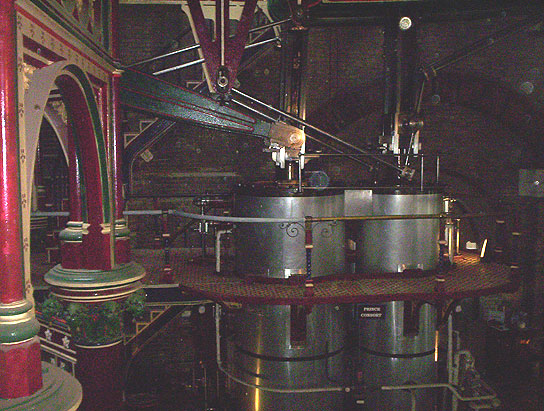
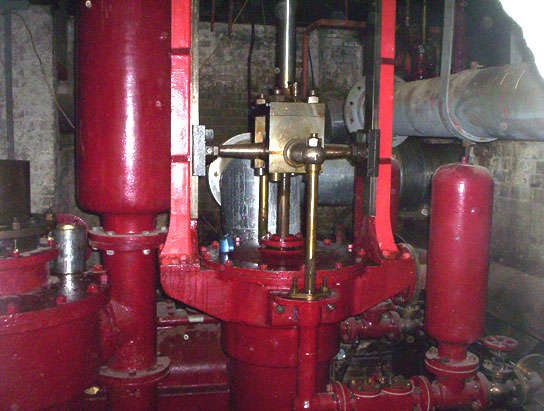
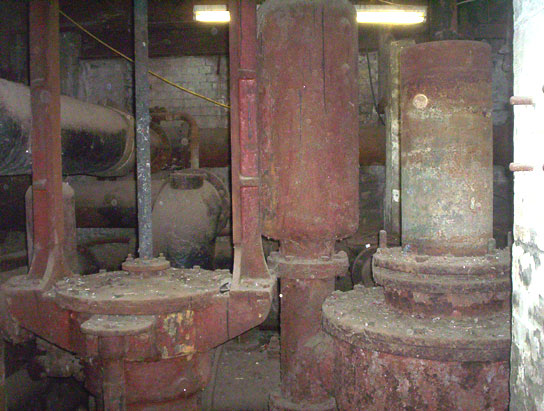
The Crossness Pumping Station was built by Sir Joseph Bazalgette as part of Victorian London’s urgently needed main sewerage system. It pumps sewage from a low intercepting sewer up to the level of the tidal Thames. The Beam Engine House is a Grade 1 Listed Industrial Building constructed in the Romanesque style and features some of the most spectacular ornamental Victorian cast ironwork to be found today. It also contains the four original pumping engines (although the cylinders were upgraded in 1901), which are possibly the largest remaining rotative beam engines in the world, with 52 ton flywheels and 47 ton beams.

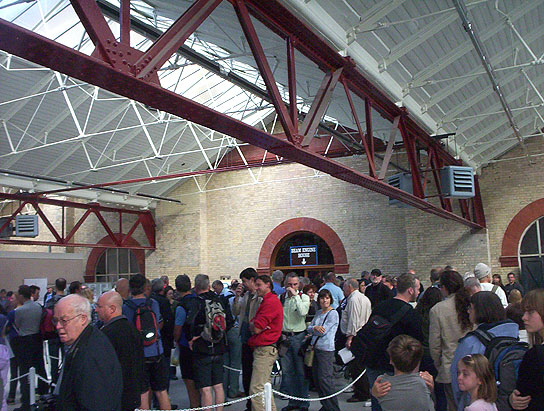
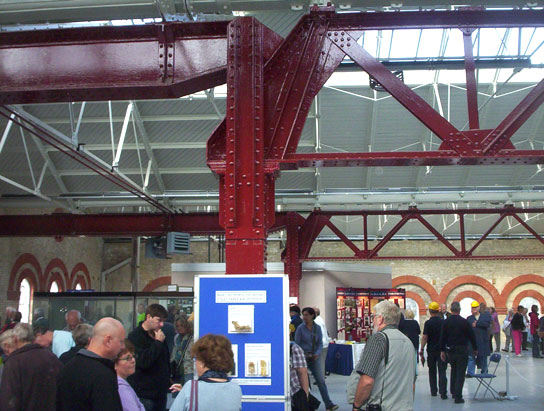
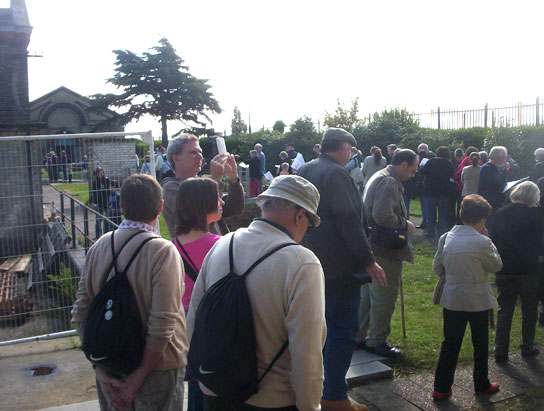
The journey there underlinined the advisability of getting up early if one wants to visit Cross Ness. It was a chapter of delays. I left the house at 7.30 AM, but the first train had a fault so got the next half an hour later, which was late at Euston because of speed restrictions. Got to Abbey Wood station at 10.40am, but found a long queue waiting for the courtesy minibus and could not get on one till over half an hour later. At the site there was a long queue to get into the buildings, then another queue to pick up a hard hat and enter the Pump Engine House, so didn’t get in there till 12.30.
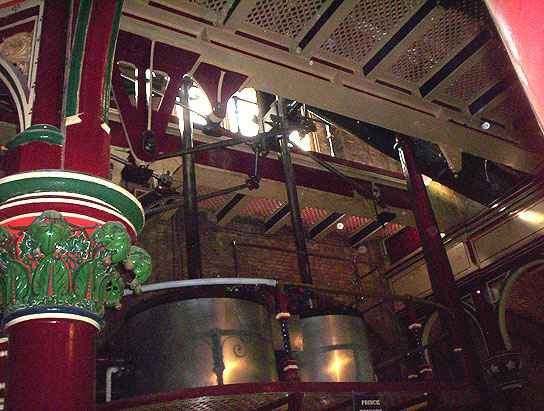
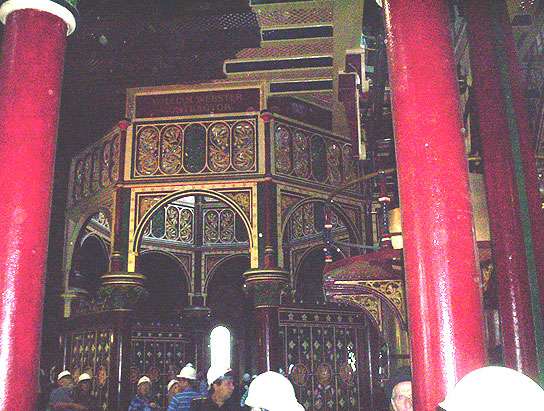
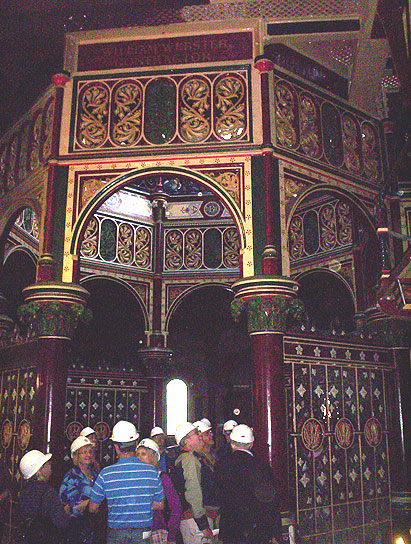
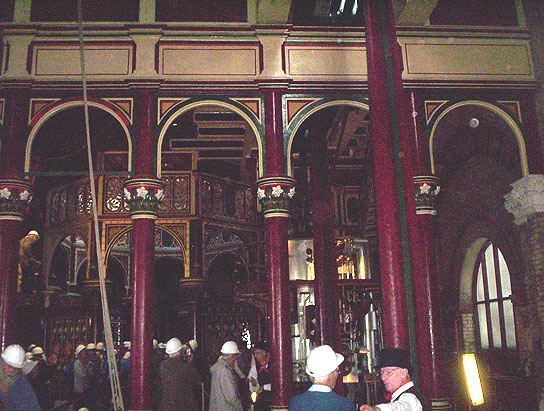
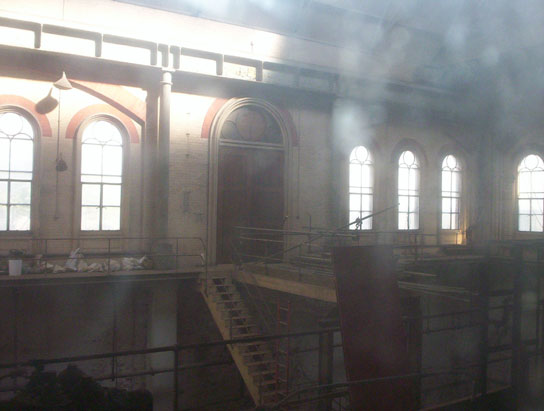
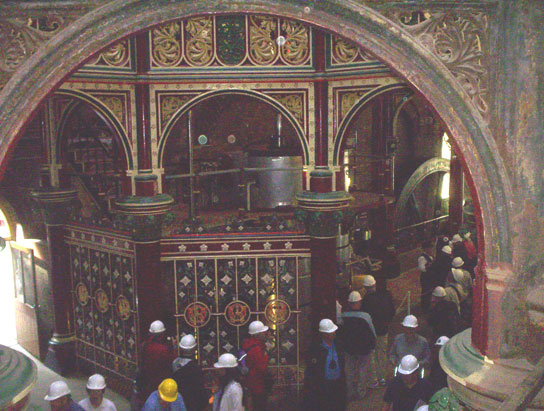
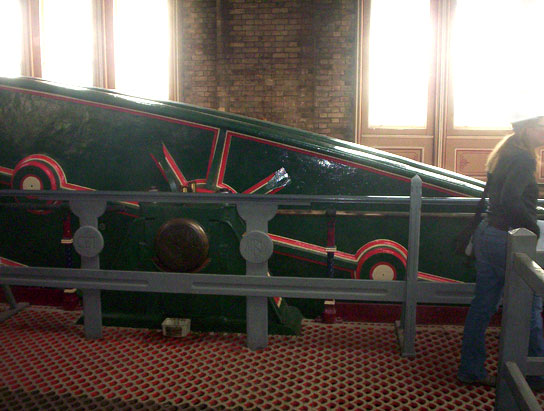
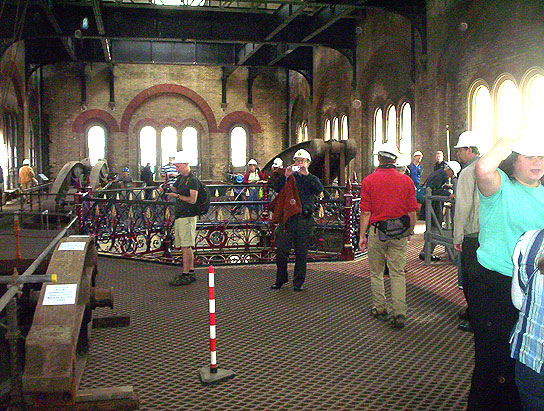
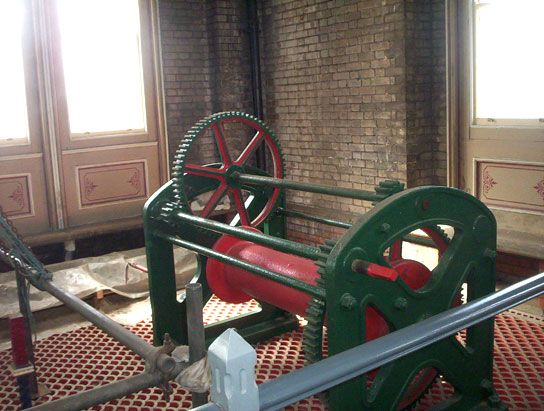
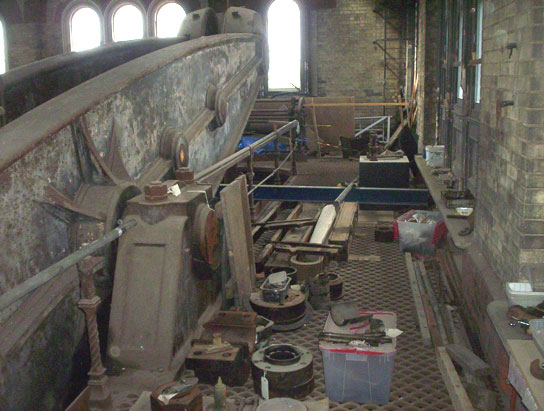
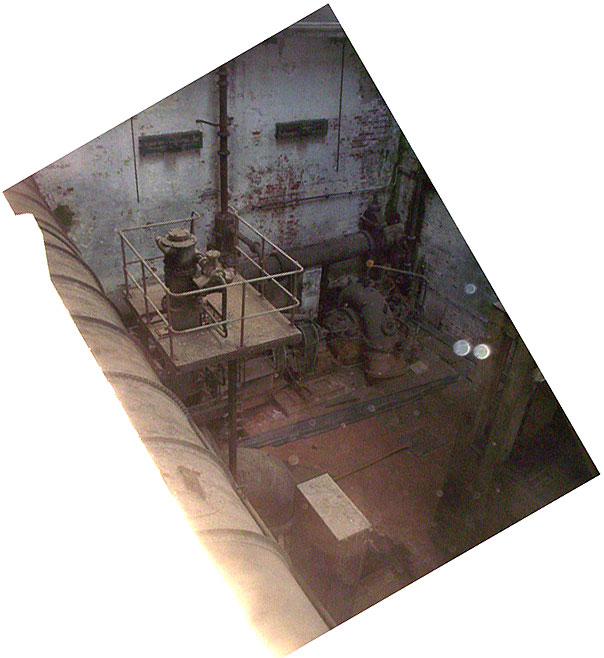
The interior is impressive, with four huge engines in place and accessible from three levels. The octagon of painted ironwork only encloses a small part of the floor area, by the way. One engine is completely restored and running on steam, another in bits and the other two untouched. Some ironwork is re-painted in bright colours, while some sections have been left dull and rusty. The beam floor runs the whole length and width of the building and allows access to all the engine beams and the top of the Octagon. There are views out over the site and the Thames. There isn’t so much to see in the basements asides from some very rusty pipes and some shiny parts of the restored engine, Prince Consort. To one side is the Triple Expansion Engine House, which now is mostly empty. From the Beam Engine floor level and old entrance, it looks like an alarmingly big and deep hole with some rusting pipes and machinery in the bottom. Apparently two old diesel pumps are down there.
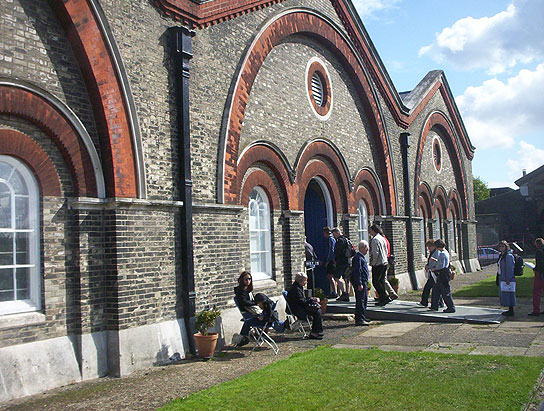
I came out after an hour, having seen and tried to photograph everything, and to let someone else in. I had a coffee and roll in the unusually cheap cafe, before visiting the workshop building and the former valve house, and taking some more photos. The brick architecture of the whole complex is quite worth seeing, with its arches and milticoloured bricks.

There are/were a few steaming days in 2011 when the site was open to the public. I visited Cross Ness pumping station on Open House London day, 18 Sept 2011. The engine house is on the far side of the large Thames Water site, 2Km from Abbey Wood railway station. A courtesy minibus is laid on, or you can drive there. Adequate car parking is provided. Watch the website http://www.crossness.org.uk/
Done here and wondering what else you could do? There are some abbey ruins near the railway station, or you could take a B11 bus to the NT’s “Red House” in Bexleyheath.
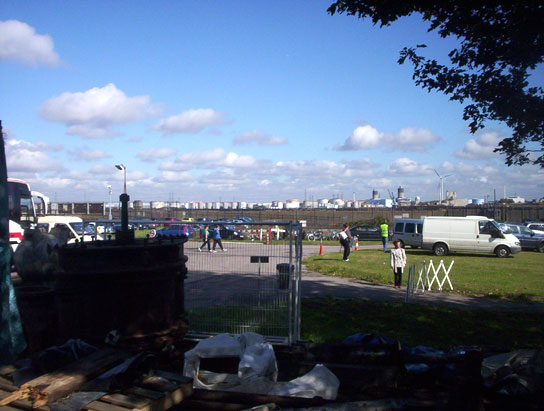
Cross Thames view from Crossness
View from Cross Ness
Corss Ness queue to get in
Queue to get in
Boiler House entrance front
Boiler House roof & queue for hard hats
Boiler House - queue for hard hats
Boiler House roof girder detail

Beam Engine House - main floor - octagon
Crossness main floor - Octagon
Prince Consort cylinder tops and pillar detail
Prince Consort cylinder tops
Main Floor - painted arches
Main Floor - arches
Main Floor - Octagon
Main Floor - arches
Main Floor - arches
Triple Expansion Engine House - from Main Floor
Triple Expansion Engine House
Main Floor - Octagon
Main Floor - Octagon seen from Staircase
Beam of Prince Consort
Top of Octagon from Consort & Victoria end
Top of Octagon from Consort
Upper Octagon
Upper Octagon
End of beam
Beam - Prince Consort
End of beam
Beam - Prince Consort
End of beam
Beam - Prince Consort
Beam Floor - Prince Consort auxiliary parts
Beam Floor - Prince Consort
Beam Floor - Victoria parts
Beam Floor - Victoria bits
Prince Consort cylinders
Triple Expansion House basement
Triple Expansion House
Basement A - Prince Consort
Basement A - Consort parts
Basement A - un-restored parts
Basement A

Penrhyn Castle, Gwynedd

Castle
National Trust.
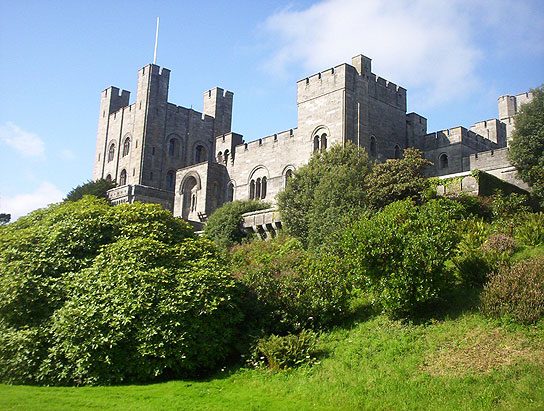
While there has been a building, fortified or otherwise, on the site for many centuries, the place was modified beyond recognition in 1820-1840 by Thomas Hopper, to create a mock Norman castle. The client was Hopper’s client was George Hay Dawkins-Pennant, who had inherited the Penrhyn estate on the death of his second cousin, Richard Pennant, who had made his fortune from Jamaican sugar and local slate quarries. Cost wasn’t a problem, and it is estimated that the house cost the equivalent of £49,000,000 in today’s money. The house is one of the most admired of the Victorian ‘mock castles’ and contains some jaw-dropping Norman-style interiors. In addition, hanging on its walls is one of the finest art collections in North Wales, with works by artists such as Rembrandt, Canalletto, Richard Wilson and Palma Vecchio.
Outside, there are extensive grounds, and in the courtyard area are several exhibitions, including full-size (not model) narrow gauge and standard gauge mineral railway shunting engines and rolling stock. There is also an interesting exhibition of dolls.

The house does have a notable resemblance to a Norman castle. Inside it’s a riot of carved decoration, all carved to a high standard. (One guide said that after going round one might want to lie down and look at something plain 🙂 ) It still has the original furnishings, often positioned by the NT in their 19-century positions. The Great Hall is the major show-piece, followed by the Library, and the Grand Staircase and other state rooms. The downstairs salons contain a quantity of paintings so valuable that even a lottery winner couldn’t afford to buy them. There’s also an accomodation tower, where the family mostly lived, and a warren of service rooms.

The kitchen and other rooms on the lower ground floor are part of the Grounds admission. The collection of full-size railway engines is unexpected but worth a look if you are a train buff. Presumably the nucleus of the collection came from the family slate mines. I didn’t explore the grounds on foot, as driving from the entrance to the car park and then walking up to the house was enough for me.
This is one of those locations where the sat-nav can lead you astray. Driving from nearby Bangor, the post-code took me to some unmarked gates, possibly the back entrance to the estate, while the visitor entrance was a mile or two further east.

Dolls in display case
Dolls on display

Thames Barrier, Greenwich, London

Thames Barrier
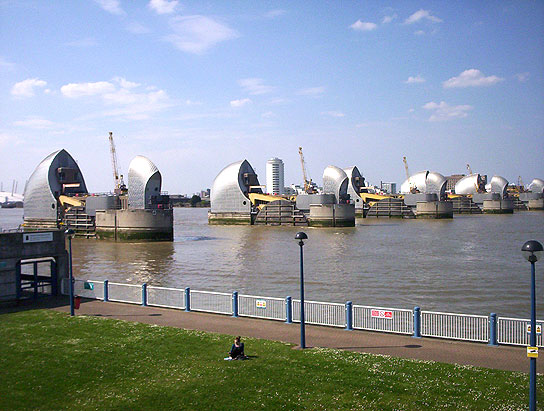
The Thames Barrier, with its striking stainless steel sails, was an iconic construction project, completed in 1984. It is the second largest movable barrier in the world, and protects central London against tidal flooding. It is raised increasingly often to protect London against high tides.

Besides looking at the barrier itself, visitors can pay a modest fee to go inside a small information centre (Thurs-Sun) which contains an interesting exhibition. When I visited, the viewpoint café above it was shut, but there was a temporary one across the car park. If you go, don’t miss the exhibition. When I lived in London the Barrier was under construction, but I never went to have a look.
Visitors can reach the site by walking to Unity Way from the A206 along a dismal industrial road, or through a small park. There is a pay and display car park on site.