Plas Newydd, Anglesey

House
National Trust.
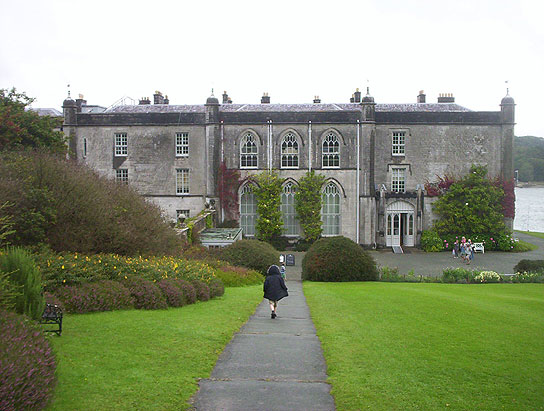
Plas Newydd originated in the 14th century, but was greatly remodelled in the 18th century by James Wyatt, the noted architect, who refaced it, blended the towers into the building front, and substantially made it into the building that stands today. The building has various Gothic features introduced by Wyatt. The interior was updated in the 1930’s and has Rex Whistler associations, including his largest painting and an exhibition.

On making a lengthy hike from the entrance, car park etc, one sees an impressive Gothick building, which one would assume is the house. In fact it’s the stable block. (Note the megalithic stone in front of the left side of the stables in the photo below.) The house only comes into view in the last few hundred yards, as one descends towards the south end & entrance. Also, the water beside the house isn’t a lake, it’s the Menai Straits. The Britannia Bridge is visible. The interior of Plas Newydd is fairly interesting, and notable for a large mural by Rex Whistler. He was also a friend of the Pagets (particularly the daughters). James Wyatt reworked the house in 1793-99. There are also substantial gardens in which the visitor can stroll, with a marine walk along the Menai Strait.
This is an interesting place to visit, and there are spectacular views from the park.
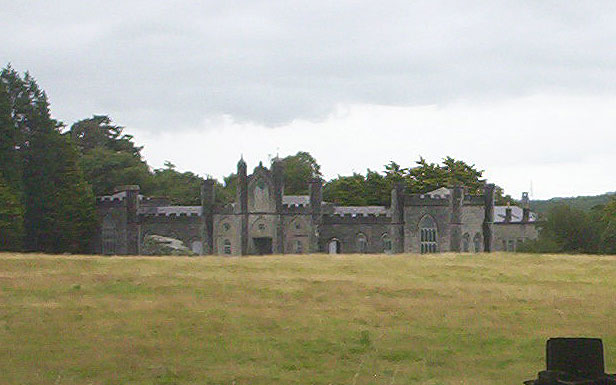
Gothic building
Stables

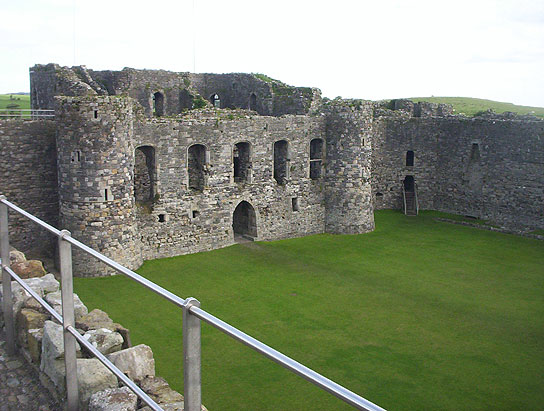
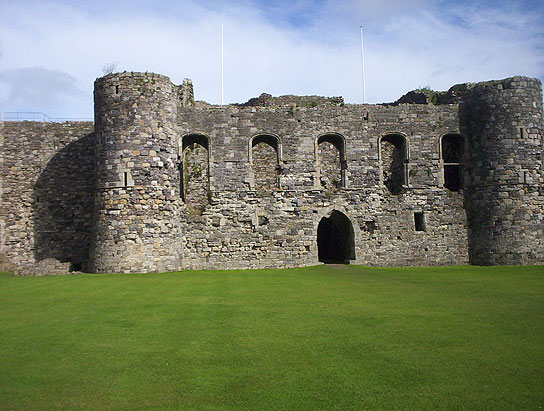
Beaumaris castle, Anglesey

Castle walls
CADW.
Beaumaris is one of the great castles of North Wales built by the English monarch Edward I, to stamp his authority on the Welsh. In the 13th century, its concentric walls within walls design was the state of the art in military technology. It is said to be the most technically perfect of all Welsh castles. It was the last of the great castles to be undertaken by the King’s designer Master St George, and remains in a relatively good state of preservation.

Beaumaris Castle is situated near the coast, and at sea level. It looks unexpectedly squat, partly because of its low siting, but mainly because the towers were never completed to the originally planned height (the King ran out of money). It is surrounded by a moat, an outer defensive wall, and an outer bailey, before one reaches the main walls and towers. Inside, the inner bailey looks big enough for a football pitch. The inner walls are honeycombed with defensive passages, and the inner and outer walls have walkways on top, some still accessible. You can spend a couple of hours exploring it all.
Well worth a visit if you like castles. Pay car parking is available nearby.

Also in Beaumaris town, the old gaol is worth a visit, as is the old courthouse. Together they vividly recall the harshness of Victorian justice. In the jail, inmates were properly fed and given medical attention as required, (which was much better than most of them got outside) but to prevent them liking jail too much, the regime was very harsh. Sentencing was also very harsh, especially for property crimes.
Castle walls

Red House, London

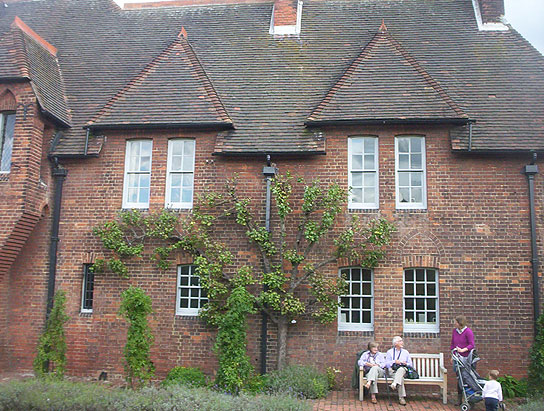
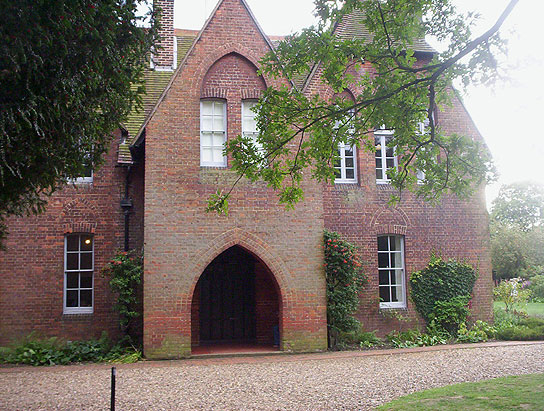
Red brick house
National Trust.
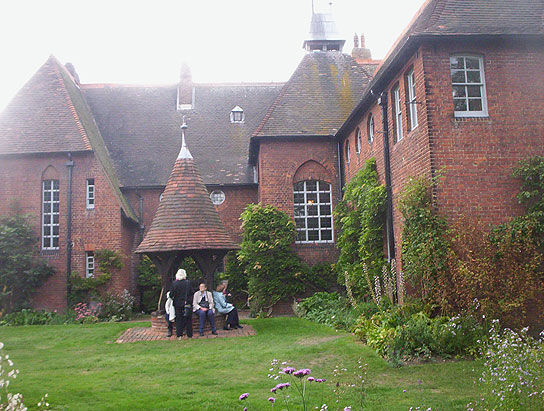
The house, rather vaguely signposted, lies near Upton Road in the Bexleyheath area of SE London, near the A207 and Bexleyheath railway station. B11 and other buses run nearby. The building is smaller than I imagined before seeing it – not a mansion but a substantial suburban gentleman’s residence. It’s of interest essentially as the only house built for William Morris, the famous Arts & Crafts movement designer. The architect was Morris’ friend Philip Webb. Few of the original moveable contents remain, but the architecture, windows and some items of decoration are much as built. There is a pleasant and quite large garden, laid out in several sections – itself an innovation at the time. Surprisingly, Morris only lived in the house from 1860-1865, but later owners were sympathetic to his creation. Morris tried to found an artistic community at Red House, but sold it when this failed.
It doesn’t take long to go around the house and gardens – I arrived after 3pm and had seen everything by about 4pm. Fewer than half the rooms are open to the public. On arrival you should note that visitor reception is away from the house, in the old stables hidden behind trees to your left.
Curious facts: Morris disliked industrial production and wanted to re-instate the craft traditions of an earlier era, but his creations, popular with some of the middle classes, were too expensive to be bought by the craft workers he admired. Morris himself was quite well-off – his house cost £4000, which was twice what my parents’ house cost a century later. The house, which originally had murals and wall-hangings and no wallpaper, is now partially papered with Morris & Co designs. When I visited, there was an exhibition about Morris & Co designs in a room downstairs.
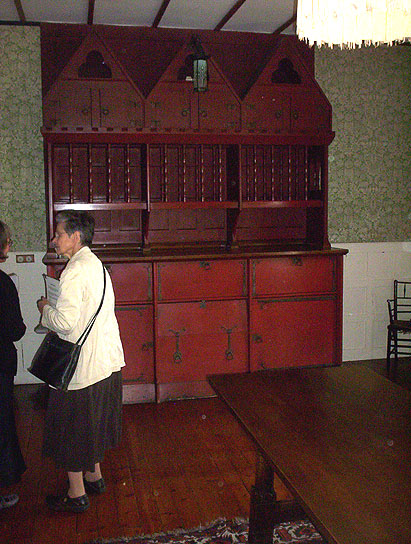
And don’t put your stuff on the table in the dining room – the NT don’t like anyone to touch it. This table, designed by Philip Webb, was bought recently for £130,000 !

Nearest railway station is Bexleyheath (3/4 mile) . There is no car park at the house. Recommended parking is at Danson Park leisure facilities – which is no closer than the railway station. Buses run along the A207 nearby. On foot from A207, walk down Upton Rd, which is almost opposite the road from the station.
Done here and looking for something else to do? Danson Park and its historic house (0.8 mile)look really interesting.

Red dresser
Webb dresser
Red brick house and lawn
Garden side
Red brick house
Front