Bradley, Newton Abbott, Devon

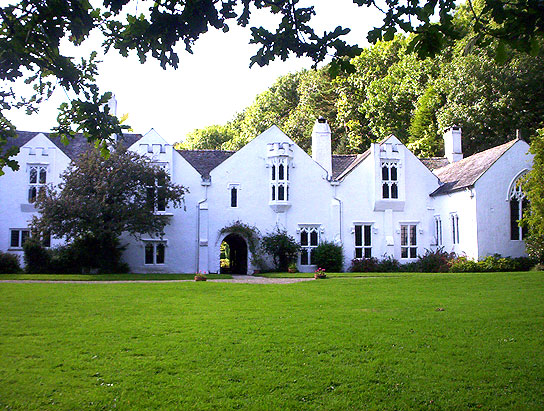
View of house exterior and lawn
Bradley Manor
National Trust.
A white manor house sits in green meadows surrounded by woodland. The L-shaped house, with many gables and tall chimneys, retains most of its medieval features. The dining room (former kitchen) has a fireplace opening formed of four tons of Dartmoor granite. The hall is the only spacious room. On the walls of an upstairs room is preserved a late medieval pattern of stencilled black fleur-de-lys. Also upstairs in a panelled room is some fine seventeenth-century plasterwork in high relief, looking well preserved. There is a collection of Pre-Raphaelite paintings and Arts & Crafts furniture. Much of the furniture is 18th century and listed on room cards. The chapel, which has an array of carved wooden bosses on the ceiling, should not be missed.

The interior was interesting. Outside, one can walk round with the guidebook and look at when each part was altered. Extensive woodlands surround the house. I finished my visit by exploring these, and found a back exit which eventually leads into a housing estate.

The house is half a mile from Newton Abbott town centre, on the Totnes road. The opening dates and times are somewhat restricted. The signs on the main road are inconspicuous. Note that there are no toilet facilities or tea room on site.
Good news: you can park at the site from 1.30 for the opening at 2:00 pm. It’s possible to get there by train, but I found that, unless you figure out the bus routes, it’s rather a tedious walk from the station and you need to know what foot route to take. Leave the house grounds on foot the same way you came in, if you don’t want to get lost in a housing estate.
Great Yarmouth Row Houses, Norfolk

English Heritage.
These are the most interesting of a number of historic buildings and museums to be found in Yarmouth’s Historic South Quay area. There were once many row houses here, but most have been removed by war and slum clearance. Two surviving examples have been restored and one (also known as the Old Merchant’s House) fitted out as it was in the 1870’s, the other (no.111) as it was in 1942.
I found the contents and the explanatory displays most interesting.
Also worth a look is the medieval town wall, much of which still exists to its original height – and it’s free to view.

Paignton-Kingswear steam railway, Devon

Unlike most heritage steam railways, this line is promoted as part of an integrated tourist transport system, and not as a destination in itself. The line runs from Paignton to Kingswear, running briefly along the sea coast before cutting acros the peninsula and running some way alongside the Dart estuary before terminating at Kingswear. It connects with First Great Western trains at Paignton, with a ferry at Kingswear, and is also offered as part of a train-boat-bus circular tour starting at Paignton, and other permutations of train and boat.
On their website they claim that “This is one of the finest heritage steam railway journeys anywhere in Europe.” It’s not bad, but having travelled on both, and not being seduced by the romance of steam travel, I can point out that the First Great Western line served by diesel railcars from Exeter to Paignton is longer, has a more spectacular coastal route, and is (with a cheap day return) cheaper.
I’d recommend using the steam railway as part of a touristy day out. There are old places to look at in Dartmouth, including a small castle, and a river trip up to Totnes is one of the best river trips around.

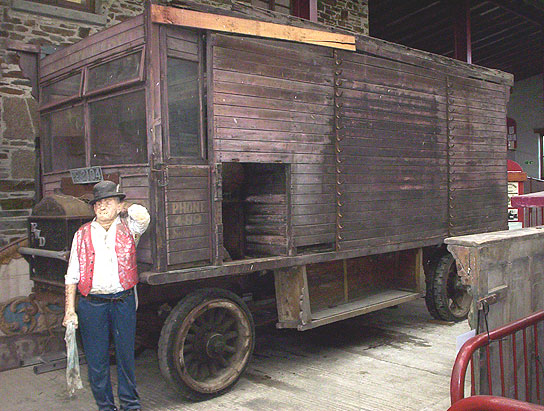
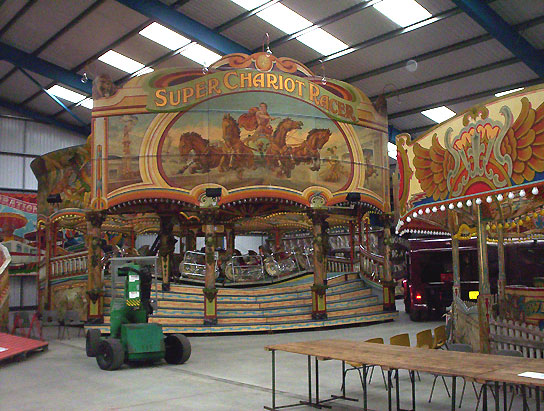
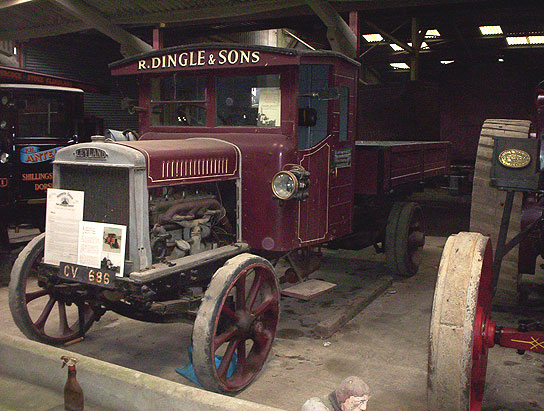
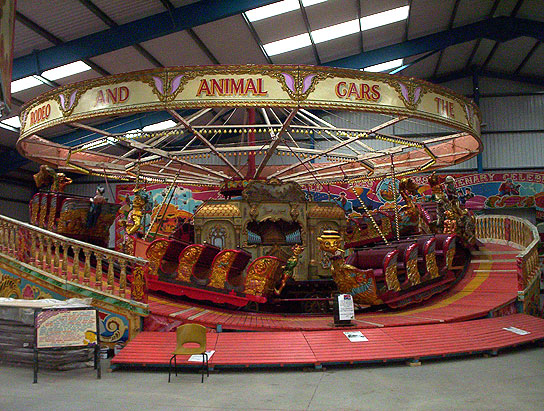
Dingles Fairground Heritage centre, Devon

Fairground roundabout ride
Ride exhibit
(Previously known as Dingles Steam Village.)
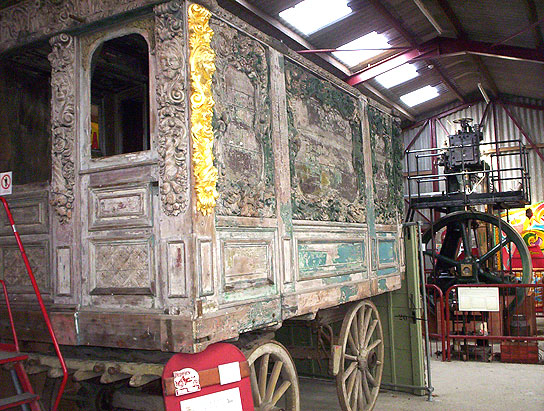
When I visited it in 2007 there were some stationary engines in steam, and other steam exhibits. Most exhibits were to do with fairgrounds, and included vehicles, some of them very ancient, sideshow displays, and, in a large barnlike hall, several complete fairground rides. It was quite interesting.
Today it seems they are offering more of the same, including working rides.
Very old wagon
Very old wagon
very old fairground lorry
very old lorry
Fairground ride exhibit
Ride exhibit
Old showman's lorry
Showman's lorry
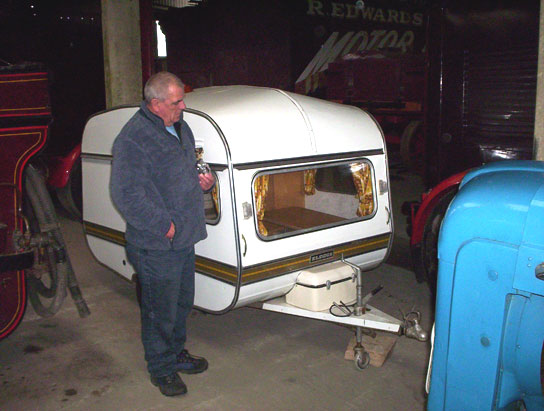
Toy sized caravan
Toy sized caravan

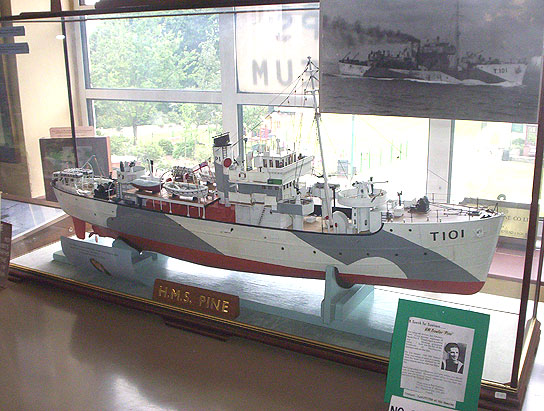
RNPS Museum, Lowestoft, Suffolk

Display with model ship
Model of HMS Pine
The Royal Naval Patrol Service manned the Navy’s “small ships” during WWII, and they had their headquarters base at “HMS Europa” in Lowestoft. Tens of thousands of new sailor recruits streamed through this base, including my father.
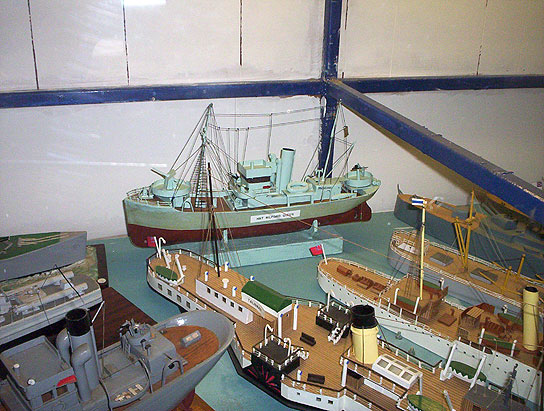
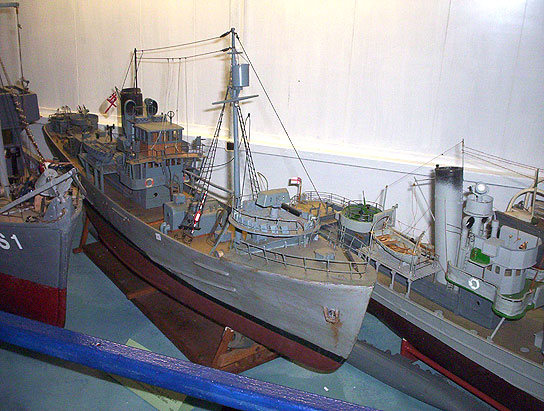
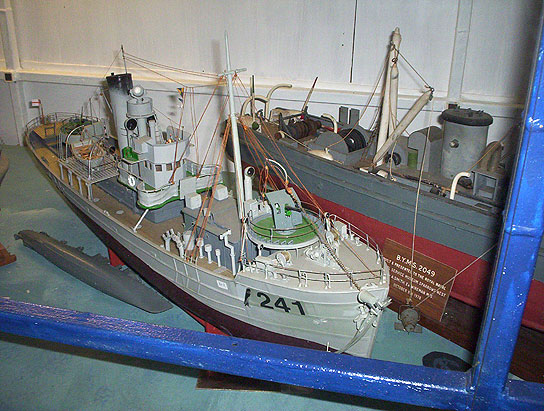
Today, the RNPS Association has its museum in rooms in one of the few surviving buildings of the base at Sparrows Nest, Lowestoft. There are two museum rooms, one on the first floor, the other at ground level at the back. They have various exhibits and mementoes including models of some of the small ships, and many photographs. There are some research materials. The ship models were the most photogenic items on display 🙂
When I visited, I was kindly received, and had a good look round the main room, and also the one at the back, which they unlocked for me. I spotted a picture of one of Dad’s armed trawlers, and they made a copy of it on the spot. They couldn’t shed much light on what Dad’s boats had been doing in the war (such information is very scanty today).
Admission to the Museum is free and it is generally open throughout the year on Monday, Wednesday and Friday mornings until noon, subject to volunteer availability.
If you have come a long way you might want to note other things in the area that shouldn’t be missed: the sea wall and sea a few hundred yards sea-ward from the Museum, Roman fort at Burgh Castle, Great Yarmouth town wall, Great Yarmouth Row Houses.
Display of ship models
Ship models
Display of ship models
Ship models
Display of ship models
Ship models

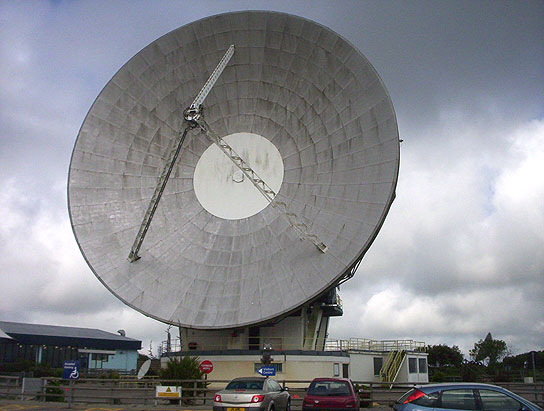
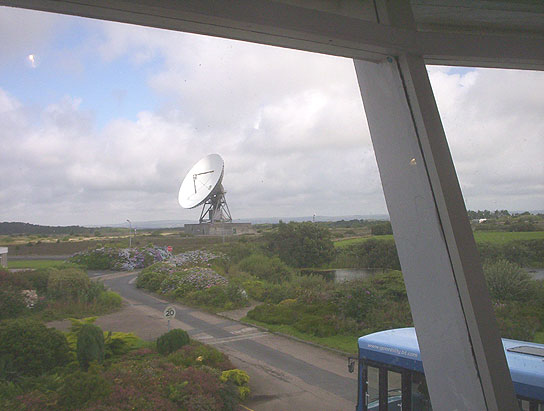
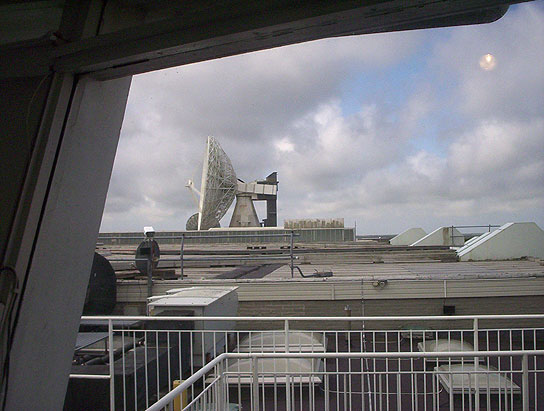
Goonhilly Satellite Earth Station, Cornwall

large satellite dish
"Arthur"
Goonhilly’s first dish, Antenna One, (“Arthur”) was built in 1962 to link with Telstar. It was the first open parabolic design and is a monster 25.9 metres in diameter and weighs 1,118 tonnes. Other dishes followed, till there were around 60 dishes of various sizes. In 2006, however, BT announced that it would close its site by 2008, centralising its operations elsewhere. The biggest dishes are redundant, as with today’s powerful electronics, much smaller one will suffice.

Until Easter 2010 the site had a visitor centre inside which the Connected Earth gallery told the history of satellite communications. There were many other interactive exhibits, a cafe, a shop and one of Britain’s fastest cybercafés (a one gigabit pipe and a theoretical maximum speed per iMac of 100 Mbit). There were also tours around the main BT site and into the heart of Arthur.

I visited the visitor centre while it was open in 2007, and found it quite interesting. I looked at the exhibits, climbed to the viewing gallery, and looked at my website via the cybercafe. The high point was a bus tour around the site, which allowed visitors to get a closer look at some of the monster dishes. What was a let-down was that some of the dishes were online and receiving signals, and we weren’t allowed to see any of it. It was like your friend asks you round to see his new satellite and Freeview, and he shows you his elliptical dish and spiky aerial. You’d be under-impressed, wouldn’t you?

On 11 Jan 2011 it was announced that parts of the site are changing hands, and there are also plans to upgrade the former visitor centre into “an outreach centre promoting space and space science for visitors, including local residents and schools”.
As with privately owned great houses, this may have been a case of “visit it while you have the chance”, but you can hope.

General site view
View from roof of V.C.
View of dish and roofs
View from roof of V.C.

Cadbury Castle, Devon

This Iron Age hill fort site is near Furzdon House (see separate entry) and the village of Cadbury.
I would have liked to walk up to it, but on my first visit to the area it was not obvious where the preferred access was. There is a signed footpath starting from the village lane, about half a mile down from the A3072. Also, the satellite view shows what looks like a farm vehicle track running from a field on the A3072 up to the top, which is marked by a circle of trees.
The second time around, my sister didn’t care to walk up it in the hot sun:-)

Furzdon House, Cadbury, Devon

The house sits on rising land above a minor road. The Georgian frontage has two projecting wings and a central colonade. A dwelling has been on the site for 750 years, the last major rebuild being in the 18th century and the last major alteration being the addition of the library wing in 1815. The Coach Hall adjacent to the house serves as ticket office and tea room when the house is opened to the public. The estate is quite large and includes the Cadbury Castle hill-fort nearby (see separate entry)

When my sister and I visited the house, we were welcomed by Catriona Furzdon, the lady of the house, at the Coach Hall. We had a look at the gardens surrounding the house before joining a guided tour of the house interior. The house has some quite interesting rooms filled with old furniture, the details being ably narrated by our guide. The gardens around the house have various sub-sections and at the rear they look down on the older parts of the house. Behined the house are terraced beds of herbs and roses, and a thatched round house. Below the house and across the road is the Meadow Garden, which has trees and a pond. We enjoyed our visit here, as we liked the house and garden and had a warm welcome. We enjoyed the tea and cake too.
http://www.fursdon.co.uk

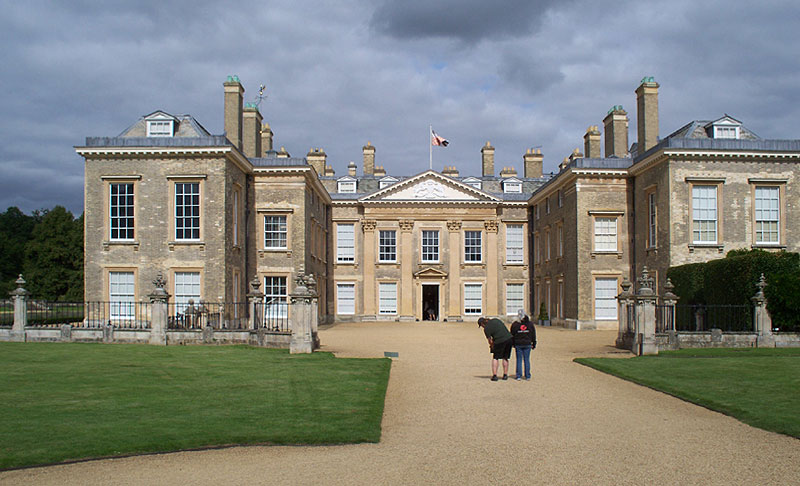
Althorp, Northants.

Private, HHA
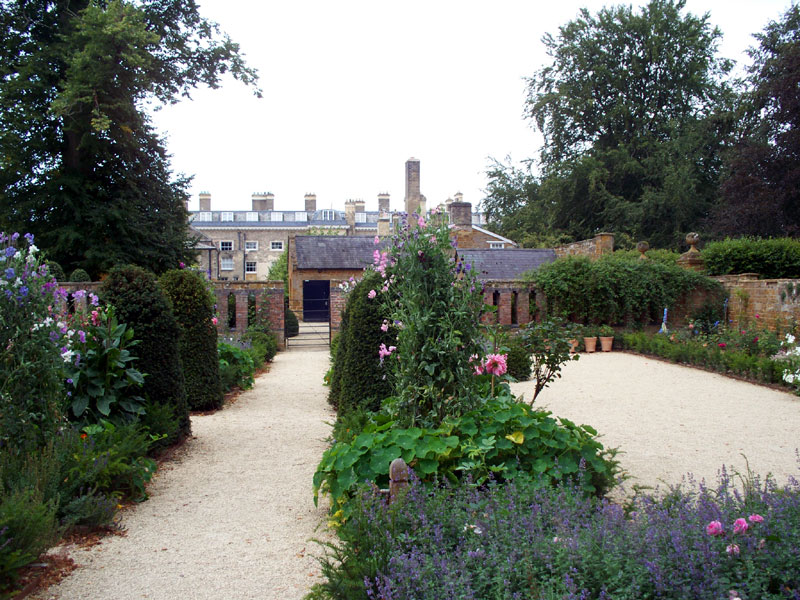
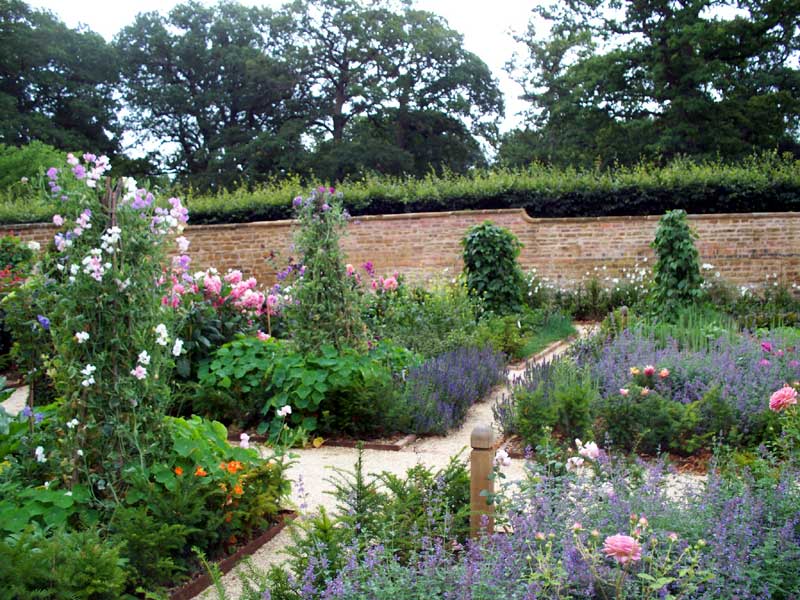
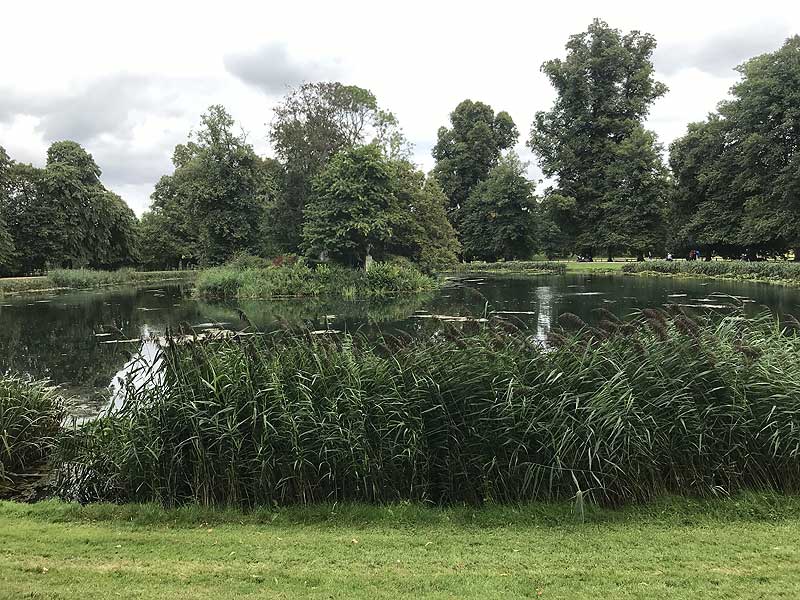
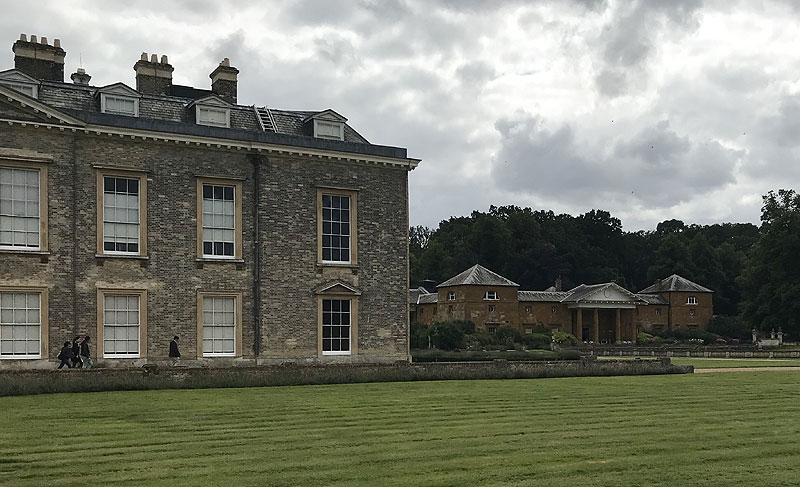
At Althorp, a great Georgian palace is surrounded by a wide park and gardens, and supported by some impressive out-buildings. Inside are collections of paintings and treasures, and outside, pathways lead the visitor around a lake set among flowers and plantings of trees. The gardens date from the 1860’s. The wider estate has 14,000 acres of countryside under management in three counties. Althorp has been the home of the Spencer family for 500 years.
The house is clad in what looks, even when one gets up close and touches it, like pale brick, but is in fact a rare system of engineered tiling designed to look like brickwork. The Spencer family has assembled an impressive collection of portrait art including several pieces painted by the Flemish master Anthony van Dyck.
When I visited in 2010, part of the house was clad in self-supporting scaffolding for a major external restoration project, so one could see at once where one’s entrance money was going. I opted to see the upstairs rooms as well (then an optional extra). “Day including Upstairs” tickets permitted access to the upstairs rooms including the five state bedrooms, Great Room, Chapel and the magnificent long Picture Gallery as well as what was included within the Day ticket. As it turns out, much of the more interesting stuff is upstairs. It’s not clear why ‘upstairs’ should be an optional extra except that, as is often the case, there is no provision for disabled access.
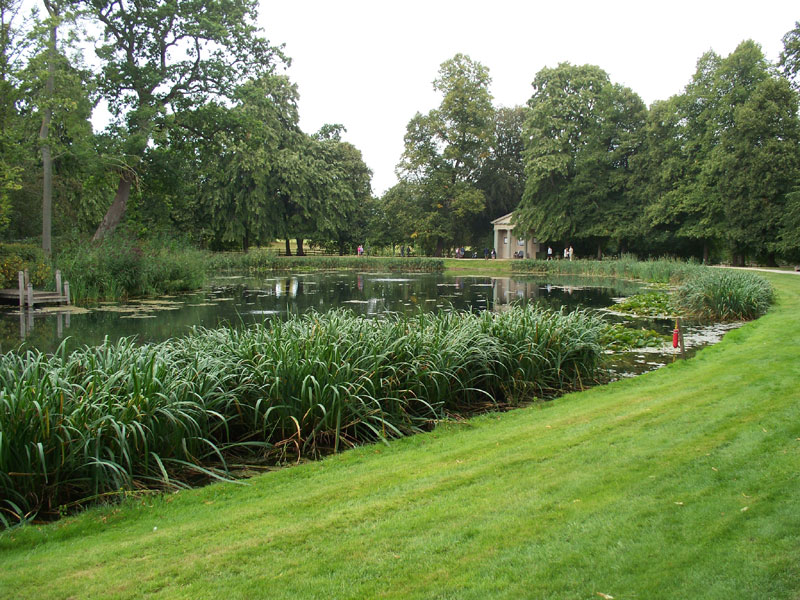
Outside, I walked around the oval lake, which makes a pleasant walk. The pavilion at the far end commemorates the late Diana, Princess of Wales. The italianate Stables were clearly built to impress, as well as housing up to 100 horses. The former Stables block, built around a square yard, now contains various amenities.
Althorp has a short visiting season each year in July-August. A discount is offered for English Heritage members, so remember to ask for it.
Revisited Aug 2023. House tickets now all include upstairs. Visitor parking is in a field opposite the West Gate public entrance. Disabled parking is next to the stable block, with entry via the power-operated gates, while able-bodied visitors have a half-mile walk. The walled garden is a recent creation.

Walled garden & rooftops
Walled garden
Oval pond
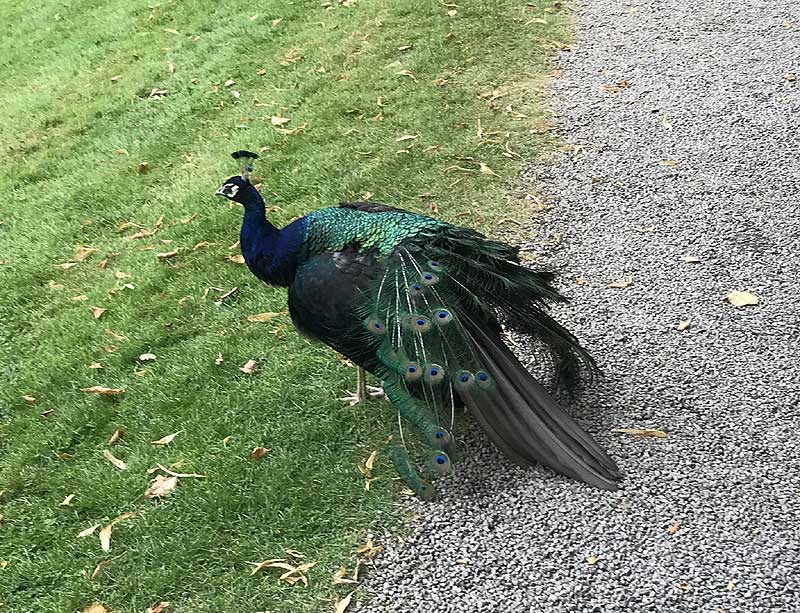
Peacock
Oval pond and island
West wing and stables

Sywell Aviation Museum, Northants.

The Museum aims to preserve the history of Sywell Aerodrome and Northamptonshire’s rich aviation heritage from the early days of aviation to the Second World War and beyond. It is housed in linked Nissen huts adjacent to the still-operational Sywell Aerodrome.
The Museum commemorates, with aircraft remains, a number of crashes which occurred in the Northants area during WWII. There are a variety of other exhibits including cockpit sections.
This is an interesting visit for the history or aviation enthusiast. Suggested visit time: around two hours.