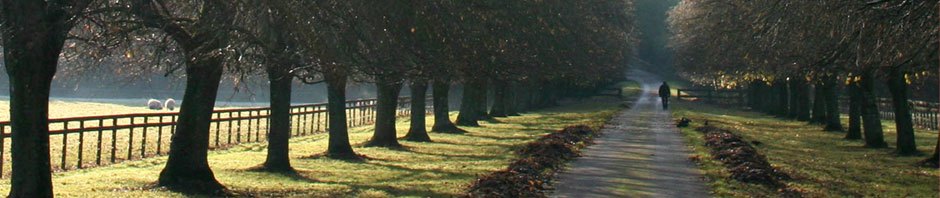
This is a great Elizabethan and 17th-century house, now partly roofless, though the Great Hall and state rooms are still roofed and intact. These rooms are refitted and redecorated to 17th and 18th century specifications. There is an outer walled courtyard, while buildings, some now roofless, surround the inner courtyard. The entry to the inner courtyard has an impressive three-tier porch.
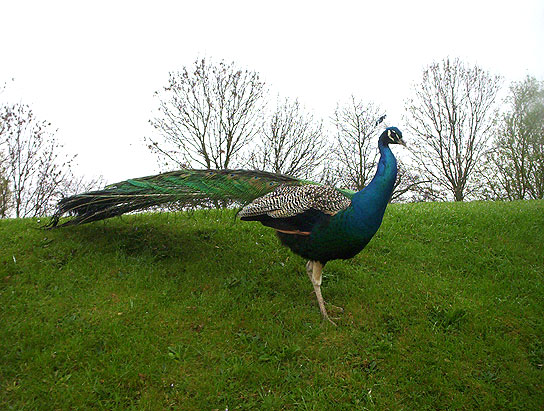
The bulk of the building, with its elaborate stonework, and many tall chimneys, remains impressive. The state rooms have a pair of large and distinctive curving bay windows. Inside, the interiors and exhibitions are of interest. Outside is a great 17th-century garden, recently recreated. Peacocks roam in the grounds. An audio tour is available.
Day: 26 September 2011
Kelvedon Hatch Bunker, Essex
The Bunker was built in the 1950’s originally as a hardened control centre for RAF Fighter Command, then used briefly as a civil defence centre, then as an emergency regional government site. By the 1990’s the Government decided that the threat of nuclear war had receded, and the mothballed bunker was sold back to the original landowners.
Today’s visitor enters through an anonymous bungalow (actually a guardhouse), and down a lengthy tunnel which leads to the lowest floor of the facility. There are many rooms on each of the three floors, most still containing age-stained equipment, and there are a number of small exhibitions and audio-visual film presentations. The exhibition explains how the up to 600 people inside were meant to rule the country in the event of a nuclear attack.
Your tour is self-guided by a personal handset, included in the admission price. A walk-through takes an hour, but if you stop to watch all the films and look at everything, a visit will occupy in excess of two hours.
I seemed to be the only person inside on the afternoon I visited, and after two hours I and a staff member who was walking through the complex to lock it up managed to scare each other somewhere in the depths of the bunker.
The route exits though a modern opening into a café and souvenir shop.
Denny Abbey and Farmland Museum, Cambs.
English Heritage & Farmland Museum Trust.
Denny Abbey was founded in 1159 as a Benedictine monastery, then it became a retirement home for elderly Knights Templars. After the Templars’ suppression for alleged heresy in 1308, it passed to the Countess of Pembroke, who converterd part into a house and the rest into a convent for “Poor Clare” Franciscan nuns. The convent was disolved by Henry VIII in 1539, and the buildings became a farm till the 1960’s.
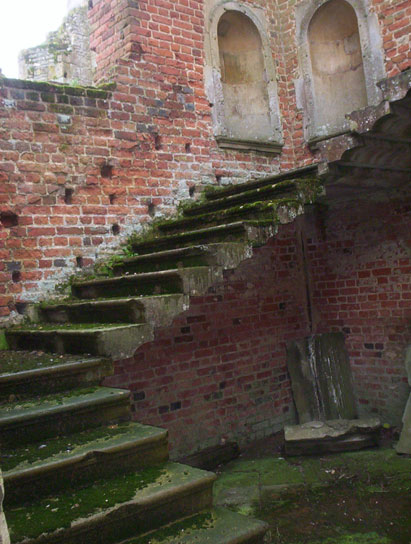
Today, the additions of later centuries have been stripped back, and the structure displayed as a relic of the pre-dissolution period. The nun’s refectory building, later used as a barn, still stands.
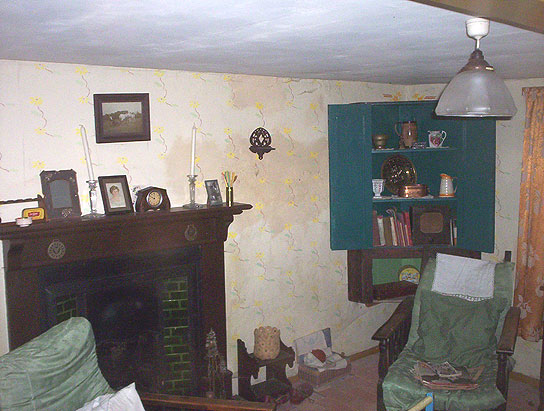
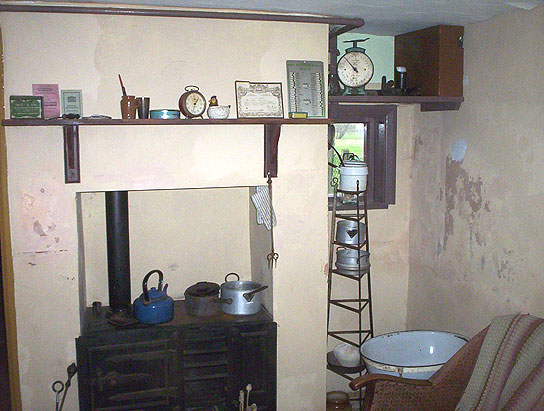
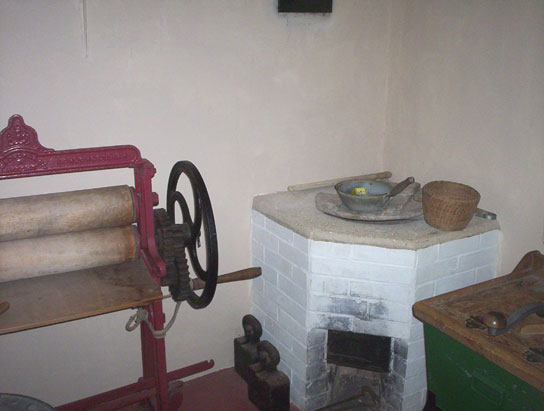
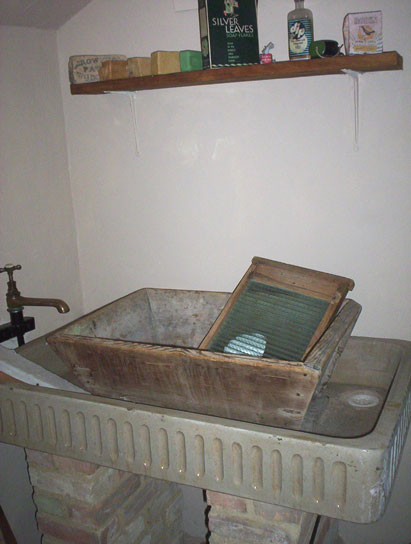
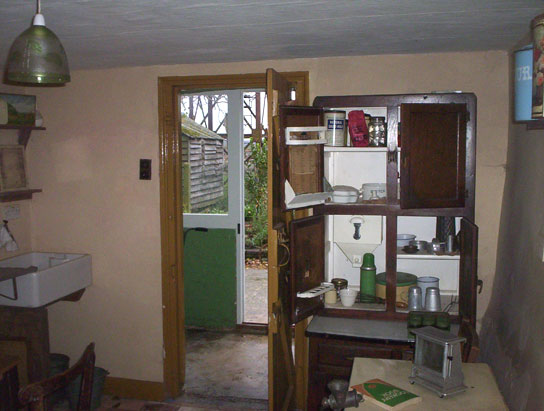
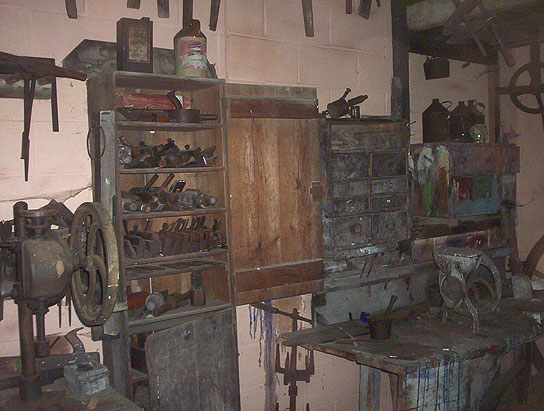
Alongside, the Farmland Museum has Walnut Tree Cottage, furnished as a labourer’s home of the 1940’s, and a fenman’s hut, blacksmith’s and wheelwright’s workshops, a village shop display and many other relics of Cambridgeshire village life.
The Abbey building is quite interesting. Though parts are little more than a shell, it’s possible to look at some rooms upstairs.
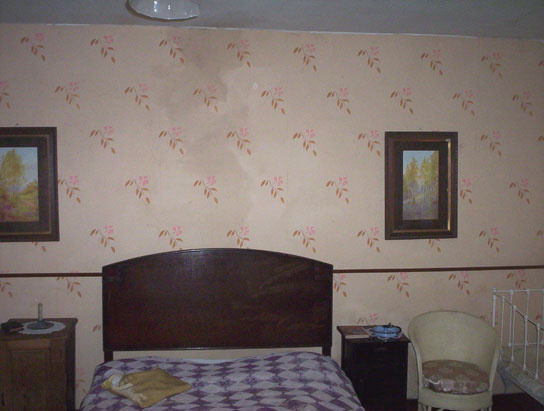
Walnut Tree Cottage is worth seeing. An authentic interior has been re-created, and its awfulness, without any modern conveniences, with dimly lit bedrooms and authentic damp, should serve as an antidote to any romanticising of rural cottage life! The other Farmland Museum exhibits are also of interest.
English Heritage members can visit the Abbey free, but still have to pay a modest charge to visit the Farmland Museum.
Claydon House, Bucks.
National Trust.
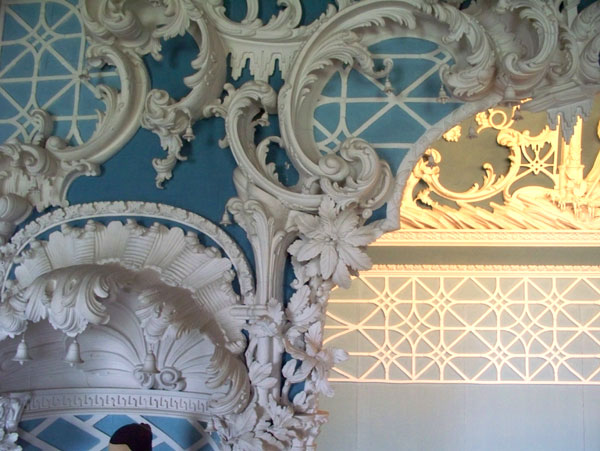
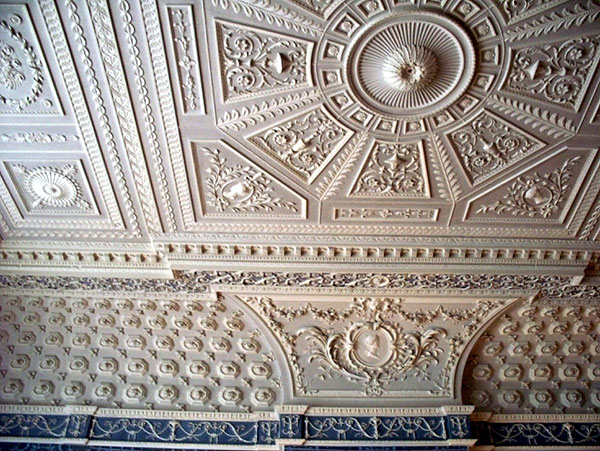
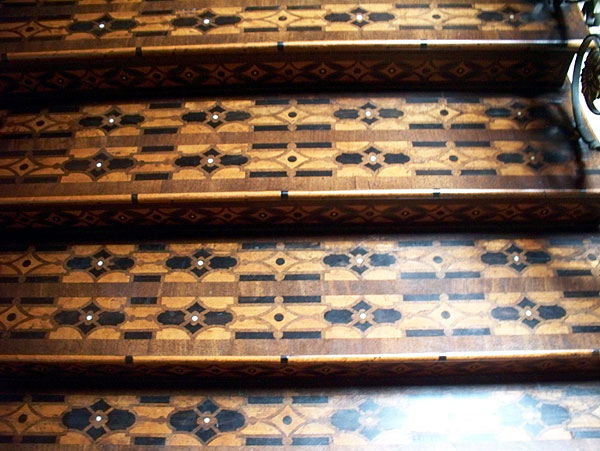
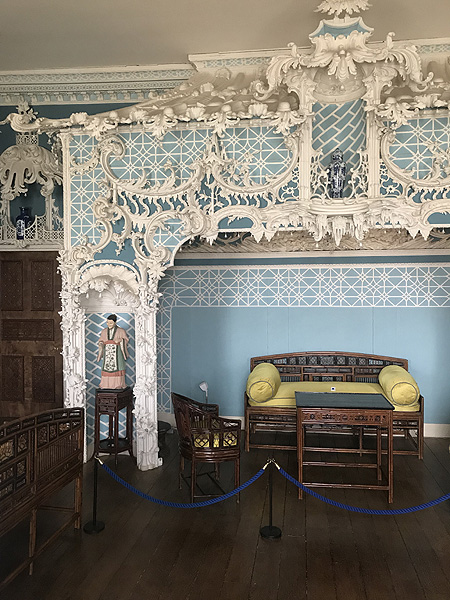
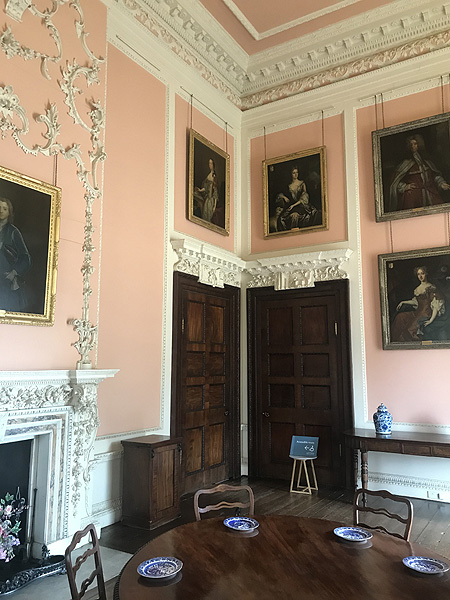
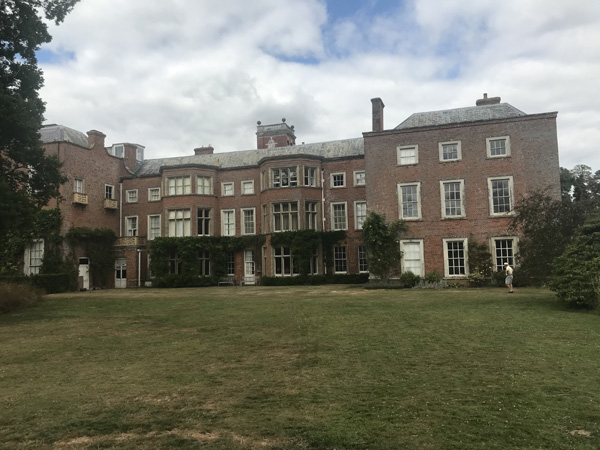
Ralph Verney inherited a Jacobean house in 1752, and reconstructed and extended it, before embarking on a still more grandiose scheme to create a great West front to rival that of his much richer neighbour, Earl Temple of Stowe. The surviving west wing contains some wonderful interiors, with carvings by the brilliant but rather difficult Luke Lightfoot, and plasterwork in the saloon and staircase by Joseph Rose. The ironwork and parquetry in the staircase are another marvel. There is also a Chinese room upstairs. Most of the unaffordable West front, including a grandiose rotunda and ballroom, was demolished by Ralph Verney’s neice and heir in the 1790’s, and there is no trace of it today.
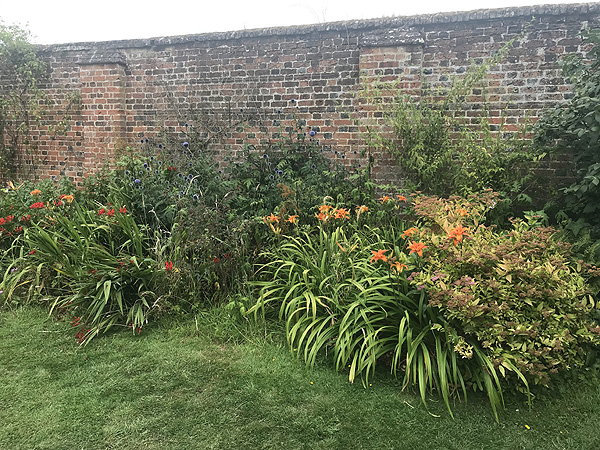
There have been some changes since my last visit. NT visitor reception is around the corner to the left, facing the courtyard. The family have now moved out, so that two more rooms are open on the ground floor, and also another staircase to the upper floors. The model of the house has been relocated to one of the newly opened rooms. The South Lawn and an area of gardens with some formal flowerbeds are now open to visitors, accessible via the courtyard, and allowing close access to the rear of the house. A large walled garden is closed off and signed as Private.
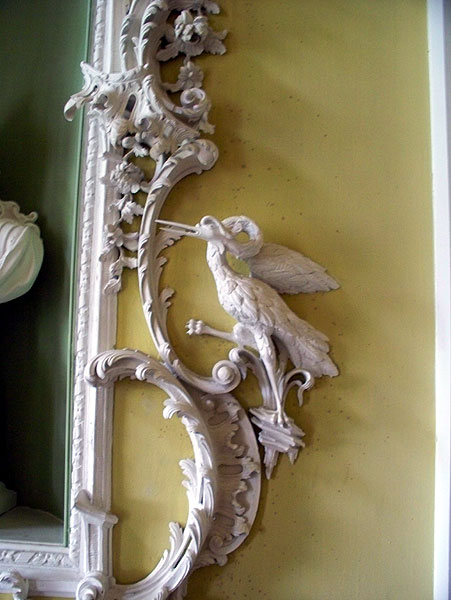
The North hall contains Lightfoot’s wonderful bird carvings in high relief (actually white-painted wood), and the next room is equally impressive. To get upstairs one ascends an original staircase which goes up a long way (the ground floor rooms are very tall) giving access to a series of rooms including the music room with a gamelan orchestra in it, a grand bedroom, the Chinese room, and a museum room with various documents, and some architectural salvage. Florence Nightingale has connections with the house. One returns to the ground floor via a small modern staircase.
Outside, there is the inevitable retail courtyard around the old stable yard, also a church, parkland, and some gardens. Much of the outside is under separate management. The garden and South Lawn entrance is via the retail courtyard.
The Church can also be visited.
Altogether, there is enough to see to justify a half-day visit.
Chatham Historic Dockyard, Kent
After the Dockyard closed as a military base, the boring parts were cleared and re-developed, while the historic bits were conserved and opened as a large-scale museum. Today, as well as interior displays, the visitor can explore a Victorian warship, a WWII destroyer, and a submarine. Inside various buildings is an audio-visual recreation of the sailing Navy, a collection of naval hardware inside a wooden shed which is an exhibit in itself, etc etc. The long rope-making building is still in use. There are many historic buildings on site (not all open). Items from the Tudor navy to the 20th century are on site. Currently (Sept. 2011) components of the dismantled and somewhat charred “Cutty Sark” can also be seen at Chatham. On some days, you will see a steam hauled dockyard train trundling around.
There is a lot to see, and visitors should be aware that it takes some time just to walk from one end of the site to the other. My favourite items were the beautiful Victorian warship, HMS Gannet, the destroyer HMS Cavalier, and the great shed with the complex timber roof, housing a collection of anything from boats to boilers.
(HMS Gannet survived because the hulk was used as a floating Gulag for hapless sea cadets, who were subjected to a regime that today would be considered too harsh even for juvenile delinquents.) Outside the entry booth for the submarine, HMS Ocelot, is a plywood board with a large hole in it, and a sign suggesting that fatties should try climbing through it before proceeding further :-).
Admission prices aren’t particularly cheap, but this is a first-rate museum and the standard price covers a year’s re-admission, which is just as well as there is too much to see in one day. On entry, you will probably be handed notices and invites for timed events, and you could start by making your way to those, and having a preview of what’s en route, bearing in mind that walking to the far end will take about 20 mins even if you don’t linger. Thanks to demolition, there is plenty of car and coach parking. If you have time on your hands after a 2nd visit, the Royal Engineers’ military museum is in the town.
Anglesey Abbey, Cambs.
National Trust.
The house’s last wealthy owner bought the stone Jacobean manor house because it was conveniently placed for the stud he owned at Newmarket. He then transformed it over the next 40 years, filling it with his collections of fine and decorative art. 98 acres of unpromising fen were transformed into a garden. The house today is an Aladdin’s cave of priceless furniture, paintings and objets d’art, a collection that ranges over every style and period from all parts of the world. There is an exceptional collection of books in a library built in 1938, and paintings, including many of Windsor, in a square two-story gallery built on in 1955. In the grounds is the Lode Mill, an old water-mill now restored to working order.
There is plenty to look at in the house, including the sole visible fragment of the old Abbey, a vaulted room now used as the dining room, and the two-storey gallery extension which houses a number of impressive paintings and an elaborately painted piano.
Outside, exploring every section of the 114-acres of lawns and gardens should tire even the most energetic visitor. There are intimate flower gardens, courts with stone columns, and long tree-lined vistas, a canal, a woodland nature walk, and a lake. The house looks its most Jacobean from the south/garden side. On arrival, the visitor’s first mission is to find the house, which is several hundred yards from the car park, beyond a line of tree and shrub planting. At the Mill, you can admire the working machinery, and purchase flour and oatmeal ground there.
Woburn Safari Park, Beds.
The main attraction is a drive-through, which takes you through several areas of parkland in which large animals roam. Here are areas with herbivores, including giraffes and elephants, carrnivores and monkeys. There is also an on-foot area, with restaurants etc, and displays of smaller and more child-friendly animals.
I took my elderly mother here in 2008 and remember herds of grass-eaters of various species on
the wide grasslands, a large and obviously male elephant, a wood with various species of monkey monkeying about, and a lot of lazy-looking lions and tigers lying about in groups. It took over an hour to drive through all the enclosures.
The tickets are quite expensive, but unless wild animals really bore you, you should find that it’s worth the investment. Season tickets and discounts are available.
Be aware that convertible cars are not permitted in the carnivore enclosure 🙂 and that in the monkey enclosure, monkeys may damage parts of your car. You can drive around the enclosures loop as often as you like.
Townend Farmhouse, Cumbria
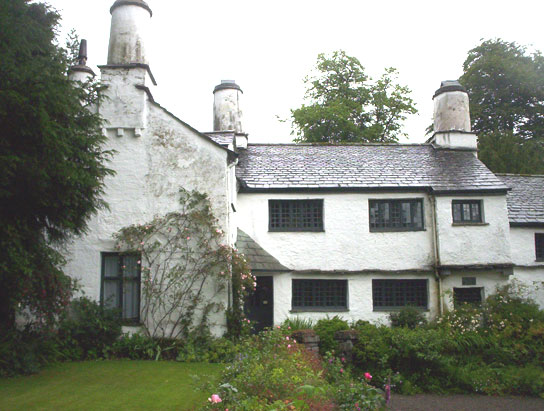
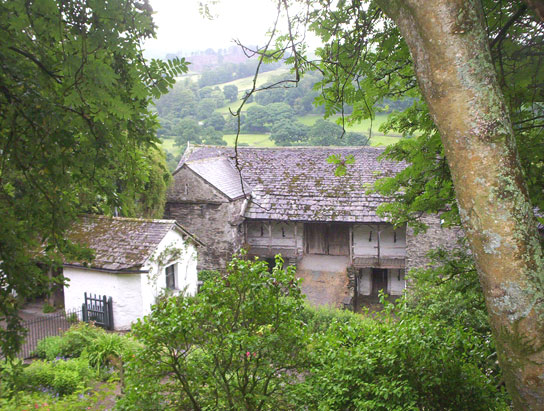
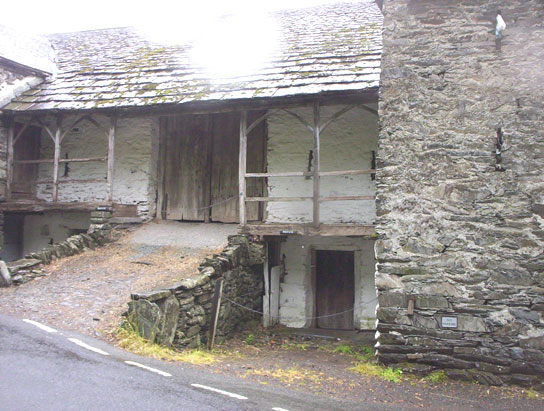
Townend is a rare and remarkably intact survival of the house of a family of yeoman farmers. The house largely dates from the seventeenth century, with limewashed walls, mullioned windows and a slate roof topped with six round chimneys. Just across the lane, dating from the same period as the house but built on a much grander scale, is the farm’s stone and slate galleried barn, with a ramp up to the granary floor and the date 1666 carved on one of the lintels.
The Browne family who lived here for over four centuries were sheep farmers, and seem to have gradually risen in society through careful management of their affairs. The contents were preserved by the last George Browne, an antiquarian and woodcarver, some of whose intricate carving remains in the house.
Much of the attraction of Townend lies in its contents, which reflect the Browne’s life and interests over several generations. There is a little library, with fiction, angling and farming periodicals, and a wealth of heavy oak furniture. Various old-fashioned rooms remain much as they were. There was a real fire burning in the kitchen on the day I visited.
The small garden has been re-created as it was in the Edwardian era.
Well worth a visit if you are in the area. It takes an hour or two to go round and see everything. Parking is some distance from the farmhouse.
Torre Abbey, Torquay, Devon
There was originally an Abbey of the Premonstratensian Order here, but after the Dissolution of the monasteries, the remains of the buildings were converted into a large rambling house, owned for centuries by the Cary family. The Abbey, by now largely Georgian in character, was purchased by the local council in 1930 for use as an art gallery. The building is said to be divided into 122 rooms, rambling over 20 different levels and with 265 steps. However, in recent years the building was found to be in need of urgent major repairs, and was closed for a time, re-opening in 2008.
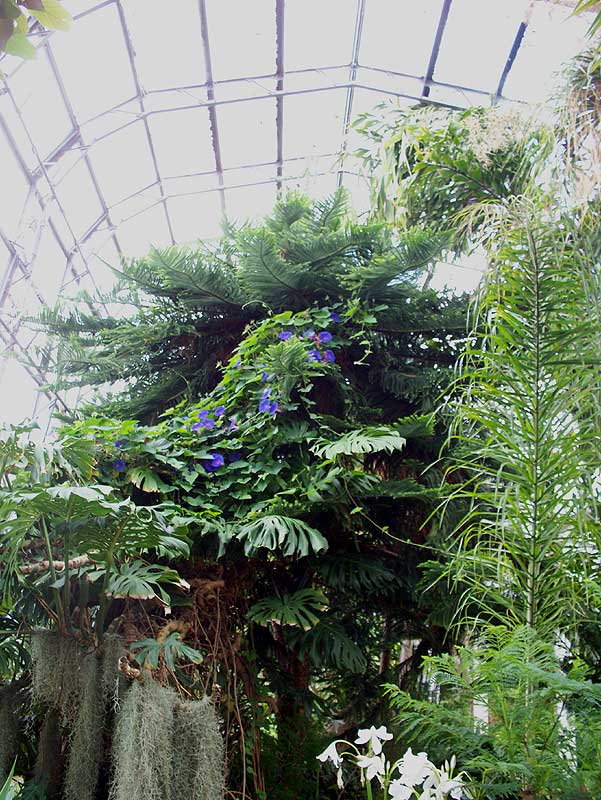
Today, the Abbey houses an enlarged art collection, including Pre-Raphaelite paintings by Holman Hunt and Edward Burne-Jones, and sculpture by Frederick Thrupp. In the gardens are some abbey ruins and a hothouse.
Adjacent to the house is the historic Spanish Barn.
The abbey is well worth a visit, both as a historic house and as an art gallery. One can get lost wandering around a large number of rooms at various different levels.
It is possible to visit Torre Abbey by train, as it is an easy walk from Torbay station.
Revisited May 2022
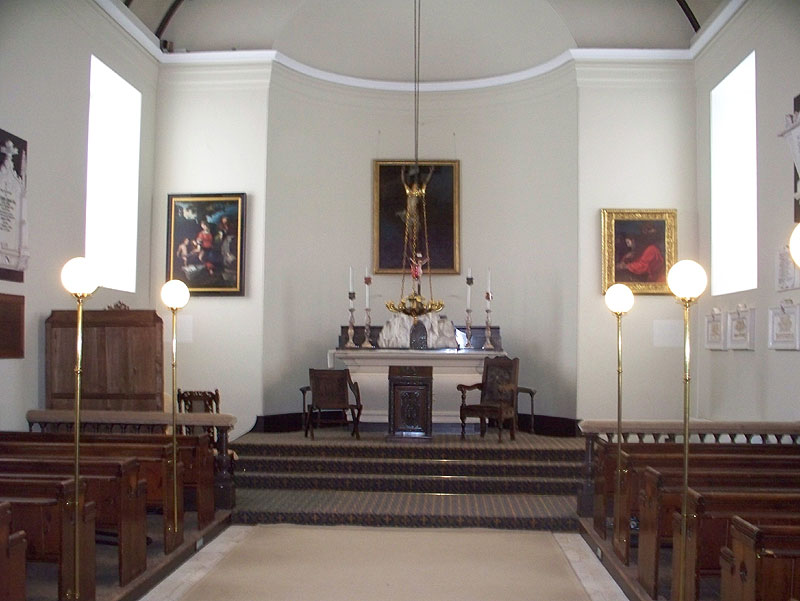
Oldway Mansion, Paignton, Devon
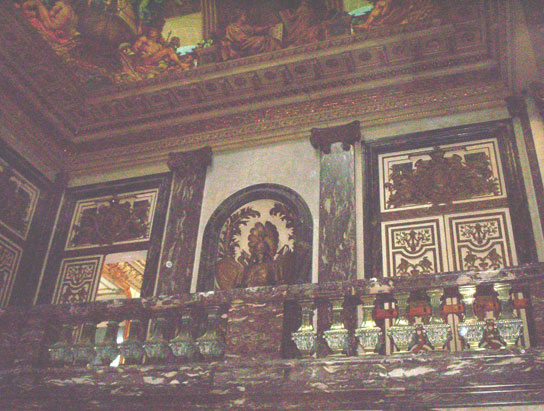
The Oldway Mansion was built around 1875 by Isaac Merritt Singer (of sewing machine fame) and remodelled by Paris Singer, his 3rd son, in 1904-7. The remodelling was intended to make the house resemble the Palace of Versailles. After use as a hospital in WWI, a country club, and a training centre for RAF cadets in WWII, it was acquired cheaply by Paignton Urban District Council, who use most of it for civic offices.
Oldway Mansion is set in 17 acres (69,000 m2) of gardens, which are laid out on an Italian theme by the French landscape gardener Achille Duchesne. Beneath the eastern elevation of the building is the maze, which consists of dwarf box hedging and flower beds. To the south of the mansion there is the grotto garden where a waterfall passes over a rocky cave into a pool below. The grounds of the mansion contain many sub-tropical plants and shrubs.
The mansion and its grounds can be visited free of charge by members of the public, and it is one of the most popular tourist attractions in Torbay. The mansion has a small museum with exhibits linked to the building’s history, including antique Singer sewing machines. Oldway Mansion is a Grade II* listed building.
In May 2010, it was reported that Torbay Council had reached an agreement with the property developers Urban Splash, which will transform Oldway Mansion into a £10million 85-bed hotel, and build around 160 homes on the site. The contract was valued at £1 million and allowed for around £3 million of repairs needed at the mansion. Torbay’s mayor Nicholas Bye supported the plan, while opposition councillors expressed concerns that the site had been undervalued.
Bastards!!
is my immediate reaction to this news, coupled with a suspicion that Torbay Council’s next move is to squander tens of millions on a shiny new prestige office block for themselves.
(If you think my reaction intemperate, reflect on how much public money councillors squander on new prestige offices for themselves given half a chance. Newham council reportedly spent £111 million on theirs, and if you Google you might find an even more outrageous example.)
As of Sept 2011 the mansion and grounds were still open to the public. I urge you to go and visit the place while you still can, and if you live locally, to protest loudly and rudely against the plans.
When I visited the site in 2008 (free of charge), the mansion looked extremely impressive on its slightly elevated site. Inside, the Versailles-style décor of the hall and staircase is gob-smacking, but not much else of the interior is on view. Outside there are large and well-kept formal gardens, which complement the house, and a round building, the Rotunda, which was built in 1879 and used for horse exercising. The Mansion can be visited by train, though it’s a bit of a tramp from Paignton railway station.