Panacea Museum, Bedford

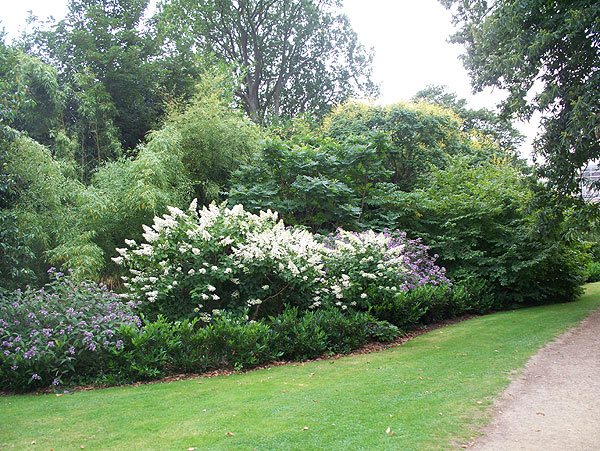
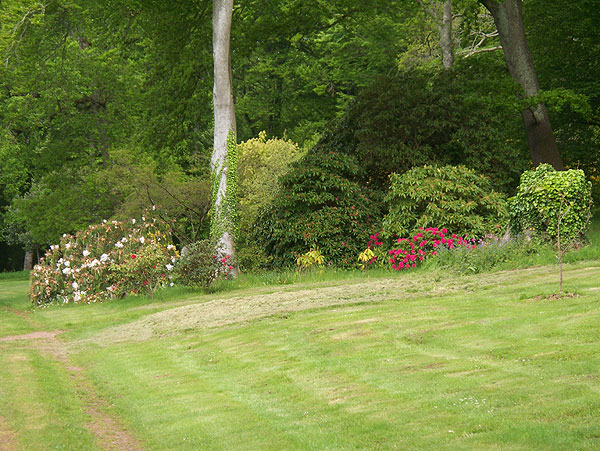
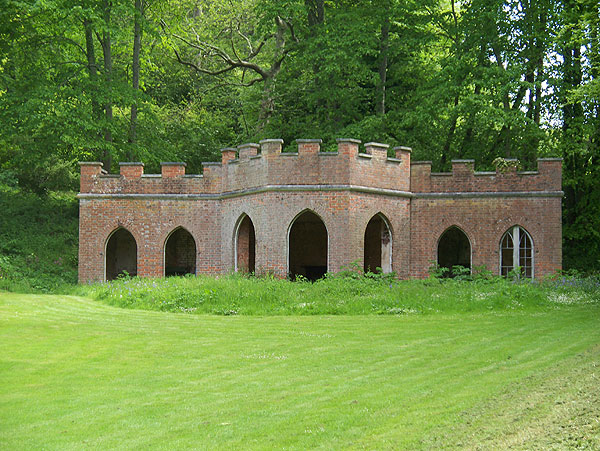
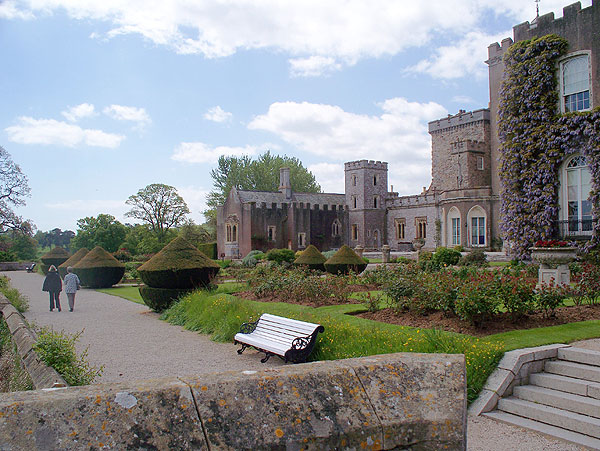
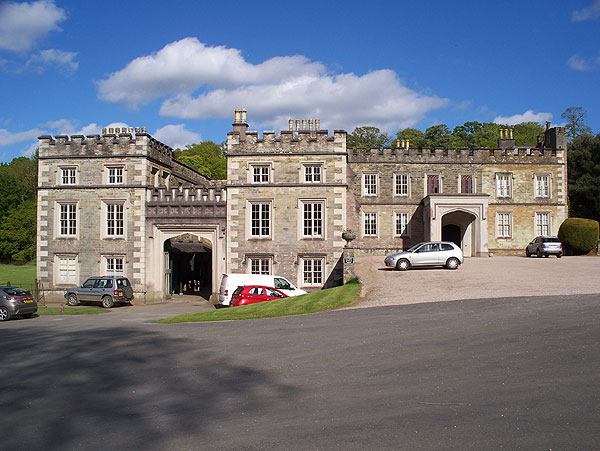
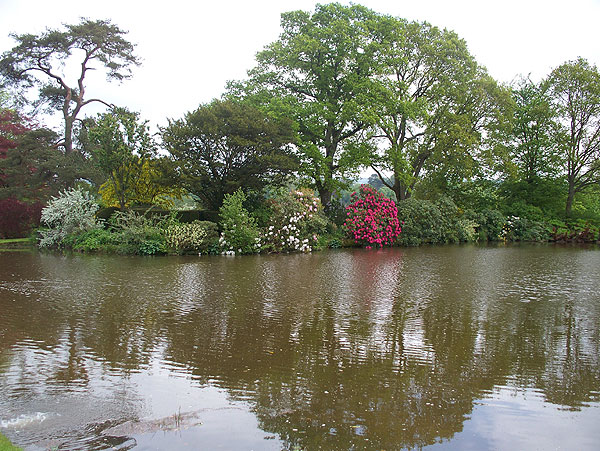
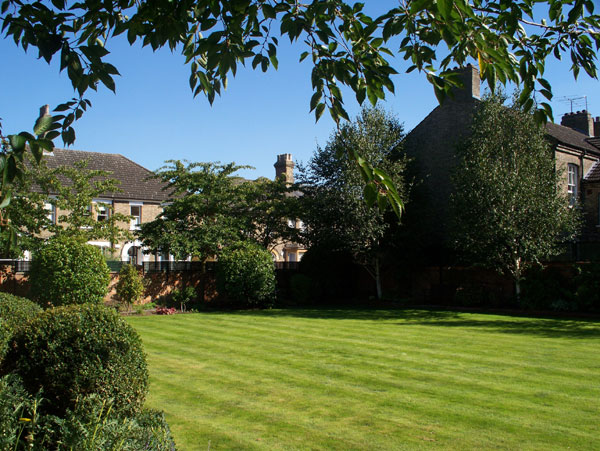
Panacea Society grounds Society grounds (above)
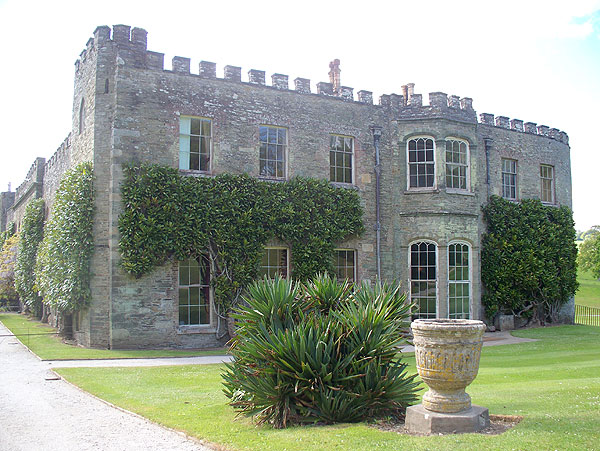
The Panacea Society was founded in 1919 by Mabel Barltrop, the widow of an English clergyman. The Society believed that she was a modern prophet and that a millennial event bringing in a thousand years of peace and happiness would soon occur. The members were inspired by the writings of Joanna Southcott, a prophetess living about 100 years earlier who predicted a messiah would begin the millennium in England.
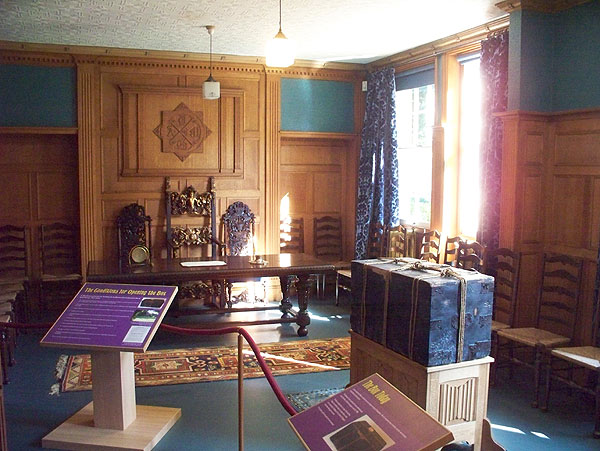
The Society was best known some decades ago for its national advertising campaigns to open ‘Joanna Southcott’s Box’. The property at Bedford included accommodation for 24 bishops at a high-profile opening ceremony. The Bishops of England declined repeated requests to attend a three-day ceremony of box opening.
Another activity of the Society was the distribution of materials for making holy water – an universal panacea.
In the inter-war period there was an active community of Society members at Bedford taking part in religious services, but nowadays the main activities of the Society seem to be maintaining the Museum and administering a substantial portfolio of property and assets bequeathed to the Society by deceased members.

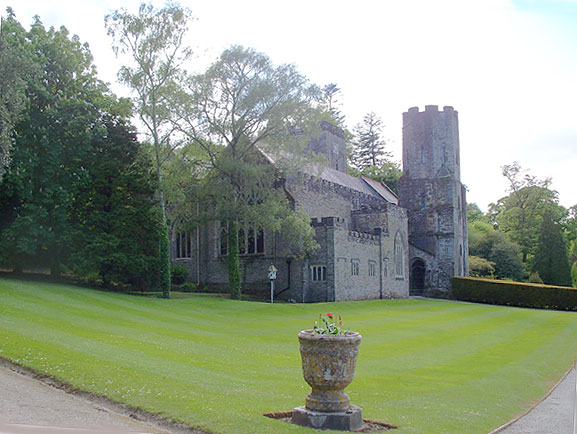
The Museum site, discreetly located in Victorian villas at the centre of Bedford near the Castle site, contains the Founder’s house, the Bishops’ accommodation, the Chapel and gardens.

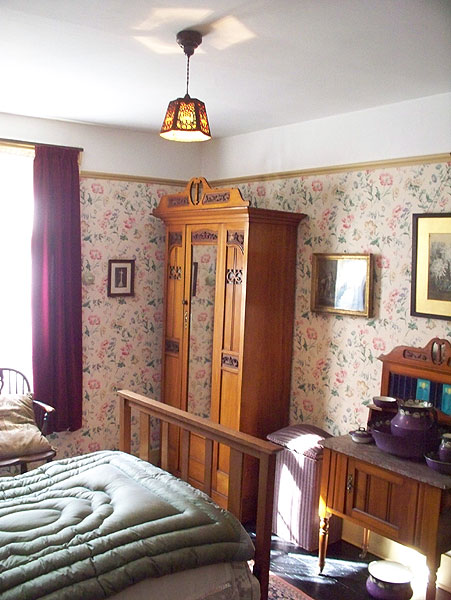
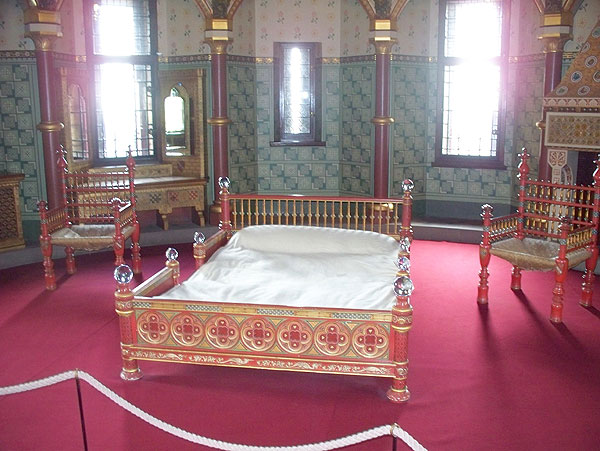
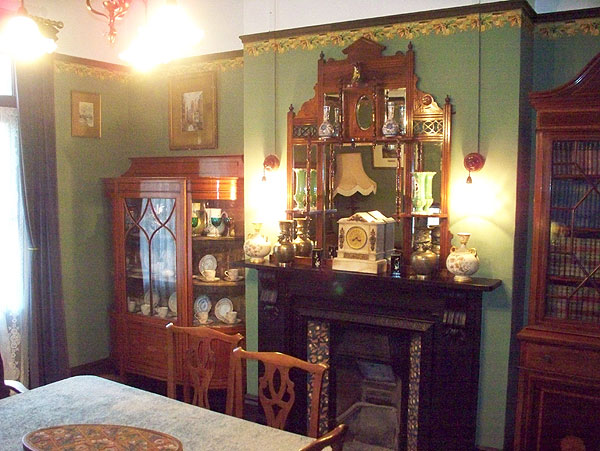
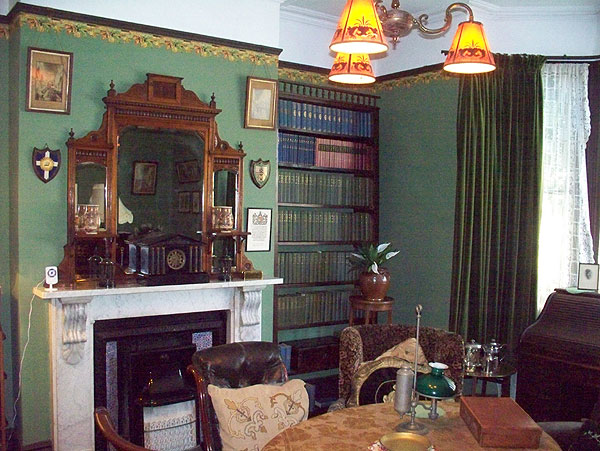
The Founder’s House has been arranged as it was in the 1930’s, with much of the original furniture. The contents reflect late-Victorian and Edwardian fashions.

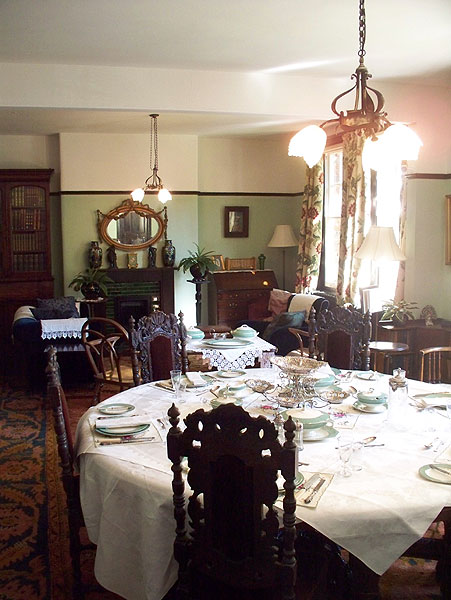
The larger building, Castleside, was intended to be used for the box-opening. Most rooms are now used as exhibition spaces, but a few are fitted out to represent their original functions: a sitting room, a bedroom, a bathroom, and the box-opening hall.
Thumbnails:
Founder's house room
Founder’s house
Founder's house room
Founder’s house
Founder's house room
Founder’s house
Bishops' meeting room and 'box'
Bishops’ hall and ‘Box’
Castleside dining room
Castleside room

Petworth House, West Sussex

Petworth_8842 National Trust
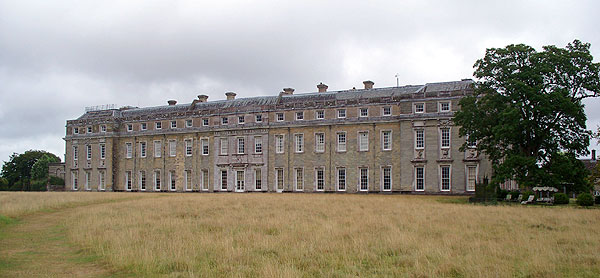
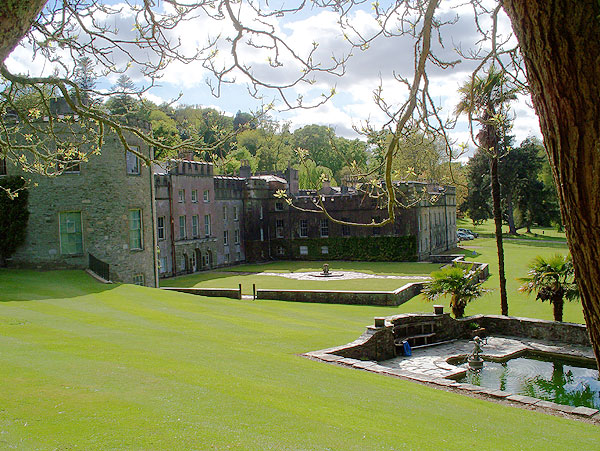
Petworth is a vast house with an important collection of paintings. The service block and servants’ quarters are across the courtyard, and there is a large park with lake.
The house was rebuilt in 1688 and altered in the 1870’s.
The artist JMW Turner was a frequent visitor to the house and guest of Lord Egremont, and the collection includes 20 of his paintings. The house features in the movie “Mr Turner” and was used as a location.
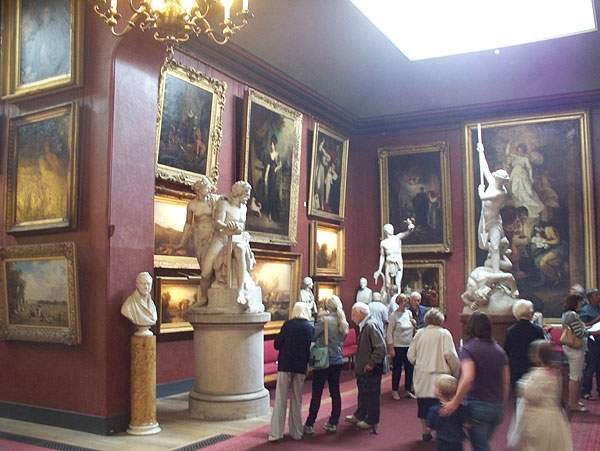
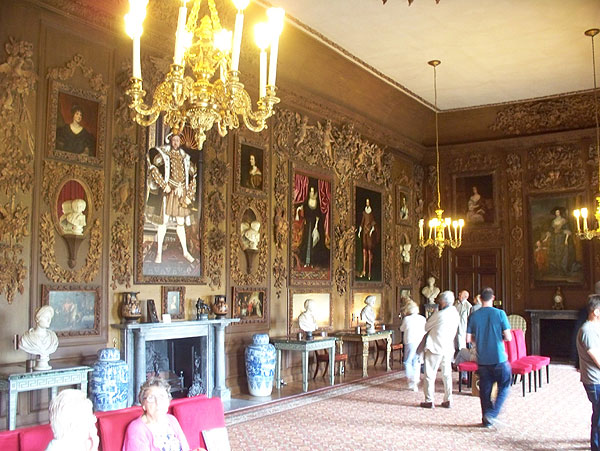
Most of the grand rooms on the ground floor are devoted to the display of paintings and sculpture, and the north end incorporates a purpose-built gallery. On some days an extra two rooms at the south end of the ground floor are opened.
The historic kitchen block, built in the 1750’s, is well preserved and the ground floor rooms can be entered. Some rooms are now used for shop, cafe and restaurant facilities.
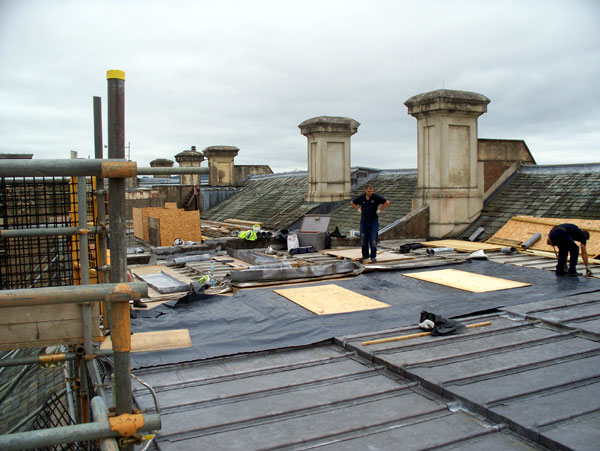
At the date of visiting, the roof of the main house was undergoing repairs and a Roof Tour (cost £5) was available, which gives a great view of the works and of the surrounding rooftops and countryside.
There is a lot to see and I spent over 4 hours there (not including the park).
If driving through the town, beware the tricky one-way system, especially if following a sat-nav. The Petworth NT carpark is distanced a fitness-inducing walk from the house. There is another carpark at the far end of the great park.
Thumbnails:
Roof
Roof
Chapel interior
Chapel
Gallery
Gallery
Grand room
Grand room
Beauties
Beauties
Garden
Garden

Stonor, Oxfordshire

House Front Privately Owned.
Stonor is a long red-brick house facing a fine grassy park. It has been in the hands of the Stonor family for the last 850 years. The house was developed in stages from c.1280 to 1760. The long entrance (South) front was faced with brick in the 17th century, though the roofline and windows were altered later. The New Hall was subdivided in the 19th century.
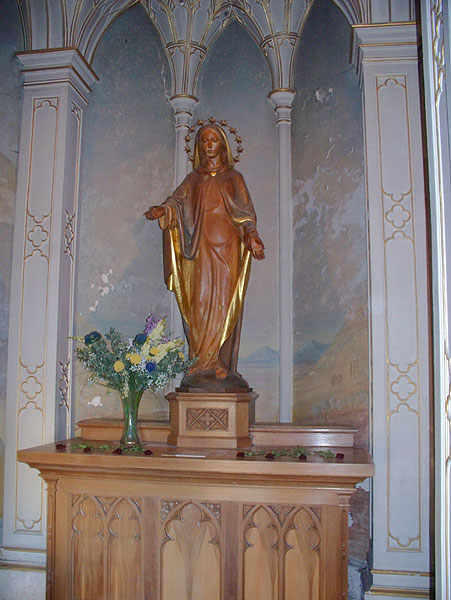
The uniform-looking brick exterior conceals an irregular internal construction, with the older parts being timber-framed. The land rises behind the house to such a degree that the first-floor rear windows are at garden level. Attached at the East end is a 13th century Catholic chapel.
Internally, the house seems a maze of interconnecting spaces. It was emptied of contents during a financial crisis in the 1970s, but the family have recovered some of the original contents and filled the house with fine objects. The more noteworthy rooms are the Drawing Room, the Dining Room, and upstairs Francis Stonor’s room with its unique shell-shaped bed, the Library and the Long Gallery.
The Stone Corridor on the north side is below garden level and has one window looking out onto a small court and the windows of the 1350 New Hall.
After touring the house I found it quite hard, in the absence of a modern floor plan, to remember which room was where. A partial plan is here: 1994 Survey

A marked up plan is displayed in the Stone Corridor. The visitor route on this plan is: tea room (E), hall (B), drawing room (P) and eastwards along front to: Narrow Corridor, Blue Dining Room (C) in frontage, Study (F) behind tea room, upstairs to Francis Stonor’s Bedroom (above F, in front of tea court upper part), the Library (above C, running full width), Lady Camoy’s Bedroom (above drawing room P), Edmund Campion Room (2nd floor, above porch S), Landing (part of central stairwell) Long Gallery (above Stone Corridor U), down central staircase (T), along Stone Corridor at back (U), passing an internal court and returning to tea-court and shop.
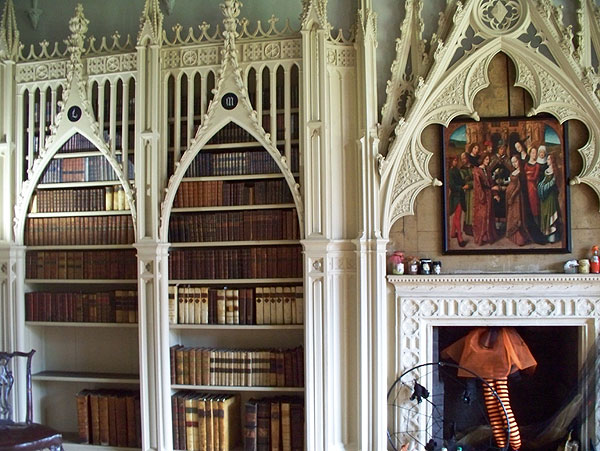
The Gothic Revival Hall is formed out of part of the 1350 New Hall, along with the Drawing Room and a bedroom above. The tea-room (Aisled Hall) is in part of what was the Old Hall.

Outside, do not neglect to visit the Chapel, and the extensive sloping walled flower gardens behind the house.

Overall, Stonor surpasses in interest the nearby National Trust houses of Grays Court and Nuffield Place.

West front & Old Kitchen Garden
North Front & Pleasure Garden
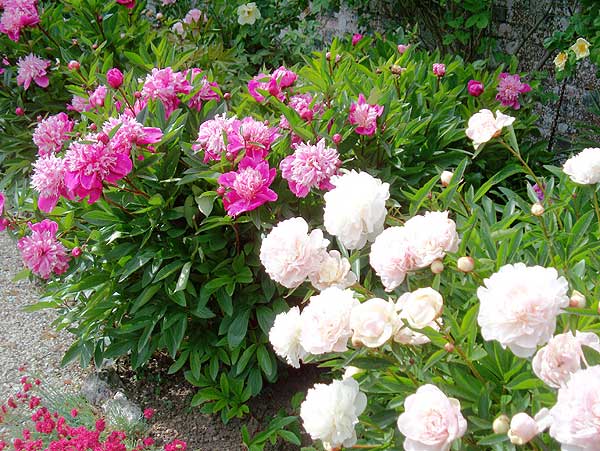
Peonies
Peonies in Pleasure garden
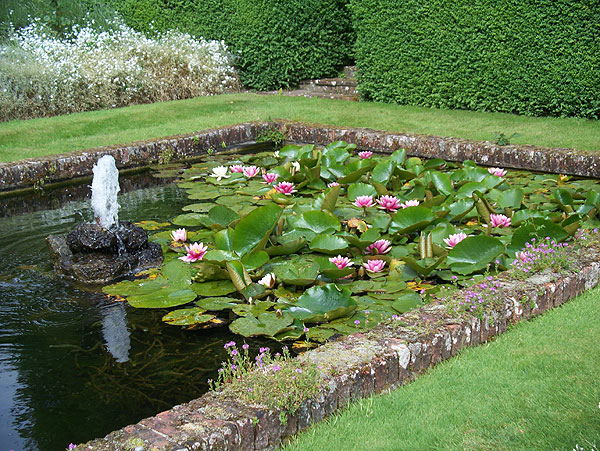
Lily Pond, Pleasure Garden
Lily pond
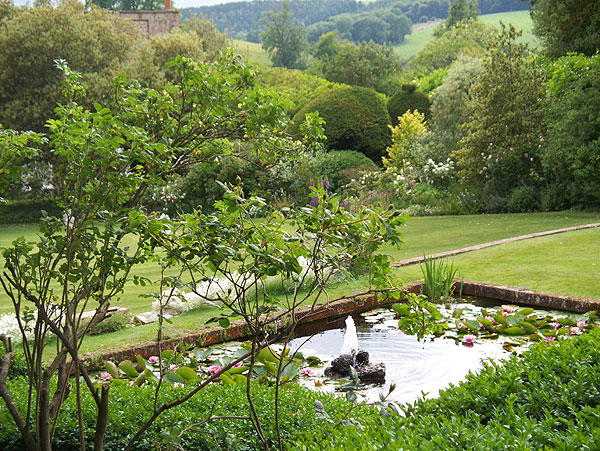
Pleasure garden
Pleasure garden

Powderham Castle, Devon

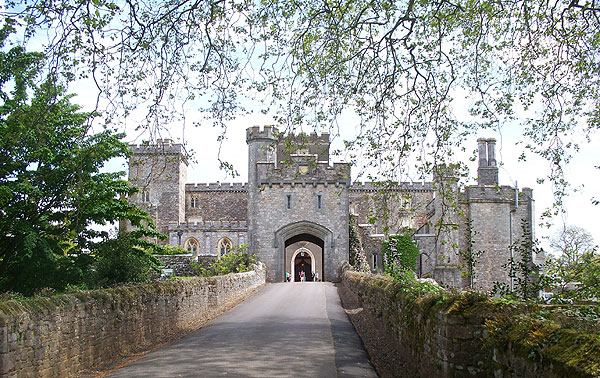
Castle Entrance Privately owned estate
The powerful Courtenay family started building the castle in 1391. It had a hall and six towers, only one of which remains today. Another branch of the Courtenay family laid siege to the castle for seven weeks in 1455, without success.
During the English Civil War, Powderham Castle was initially held for the Royalists, attacked in 1645, and finally taken by the parliamentarians in 1646. The badly damaged castle was not lived in by the family again till 1702.
Sir William Courtenay inherited in 1702 and set about repairing and modernising the castle. He divided the long Great Hall horizontally and vertically. His heirs added the fine plasterwork of the staircase, moved the chapel, built the Belvedere Tower, and added the Music Room, containing the biggest Axminster carpet ever made at the time.
In 1835, William Courtenay inherited and engaged the architect Charles Fowler, who added the State Dining Room, and at the same time changed the main entrance from the eastern side to the western, creating the viaduct and courtyard with the medieval style gatehouse. An older chapel was demolished and the medieval Grange converted into a chapel.
Minor internal alterations and a new entrance on the North side have been made in the 20th century.
Access to the lavish interior is by hourly guided tours. Various rooms on the ground and first floors are shown, the highlights being the staircase and the Music Room. There are a number of amusing hidden doorways.
Immediately outside are the Chapel and the raised Rose Garden. In the estate are various family-themed attractions. Garden fans will find the Woodland Garden and folly well worth seeing, but be warned that this is about a mile (20 mins walk each way) from the castle. I didn’t make it as far as the Belvedere (40 mins each way).
To see the main attractions takes about 3 hours. Families could make a day of it. Powderham is one of the more energetically marketed private estates, and as you drive out you will find that it even has its own shopping centre with food hall and gardening store.

Woodland Garden
Woodland Garden
Woodland garden folly
Garden Folly
Rose Garden & North front

Port Eliot, Cornwall

Entrance front, Port EliotPrivately owned
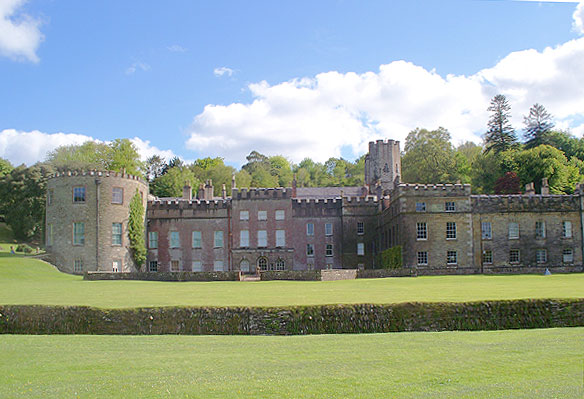
A grand house and grounds near the Saltash estuary. Parts of Port Eliot are extremely old – there are fragments dating from the 4th, 9th, 10th and 13th centuries, but most of the house dates from a makeover by Sir John Soane in the 18th Century. It was previously known as Port Priory. The estuary water used to be closer, but was diverted by a dam in the 18th century.
A notable feature of the contents is a series of family portraits by Sir Joshua Reynolds. They belong to the Plymouth City Museum and Art Gallery, having been accepted in lieu of death duties, but remain in the house on condition that they are available for viewing on 100 days per year. There are a number of fine rooms with contents including valuable furniture – the Morning Room, Drawing Room (library), Big Dining Room and the Round Room. I don’t recall seeing the Conservatory annex.
The Round Room was designed by Sir John Soane and is considered one of his outstanding achievements. It is painted with a 20th century mural by eccentric artist Robert Lenckiewicz, which is regarded as his masterpiece. It depicts dozens of people known to the Eliot family and is an outstanding work. In the same room is a Harley-Davidson motorcycle, restored and presented like an art exhibit.
A look on Google Satellite makes the house plan, with its two almost separate blocks, clearer.
I found that all the house guides (stewards) were knowledgeable and enthusiastic. The house is still a family home, and visitors may see family possessions lying around – and the family dog. There are extensive grounds, which I did not have time to fully explore.
Visiting – the house is about 200 yards north of St Germans village on the B3249. Approaching from this direction you will come on an entrance with gateway and lodges forking to the right, at a small car park. The pedestrian entrance is here. You could park here and walk down past the church, as the house (behind the church) is much closer than it looks. I’m still not sure what they expect car-borne visitors to do – apparently there is another entrance and car park 1Km further on, to the west, which you’d come on first if approaching from the A38. I visited on a day of low visitor numbers (they do have an annual literature festival), and not finding anyone to ask, I drove through the gate and parked in front of the house. There was plenty space and nobody objected.
Important Notice: The owner of Port Eliot is in negotiations to sell the house to a trust run by Prince Charles. The implications for visitor access are unclear, but the interior will no longer look like a family home. As with privately owned mansions in general, the message is: Visit It While You Still Can.
For interior photos see Port Eliot website.

East Front, Port Eliot
East Front
Church from house grounds
Church
North Front, Port Eliot
North Front
Round Room & North front

Downes House, Devon

Private
Moses Gould built the original house in 1692 in red brick. In 1794 James Buller faced the house with pale beer stone and the windows were lowered. In 1840 James Wentworth Buller demolished the back part of the house, which included a brewhouse and built the present red brick back section to contain staff quarters and extra bedrooms for his family of 10 surviving children. (This block can be seen from the car-park next to the house). The wings were also modified in the 19th Century.
In 1910 Tremayne Butler modernised the house. He extended the area which now forms the main entrance, and removed the wall between the old entrance hall and library to form what is now called the Long Hall.
In 1980 service rooms at the back of the house were demolished. They were of no architectural interest and in a dilapidated condition.
The present layout of the house is best seen on the Google Satellite view.
Interior: The tour starts at the Front Hall (present entrance hall) which contains portraits etc. Beside it is the Museum, with mementos of Sir Redvers Buller. Further on is the Panelled Room, with shields. The paneling above the fireplace is older than the house.
The Main Staircase is one of the major features of the house, with a 19th century window containing medieval church stained glass, and a fine ceiling of plaster over copper supports. At the top of the staircase a Bedroom is on show with a four poster bed, which came originally from a Portugese palace on the west coast of India.
The Long Hall now contains many portraits of the Buller Family. Beyond it, the Dining Room occupies the East wing. It contains spears and shields from the Zulu and Ashanti wars.
Most famous occupant: General Sir Redvers Buller, VC, GCB, GCMB, 1839-1908. A local hotel (now a Weatherspoons) is named after him.
Downes House is worth a visit to see the main staircase, dining room and other contents.
The house is still used as a home by the London-based owners at weekends.
Note that the only admission is at 2.15 PM, by guided tour. We were not encouraged to walk around the grounds, but the aerial view indicates that there is not a lot to see.
Pictures at Downes Estate

Cadhay, Devon

East Front, Cadhay
East Front
Private
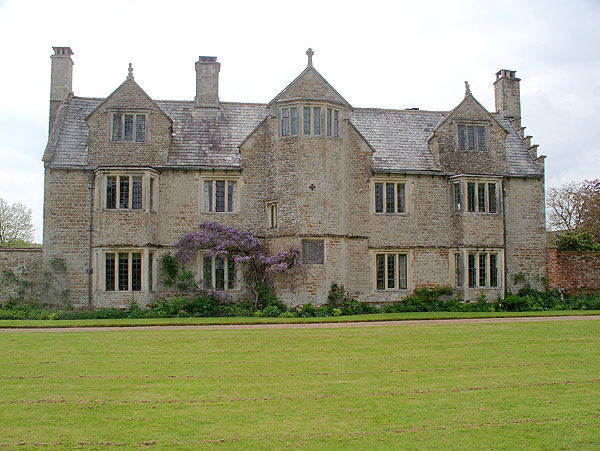
Cadhay was mostly built in the 1540s as a Tudor house with hall, screens passage and domestic wings, by John Haydon, a lawyer who grew rich dissolving monasteries. His nephew added a fourth range with a Long Gallery, enclosing the courtyard.
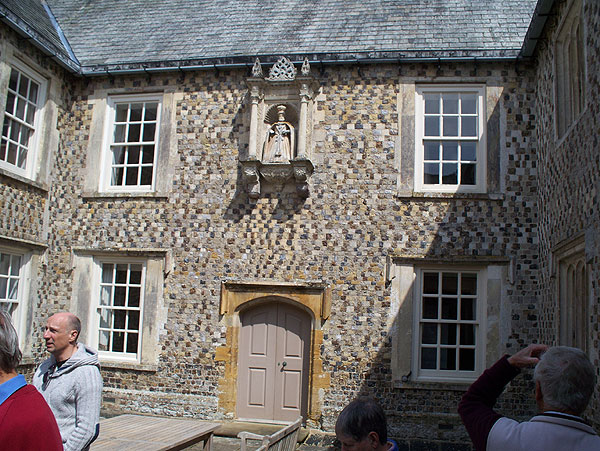
The courtyard is the pride of the house and contains statues of Henry VIII and his three monarch offspring, Edward, Mary and Elisabeth. The stonework is laid checkerboard, of limestone alternated with local ‘chert’ flint.
A later owner, William Peere Williams, altered many rooms and put an upper floor in the Great Hall, forming a dining room below and the Roof Chamber above. The front was also refaced in smooth stone.
A Cambridge academic, Dampier Whetstone, bought the house in 1910, rescuing it from agricultural use and re-instating its Tudor character. The Williams-Powletts bought the house in 1935 after leasing it, and the current owner, furniture maker Rupert Thistlethwayte, a direct descendant of the Pouletts whose coat of arms appear above various fireplaces, has restored the house.
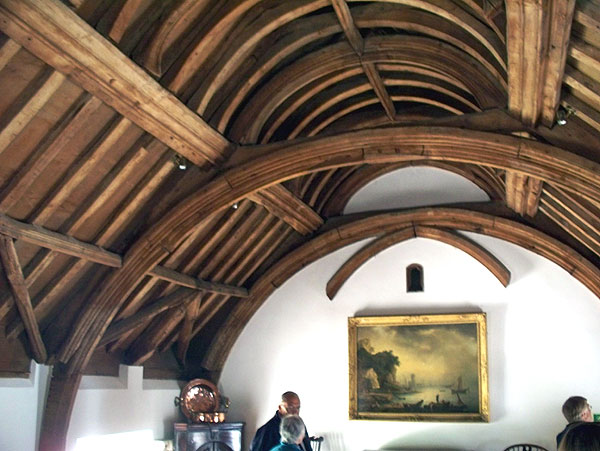
The rooms and contents are of some interest. Most rooms are double aspect with interconnecting doors (no corridor). The Long Gallery, a curiously narrow room with a barrel vaulted ceiling, acts as a kind of family museum. The Roof Chamber has a notable but much altered beamed ceiling.
Outside are some fine gardens, to the side and rear, also some ponds. A walled garden is divided into allotments.
The house is opened to the public on Friday afternoons. Tickets for the house tour and gardens are sold at the tea-room. For the rest of the week, the house is let out as a self-catering unit for wedding parties, etc.
Fish Pond, Cadhay
Fish Pond
Courtyard, Cadhay
Courtyard
Roof Chamber roof, Cadhay
Great Chamber roof
South front, Cadhay
South front

Lytes Cary Manor, Somerset

Lytes Cary front This medieval manor was originally the family home of Elizabethan herbalist Henry Lyte. A copy of his book on herbs can be seen in the hall. In the 1750’s the Lytes were forced to vacate the house, which became partly ruinous. Sir Walter Jenner and his wife bought the house in 1907, restored the medieval part of the house and built a new family wing on the east side.
Today, visitors can see the medieval part of the house, with period contents collected by the Jenners. A number of downstairs rooms and three bedrooms can be seen. Outside is the chapel, which predates the house and, has no direct access from the house.
Lyte’s original gardens have long disappeared, but the Jenners created gardens in an Arts and Crafts style, and the gardens were further developed in the 1960’s onward by National Trust tenants the Chittendens. The garden contains a formal section with lawn and yew bushes, and other more informal parts.
While of modest size, the house contains various rooms and contents of interest.

Lytes Cary North Front
North front
Lytes Cary West Front
West Front

Strawberry Hill, London

Side of house
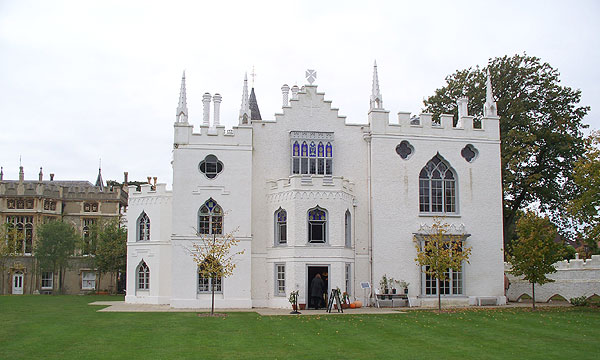
Strawberry Hill is the first Gothic Revival house in England, built by Horace Walpole, son of the famous politician Sir Robert Walpole.
Horace Walpole is also known as the author of a Gothic romance ‘The Castle of Otranto’.
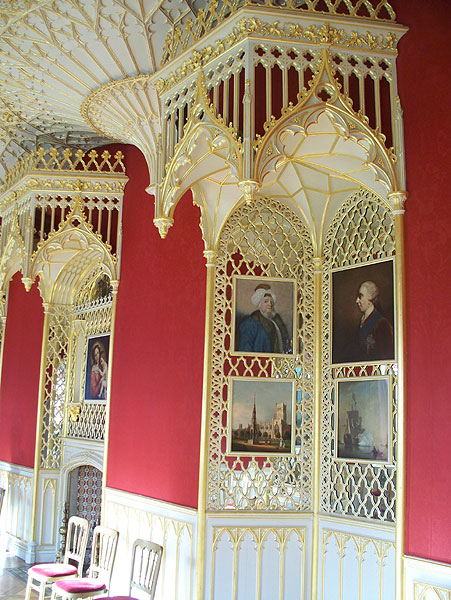
Walpole acquired the pre-existing house in 1747 and adapted and extended it between 1747 and 1770 as a Gothic house. He did not intend it to last beyond his lifetime, but remarkably, much of the exterior and interior detailing has survived to the present day.
The house has recently been the object of a major restoration, which included taking down and reconstructing the south-west corner, painting the exterior in the original white, and returning the various rooms to their 18th century appearance. Some work is still in progress, but the major rooms are complete. Fortunately, the house was one of the best documented in England.

Visitors will note that the house is attached to a brownstone crenelated building, part of the adjoining St Mary’s College. The immediately adjoining part is a 19th century house extension to Strawberry Hill, built for Lady Waldegrave. The next section appears to be Walpole’s 18th century “New Offices” or stable block, which Lady Waldegrave converted into bedrooms.
Further away in the College grounds and on the Waldegrave Road side of the range of buildings is Walpole’s Chapel, under a tree at the other side of the car park and behind the large 20th century Chapel. The Chapel interior dates from 1954.

Strawberry Hill is a very interesting building and well worth a visit. The house is an easy walk from Strawberry Hill rail station. Car parking at the house is limited and permit parking applies in adjoining streets.

Detail in Gallery
Detail in Gallery
Detail in Library
Library
Chapel altar
Chapel altar
Chapel wall
Chapel wall

Castell Coch, Wales

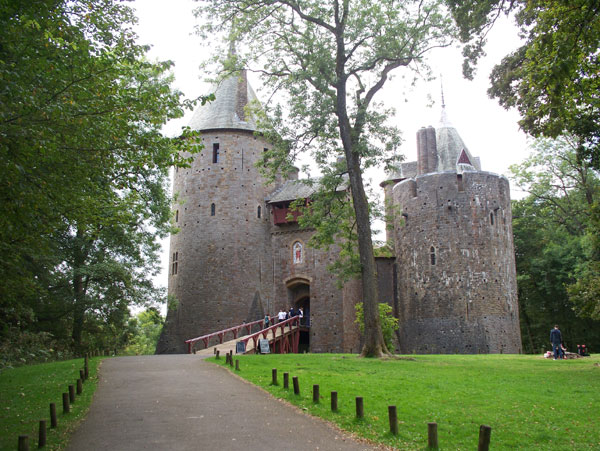
Castle exteriorCADW
Castell Coch was built for the immensely rich 3rd Marquess of Bute, who employed William Burges as his architect and designer. They conceived the idea of rebuilding the ruined medieval Castell Coch and fitting it out with a stylish Victorian interior. Work went on from 1875-91. Burges used the stumps of the original towers and curtain wall, but above that level used his own imagination. In particular, the striking conical tower roofs cannot be references to any original British roofs.
Two of the towers are fitted out as a lavish country home and banquet venue, while the third tower, with a plainer interior, was probably used to accommodate servants. There is no guest accommodation, and it seems that the completed castle was rarely used.
The first sight of the castle, with its unequal round towers and pointy roofs, is pure Disney :-). The internal courtyard, with its covered walkways, may not strike visitors as being particularly medieval, though such features were known in the medieval period.
Indoors, the banqueting hall with its painted walls and ornate barrel boarded ceiling is an impressive room. Next door is the vaulted and multi-sided Drawing Room, probably the finest room in the castle. Above the fireplace is the ‘Three Fates’ a brightly coloured piece of statuary. The lower parts of the walls are paneled. Above that the walls are painted with a design of various animal fables. Above that are galeried recesses, and above them the vault with birds and stars.
Another impressive room is Lady Bute’s Bedroom, a large rounded room surmounted by a mirrored dome. In the lower part the decoration is Moorish, while in the dome the five rows of painted panels of plants and animals suggest the Aesthetic movement.
Also of note are Lord Bute’s Bedroom and the children’s room.

I would suggest visiting Castell Coch followed by the more extravagant Cardiff Castle. It is possible to look around Castell Coch in an hour and a half, so it is easily possible to visit both in one day.
If arriving by car from the south or east, the route involves going up the busy A470 dual-carriageway, coming off at a roundabout and then going south again on a parallel road before passing through the village of Tongwynlais. If using a sat-nav, do not turn right into Catherine drive from Castle Rd – the castle entrance is nearby on the left.

Drawing Room dome
Drawing Room
Lady Bute's Bedroom
Lady Bute’s Bedroom