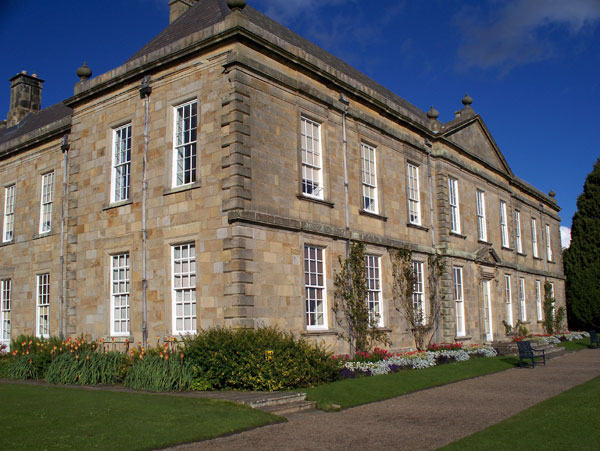
Wightwick Manor, Wolverhampton

Wightwick Manor (E)
National Trust
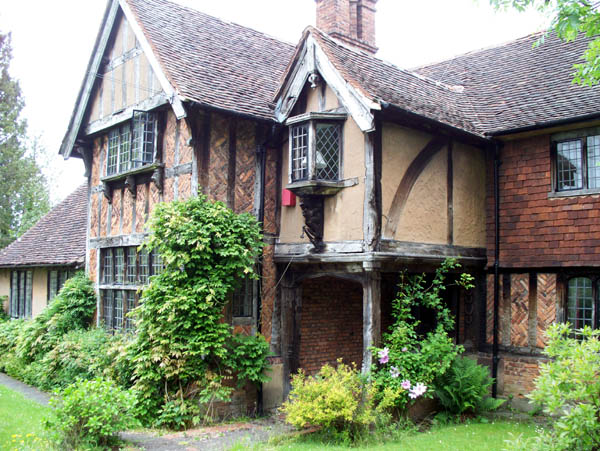
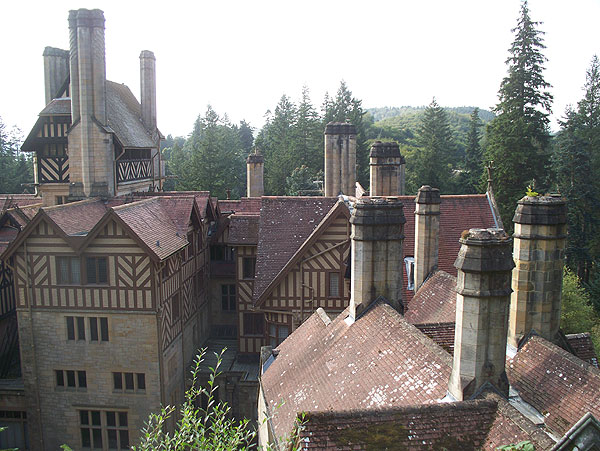
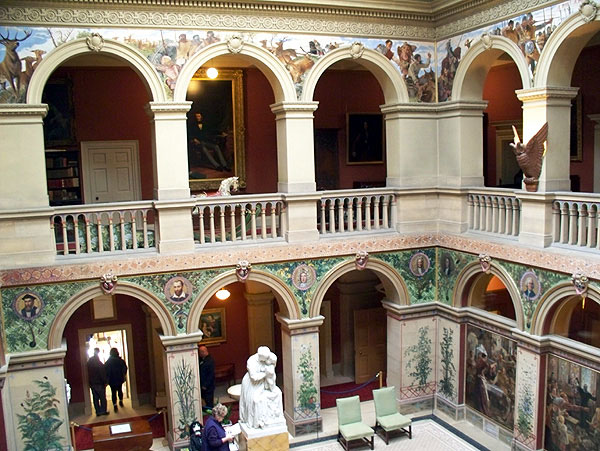
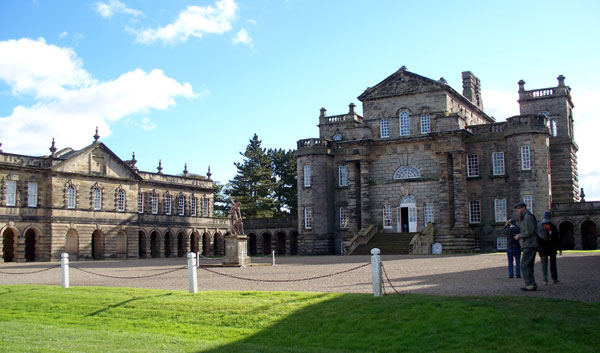
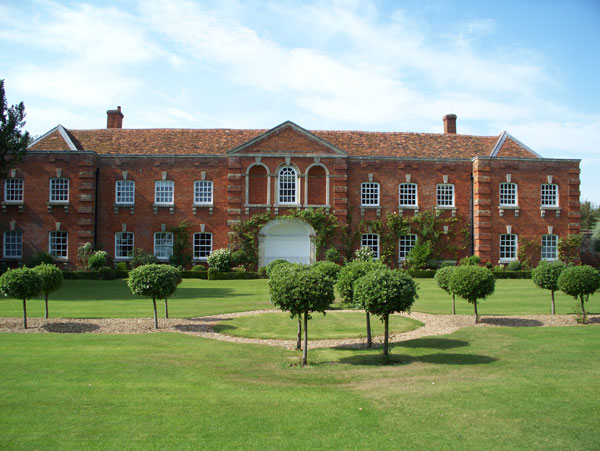
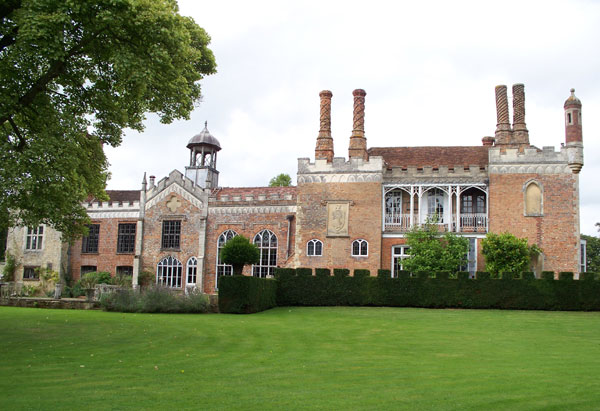
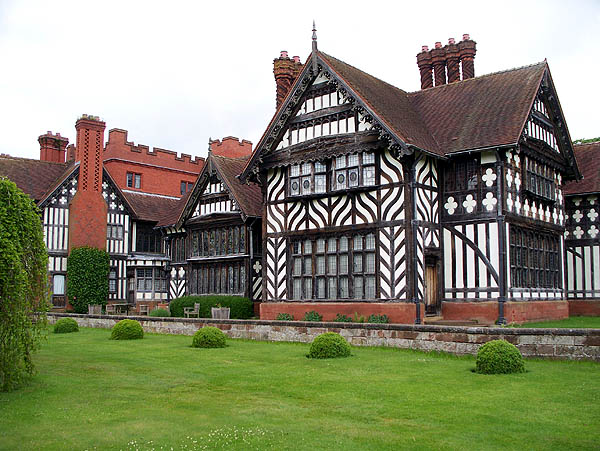
Wightwick Manor is one of the finest surviving examples of a house furnished under the influence of the Victorian Arts and Crafts Movement. Thought built in the late nineteenth century, it is designed to look like a late medieval house, with its external black-and-white timbering and small-paned leaded windows. The eastern half, which was built later, is the more richly decorated, with stripes, swirls and quatrefoils, said to be in the style of Tudor buildings of the Welsh Marches.
Inside, the house has a more or less medieval-style interior, with all the latest 19th century conveniences. The contents, collected at various periods in the house’s history, include Pre-Raphaelite art and other collectibles from the Victorian period.
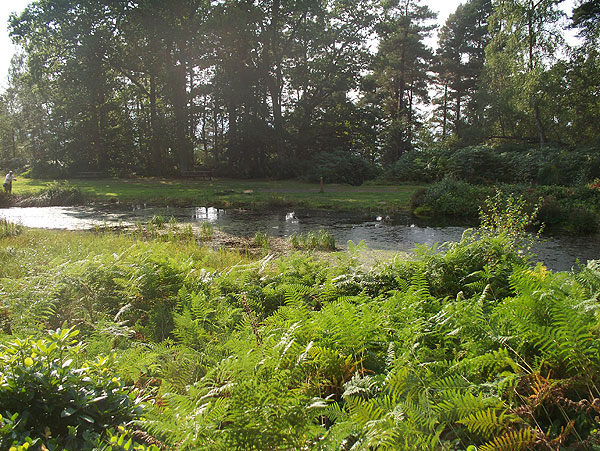
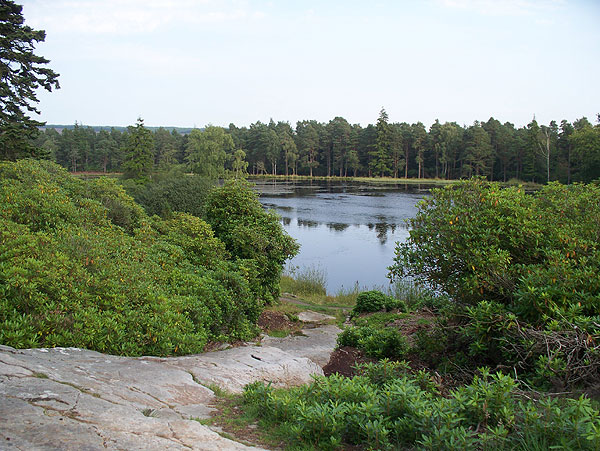
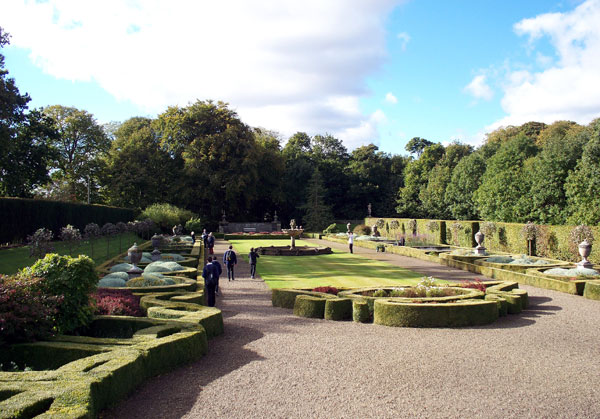
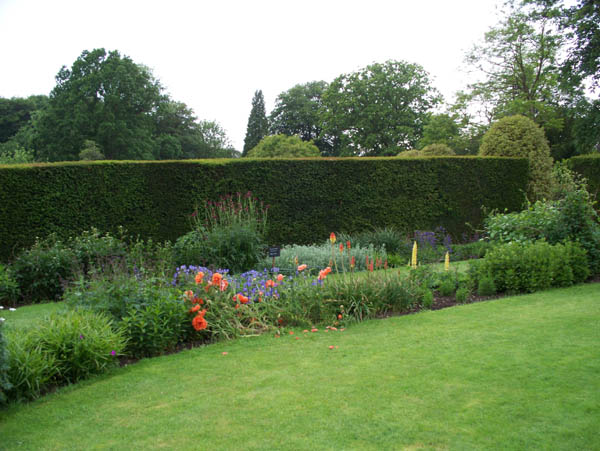
The formal gardens and grounds of 19 acres include two lakes, a vegetable garden and woodland.
Wightwick Manor (pronounced “Wittick”), inside and out, is a must-see for fans of Victorian art, design and architecture.

A few miles away I stumbled on the “Tudor House” at Histons Hill, Oaken, by the side of a busy road. It looks as if it has been crumbling there since the Tudor period, but in fact was built during the 20th century by the architect KH Smith, using timbers from several ancient buildings.
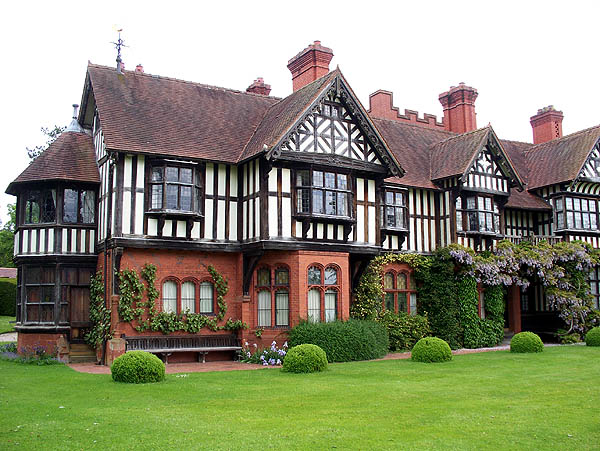
Wightwick Manor (W)
West ext.
Wightwick Manor formal garden
Garden
"Tudor House", Oaken
"Tudor House"

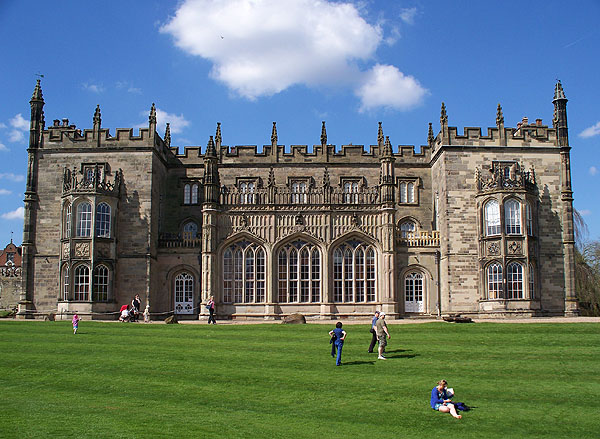
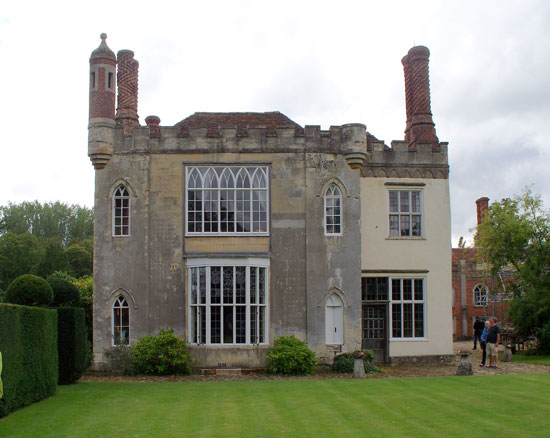
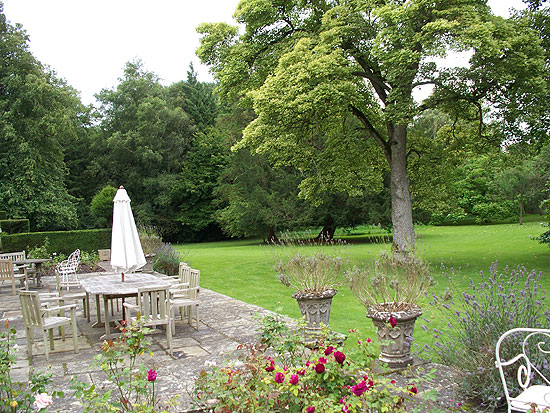
Arbury Hall, Warwickshire

Entrance front from garden
Private.
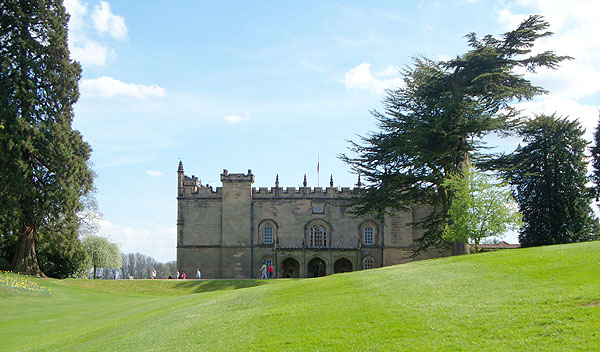
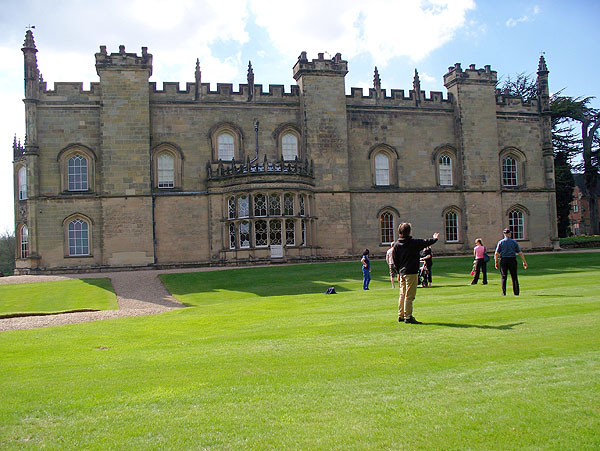
Arbury Hall was originally built on the site of a 12th century Augustinian Priory. The Elizabethan house was remodelled in Gothic style for Sir Roger Newdigate during the second half of the 18th century. The exterior of the old hall was entirely encased in stone. The fine gardens also date from the 18th Century.
The Newdigate family has owned the house and estate since 1586.
The author George Eliot was born on the estate, and a fictionalized version of the house and estate appears in her work.

The house is a splendid example of Gothic Revival style, a style which later influenced much of Victorian architecture. The ceilings in the principal rooms are fan vaulted in plaster in a manner apparently inspired by Westminster Abbey. In the principal sitting-room the ceiling is more ornate and more high-relief than one could believe possible if one had not seen it with one’s own eyes. Above the present entrance front is a long gallery with many curios on display, including a collection of antique firearms and native weapons.
Views of the house interiors can be found on the estate website.
The house and gardens are infrequently open to the public (Bank Holiday Sunday/Mondays only in 2013).

The entrance to the house is via a gateway in Stockingford village (B4012/B4112). A very long driveway follows; beware the ill-marked speed bumps!
Admission to the house is by guided tour only. The Spring Bank Holiday opening proved popular, and visitors had to queue for half an hour or more for a tour. (Other establishments would have issued timed tickets). The gardens, which (in spring) feature many flowering trees, are well worth seeing. There are several lakes.

Arbury Stables
Stables
Arbury, side
House
Arbury - dinng room side
Facing lake
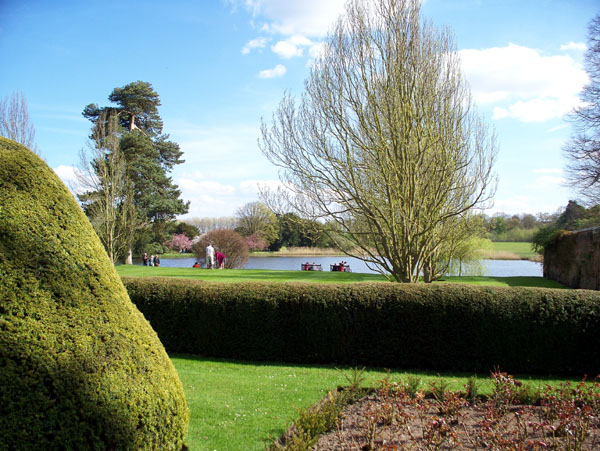
From garden towards lake
From formal garden
Click on images to enlarge

Knole, Kent

National Trust
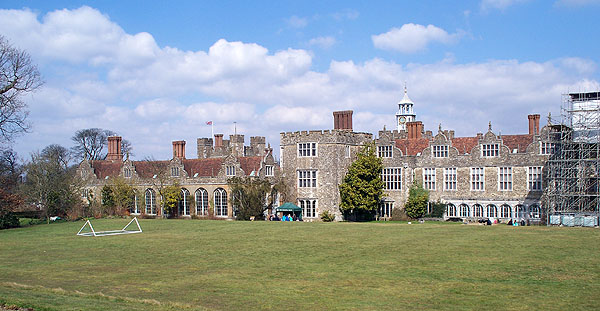
One’s first impression of Knole is that it’s big. The frontage is very long, and is exceeded by the depth, and there are seven courtyards. On the approach one can also see part of the massive wall of Lord Sackville’s walled garden.
Passing through the arched main entrance, one enters the Green Court, with some fine frontages. Visitor reception and the garden are to the right. Note that after checking in (or paying) at the visitor reception, one is expected to present one’s ticket at the garden entrance (if open) and at the Great Hall.

It’s worth making the effort to come on a Tuesday, when Lord Sackville’s walled garden is open. The walled garden is the size of a municipal park and features trees rather than flowerbeds in a variety of differing areas. It wraps around two sides of the house, (SW & SE) and these exteriors can not be seen from outside the garden. (Actually when I visited, the south end of the house was wrapped in scaffolding and plastic, and not visible anyway.) The wider park (huge) is rather bare and brown by comparison.

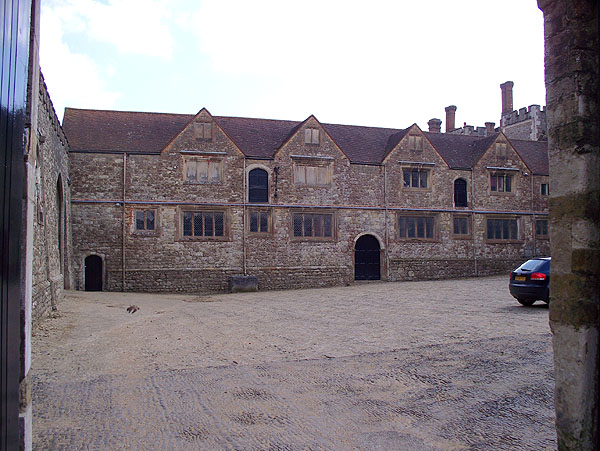
The Stone Court has some fine frontages. The Great Hall is an impressive room with a fine carved screen. Beyond it, only a fraction of Knole is open to visitors, mostly in areas behind the SW and SE frontages. There is a large collection of paintings, and some very old furniture collected from Royal palaces, and a collection of fine china. There is a room with furniture made of silver. The house dates from the Tudor period, and has not been radically remodelled since, so expect everything to look … old. At least one area is alarmed, so don’t let your brat run around unchecked 🙂

Be aware that the interior of the house is unheated and draughty, so if you visit on a chilly, breezy spring day, dress as for outdoors, as it will be as cold as the park! The old ‘Estate Office’ is the only visitor room that is properly heated.

If you have time, walk around the outside towards the tea-room to look at the north exterior and peer into the Stable Court (private).

Knole is a healthy 1.5 mile walk from Sevenoaks railway station, mostly uphill. Parking at the house is £4 (NT members free).

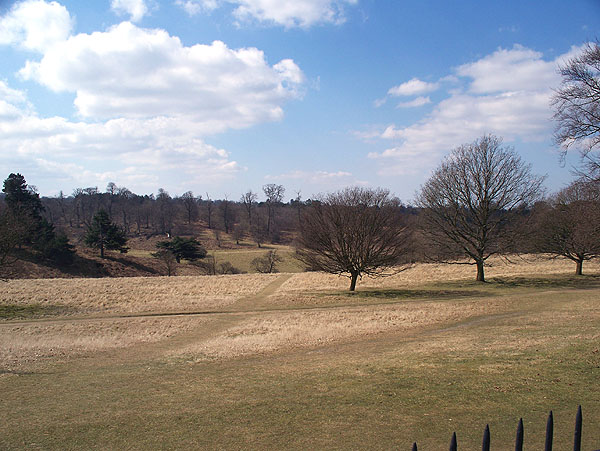
Knole parkland
Knole parkland, west
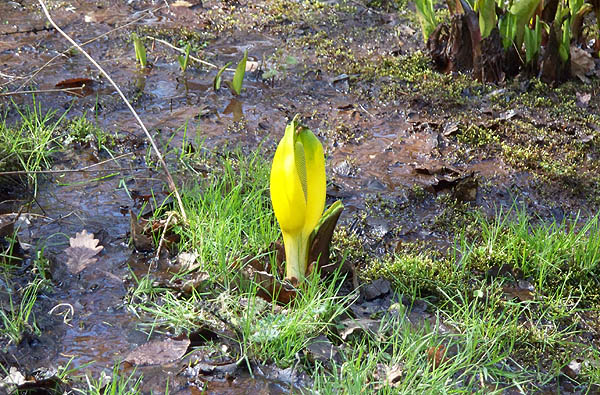
Marsh plant in walled garden, Knole
Garden, Marsh plant
Knole, SW front
Knole, SW front
Knole,  Stable Court
Stable Court
Knole, Stone Court
Stone Court

(click on images to enlarge)

Carlyle’s House


National Trust
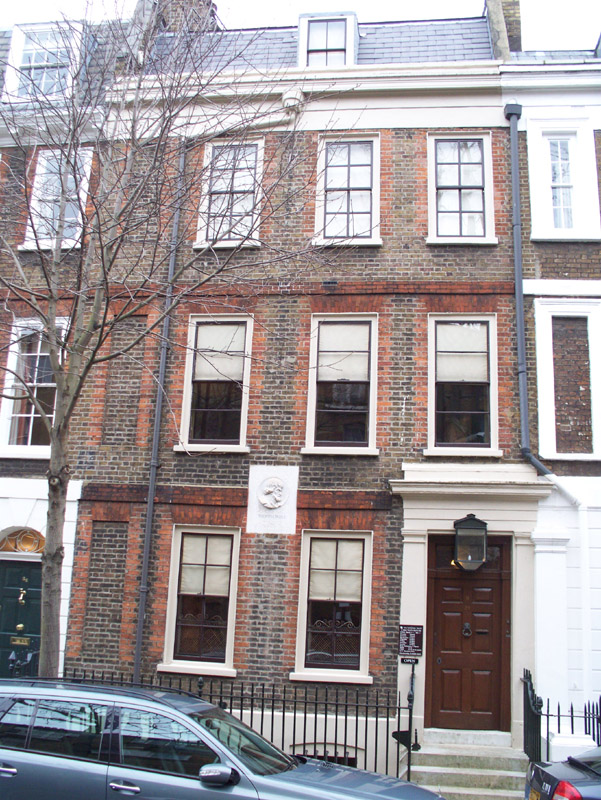
The house in Chelsea was rented for over 40 years by the Scottish writer Thomas Carlyle and his wife Jane. They were visited there by many of the famous literary names of the Victorian era. Nowadays, Jane Carlyle’s lively letters are probably more widely read than Thomas Carlyle’s multi-volume histories.
Not long after Carlyle died, the freehold of the property was acquired for a museum to commemorate Carlyle. The National Trust took over the property in 1936 and over the years many of the Carlyles’ possessions have been returned to the house. The house is largely unaltered and is presented much as it would have looked when the Carlyles lived there. On the top floor is a study, windowless except for a skylight, where Carlyle did much of his writing. It was designed to be soundproof, but it seems this was not a success.
In each room there are several cards with information about the Carlyles and their famous friends and visitors.
In the basement is the kitchen, and there is access to the rear garden. Even if you don’t know much about Carlyle, it is interesting as a Victorian middle-class house.

Nearest tube stations are South Kensington and Sloane Square (1 mile) and there are buses to Carlyle Square on the King’s Road (1/4 mile)
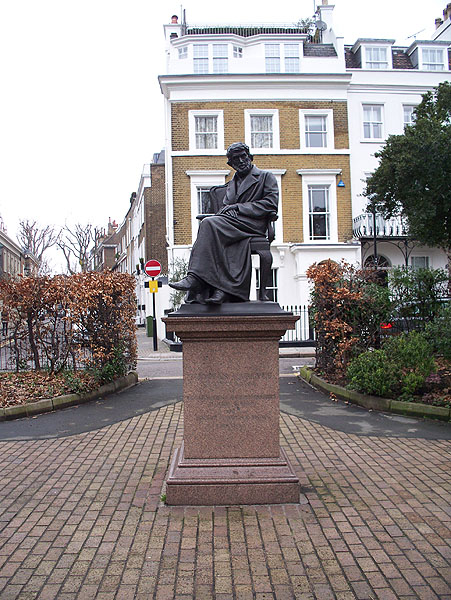
On foot it is easiest to find Cheyne Walk at the river, then the Carlyle statue and Cheyne Row.

Carlyle statue looking towards Cheyne Row.
Carlyle statue

Leighton House Museum, London

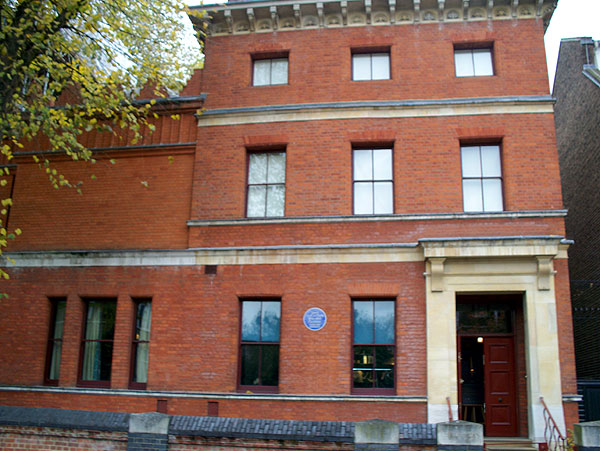
Leighton House front
National Trust.
Leighton House was the home of eminent Victorian painter Frederic, Lord Leighton. The interiors have been restored to match their original appearance as closely as possible. The interior of the house is striking. The stairwell hall is tiled with colored tiles. There is an Arab Hall, also tiled, that is two floors high and is topped by a dome visible from the street. Upstairs, the artist’s studio is the size of a baronial hall and has three fireplaces. Remarkably, there was only one bedroom.
Visitors may notice downstairs a couple of fireplaces under windows, that seem to have no chimney breast. Apparently, in the case of the dining room, the flue is in the wall to one side.
The house originally displayed Leighton’s art collection, but this was dispersed after his death in 1898. A few items have been returned to the house, and replicas or similar objects substituted for others.
If you like Victoriana, a visit here is highly recommended. Note that, as the house is owned and operated by the Royal Borough of Kensington and Chelsea, even NT members have to pay, but get a 50% discount.

The house is regularly used for art exhibitions, in the house itself and/or the attached gallery.

The house is near the south end of Holland Park, and the ‘nearest’ Tube stations are High Street Kensington and Holland Park, both at least 15-20 minutes walk away.

Cragside, Northumberland

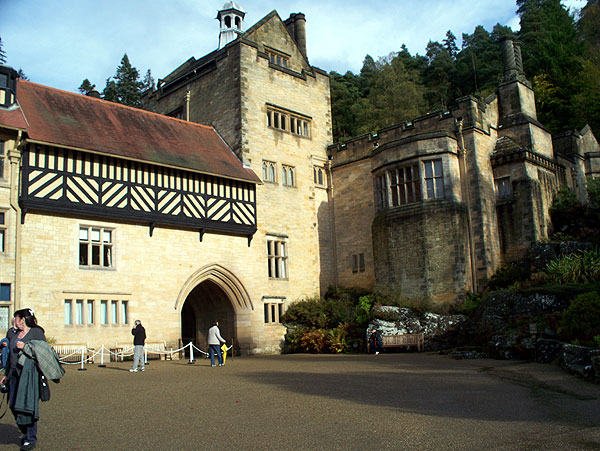
Cragside view from South
National Trust
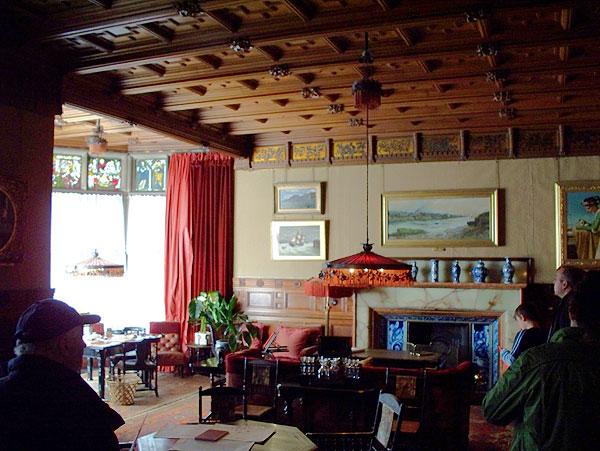
Cragside was bought by the Victorian industrialist and arms manufacturer Willian George Armstrong, and the house was greatly extended between 1863-1884. Externally, the house is a jumble of English baronial styles, with mullioned windows, battlements, decorated barge boards, shouldered gables, tall decorated chimneys, steep roofs, and mock timber-framing, and has an irregular outline. Inside it has a number of unusual features incorporating Armstrong’s ideas, often very advanced for the time, including a water-powered spit turning mechanism, electric lighting from a hydro-generator on the estate, a hydraulic powered lift and a sauna suite. There are several rooms with elaborate Victorian interiors. The large drawing room, finished in a Classical Renaissance style, has a vast chimney piece, elaborately carved in marble. A long gallery is lined with pictures and other objects.

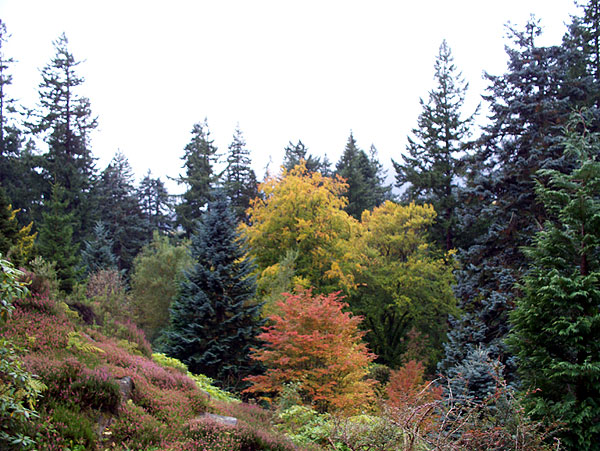
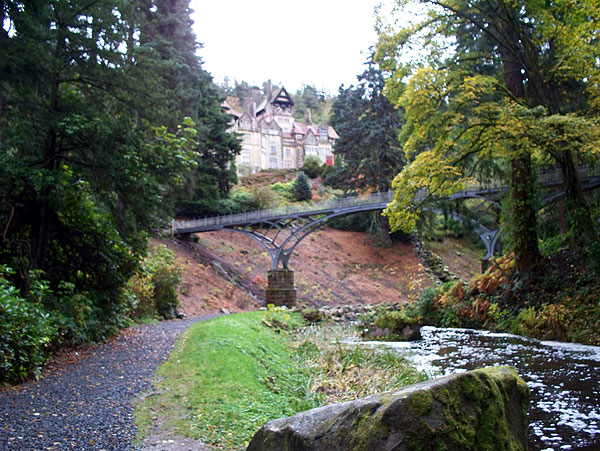
From the house, there are spectacular views over the woodland below. A rockery garden plunges down to a stream and an arched metal bridge. Out in the estate there are several of Armstrong’s installations to visit, and 40 miles of footpaths to explore. You can walk to the pair of lakes above the house and back in an hour or so, but the signposting on the paths is vague and the climb is steep.
The exhibition centre & tea rooms are next to the lake visible from the entrance. The formal gardens are 1/4 mile from the house, or from the main car park. The’re quite pretty but could be skipped if you are short of time.
A ‘hopper’ minibus provides free transport around the above-mentioned ‘near’ parts of the estate for those who have difficulty in walking. You can drive your car around a 6-mile one-way circuit to access the ‘far’ parts of the estate. Cragside is a clear candidate for an ‘all day visit’.
Visited 2012 and 2016.

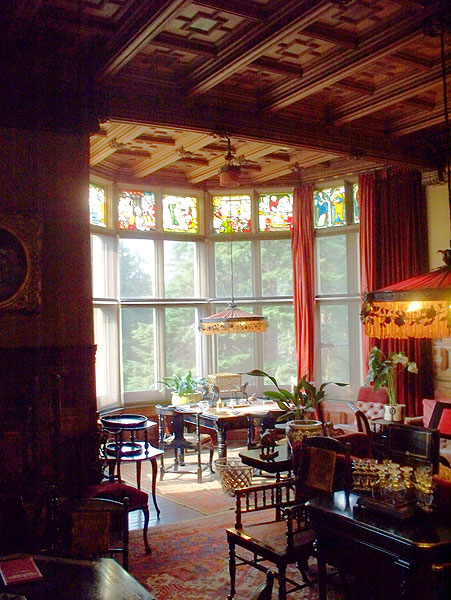
Library interior
Library
View near House
View near house
View of Iron Bridge and house
Iron Bridge and house
Library bay window
Library
Dining Room stained glass
Dining Room glass
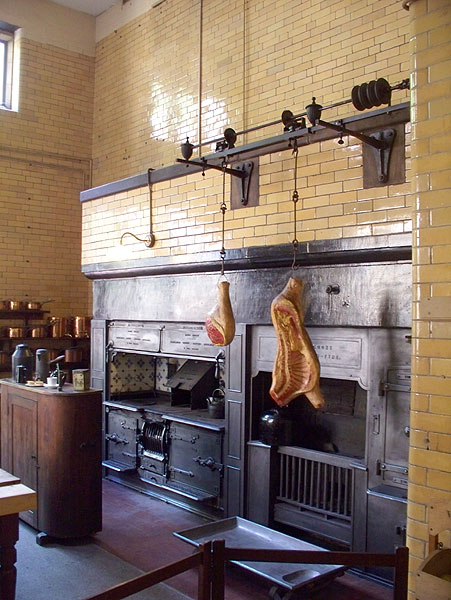
Kitchen
Kitchen
Morning Room
Morning Room
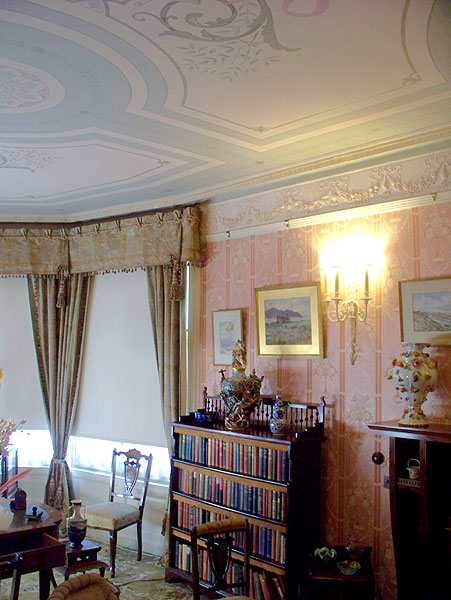
Drawing Room
Drawing Room
Roofs from path above
From above
small lake in woods
Slipper Lake
Nelly's Moss North Lake
North lake

Wallington, Northumberland

Wallington South & West frontsNational Trust.
The 18th century house stands in extensive grounds, and the south front can be seen from a mile away on the approach route. Behind the house (north side) is a green surrounded by stable blocks etc.

Inside the house, one you leave the entrance hall, the preferred route is to turn right and go around the ground floor in an anti-clockwise direction, finishing with the south front rooms (Library, Drawing Room and Dining Room). Then go upstairs. Alternatively, you could go upstairs first. Noteworthy items in the house are the fine collection of Chinese porcelain, the pre-Raphaelite murals in the central hall, and the plasterwork in the south-facing ground floor rooms. Pictures, furniture, porcelain figures and a collection of dolls’ houses may also be of interest.

Outside, the Walled garden (half a mile from the house) is said to be well worth a visit. Unfortunately I was unable to see it because of lack of time. A full visit to house and grounds could take several hours.

Dining Room view
Dining Room
Central Hall with murals
Central Hall

Seaton Delaval Hall, Northumberland

Main and east wing
National Trust:
The house is impressively composed, with a central block and two wings. At a glance, it looks complete, but the central block is a fire-gutted shell which was burnt out in 1822. It has been re-roofed and re-windowed to keep out the elements. It was originally built in 1719-30. The architect was John Vanbrugh, who also designed Castle Howard and Blenheim Palace. The survival of the shell is a testament to the strength of its construction.
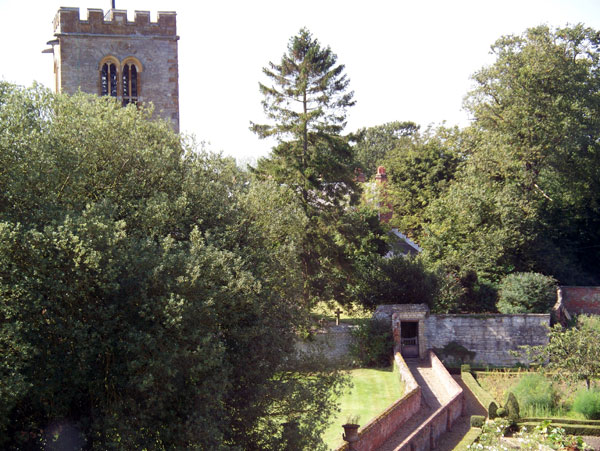
The east and west wings formerly contained stables and the kitchens. The kitchen block has since been converted to residential accommodation. Note the two stone spiral staircases in the central block, and the two rooms not gutted by fire. In the grounds are formal gardens and a small Norman church.

Formal gardens
Formal gardens
Fire damaged interior

Chicheley Hall, Bucks

Privately owned, limited access.
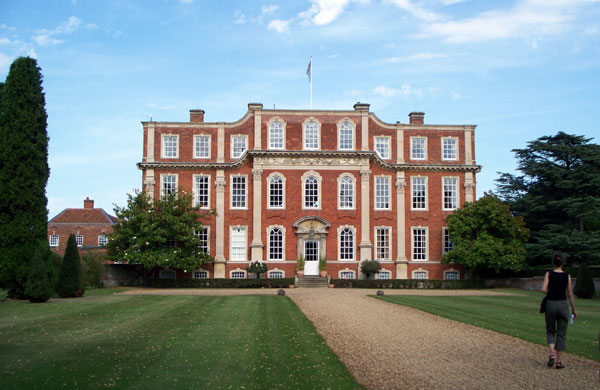
Chicheley Hall is an early Georgian mansion built in 1719-23. It was owned for centuries by the Chester family, some of whom are buried in the nearby churchyard. From 1954-2009 it was owned by the Beatty family, Earl Beatty being the son of the famous WWI admiral. It is now owned by The Royal Society, who have spent many millions of pounds on renovating the Hall and turning it into a conference centre.
I remember visiting the house when it was open in the 1980’s and seeing some Beatty memorabilia, but no Beatty relics now remain in the house. The ‘uneven floors and creaking corridors’ are also in the past. In Sept 2012 I was able to visit the Hall via a guided tour as part of the national Heritage Open Days event.
Inside, the restored double-height entrance hall is impressive. On the ground floor a set of three panelled rooms have been restored to a high standard. There is high quality wood-carving in various places. On the first floor are some public rooms. The second floor is devoted to bedrooms including one with a carved panel from the previous house, and another with a Latin inscription, as well as a room lined with built-in cupboards in dark wood (presumably the ‘secret library’ referred to in some descriptions.)
Outside the approach front is the most impressive view of the house, followed by the lake front, while the garden and service fronts are more utilitarian. There are two service wings now used for guest bedrooms, the north wing being linked by a curving corridor.
According to the Chicheley Hall website, non-corporate visitors can visit the Hall by arrangement and have a cream tea etc. You should contact them for details.
The estate has 75 acres of land, which includes several acres of pleasant gardens around the house.

Chicheley main stairs
main stairs
Chicheley ceiling
Chicheley ceiling
View of church from house
View from house
Chicheley North wing, garden
North Wing

Nether Winchendon House

Nether Winchendon House Privately owned/HHA
The house is of ancient origins, with the Great Hall dating from the 12th century. The Dining Room, with its fine carved oak frieze and oak linenfold panelling, dates from the 16th century. In the late 18th century the house was extended and remodelled in the then fashionable Strawberry Hill Gothick style. It has been owned by the same family for over 400 years.
Several ground floor rooms are on display to visitors. The Entrance Hall was completed in about 1820 and contains family portraits and some interesting ancient documents. The Dining room, a.k.a the Drawing Room, formerly Sir John Daunce’s Parlour, has an impressive carved oak frieze and ceiling decoration. There is a fine tapestry depicting Lord Russell, one of the former owners, alongside Henry VIII. The ancient Great Hall has a vaulted ceiling which dates from the time of the Gothick alterations. Here are various old family portraits. The Justice Room was created at the time of the Gothick make-over, and is panelled with walnut grown on the estate. Formerly a medieval screens passage and staircase were here. There are various pictures here.
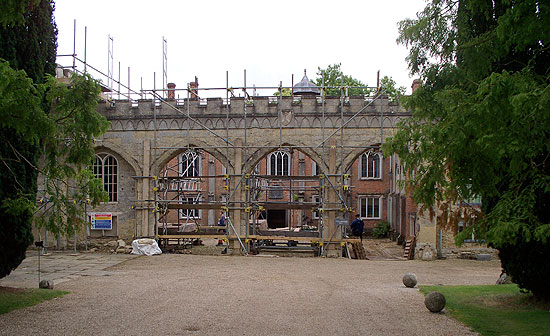
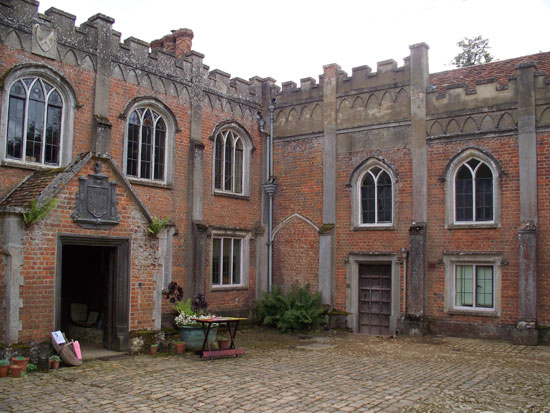
Outside, the screen of arches and folly tower enclosing the courtyard date from the time of the Gothick make-over. The seven acres of gardens were reshaped and replanted in the 1950’s and 1960’s.
The house is opened to the public in April/May, and also on the August Bank Holiday, by timed guided tour. It’s well worth a visit if you are in the region. Nearby are Waddesdon Manor, Long Crendon Court House, and Claydon.

Nether Winchendon entrance
Entrance arches
Nether Winchendon courtyard
Entrance Courtyard
Side of house
Side of house
Grounds from terrace