Herstmonceux Castle

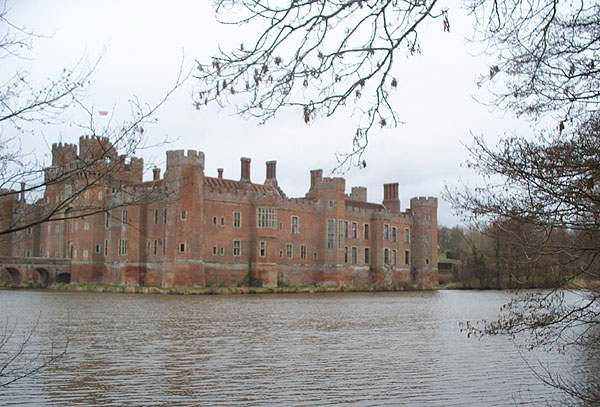
Castle and wide moat Herstmonceux Castle has a chequered history. It was built in the 15th century as a castle-style palatial residence by one Roger Fiennes, Treasurer to the court of Henry VI. By the 18th Century, the castle was in the hands of Robert Hale-Naylor, who had the interior of the castle dismantled in 1777 on the advice of fashionable architect Samual Wyatt. The contents were sold off, and other materials used to build a new mansion, designed by Wyatt, nearby. The outer walls remained as a romantic ruin till the 20th century.
Radical restoration work was started in 1913 by Colonel Lowther and completed for Sir Paul Latham by the architect Walter Godfrey. Despite appearances, everything visible from the inner courtyard is 20th century work.
In 1946 the castle and estate passed into the hands of the Admiralty and by 1957 was the home of the Royal Greenwich Observatory, with the castle being used for accommodation and the grounds housing various telescope domes.
By the 1970s the Observatory had moved out and in 1992 the castle was bought by Queens University of Canada with funds provided by Alfred Bader. In 1994 the Queen’s International Study Centre opened.
The most striking thing about the castle is its size – it is one of the biggest brick-built castles in England and one of the largest early brick-built structures.
The grounds and gardens are normally open to the public, and on some days a guided tour of the Castle is available at extra cost. (Pay at reception in the Castle). It is worth taking the tour, as you will see much of the ground and first floors, as well as the courtyard. The interior contains various bits of architectural salvage from older houses.
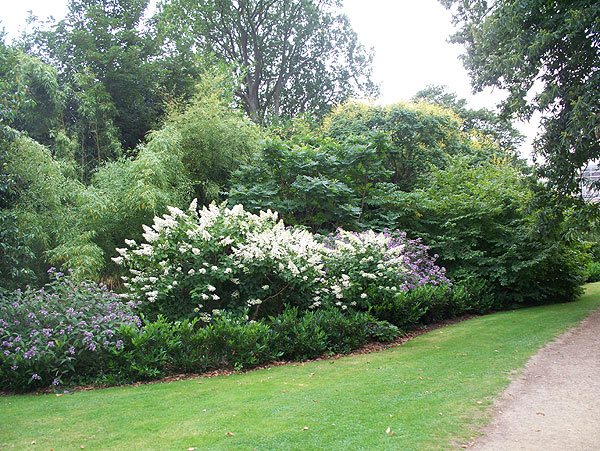
The gardens and woods are also worth exploring.

If visiting the castle by car, it is recommended that you do not use postcode navigation, but instead navigate to Bradley Road, Herstmonceux or to the Wartling Road running northward from the A27 at Pevensey.
The only public entrance, shared with the Observatory Science Centre, is off the Wartling Road. The ticket hut for the castle grounds is opposite the Science Centre.
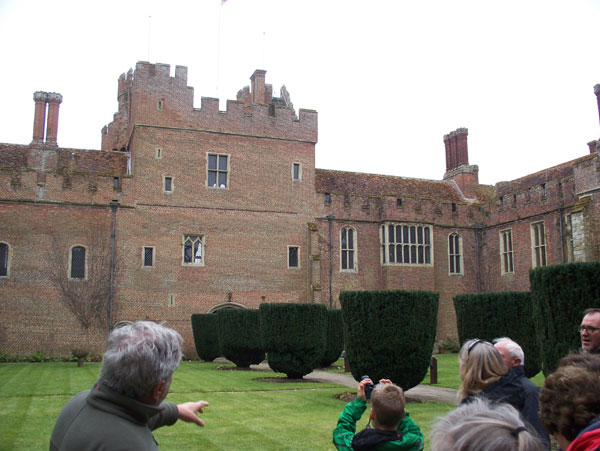
Inner Courtyard
Inner Courtyard
Staircase from older house
Staircase
Fireplace surround from older house
Fireplace surround
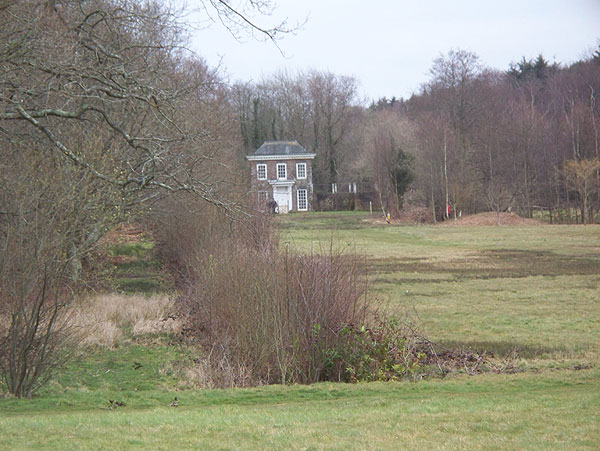
Folly House distant view
Folly House

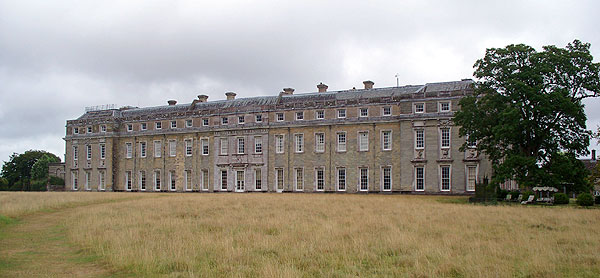
Petworth House, West Sussex

Petworth_8842 National Trust
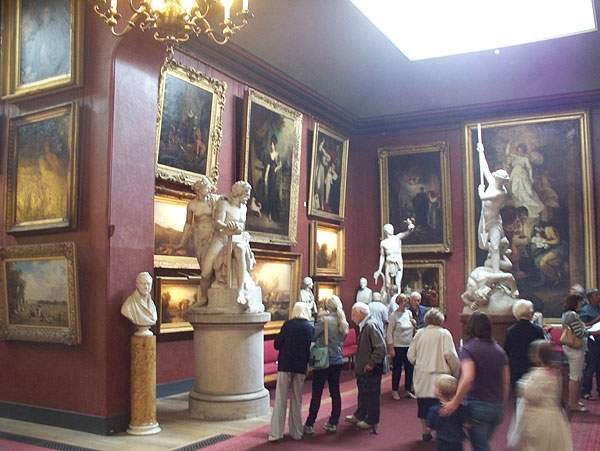
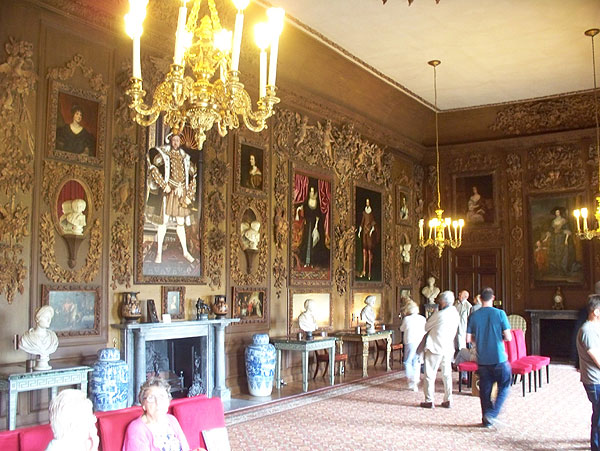
Petworth is a vast house with an important collection of paintings. The service block and servants’ quarters are across the courtyard, and there is a large park with lake.
The house was rebuilt in 1688 and altered in the 1870’s.
The artist JMW Turner was a frequent visitor to the house and guest of Lord Egremont, and the collection includes 20 of his paintings. The house features in the movie “Mr Turner” and was used as a location.
Most of the grand rooms on the ground floor are devoted to the display of paintings and sculpture, and the north end incorporates a purpose-built gallery. On some days an extra two rooms at the south end of the ground floor are opened.
The historic kitchen block, built in the 1750’s, is well preserved and the ground floor rooms can be entered. Some rooms are now used for shop, cafe and restaurant facilities.
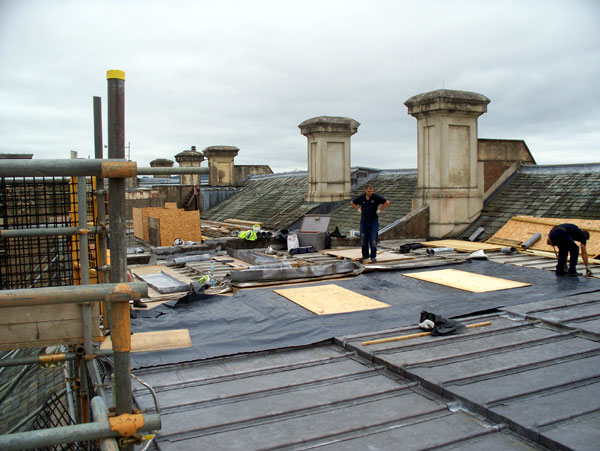
At the date of visiting, the roof of the main house was undergoing repairs and a Roof Tour (cost £5) was available, which gives a great view of the works and of the surrounding rooftops and countryside.
There is a lot to see and I spent over 4 hours there (not including the park).
If driving through the town, beware the tricky one-way system, especially if following a sat-nav. The Petworth NT carpark is distanced a fitness-inducing walk from the house. There is another carpark at the far end of the great park.
Thumbnails:

Roof
Roof
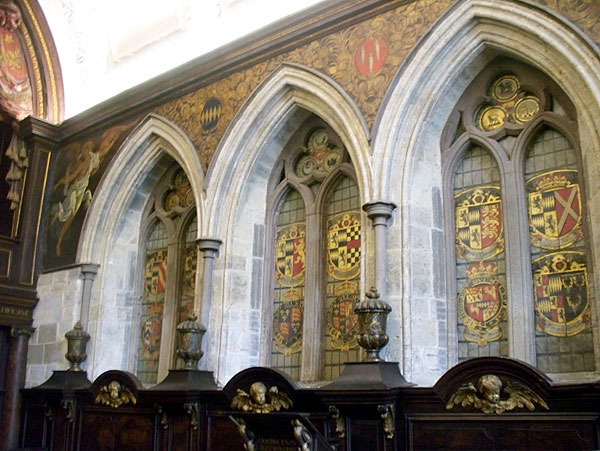
Chapel interior
Chapel
Gallery
Gallery
Grand room
Grand room
Beauties
Beauties
Garden
Garden

Fort Brockhurst – Hampshire

Fort entrance with footbridge English Heritage
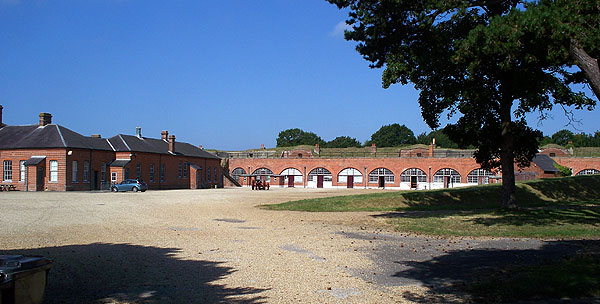
Fort Brockhurst is one of a large number of forts built to defend Portmouth in the Victorian era. It is one of five outward-facing forts positioned to defend Gosport against a land attack by the French. It never fired a shot in anger, and never received its full complement of guns, but remained in use as a barracks till after the Second World War.
Of the four surviving forts of this group of 5, this is the only fort open to the public.
The fort is surrounded by a water-filled moat, and another moat surrounds the circular keep which was intended as a final refuge should the rest of the enclosure be overrun. Visitors can enter spaces including the keep, parade ground, the Institute welfare building for soldiers (now a museum), a barrack room, armourer’s workshop, ablutions room and walk along the ramparts.
Admission is free.
Note that the fort is only open for around 1 day a month and it opens at 11am rather than the usual EH 10am. If you arrive early, you cam walk the perimeter of the moat.
There is free parking for cars in front of the fort. (Width restriction).

Parade ground
Parade ground
Keep circular courtyard
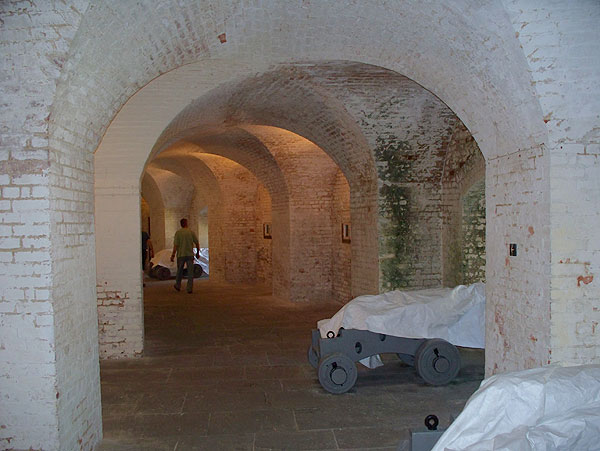
Keep vault with cannon
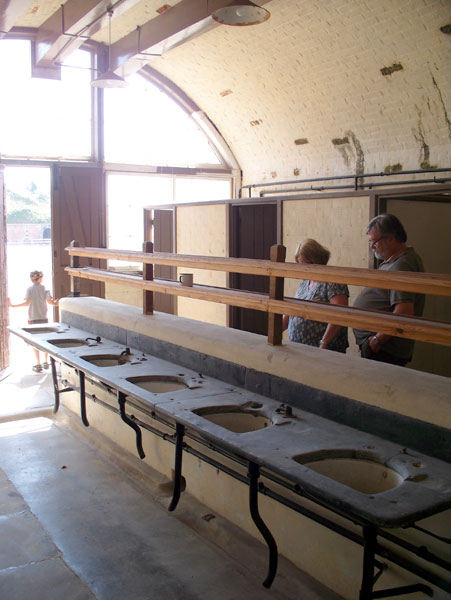
Washroom
Washroom

M33 – Portsmouth Historic Dockyard

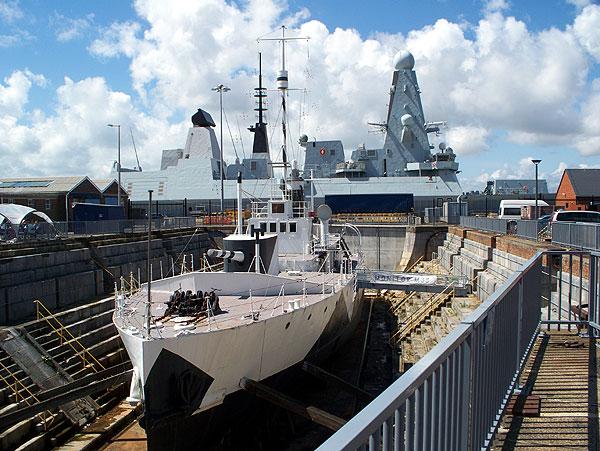
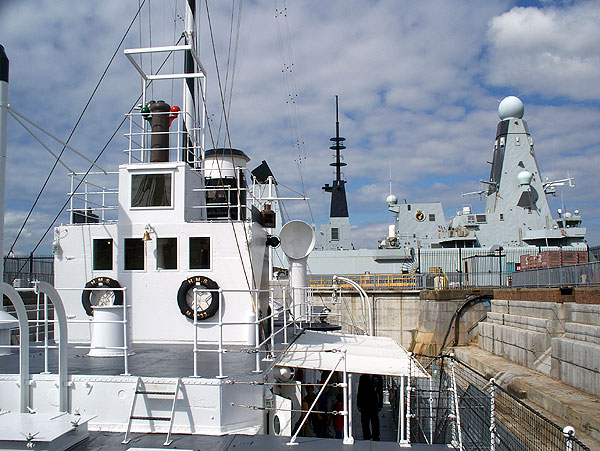
Ship in drydock -2013
2013 view

The monitor ship M33 has recently completed a restoration of its interior and was ceremonially opened on the 6th August 2015. Previously one had only been able to view the ship from the top of the drydock.
I was one of the first members of the public allowed on board on the 7th August. The ship was built within around seven weeks as a shore bombardment vessel, and despite mounting two 6 inch guns it has a displacement of only a few hundred tons and no armour.
You may find it interesting to compare this ship with the 10,000 ton cruiser HMS Belfast (C35) which has twelve 6 inch guns.
M33 is one of the very few ships surviving from WWI, and the only survivor of the Gallipoli campaign.
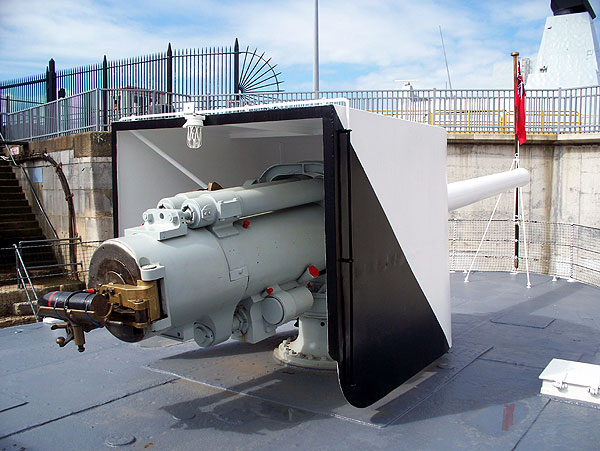
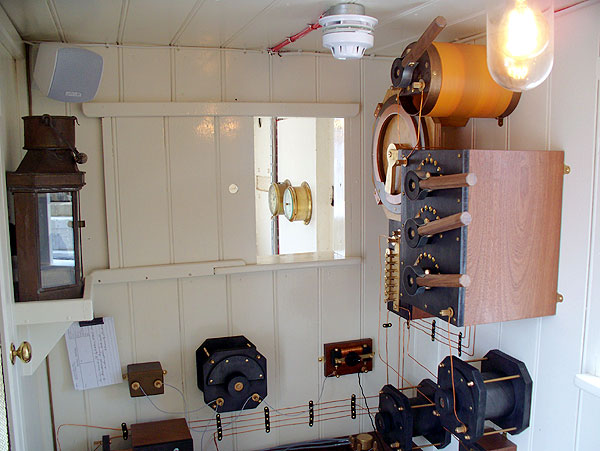
As seen today, the 6″ guns are essentially the same as the originals, and the crew accommodation, stores, officer quarters, galley, wheel house, radio room etc have been fitted out with representative contents. Maxim guns as used for repelling close attack stand on slots in the side deck.
The engines and boilers were removed a long time ago, prior to the ship’s use as a hulk, and have not been replaced. Instead, the space is used as a cinema for a short film. The bass sound in the empty steel space is quite effective. 🙂
The ship is well worth a visit and can be visited as part of the Portsmouth Historic Dockyard. Charges apply.
Shell room with contents
Shell room
6" gun on stern
6″ gun
Restore radio room interior
Radio room
Superstructure
Superstructure
Crew accomodation
Crew accomodation

D-Day Museum, Portsmouth

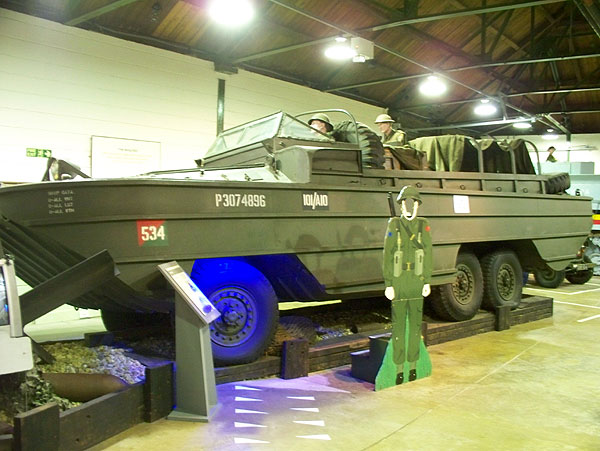
DUKW in vehicle hall The D-Day Museum is housed in a modern building near the Southsea Castle on the sea-front.
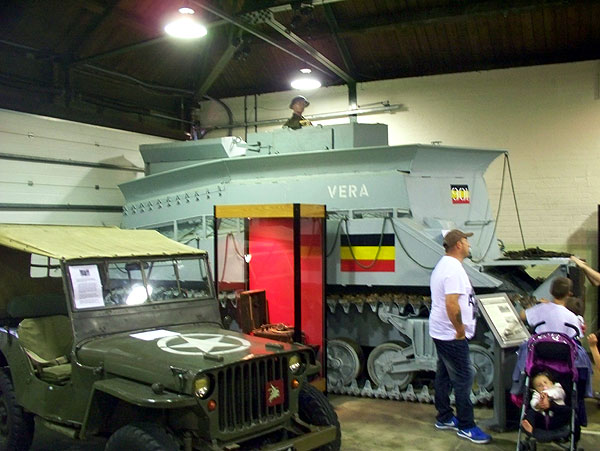
A circular hall has a modern D-Day Tapestry displayed around its circumference, and an auditorium for showing a short 15-minute film in the centre. On the other side of the museum, a winding series of galleries display materials on the build-up to D-Day and the invasion itself. A final pair of halls show vehicles used in the invasion – a glider, jeep, tank, tank landing craft and a DUKW.
It is an interesting museum and worth a visit if you are in the area or if you have a connection with the invasion.
Admission charges apply.
A car park (chargeable) is next to the museum, or you can park along the sea front (chargeable).
The Southsea Castle is about 100 yards away – in fact the D-Day Museum is within the outer defences of the castle.

Amphibious tank
Amphibious tank

Uppark, West Sussex

Side of house
National Trust
Uppark is a Queen Anne style house and garden standing on a hilltop. It was built largely in its present form in the late 17th century. Some remodeling took place in the 18th and 19th century. It is a handsome house, and has some fine principal rooms with original contents. The gardens are attractive, and there are some interesting tunnels under the forecourt which connect the house with the stables and former kitchen outbuildings.
Uppark is known nowadays partly for the disastrous fire which occurred in 1989. The fire was started by heat from a workman’s blowlamp, and not discovered till it had taken hold in the roof. Firemen arrived promptly but were unable to halt the progress of the fire which destroyed the roof and upper floors and damaged the principal floor. The portable contents of the principal floor were rescued by firemen and volunteers before the upper floors fell into the principal rooms.
The decision was made to restore the house to its condition before the fire. The reconstruction was an epic of restoration. Today, the principal (ground) floor looks much as it did before the fire and is furnished with most of its original contents.

Titchfield Abbey, Hampshire

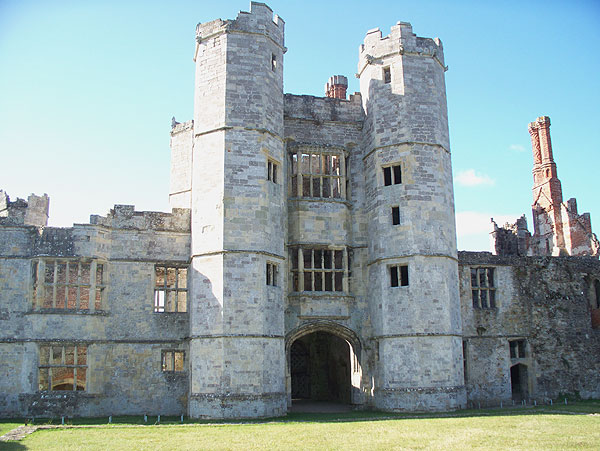
Frontage with towers
English Heritage
The ruins of a 13th century Premonstratensian abbey were converted into a Tudor mansion, known as Place House, with a grand turreted gatehouse constructed across the nave. The house was dismantled after 1781.
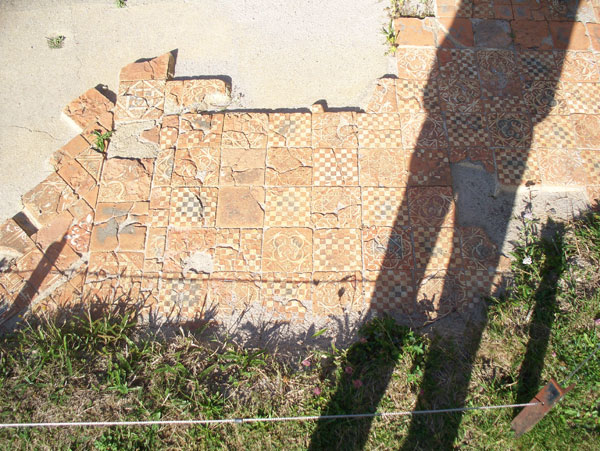
The remaining structure, with towers, is quite impressive and well worth a visit. Still in position are fragments of tiled floors.
A free downloadable audio tour is available from the EH website.

Directions: Sat-nav delivers you outside the property, but the entrance, opposite a pub and to the right of a garden centre, is quite difficult to spot. If you drive through the narrow gated entrance, you should be able to park onsite. Admission is free.

Floor tiles
Floor tiles

Southwick Priory, Hampshire

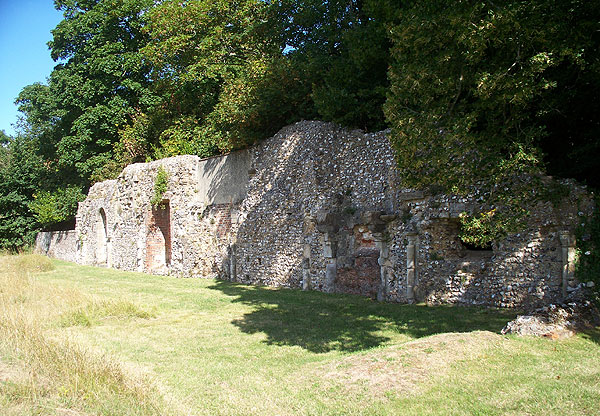
Stone wall
English heritage
This was once a famous priory and place of pilgrimage. Now only part of the refectory wall survives.
Casual visitors may feel that tracking down and viewing this ruin is more trouble than it was worth. Some carved features remain.

Directions: The postcode takes you to a layby on the main road, alongside a long wall. The entrance is from Southwick village (right at roundabout, following the long wall). Park in the village car park. The entrance to the ruin is an inconspicuous metal footpath gate directly opposite the car park entrance, to the left of the sawmill. The EH sign is a few feet inside the gate. Follow the path through the wood. When you emerge at the golf course, the ruin is to your right.

Explosion! The Museum of Naval Firepower

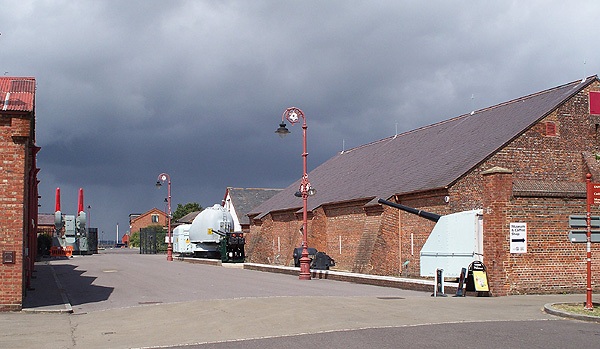
Entrance yard
Entrance yard

The Explosion! museum is situated in Gosport, Hampshire, in the 18th century buildings of the Royal Navy’s former armaments depot. The Museum is one if the Portsmouth Historic Dockyard group of attractions.
The displays include historic uses of the site, plus naval weapons of all sizes. The largest complete gun assemblies with mountings are around 4 and a half inch, larger guns being represented by 6″ barrels and a 15″ breech. Some gun mountings can be seen in the photo above. There are also missiles, mines and torpedoes of various ages, including a nuclear bomb. If you like weaponry, this is for you. There are over a dozen display halls.
The Museum has a large number of modern audio-visual displays for interpretation and further information, but I found several that were not working properly.
My tour took around 3 hours, and I could have spent longer.

Access: The site can be reached by water-bus from the Historic Dockyard at Portsmouth, or by road from Gosport. The water-bus is infrequent; however the alternative access by road passes through a long built-up area and is liable to be very slow on a weekday.

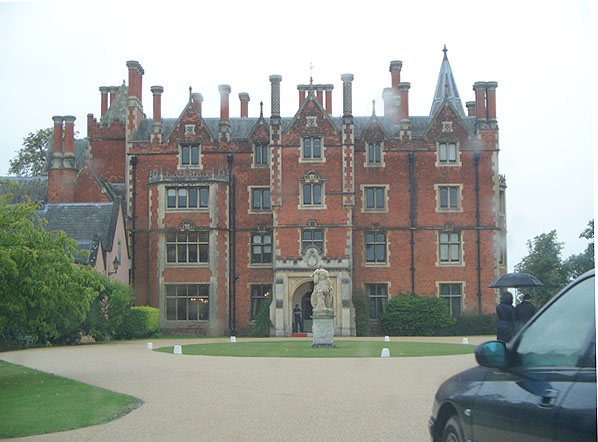
Taplow Court, Bucks

House frontage Private.
Heritage Open Day visit.
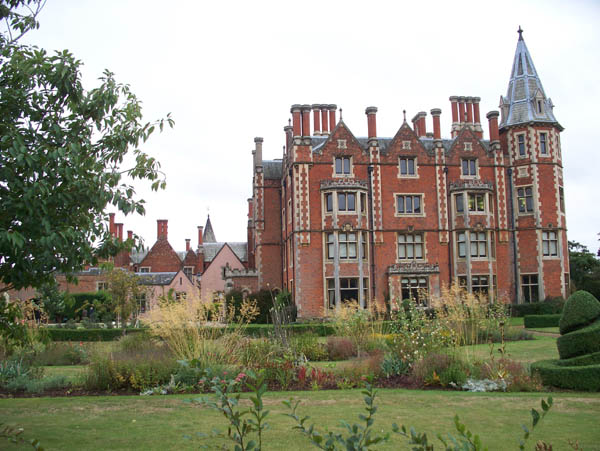
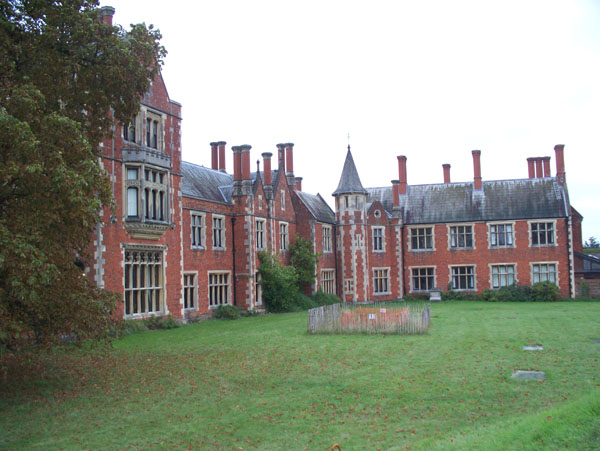
Taplow Court is a large Victorian house in the village of Taplow in south Bucks. The present house was originally Jacobean, but arrived at its present appearance by stages of modification and extension, by the Earls of Orkney in the 18th century, then after it was sold in 1852, by the Grenfells. William Grenfell, Lord Desborough, was the organizer of the first Olympic Games in Britain, in 1908.
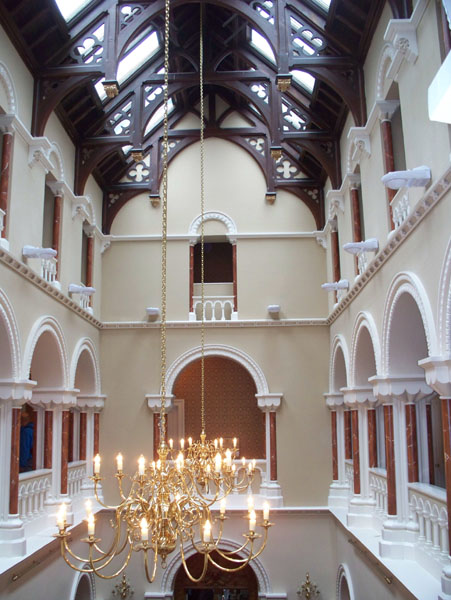
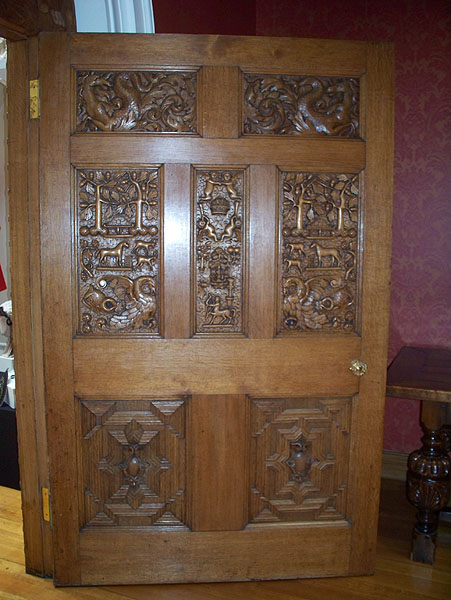
The focus of the interior is the three-storey Norman Hall, inserted by the Orkney heir, Thomas Hamilton in the 1830’s. The hall doors are beautifully decorated with carved wood panels.

The house is now owned by SGI (Soka Gakkai International Buddhists), who seem to have spent a great deal of money restoring the house and grounds.
The attractive grounds include gardens, and there is an important Saxon burial mound just behind the house.

The house and grounds are worth a visit. They are open free of charge on several Open Days each year.

Normal Hall, taplow
Norman Hall
Carved Hall Door, Taplow
Hall Door
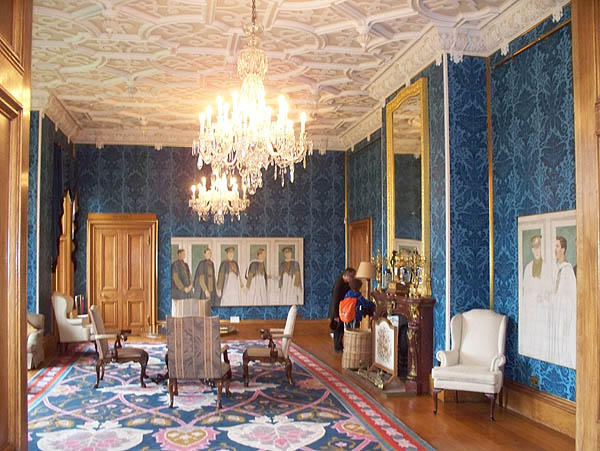
Reception room, Taplow
Reception room
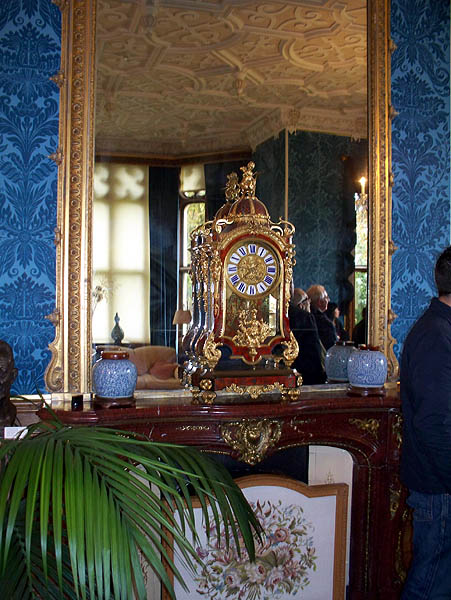
Clock and mirror
Fine Contents
Side of house + gardens
Side, Gardens
Back of house, & service wing.
Back & service wing