Clovelly village, Devon

Clovelly is a historic village on the north coast of Devon, and is entirely owned by a private estate, whose intention is to maintain its 19th century appearance. Quaint cottages line a steep cobbled main street leading 400ft down a cleft in the cliff face to a small harbour. Traditionally, donkeys and sledges bring goods up and down the steep street.

Naturally this is just the sort of place that tourists like to visit, and access for visitors is controlled. We had to pay an admission fee in the building at the top of the hill, and also pay to park. In any case, the village street is totally unsuitable for anything other than the occasional Land-Rover. Once admitted, there are a number of things to do, including patronising local businesses such as the New Inn Hotel. Signs lead to a couple of cottages fitted out as museums, otherwise please note that the houses are lived in and you should NOT expect to get inside! There is a view point with seats half way doen the street – you’ll need it!
Above the town, there are footpaths for walkers along the cliff tops, and also the Clovelly Court gardens.
Birmingham Back to Backs

National Trust.
You have all heard of “Back to Back” housing, with its connotations of urban slums. But what exactly is it, and what were the layouts like? To find out, you really have to go see some of the real thing. Such housing once existed in vast numbers, but today hardly any remains.
The examples preserved by the National Trust face onto a street and courtyard in central Birmingham. Three pairs of back-to-backs on Inge Street adjoin a terrace of five blind-back houses on Hurst Street. These tenements make up the north and east sides of the inner court. The yard contains two wash-houses and the outside toilets. Four back-to-backs have been fitted out to show what life was like here at different dates.

Until I actually saw the back-to-backs I had only a hazy idea of what they were like. These were cramped 3-room dwellings just one room wide and one room deep, extending over three floors, plus attic, with no toilet or bathroom. Everything was poor, shabby or peeling, and the construction, with walls a single brick thick, was cheap and flimsy. Up to 8 or 10 people crammed into each dwelling. Construction of such buildings was banned from 1876, but some were still lived in nearly a century later.
Today the NT have knocked through some openings to convert four cramped dwellings into a ‘tour’ but you are still strongly advised to book your conducted tour well in advance. Inge Street is within walking distance of Birmingham New Street rail station. This isn’t a prime commercial area, and when I visited, it looked like free on-street parking might be available for those totally determined to drive.

After visiting here, you might be interested in the covered market (nearby) the municipal art gallery (walk or bus ride) or the Jewellery Quarter (bus ride).

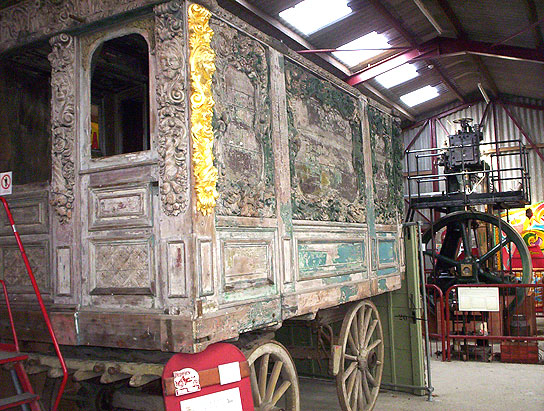
Dingles Fairground Heritage centre, Devon

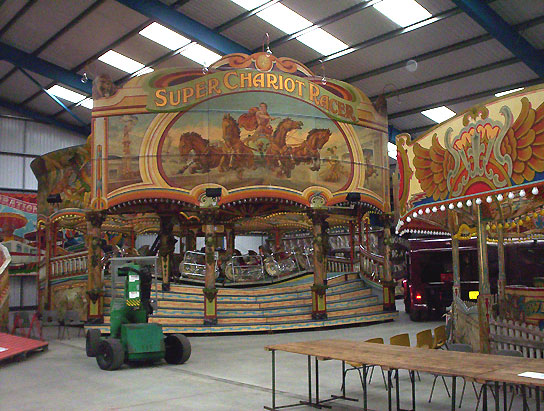
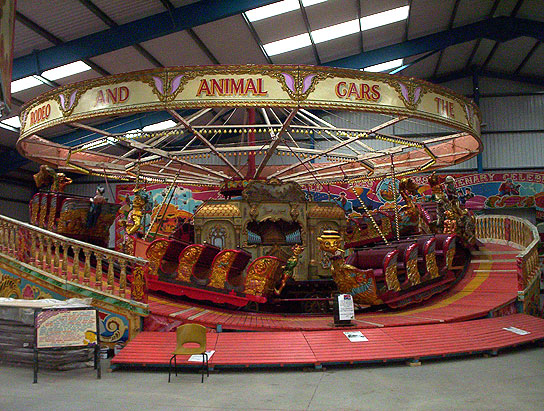
Fairground roundabout ride
Ride exhibit
(Previously known as Dingles Steam Village.)
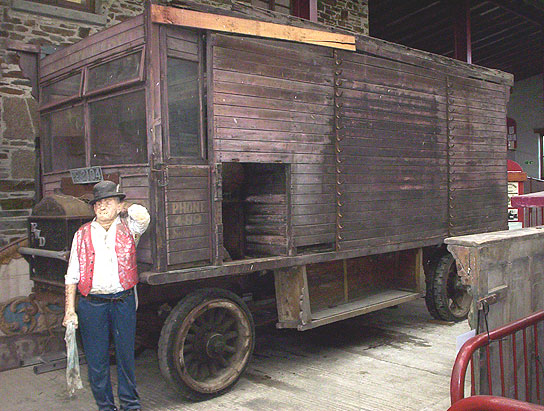
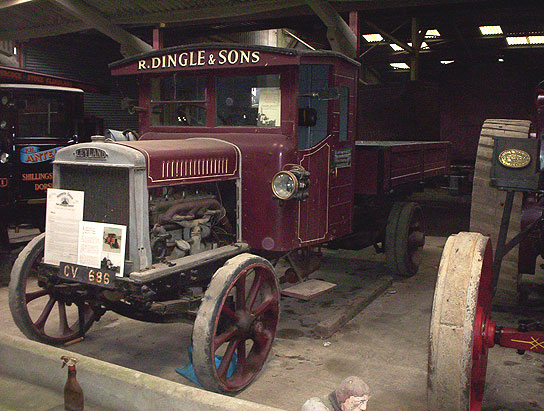
When I visited it in 2007 there were some stationary engines in steam, and other steam exhibits. Most exhibits were to do with fairgrounds, and included vehicles, some of them very ancient, sideshow displays, and, in a large barnlike hall, several complete fairground rides. It was quite interesting.
Today it seems they are offering more of the same, including working rides.
Very old wagon
Very old wagon
very old fairground lorry
very old lorry
Fairground ride exhibit
Ride exhibit
Old showman's lorry
Showman's lorry
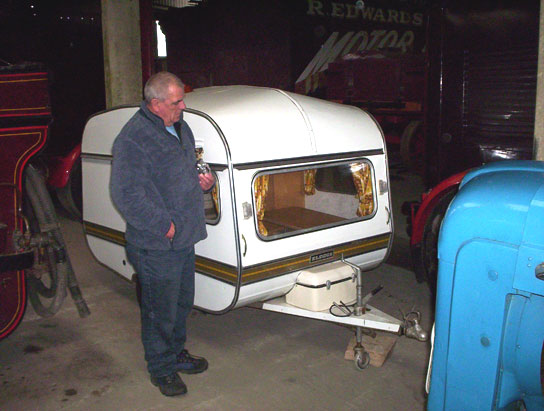
Toy sized caravan
Toy sized caravan

RNPS Museum, Lowestoft, Suffolk

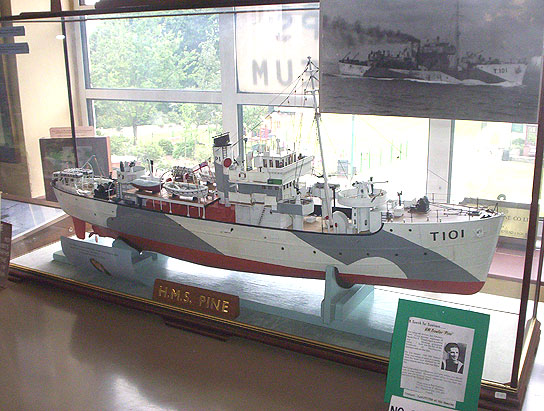
Display with model ship
Model of HMS Pine
The Royal Naval Patrol Service manned the Navy’s “small ships” during WWII, and they had their headquarters base at “HMS Europa” in Lowestoft. Tens of thousands of new sailor recruits streamed through this base, including my father.
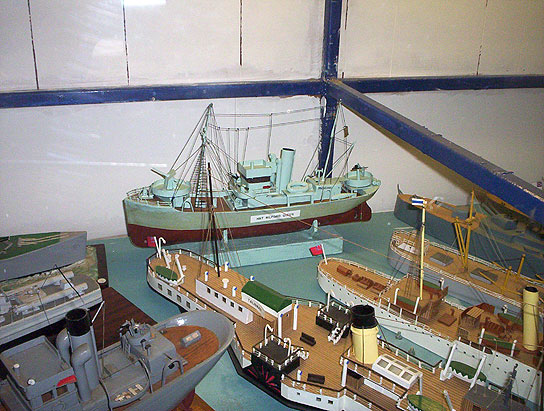
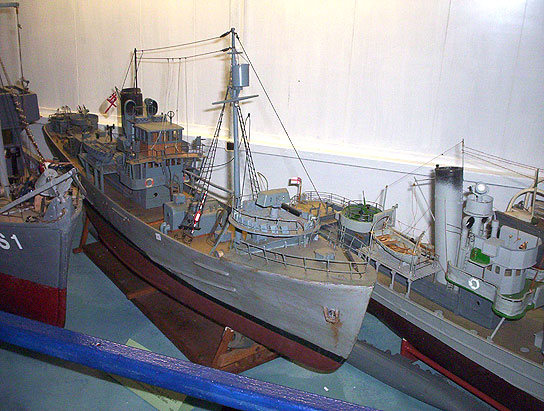
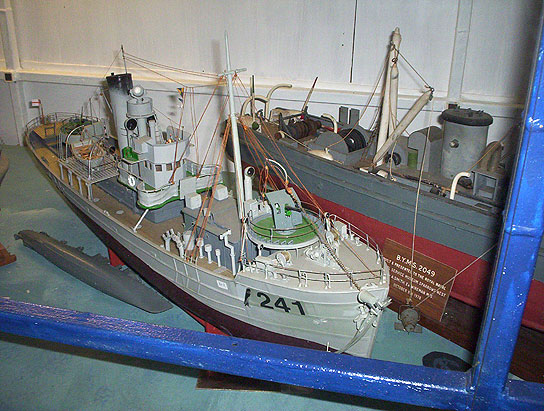
Today, the RNPS Association has its museum in rooms in one of the few surviving buildings of the base at Sparrows Nest, Lowestoft. There are two museum rooms, one on the first floor, the other at ground level at the back. They have various exhibits and mementoes including models of some of the small ships, and many photographs. There are some research materials. The ship models were the most photogenic items on display 🙂
When I visited, I was kindly received, and had a good look round the main room, and also the one at the back, which they unlocked for me. I spotted a picture of one of Dad’s armed trawlers, and they made a copy of it on the spot. They couldn’t shed much light on what Dad’s boats had been doing in the war (such information is very scanty today).
Admission to the Museum is free and it is generally open throughout the year on Monday, Wednesday and Friday mornings until noon, subject to volunteer availability.
If you have come a long way you might want to note other things in the area that shouldn’t be missed: the sea wall and sea a few hundred yards sea-ward from the Museum, Roman fort at Burgh Castle, Great Yarmouth town wall, Great Yarmouth Row Houses.
Display of ship models
Ship models
Display of ship models
Ship models
Display of ship models
Ship models

Goonhilly Satellite Earth Station, Cornwall

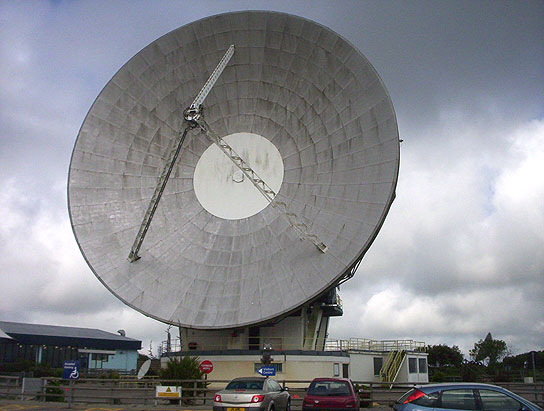
large satellite dish
"Arthur"
Goonhilly’s first dish, Antenna One, (“Arthur”) was built in 1962 to link with Telstar. It was the first open parabolic design and is a monster 25.9 metres in diameter and weighs 1,118 tonnes. Other dishes followed, till there were around 60 dishes of various sizes. In 2006, however, BT announced that it would close its site by 2008, centralising its operations elsewhere. The biggest dishes are redundant, as with today’s powerful electronics, much smaller one will suffice.

Until Easter 2010 the site had a visitor centre inside which the Connected Earth gallery told the history of satellite communications. There were many other interactive exhibits, a cafe, a shop and one of Britain’s fastest cybercafés (a one gigabit pipe and a theoretical maximum speed per iMac of 100 Mbit). There were also tours around the main BT site and into the heart of Arthur.

I visited the visitor centre while it was open in 2007, and found it quite interesting. I looked at the exhibits, climbed to the viewing gallery, and looked at my website via the cybercafe. The high point was a bus tour around the site, which allowed visitors to get a closer look at some of the monster dishes. What was a let-down was that some of the dishes were online and receiving signals, and we weren’t allowed to see any of it. It was like your friend asks you round to see his new satellite and Freeview, and he shows you his elliptical dish and spiky aerial. You’d be under-impressed, wouldn’t you?

On 11 Jan 2011 it was announced that parts of the site are changing hands, and there are also plans to upgrade the former visitor centre into “an outreach centre promoting space and space science for visitors, including local residents and schools”.
As with privately owned great houses, this may have been a case of “visit it while you have the chance”, but you can hope.

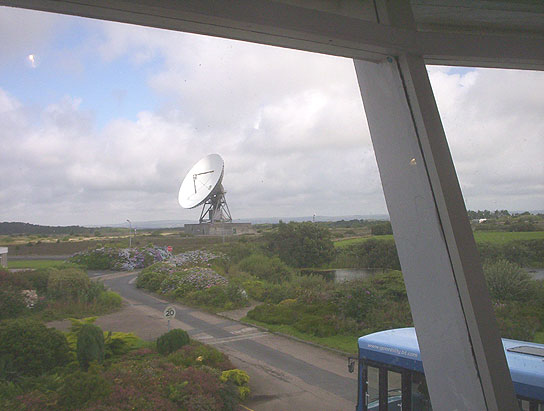
General site view
View from roof of V.C.
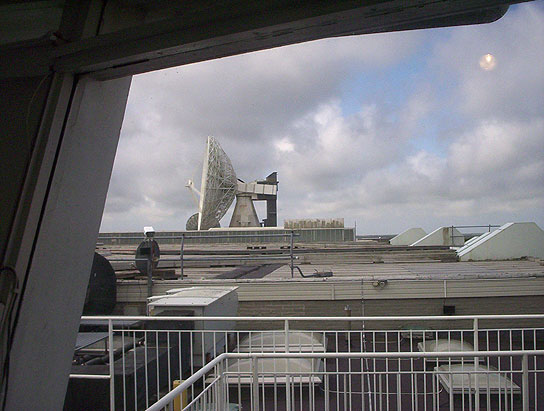
View of dish and roofs
View from roof of V.C.

Sywell Aviation Museum, Northants.

The Museum aims to preserve the history of Sywell Aerodrome and Northamptonshire’s rich aviation heritage from the early days of aviation to the Second World War and beyond. It is housed in linked Nissen huts adjacent to the still-operational Sywell Aerodrome.
The Museum commemorates, with aircraft remains, a number of crashes which occurred in the Northants area during WWII. There are a variety of other exhibits including cockpit sections.
This is an interesting visit for the history or aviation enthusiast. Suggested visit time: around two hours.

Dover Castle, Kent

English Heritage.
There are diverse things to see on this site: the great medieval castle built by Henry II, the recent re-creation of a medieval castle interior, the church, the Roman lighthouse tower, the Medieval tunnels under the castle, the Napoleonic tunnels in the cliff, and the associated WWII tunnels housing an underground hospital etc, not to mention the cliff-top Admiralty Look-out.
The castle, for once, is a building rather than a ruin, and the recreation of the medieval interior furnishings is interesting. The bright primary colours somehow remind me of a child’s poster paint box. The audio-visual projections using actors are also great fun. The Roman lighthouse tower beside the church looks weather-worn, but it’s amazing that it’s still standing. There is plenty of interest in the cliff-side tunnels which are full of WWII exhibits. There are also great views of the Channel and Dover Harbour.
The Castle could be an all-day visit, but there are some other military relics in the area, such as the Western Heights.

Levant Mine and Beam Engine, Cornwall

National Trust.
On a cliff-top site sits an old beam engine in its original engine house, still in steam. On the same site are a small museum, a film about the mine, and the top of the shafts. By the car park is a small piece of underground mine tunnel that you can walk through. At varying distances are other relics of mining. The Botallack Count House (NT) is on the clifftops nearby, as are other various engine house ruins and ore processing floors.
This is a great site that in summer overlooks a blue sparkling sea. Indoors you can experience the sound and smells of the old engine in steam-powered motion – the only beam engine in the world still in steam on its original site. Outside, you can explore a landscape littered with mining ruins for as long as you like, or just sit and watch ships go by.
Less than a mile away is the Geevor mine (see separate entry) and the Botallack Count House is a mile or so in the opposite direction.

Cornish Mines and Engines – Pool

National Trust.
The National Trust has several more or less working Cornish mining engines in its care. At Pool, Cornwall, at the heart of the Cornish Mining World Heritage Site, are two great beam engines, preserved in their towering engine houses. The pumping engine on the main site is one of the biggest beam engines in the world, with a 90” cylinder. On the other side of the A3047 is another site, with the great beam of the Michell’s Shaft winding engine poking out of the side of the engine house. Both engines can be seen in motion from time to time, driven by electric auxiliary motors. The main site, with a museum, audio-visual, and walk-through of various buildings, has a lot to see besides the engine.
When visiting, you’ll find that you can park outside the Michell engine house on an area of gravel, and later drive across the road to the far end of the Morrisons’ car park and the larger site.
See also ‘Levant Mine and Beam Engine’

Royal Engineers Museum, Chatham, Kent

The museum contains exhibitions and displays about military engineering. There are also vast reserve collections for researchers. FYI military engineers build camps and fortifications, dig tunnels etc.
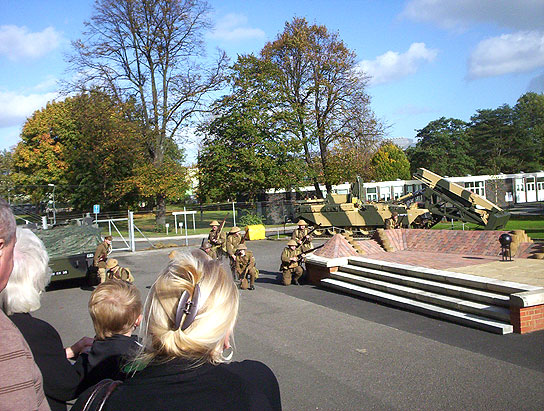
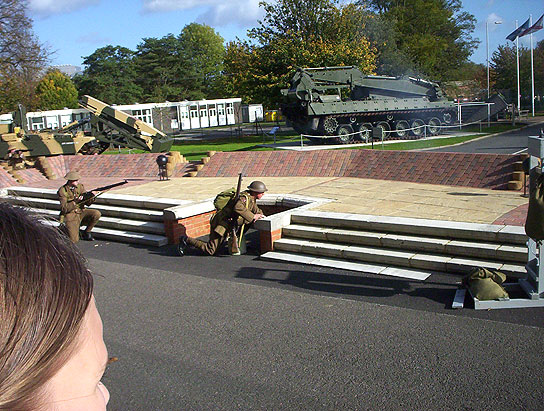
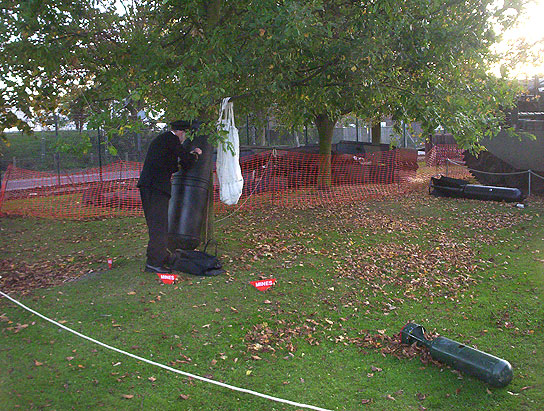
On the day I visited there was a progamme of re-enactments before the front of the building – soldiers attacking, defusing bombs etc. Interesting, but a bit of a distraction from trying to get round the four sides of the galleries and see the exhibits.

Soldiers outside museum
Bomb disposal outside museum
Bomb disposal