Little Moreton Hall, Cheshire

National Trust.
Little Moreton Hall was built in the fifteenth and sixteenth centuries, entirely of timber framing. It surrounds a central courtyard. While most of the hall is of two storeys, the south wing has three storeys, the top floor being filled with a magnificent long gallery, possibly added as an afterthought. At any rate, the weight of the gallery and its heavy stone roof has distorted the structure below, and the floor of the gallery now resembles a wave-tossed sea frozen in oak.

(Those of an engineering turn of mind may note that the Trust recently inserted hidden steelwork to hold up the 3rd floor, and that the Hall’s undulations owe less to a medieval lack of string and spirit levels than the tendency of vertical posts to rot at the bottom and slump downwards over the centuries.)

Apart from three pieces, all the original furniture has disappeared and the rooms are shown unfurnished. The interior is corridor-less, with one room leading into another.
The building is of exceptional interest, and the external timbers have been cut in a variety of patterns to glorious effect. The whole is a testament to the ingenuity and skill of Tudor workmen.
Besides the house, there is a chapel with wall painting dating from the 16th century. The built-in dog kennel in the courtyard may amuse visitors.
Shaw’s Corner, Herts

National Trust.
The house is undistinguished, but is filled with fascinating mementoes of the great Irish dramatist and critic. Apart from the museum room, which shows gems such as the Oscar that Shaw was awarded in 1938 for the screenplay for the film version of Pygmalion, and his membership card for the Cyclists’ Touring Club, the house is still arranged very much as it was in his day. The rear garden is of a considerable size, and contains a curious rotating shed in which Shaw did much of his writing. The trees have grown rather bigger than they were in Shaw’s day, transforming parts of the garden into a small wood.
I enjoyed my visit to the house and garden, and departed much better informed about Shaw than I was when I arrived. Despite its proximity to London and some large towns, the village can only be accessed by some narrow and twisty roads, but the small NT car park can be very busy.

Killerton, Devon

Killerton entrance front National Trust.
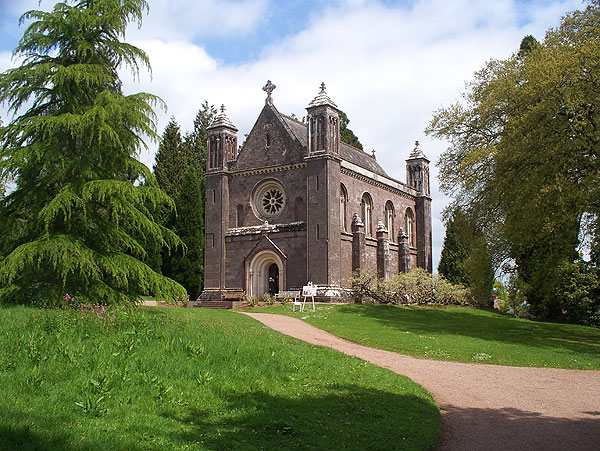
The house was built in 1778-9 but was considerably expanded in the early nineteenth century and again in Edwardian times. Elsewhere are magnificent stone stables and a Victorian Norman Revival chapel. The house is unpretentious outside, but inside downstairs has some grand rooms. The contents reflect country house life in the 1930’s. Upstairs is the noted costume collection of Paulise de Busch. Outside, to one side of the house and above it, are magnificent gardens. The former walled garden is now the car park. Nearby is a large Chapel.
The house stands in a large estate, and elsewhere on it are the Marker’s Cottage (NT) and Clyston Mill (NT), and Budlake Old Post Office (NT). I don’t recall that I saw these, but they have separate entries in the NT guidebook.
I recall that this was rather a tedious place to get to, despite its proximity to Exeter. No major roads run near the estate.

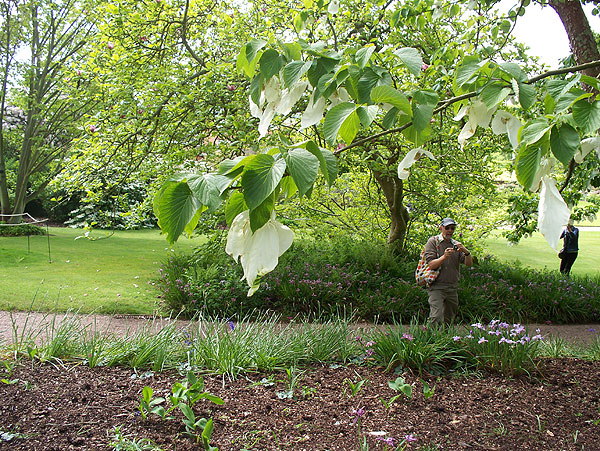
Handkerchief tree
Handkerchief tree
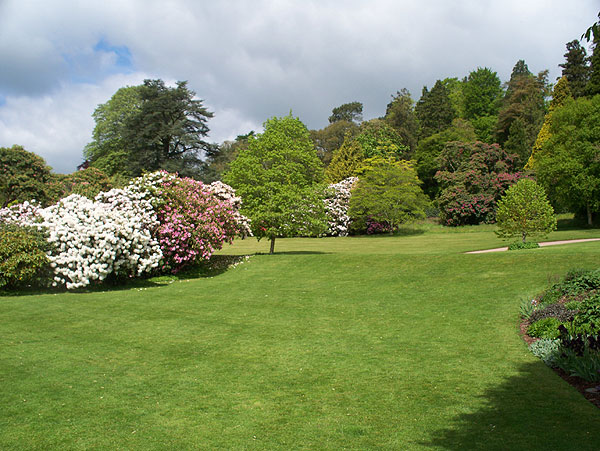
Killerton garden
Garden
Chapel, Killerton
Chapel
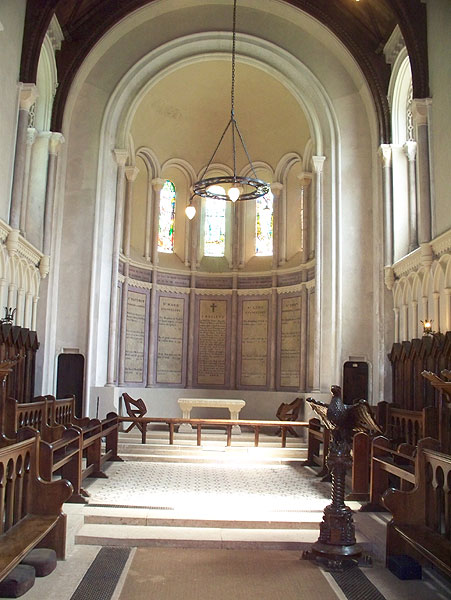
Chapel interior, Killerton
Chapel interior

Melford Hall, Suffolk

National Trust.
The Hall appears to date from the early sixteenth century, and apart from the removal of a gatehouse range that once enclosed the courtyard, and the insertion of eighteenth-century sash windows, the exterior seems not to have changed much. The interior has had repeated makeovers, with fashionable rococo decoration given to the principal rooms in the 18th century, and further changes in the 19th century. The house was ransacked in the Civil War, and the north wing suffered a devastating fire in 1942. The house has interesting contents, and some fine rooms. There is a notable staircase hall with a wide, straight staircase in the central block. Outside, there are gardens in which the visitor can stroll.

Oxburgh Hall, Norfolk

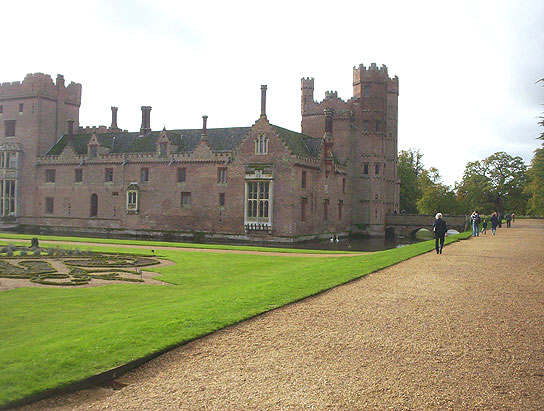
House, path and lawn National Trust.
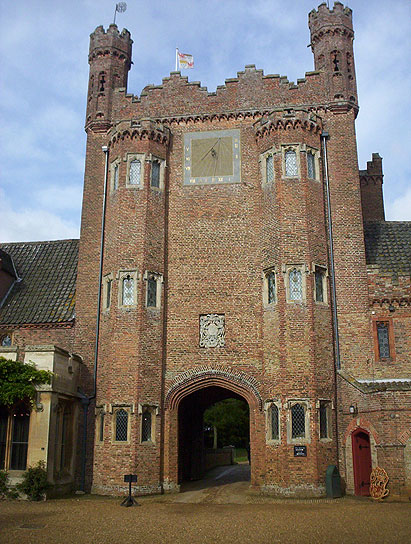
A red-brick moated house stands amongst extensive gardens and grounds. When it was founded in 1482, the house was in the middle of a marsh. Much has changed since, and while the great gatehouse is largely orginal, there was an extensive resoration of other parts in the 19th century. Stepped gables and twisted terracotta chimneys on the side ranges were added during the restoration. In the grounds is the Gothic Revival Chapel, designed by Pugin. It contains an elaborate altarpiece.
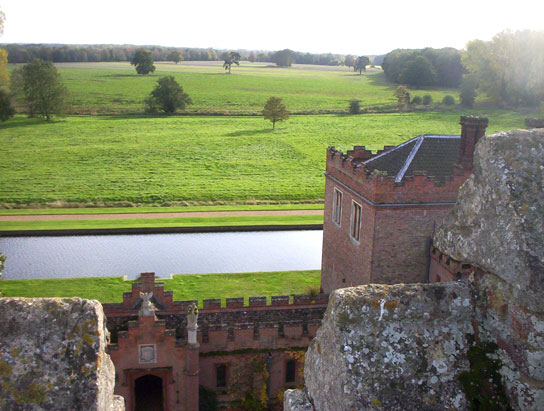
The King’s Room in the gatehouse is a great room with walls of exposed brick. An interesting circular staircase of fine brickwork leads up to another great room, the Queen’s Room. The staircase leads up to the flat roof, where other towers and chimneys can be viewed, and also the surrounding countryside.
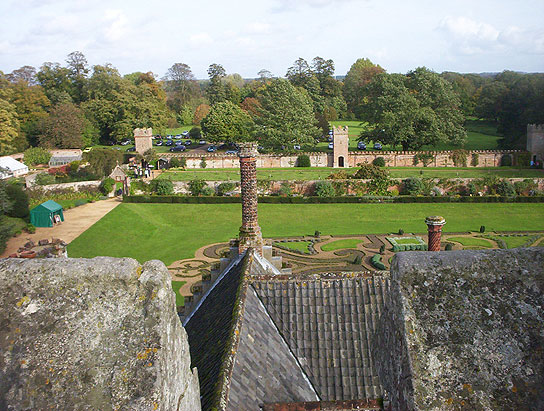
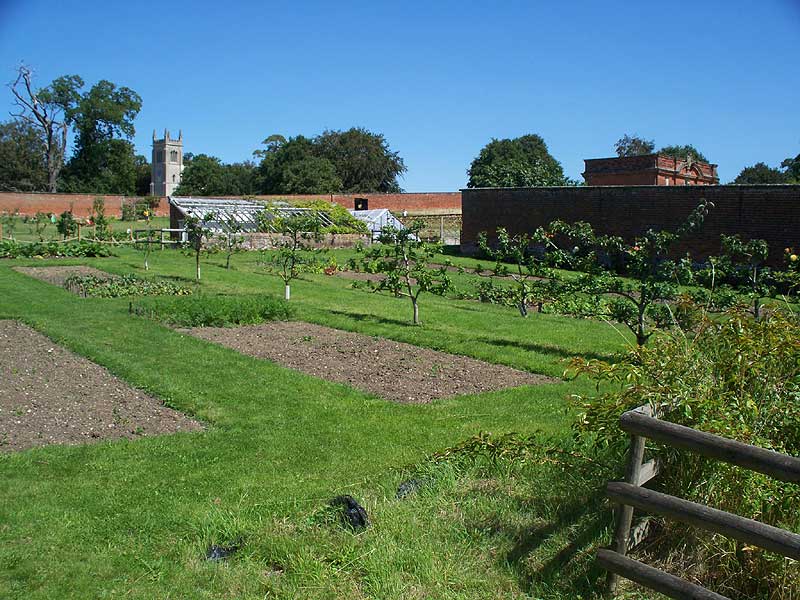
There is a walled garden with turreted walls, and other areas of garden for the visitor to explore.
At the entrance to the estate is a rather startling ruined church, which can be reached from the car park. It was largely wrecked in 1948 when the steeple collapsed, destroying the nave and south aisle, but preserving the chancel and Bedingfeld Chantry.
There is a lot to look at on this estate, and it is well worth a visit.

Gatehouse tower
Gatehouse tower
View from roof
View from roof
Walled garden seen from roof
Walled garden

Ickworth, Suffolk

National Trust.
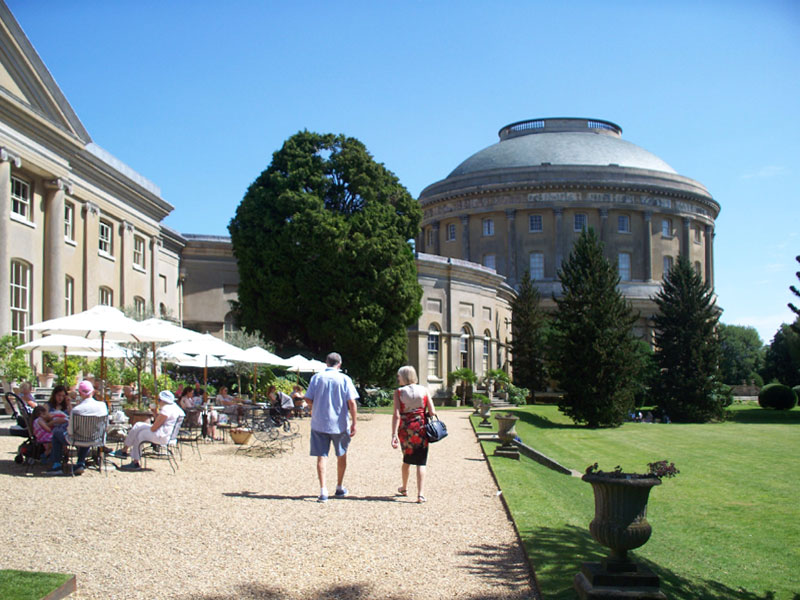
The house is unusual, having a huge and palatial central rotunda and two curving wings connected to it by corridors. It was built by the eccentric Earl-Bishop of Derry, Frederick Hervey, to house his collections, a plan realised by his descendants.
One of the wings leads to a Pompeian Room, the block beyond being occupied by the orangery and the modern visitor reception. The other, east, wing corridor terminates in an ante-room, with more collections. The block at the far end of the east wing was the family residence, now a hotel. There are also exhibits in the basement. Outside, there are 70 acres of formal gardens and 1800 acres of park. The Italianate garden is behind the house.

The grand rooms are impressive and the house contents are of interest. On my last visit I explored the park, in which it is posible to take a 7 mile walk. Some of the paths are hard-surfaced trackways on which you can cycle or use a mobility buggy. On a walk around the relatively short River Linnet trail I saw a lot of grassland and arable, the walled garden with listed summerhouse, and St Mary’s Church.
There is another church (St Leonards at Horringer) at the estate entrance.
The house and park together could be an all-day visit.
Or if you are coming a long way, you could also visit Melford Hall nearby.

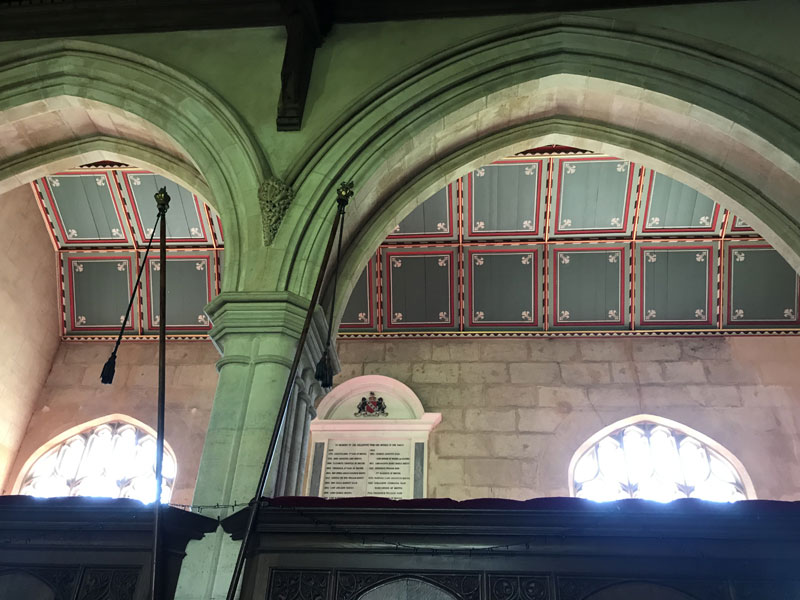
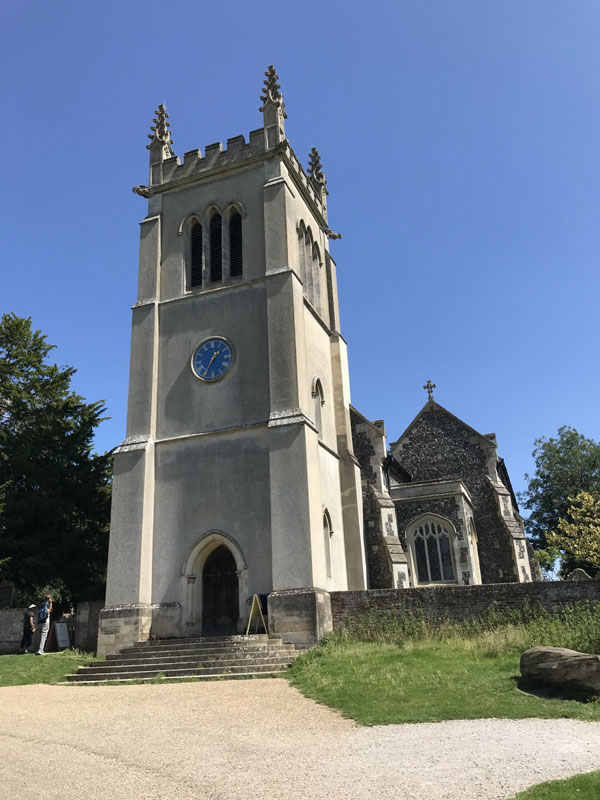
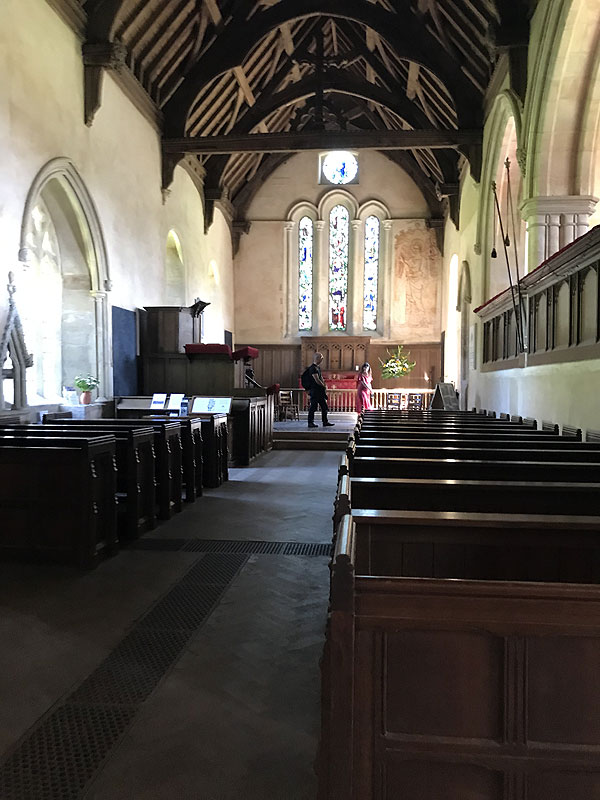
St Mary’s church -int
St Mary’s Church
St Mary’s Church -int
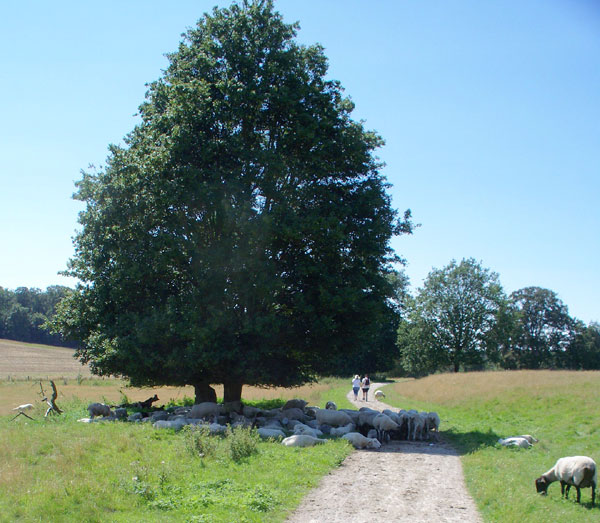
Park with livestock
Walled Garden
Summerhouse

Higher Uppacott Dartmoor Long House, Devon

The Dartmoor longhouse is a type of medieval farmhouse once common in the area. Built on a slope, they housed people and animals in the same building. The people lived in the upper end, above a cross passage, and the cows were tethered in stalls in the lower end, or shippon, with their heads to the wall, and their other end near a central gully which discharged out of the lower end of the building. Once there were hundreds of these longhouses, but while some survive as cottages or farm buildings, almost none still have an unconverted shippon.
This one was purchased by the Dartmoor National Park Authority because of its original state. The living quarters have a large fireplace, old-fashioned rooms and an upstairs where original thatch still blackened by a medieval central fireplace can be seen. Below the cross-passage, the shippon still has animal pens and central drain.
The longhouse is not regularly opened to the public, partly because of that problem that afflicts ancient settlements that collide with the 21th century, i.e. “nowhere to park”. I saw it on a Heritage Open Day, when we had to rendezvous at a moorland car park half a mile away and be ferried to the site. The visit was most interesting, and I recommend that you check out visit opportunities and make the effort to see it. There is also an online virtual tour.

Greenway, Devon

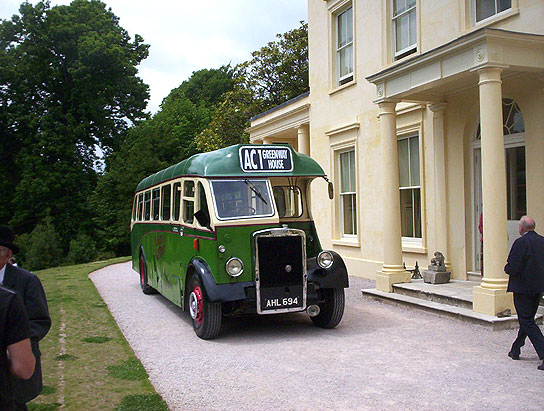
House front with old bus
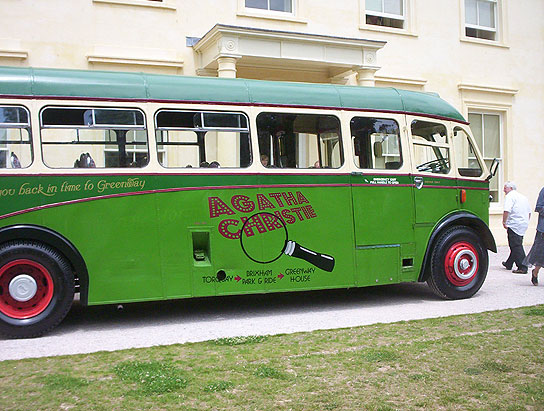
Vintage bus in front of house
National Trust.
This is the former home of best-selling author Agatha Christie. The house is in a rural setting on the banks of the Dart estuary, and is set in extensive gardens and grounds that slope down to the riverbank. Many visitors, of course, are drawn here by the Christie connection. The house contains many interesting family collections (Christie’s husband was an archaeologist). The Georgian house dates from 1790, with early nineteenth-century additions.
There is an intriguing frieze in the library, painted by an American naval officer whern the house was requisitioned during WWII. Outside there is a stable block, and down by the river a substantial Georgian boathouse. The gardens are quite large and some time can be spent exploring them.
There are strong disincentives to arriving here by car – the roads are awful and the NT car park is very small, so visitors have to ring up and book a space well (i.e. days) in advance. I don’t remember my whole itinerary, but I arrived by minibus from a bus station in some town nearby. Apparently there is also a vintage shuttle bus service. You can also arrive by river ferry from Dartmouth etc.
green vintage bus
Vintage bus

Lanhydrock, Cornwall

National Trust.
The house dates from the 1630’s, but was largely rebuilt after a disastrous fire in 1881. Only the Jacobean gatehouse and the north wing survived. The Jacobean-styled house in silver-grey granite extends around three sides of a courtyard and contained every Victorian convenience except gas and electricity, which the owner found too hazardous. Inside, the newer and restored interiors contain interesting portraits and furniture, and a complete set of Victorian domestic paraphenalia in the service rooms. The old North wing has a 116-foot gallery with a barrel ceiling covered with remarkable 17th century plasterwork. Male and female servants had separate quarters. A large informal garden covers the steep slopes above the house.
The house makes an interesting visit, as the fine rooms and bedrooms are deeply elegant, while the numerous rooms devoted to nurseries, kitchens and servants quarters give an insight into Victorian life ‘below stairs’. I don’t recall the gardens, but the day was rather damp. For the able- bodied, there is a 600-yard walk between car park and house.

St Michael’s Mount , Cornwall

National Trust.
The house, perched on a rock off the Cornish coast, is a strange hybrid of monastery, fortress, and elegant country house. A Benedictine priory was established here in the twelfth century, and a fourteenth-century church survives. The site was later converted into a fortress armed with cannon, and was key in the defences against the Spanish Armada in 1588. It was ocupied by Royalists during the Civil War, before surrendering in 1646 to a Parliamentarian whose family have occupied it ever since. Inside are Georgian interiors, some rare plasterwork, and fine Chippendale furniture. Outside, there is a terraced rock garden below the house, and an eighteenth-century walled garden.
Approaching the house is, to say the least, unusual. At low tide you can walk across the causeway, while at high tide small boats ferry visitors across to a little harbour on the landward side of the Mount. One then has to negotiate a steep cobbled path up through the gardens to the house entrance a long way above.
The house with its varied architecture is interesting, and the contents are worth seeing. There are also fine sea views, and there is more to see in the gardens and around the harbour. Altogether a visit to St Michael’s Mount is not to be missed if you are in the area.