Holkham Hall, North Norfolk

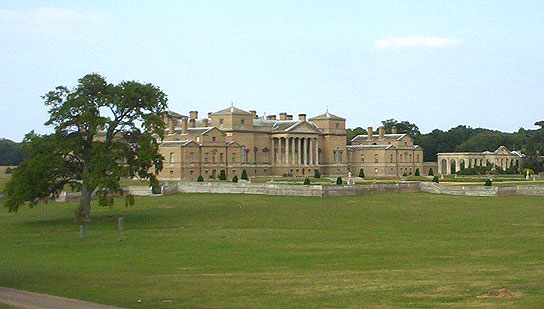
House in park
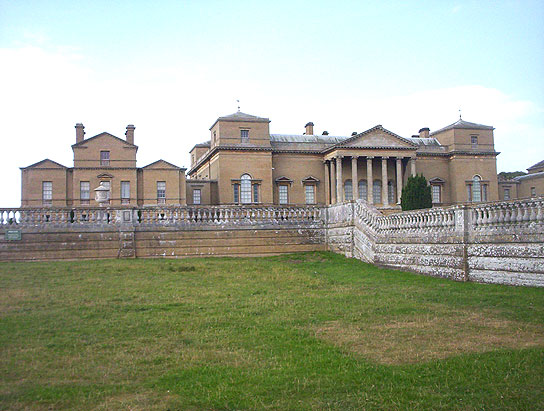
South front
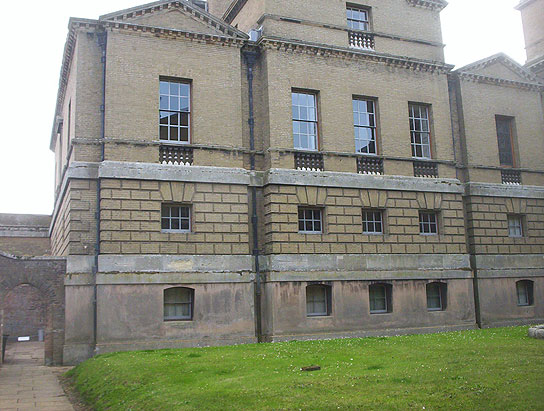
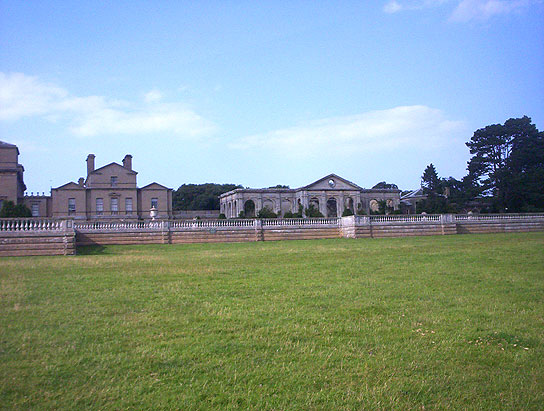
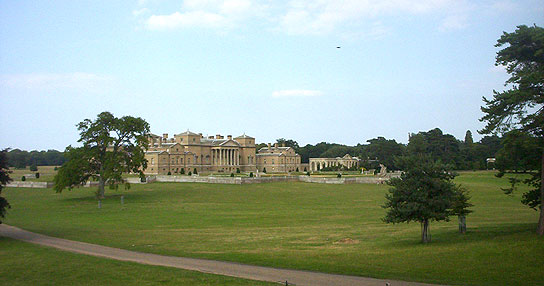
Holkham Hall and estate are essentially the creation of one man, Thomas Coke, who built it in 1734-1759. It is said to be one of the 10 best houses in England. The house is built of buff-coloured brick from brickworks on the estate. First impression is that it’s big, and rather austere-looking. (think of Whitehall or the Bank of England parked in the Norfolk countryside). The central core is quite big, and then there are four symmetrically placed wings, plus the service courtyard. It seems that the house is meant to be viewed from the south. However today’s visitor approaches from the north-east past the service courtyard, and can only see the south front after a trek around the inner park.

The house opening hours are quite restricted, and it can take 2 hours to go around the interior, so it’s as well not to be distracted by any outside exhibits, walks, tea-rooms etc. On entering, the visitor’s reaction is likely to be Gosh!! Look at that!! rather than “nice room”. This is said to be the most impressive hall in England, with alabaster walls, Roman columns, a double staircase, coffered cieling, semicircular vaults, bas-reliefs, side balconies, plasterwork, and lots and lots of gold-leaf. Several of the other rooms carry on the same theme, such as the sculpture gallery (with ancient Roman sculpture), the libraries (with Birds of America and scores of huge volumes of the Cosmographica, a medaeval world atlas, on the shelves), and the Drawing Room, Saloon and South Dining room all built and furnished to impress.
If you stand in the right spot in the saloon you can see an enfilade right from one end of the house to the other, and at 90 degrees to that, a monument out in the parkland to the north, and another to the south, both on the axis you’re standing on. Paintings are well represented, and some are by famous artists, and some are big (or both). The tour ends in the Old Kitchen, in one of the wings – a room big enough to swallow the whole of my house, and probably some of yours as well.
Unusually, the hall has never suffered major alterations, or sales of contents, and still belongs to the Cokes, descendants of the builder.

Outside, there’s the the park and the estate, which stretches to the sea, a walled garden (which I didn’t see), and outbuildings, and some private gardens. Around the service courtyard are the ticket office, tea-rooms and some exhibitions. The Bygones exhibition (a chargeable extra) containing various artefacts and vehicles, is interesting, but could be skipped if you’ve seen that sort of thing elsewhere or are short of time. The history of farming exhibition (free) is quite interesting. It’s worth asking what discounts are available, as with parking (£2.50), guidebook (£6) etc a visit can become quite expensive.
I arrived arround mid-day, but Holkham is a suitable destination for an all-day visit.
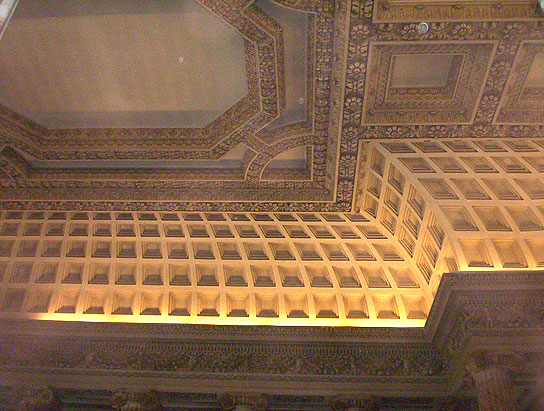
Hall ceiling
Hall ceiling
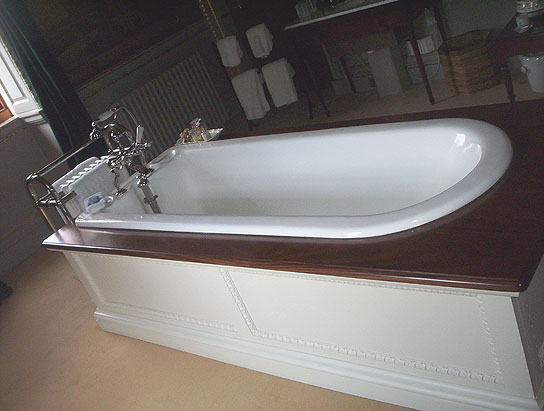
Bathroom
Stately bath
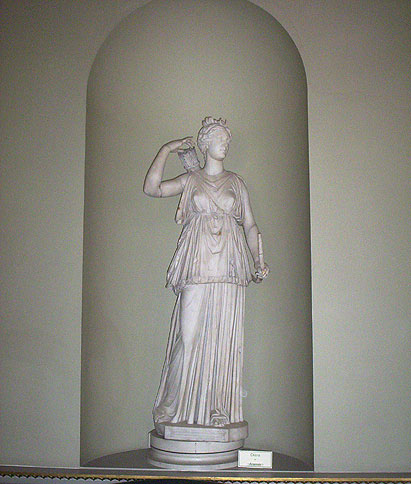
Roman Statue
Roman Statue
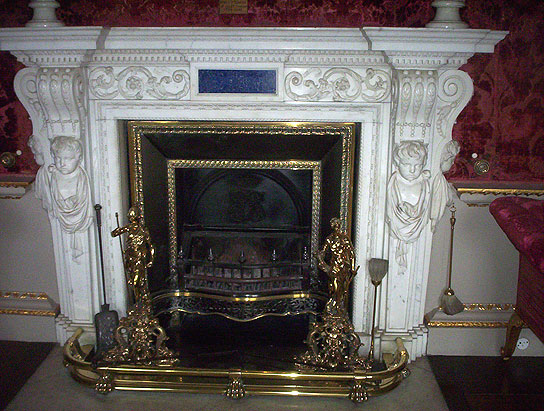
Fireplace
Fireplace
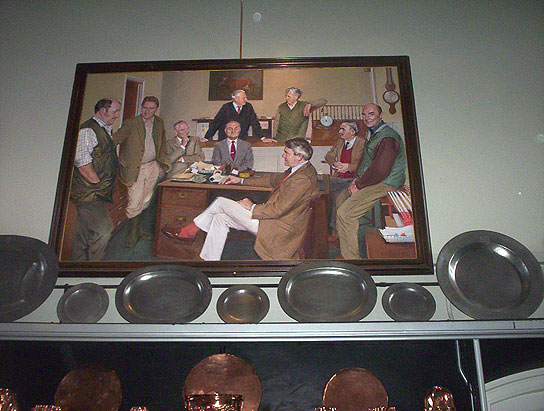
Painting
Kitchen display
Kitchen wing exterior
Kitchen wing
House frontage
South Front
South east front
South front

Felbrigg Hall, North Norfolk

National Trust.
Felbrigg is an old Jacobean house with a later extension, and attached service buildings built around a service courtyard. It is noticeable that the older wing is built of a patchwork of brick, flint and limestone, with a largely weathered coating of plaster, while the newer Classical wing around the corner is in immaculate brick with sash windows. The Jacobean wing has a parapet pierced with the giant-sized lettering GLORIA DEO IN EXCELSIS. Inside, many of the principal rooms have fine plasterwork by Edward Gouge.

A tour of the interior starts with the grand rooms on the ground floor and proceeds upstairs to the principal bedrooms and the Chinese Room, passing the bathroom and descending by the back stairs to the service areas and a corridor with taxidermy collection. The tour continues along one side of the square of service buildings to exit near the reception. There are a number of attractive rooms and interesting contents.

Outside, I had a look at gardens near the house and the Orangery, before making my way through a mini woodland behind the house towards the walled garden. The large walled garden (next to the car park) is worth seeing. There are several walled sections, some mainly grassed and some highly planted, and a Dove-house here. An un-documented feature is that the grassed section nearest the gate shows the ghost of a previous formal planting on the aerial view.
Parking is free (for NT members).

It’s possible to visit Blickling Hall and the nearby Felbrigg in one day. If so doing, it’s advisable to start with the Blickling gardens at around 10am, and to devote more time to Blickling, which is larger and has more to look at.

Blickling Hall and Estate, North Norfolk

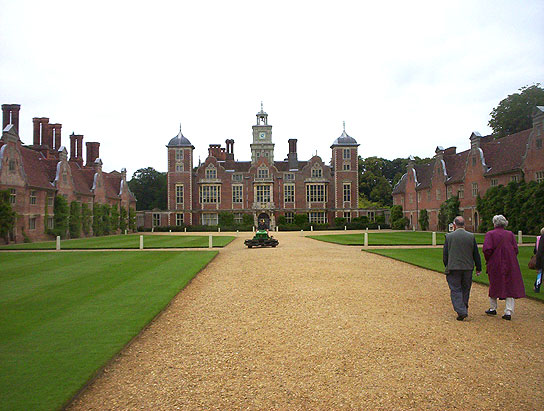
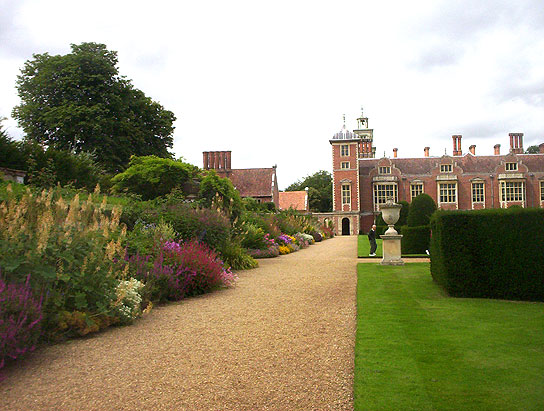
House front & gravel path
National Trust.
There was a house here in the 15th century, but the current Blickling Hall was built on the ruins of the old Boleyn property in the reign of James I, by Sir Henry Hobart. It is a large Jacobean red-brick house with two internal courtyards. The library at Blickling Hall contained and still contains historically significant collections of manuscripts and books.
Outside, there is a formal parterre to the east, and elsewhere a Wilderness garden, a Secret garden, lawns, a kitchen garden, and a large yew hedge on the approach to the house. The wider Park comprises 450 acres of parkland, and beyond that is an estate of 3500 acres of farmlands.

Unusually the service wings, attractively constructed in red brick, are in front of the house, and to either side of the large front lawn. It looks quite impressive, and there is a lot to see inside, with about 18 rooms open to visitors, and quite a lot of interesting contents and impressive plaster ceilings. The Long Gallery is 123 ft long. Outside, I explored the large informal gardens with trees and an Orangery etc, and the formal garden. The large park was big enough to completely lose the preparations for an open-air concert scheduled for the evening of the day I visited. I didn’t see the RAF exhibition. Parking is free (for NT members).

It’s possible to visit Blickling Hall and the nearby Felbrigg in one day. If so doing, it’s advisable to start with the Blickling gardens at around 10am, and to devote more time to Blickling, which is larger and has more to look at.

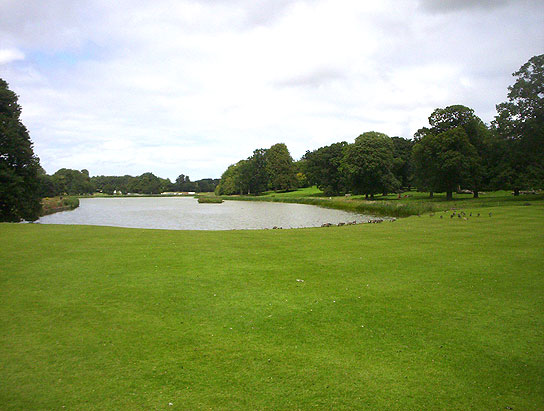
Lake in park
Lake in park
House & garden
East front & garden

Shugborough Estate, Staffordshire

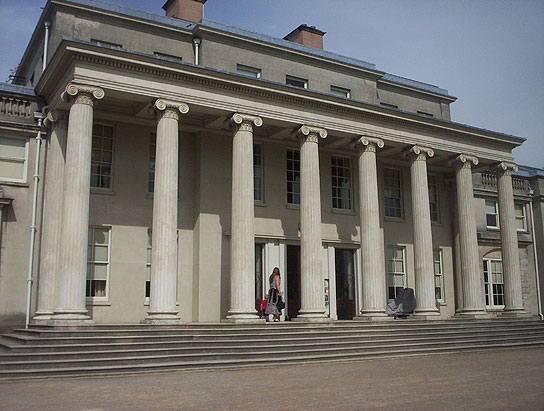
House with pillared portico
National Trust.
On a trip to Wales I could not resist temptation to follow the National Trust sign to Shugborough. Not such a great idea – it’s really an all-day destination, and too far from the M6 for a coffee stop. £3 fee for parking. 2 hours later, rejoined the M6.
There’s plenty to see and do – I just had a coffee and walked around the grounds. I managed to see almost all the Grade 1 listed garden monuments. The Hall has a columned portico, which looks impressive. There is also a courtyard with museums, and a walled garden. The size of the park is such that a shuttle service is laid on to transport visitors from the vicinity of the reception to the house.
Visitors should note that the estate is managed by Staffordshire County Council. Only the house and gardens are free to NT members.
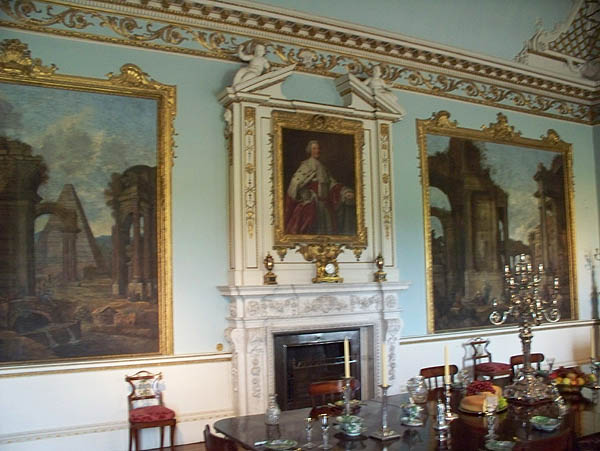
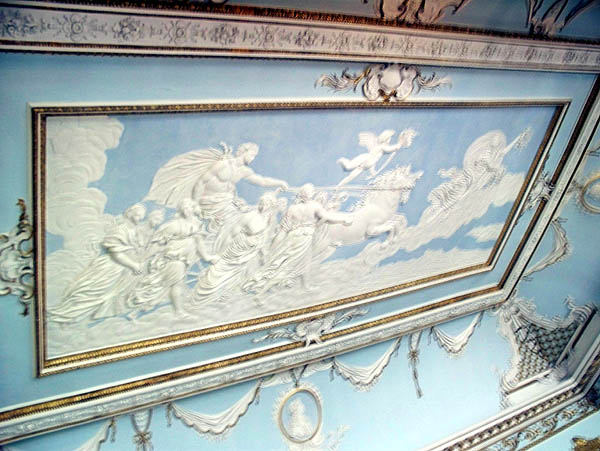
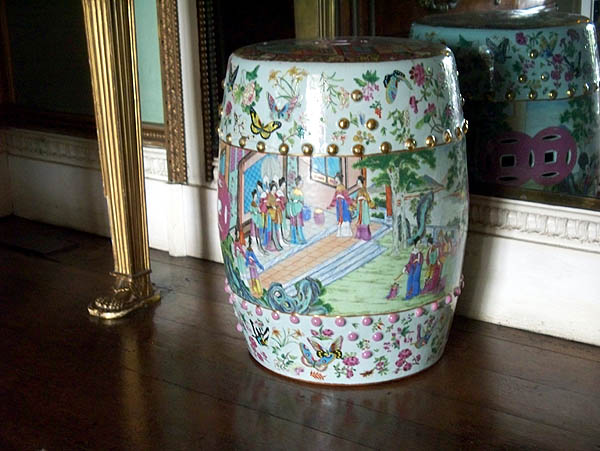
In June 2013 I made a second visit – this time to the house only. The central section of the mansion was built in 1694 with the wings added in 1748. Further extensions were made in 1790-1806. The ground floor contains some fine interiors, also a number of interesting artefacts from China and elsewhere. The State Dining Room is one of the most impressive Rococo rooms in England, with a set of wall paintings of ruins, and an elaborate plasterwork ceiling. The Blue Drawing Room contains some significant china collected by George Anson, including a pair of very fine barrel seats, intended to be filled with pot-pourri. The Red Drawing Room contains fine furnishings including large mirrors and pier glasses.
Upstairs a number of rooms are being refitted to commemorate the connection of Lord Lichfield (Patrick Lichfield), the famous society photographer. Many examples of his photographs are on show as is some of his equipment.

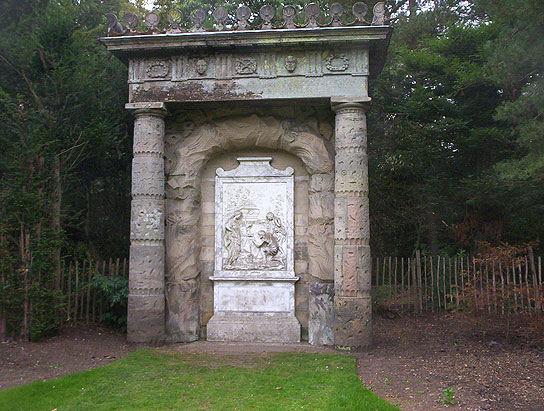
Monument
Gargen monument
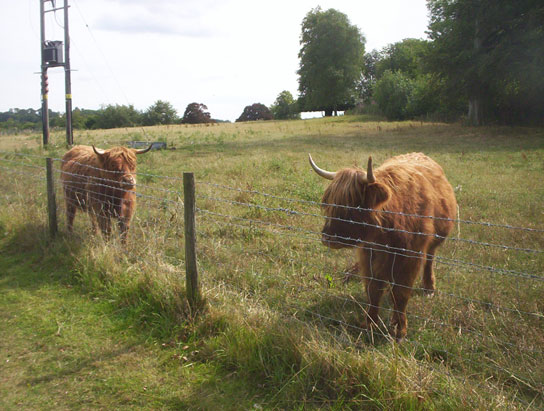
Cattle in field
Estate cattle
Dining Room, Shugborough
Dining Room
Dining Room ceiling
Dining Room
Barrel seat, Blue Drawing Room
Barrel seat
Vase, Blue d.r, Shug
Vase, Blue DR.

Rockingham Castle, Northants.

Rockingham Castle was founded by the Normans, and beseiged in the Civil War. The castle was later demolished. The surviving buildings are based on the castle domestic buildings and outer bailey. The present house was repaired and extended at various times in the 17th and 19th centuries, the most conspicuous addition being the Victorian tower. The Castle stands on the edge of an escarpment giving dramatic views over the Welland Valley and several counties.

There is a complex of old buildings inside what used to be the castle’s outer defended area. Despite the imposing medieval gateway, which appears on the publicity photos, there’s less castle here than the publicity might suggest. There’s a self-guided tour of some old interiors, mostly on the ground floor, and if you climb the (Victorian) tower, there is a superb view over two or three counties. The interiors exude a comforting oldness, rather than offering spectacular treasures or jaw-dropping interiors.

The old service buildings around the courtyards are of some interest. The 18 acres of gardens include some notable areas, including the circular gardens on the site of the original castle, and the great yew hedge.
Opening dates are somewhat restricted. Worth a visit if you are in the area.

Plas Newydd, Anglesey

House
National Trust.
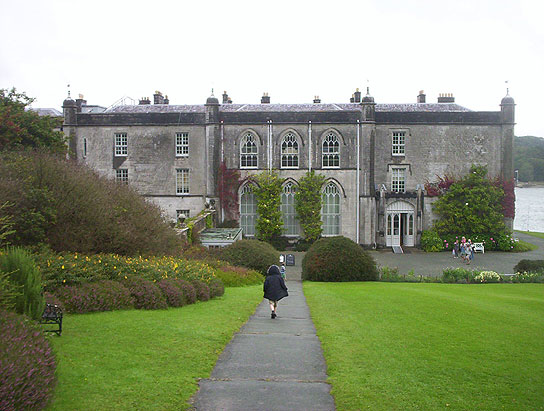
Plas Newydd originated in the 14th century, but was greatly remodelled in the 18th century by James Wyatt, the noted architect, who refaced it, blended the towers into the building front, and substantially made it into the building that stands today. The building has various Gothic features introduced by Wyatt. The interior was updated in the 1930’s and has Rex Whistler associations, including his largest painting and an exhibition.

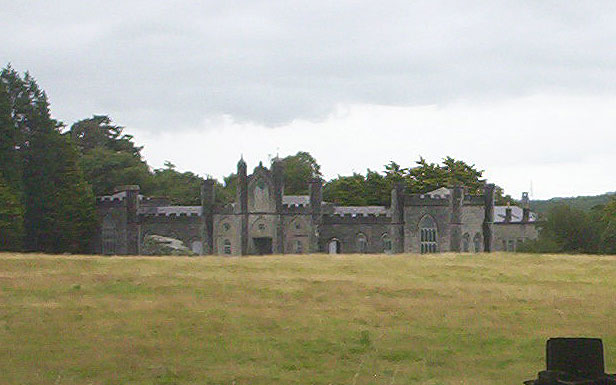
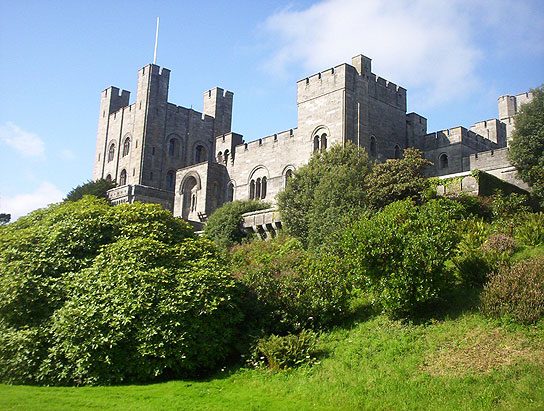
On making a lengthy hike from the entrance, car park etc, one sees an impressive Gothick building, which one would assume is the house. In fact it’s the stable block. (Note the megalithic stone in front of the left side of the stables in the photo below.) The house only comes into view in the last few hundred yards, as one descends towards the south end & entrance. Also, the water beside the house isn’t a lake, it’s the Menai Straits. The Britannia Bridge is visible. The interior of Plas Newydd is fairly interesting, and notable for a large mural by Rex Whistler. He was also a friend of the Pagets (particularly the daughters). James Wyatt reworked the house in 1793-99. There are also substantial gardens in which the visitor can stroll, with a marine walk along the Menai Strait.
This is an interesting place to visit, and there are spectacular views from the park.

Gothic building
Stables

Red House, London

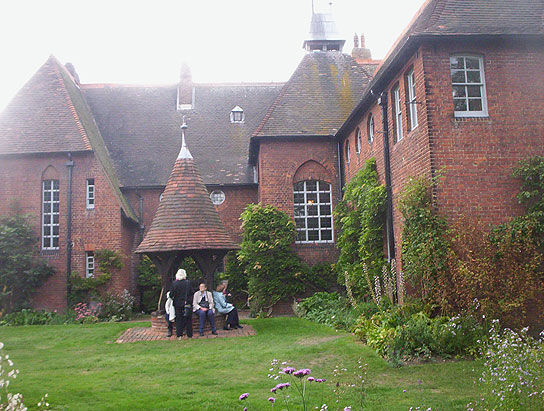
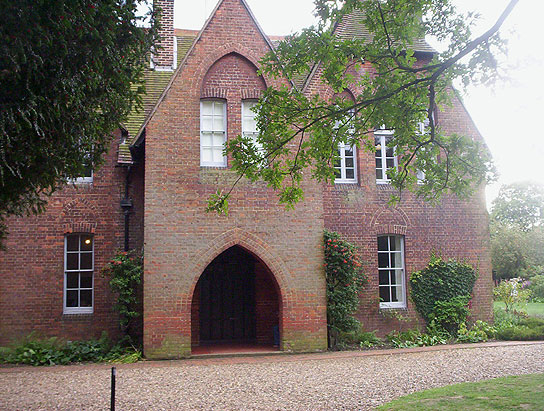
Red brick house
National Trust.
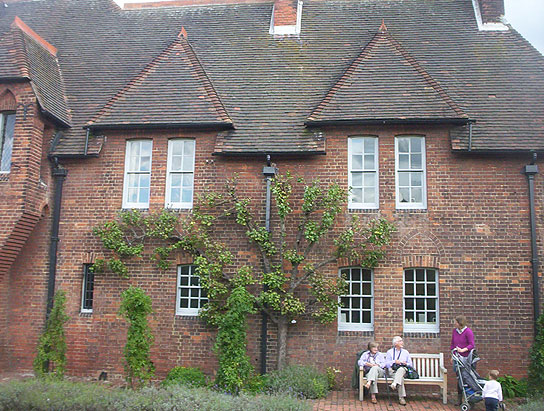
The house, rather vaguely signposted, lies near Upton Road in the Bexleyheath area of SE London, near the A207 and Bexleyheath railway station. B11 and other buses run nearby. The building is smaller than I imagined before seeing it – not a mansion but a substantial suburban gentleman’s residence. It’s of interest essentially as the only house built for William Morris, the famous Arts & Crafts movement designer. The architect was Morris’ friend Philip Webb. Few of the original moveable contents remain, but the architecture, windows and some items of decoration are much as built. There is a pleasant and quite large garden, laid out in several sections – itself an innovation at the time. Surprisingly, Morris only lived in the house from 1860-1865, but later owners were sympathetic to his creation. Morris tried to found an artistic community at Red House, but sold it when this failed.
It doesn’t take long to go around the house and gardens – I arrived after 3pm and had seen everything by about 4pm. Fewer than half the rooms are open to the public. On arrival you should note that visitor reception is away from the house, in the old stables hidden behind trees to your left.
Curious facts: Morris disliked industrial production and wanted to re-instate the craft traditions of an earlier era, but his creations, popular with some of the middle classes, were too expensive to be bought by the craft workers he admired. Morris himself was quite well-off – his house cost £4000, which was twice what my parents’ house cost a century later. The house, which originally had murals and wall-hangings and no wallpaper, is now partially papered with Morris & Co designs. When I visited, there was an exhibition about Morris & Co designs in a room downstairs.
And don’t put your stuff on the table in the dining room – the NT don’t like anyone to touch it. This table, designed by Philip Webb, was bought recently for £130,000 !

Nearest railway station is Bexleyheath (3/4 mile) . There is no car park at the house. Recommended parking is at Danson Park leisure facilities – which is no closer than the railway station. Buses run along the A207 nearby. On foot from A207, walk down Upton Rd, which is almost opposite the road from the station.
Done here and looking for something else to do? Danson Park and its historic house (0.8 mile)look really interesting.

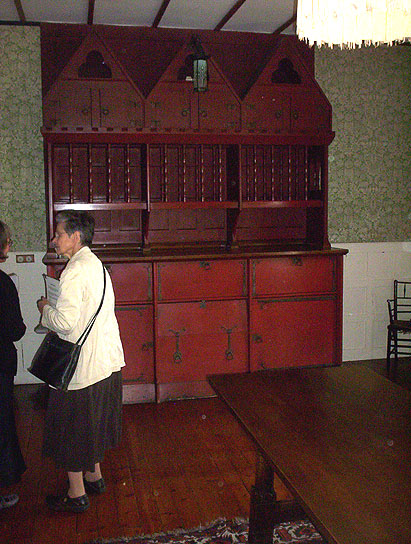
Red dresser
Webb dresser
Red brick house and lawn
Garden side
Red brick house
Front

Penrhyn Castle, Gwynedd

Castle
National Trust.
While there has been a building, fortified or otherwise, on the site for many centuries, the place was modified beyond recognition in 1820-1840 by Thomas Hopper, to create a mock Norman castle. The client was Hopper’s client was George Hay Dawkins-Pennant, who had inherited the Penrhyn estate on the death of his second cousin, Richard Pennant, who had made his fortune from Jamaican sugar and local slate quarries. Cost wasn’t a problem, and it is estimated that the house cost the equivalent of £49,000,000 in today’s money. The house is one of the most admired of the Victorian ‘mock castles’ and contains some jaw-dropping Norman-style interiors. In addition, hanging on its walls is one of the finest art collections in North Wales, with works by artists such as Rembrandt, Canalletto, Richard Wilson and Palma Vecchio.
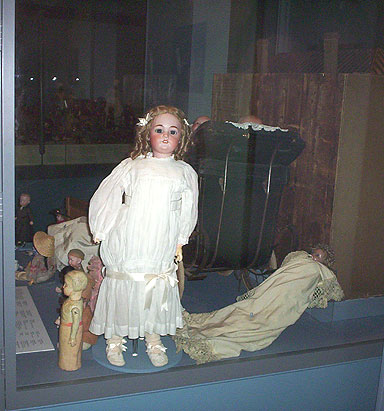
Outside, there are extensive grounds, and in the courtyard area are several exhibitions, including full-size (not model) narrow gauge and standard gauge mineral railway shunting engines and rolling stock. There is also an interesting exhibition of dolls.

The house does have a notable resemblance to a Norman castle. Inside it’s a riot of carved decoration, all carved to a high standard. (One guide said that after going round one might want to lie down and look at something plain 🙂 ) It still has the original furnishings, often positioned by the NT in their 19-century positions. The Great Hall is the major show-piece, followed by the Library, and the Grand Staircase and other state rooms. The downstairs salons contain a quantity of paintings so valuable that even a lottery winner couldn’t afford to buy them. There’s also an accomodation tower, where the family mostly lived, and a warren of service rooms.

The kitchen and other rooms on the lower ground floor are part of the Grounds admission. The collection of full-size railway engines is unexpected but worth a look if you are a train buff. Presumably the nucleus of the collection came from the family slate mines. I didn’t explore the grounds on foot, as driving from the entrance to the car park and then walking up to the house was enough for me.
This is one of those locations where the sat-nav can lead you astray. Driving from nearby Bangor, the post-code took me to some unmarked gates, possibly the back entrance to the estate, while the visitor entrance was a mile or two further east.

Dolls in display case
Dolls on display

Kenwood, London

English Heritage.
Kenwood was remodelled by Robert Adam between 1764 and 1779 into a majestic villa for the judge, Lord Mansfield. In 1927 Lord Iveagh bequested Kenwood to the nation, along with a collection of pictures. The Iveagh Bequest includes important paintings by many great artists, including Rembrandt, Vermeer, Turner, Reynolds and Gainsborough. Upstairs is the Suffolk Collection of portraits, notable for the costumes depicted. The Kenwood interiors are also worthy of note.

I didn’t have a lot of time to enjoy Kenwood before it shut but I did manage to look at the pictures, which include some famous and impressive works. Surrounding the house is some pleasant leafy parkland.

Admission to Kenwood is free to all.
Bus 210 stops near Kenwood.
If you are planning a 3-in-1 day visiting Fenton House, 2 Willow Road, and Kenwood, don’t try walking across the Heath – it takes too long for the purpose and it is too difficult to find one’s way. A taxi might be quickest. Or use Bus 210.

Eltham Palace, London

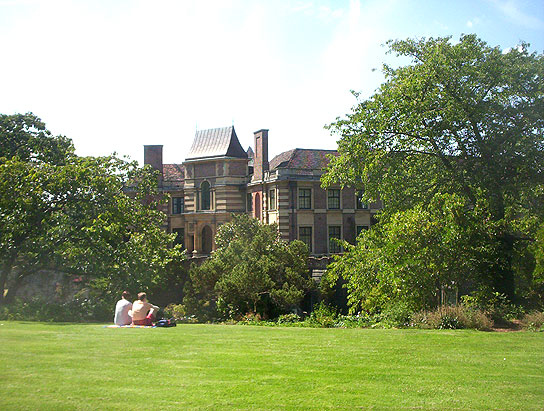
House and grounds
English Heritage.

There was a royal palace on the site, but all that remains is the great hall (much restored) which is incorporated into the 1935 Art Deco mansion. The Courtaulds bought a 99 year lease and demolished some old buildings (mostly not really old or interesting) before building their state-of-the-art Art Deco mansion.

It appears that no expense was spared – it’s big, and the lady liked gold plated bath taps. The Courtaulds only enjoyed their house for about 8 years, before the war and persistent near misses from sundry German munitions caused them to move to Scotland. They never returned, and the house was leased to the Army education service, who used it for half a century. English Heritage have now restored the house to its 1935 appearance, using reproductions where items had disappeared. The principal rooms, with walls and ceilings in Art Deco styles with lots of wood veneer panelling, and some inlaid marquetry pictures, are well worth seeing. There are also extensive gardens, which have been restored to something like the 1930’s appearance (but minus the swimming pool and squash court). Medieval remains can be seen in the grounds. The original 1930’s outbuildings, greenhouses, etc are around the EH car park, outside the ticketed area and a little way off the pedestrian access.

The house and gardens are well worth a visit. Not to be missed if you are a fan of Art Deco style.
I travelled here by train.

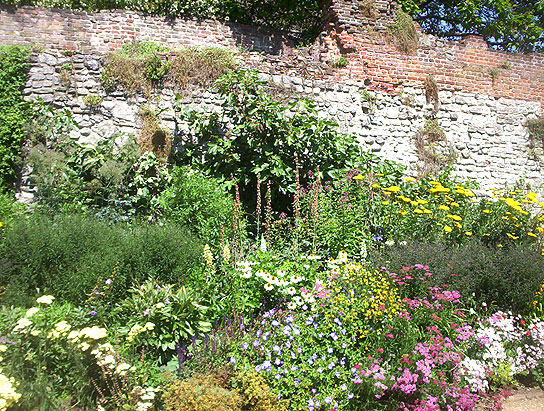
Garden
Garden
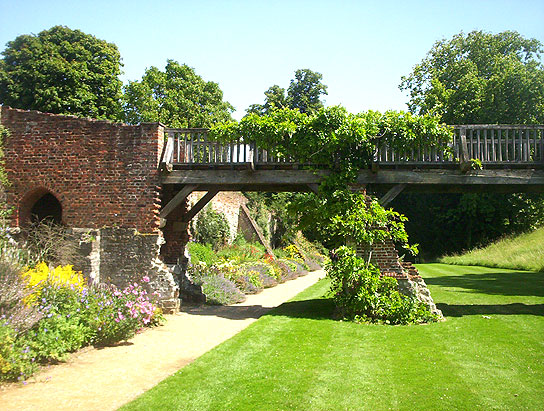
Garden with bridge
Garden