Privately owned/HHA
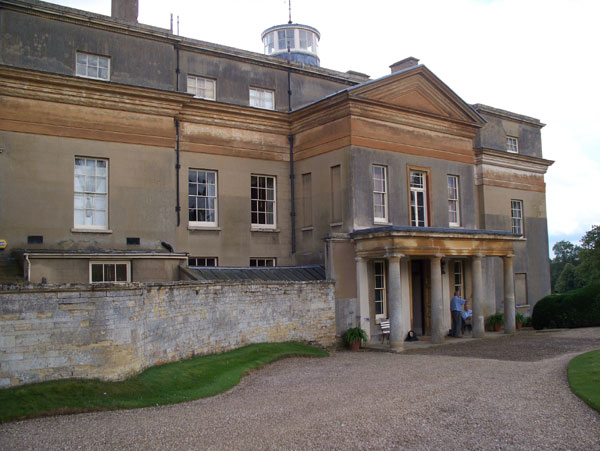
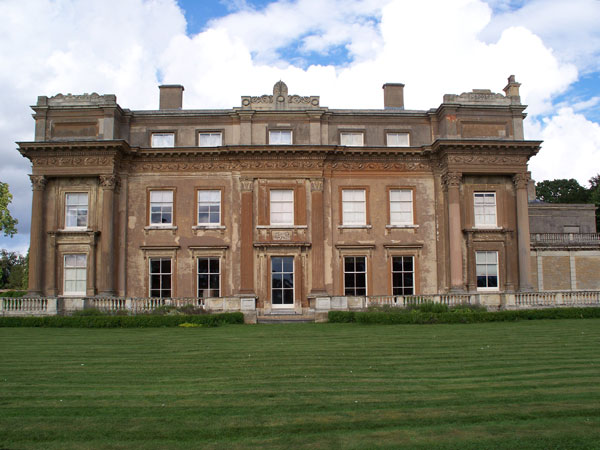
Turvey House was built by one John Higgins in 1792, on the ruins of an earlier house. In 1813 his son inherited and substantially remodelled the house, turning it into a neoclassical mansion on three floors, and moving the entrance from its original position facing the river, to the courtyard, where it is next to a wall hiding the kitchen and service quarter. A tunnel allows the servants to come and go from the kitchens out of view of the gentry. There are 21 bedrooms (including former servants’ rooms and nurseries).
Downstairs the rooms on view contain much fine furniture and ceramics, and relics from foreign travels. The entrance hall has a dome reaching up to the roof. Also on view are the Drawing Room, Dining Room, Library and Billiard Room. Upstairs, the visitor can enter or peer into some of the bedrooms.
There is a fine cast iron spiral staircase, said to have come from the Great Exhibition of 1851, linking the first and second floors.
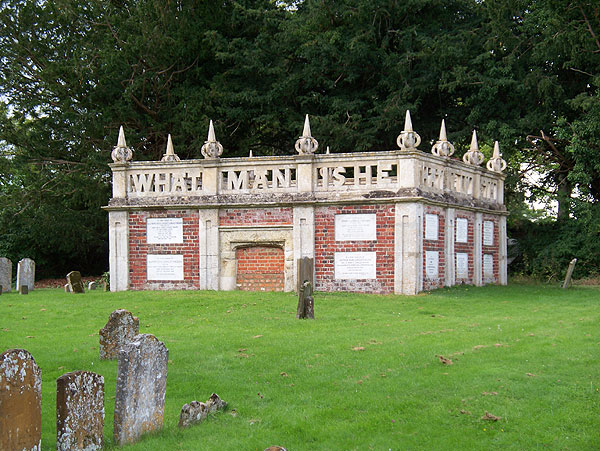
When navigating to the house, I suggest that you not use the postcode (I did, and ended up in the middle of the farm estate.) Use Turvey, Carlton Road instead. The entrance gates for the house are in the middle of the village, next to the church. If you can’t locate the church, look for the brown signs in the middle of the village to “Country Park” and follow this road for about 100 metres. There is an unusual Higgins Mausoleum in the churchyard. The inscription on it reads: What man is he / that liveth /and shall not / see death?
The house is opened on sundry dates during the summer months. It’s worth a visit if you are in the region. Turvey House entranceHiggins mausoleum
National Trust
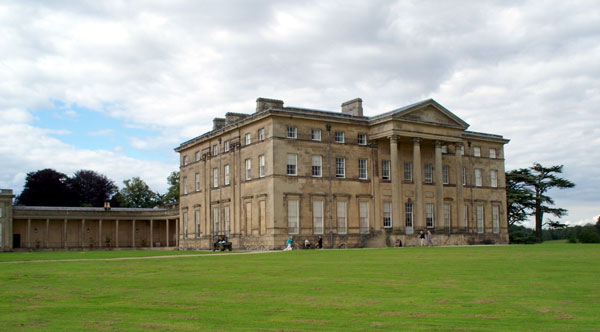
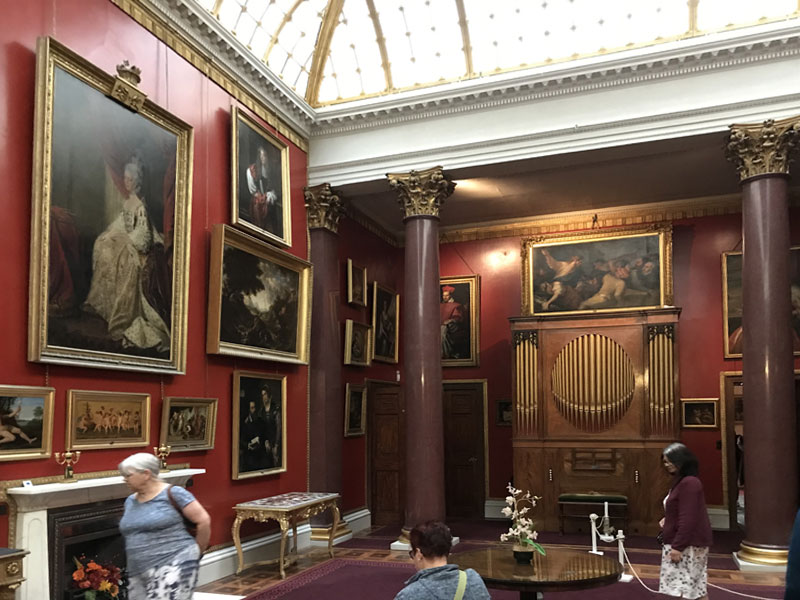
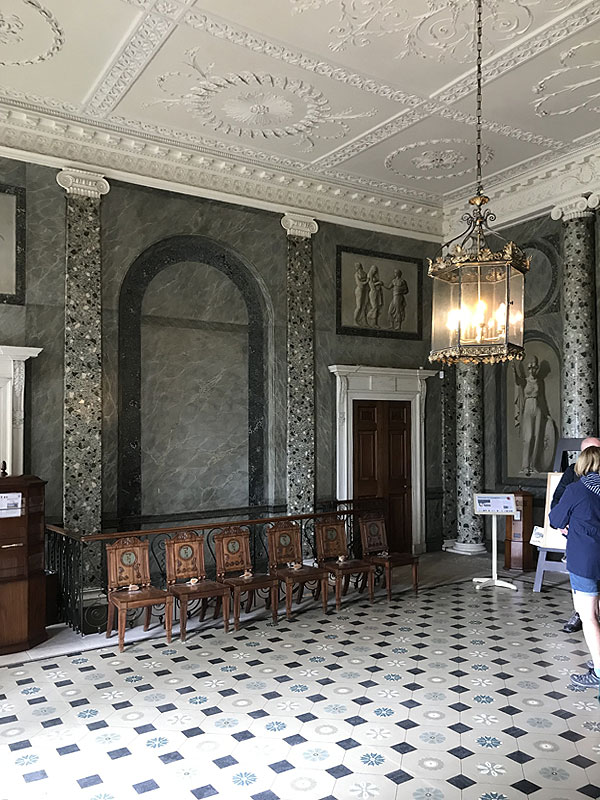
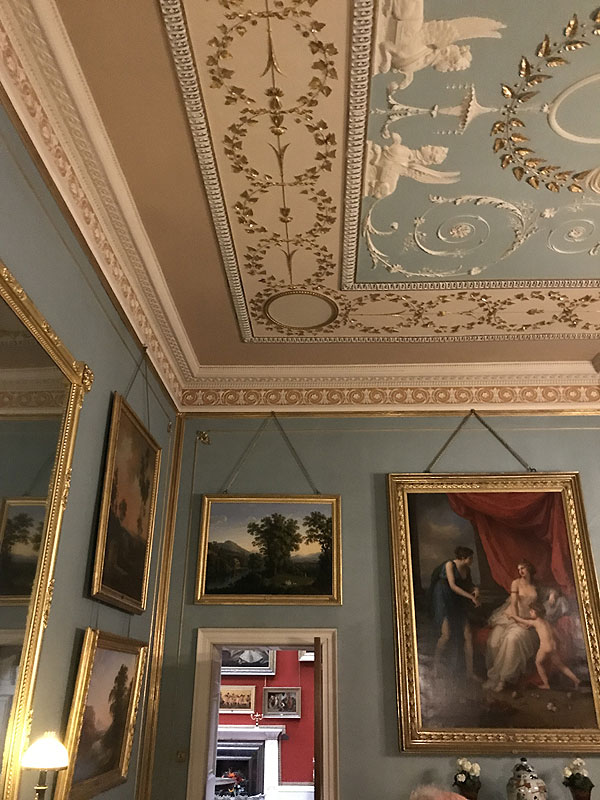
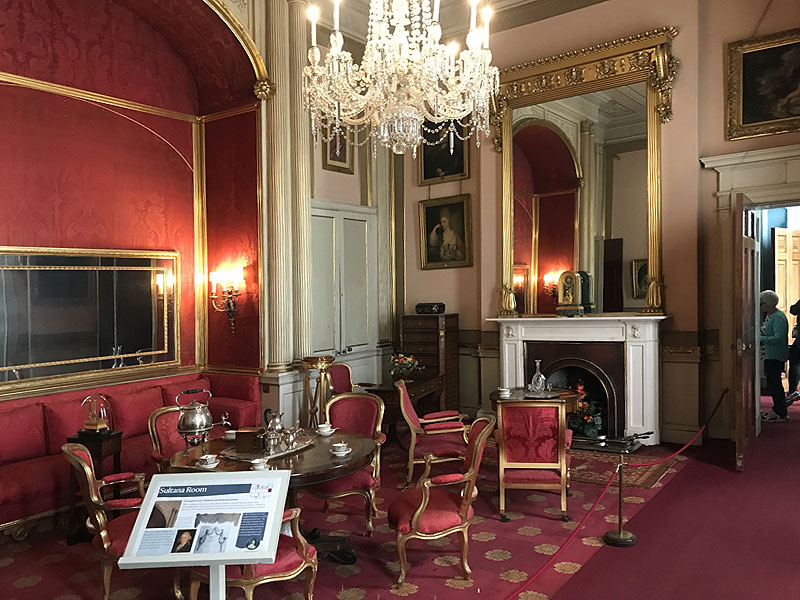
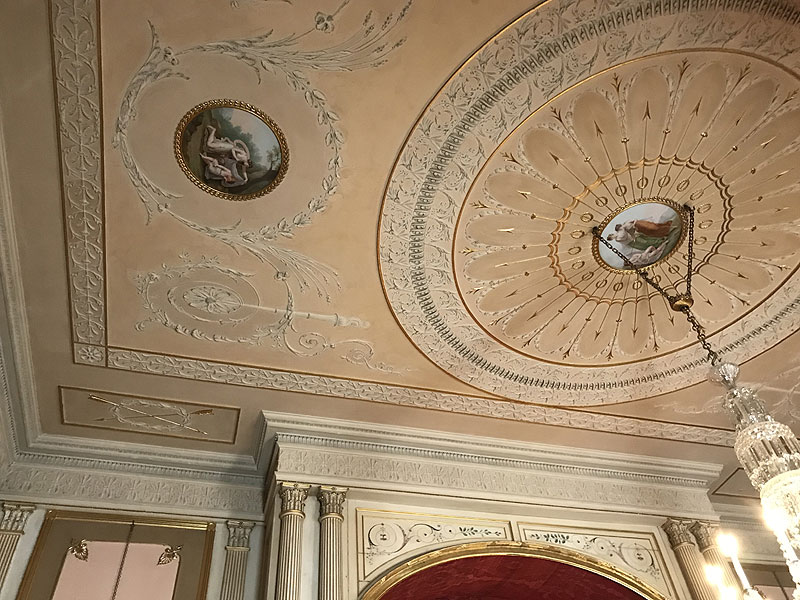
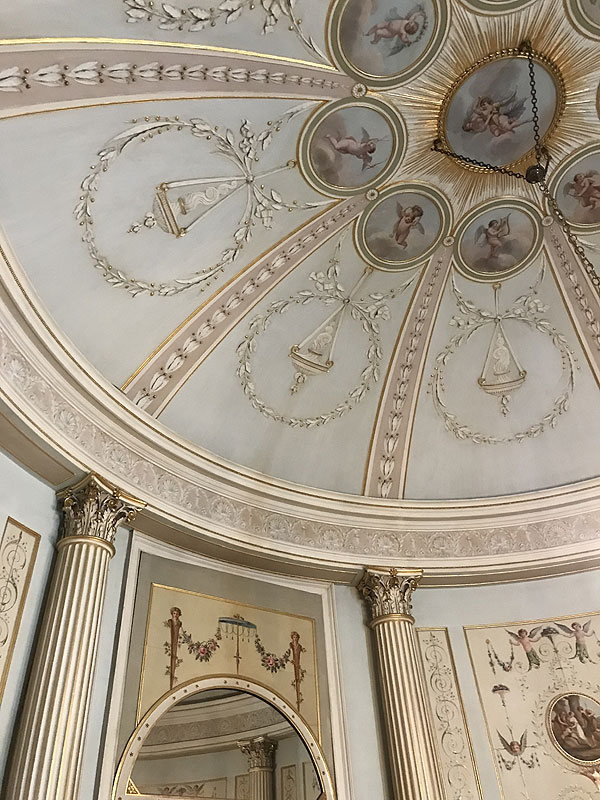
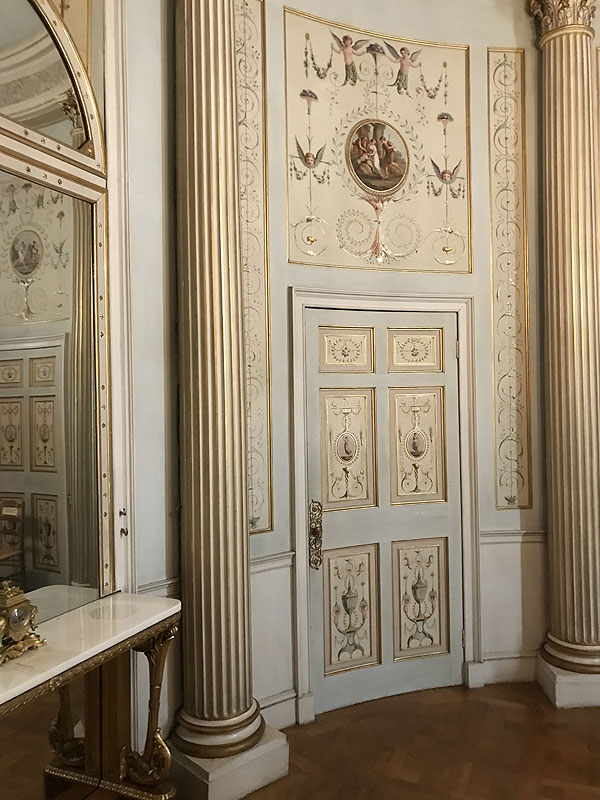
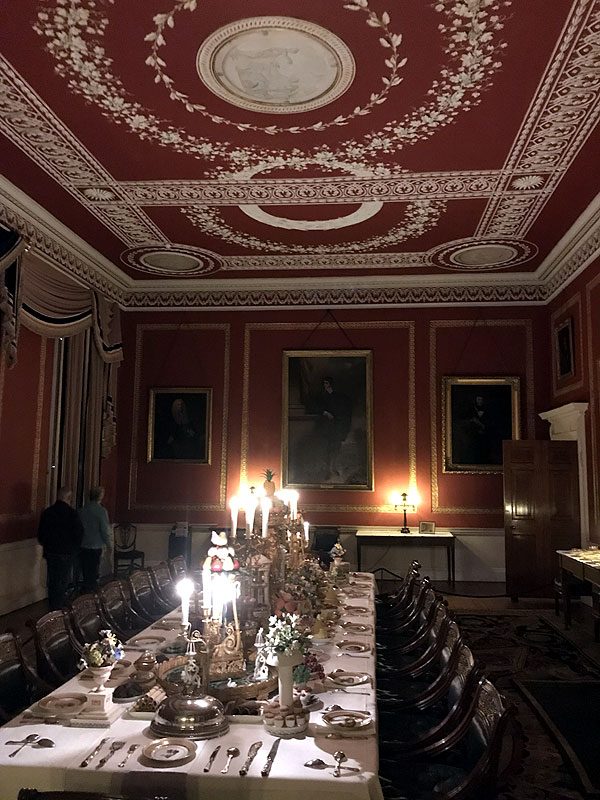
Successful politician Noel Hill, later 1st Lord Berwick, built Attingham Hall, a grand Georgian mansion, in the 1780’s on the site of an earlier house. Successive Lords Berwick completed and furnished the house, and made alterations such as adding the picture gallery with its innovative iron-framed roof lights, and demolishing the remnants of the earlier building on the site.
Attingham came to the National Trust in 1947, and for many years parts were let out as a Further Education college.
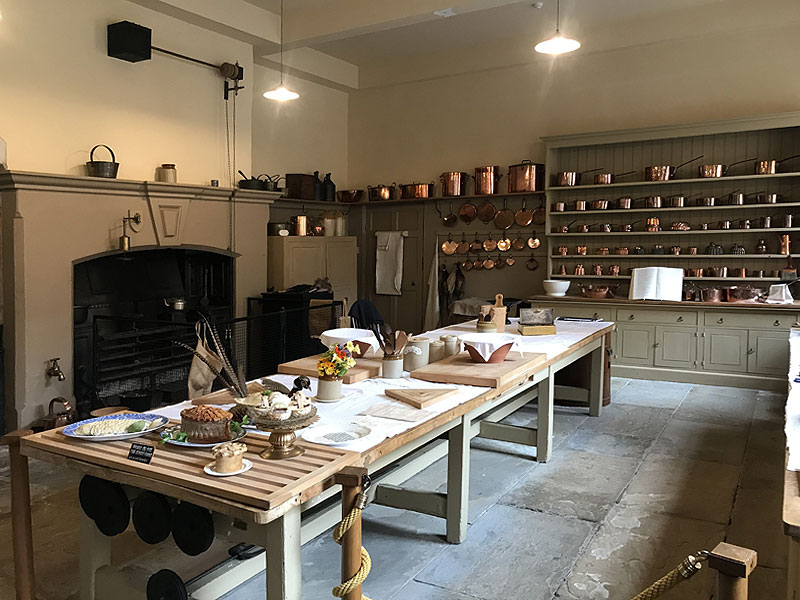
The grand rooms on the principal floor are all on display, with masculine styled rooms on one side of the house, and feminine themed rooms on the other. The principal rooms with their superb decorations and plasterwork are well worth a visit, but upstairs seems to be a work-in-progress and most of the upper floor is not open to the public. The service basement and kitchens are open to visitors.
There is an extensive park including an imposing stables block, and a walled garden.
The NT guidebook rather irritatingly does not contain a floor plan or room guide, so if you see a separate floor plan available you might want to avail yourself of it.
I visited again in 2023, again touring the principal rooms. There is no general access to upstairs, but an extra-cost guided tour is available to visit a two-floor apartment in the East Wing which contains a number of furnished and grand rooms. This apartment was occupied by the last (8th) Lady Bervick, and then was leased to a Mr Cohen, a Regency furniture collector, who died quite recently. The rooms are as he left them. This extra tour is well worth the fee. You are advided to book it at the reception on arrival to save yourself a lot of trekking about, later.
In 2023 I also visited parts of the grounds, including the ice-house (disappointingly just a hole in the ground), the Bee House, and the large Walled Garden. The latter is worth the walk. Nearby are some excavations uncovering lost pleasure ground fratures. The stable block, on the entry route, is also worth a look around. If you make an all-day visit, there are circular walks around the extensive grounds and estate. KitchenPicture GalleryHallCeilingRoomCeilingCeiling, BoudoirBoudoirDining RoomWalled Garden
National Trust
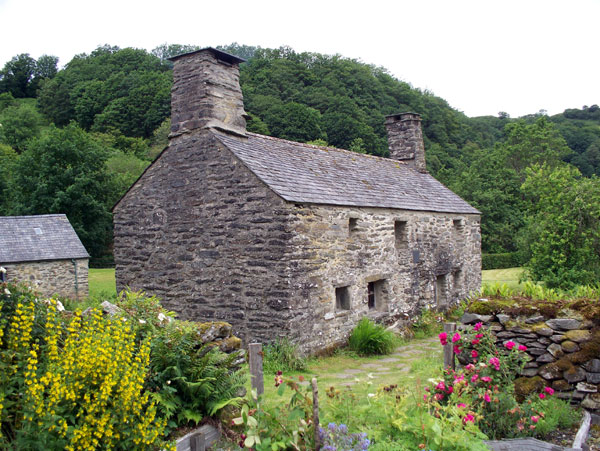
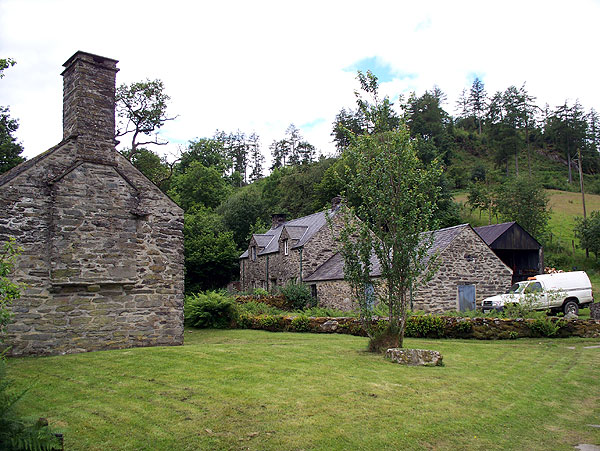
Ty Mawr Wybranat is a traditional stone-built upland farmhouse, set in the heart of the beautiful Conwy valley. The site is very important in the history of the Welsh language, as Bishop William Morgan once lived here. Morgan translated the Bible into Welsh, and in the process produced a standardised version of Welsh and guaranteed the survival of the language. The buildings indicate how people once lived here without modern comforts, and house an impressive collection of Bibles in nearly 100 languages. Don’t miss the opportunity of chatting with the warden.
In former times the region was much less isolated, as a major drover’s road went through the valley (think mediaeval M4).
Surrounding the property are opportunities for woodland walks.
Warning for Satnav and Google Map users:
The National Trust direction to approach via the village of Permachno (A5/B4406) should be treated as an instruction, not a suggestion! This route is single-track, steep, narrow and twisty, but at least it’s a road, and leads to the car park 500 yards above the house. The alternatives are farm and forest tracks – you can get a road car through, but when you find what they’re like – gated, overgrown, and no passing places – you’ll soon wish you hadn’t started. Do not approach via a turning off the A470.
You can walk from Pont-y-Pant railway station, (2.5 miles) but be aware that this is a bog-and-mountain trek, not a nice stroll. You should take hiking boots, OS map, and compass as there is no obvious trail.
(Don’t complain about the bilingual road-signs when visiting Wales: the Welsh-speakers are very fond of them and would be quite happy to have them monolingual – in Welsh! The rebels used to drive around at night covering English-only signs in green paint…) House, cottage and barn
National Trust
Plas yn Rhiw is a house of 16th century origins, rescued from dereliction and restored by the three Keating sisters, who bought it in 1938. Architect Clough Williams-Ellis (of Portmeirion fame) had a hand in the restoration. Externally the house has an imposing Georgian frontage and beautiful gardens on a steeply sloping site overlooking Cardigan Bay. Signs of the raising of the 2nd storey walls in the early 1800s can be seen in the stonework. There are spectacular views from the house looking across the bay. Outbuildings from an earlier period of the estate’s history, some ruined, lie near the house or in the gardens.
Inside, many of the rooms seem cramped and old-fashioned, and contain a clutter of the Keatings’ possessions. Elegant Georgian chairs, fur coats and gloves indicate comfortable gentility. Contents include Honoria Keating’s landscape paintings, period furniture, a library reflecting their interests, and 1930’s domestic electrical appliances.
The site near the tip of the Gwynedd peninsula is somewhat remote, but the effort of getting there is well repaid. Musicians on verandahView from houseRhiw from front near Plas yn Rhiw
Private
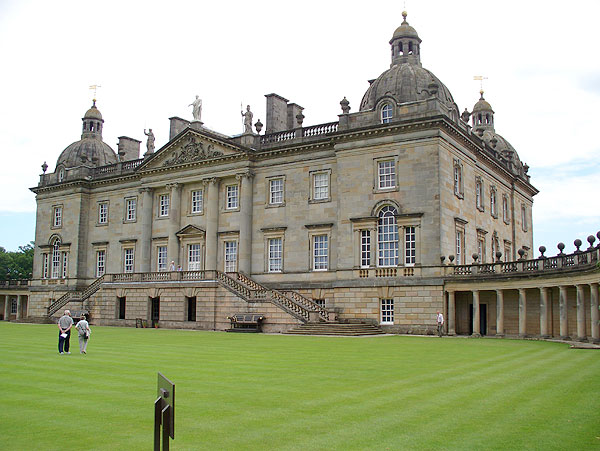
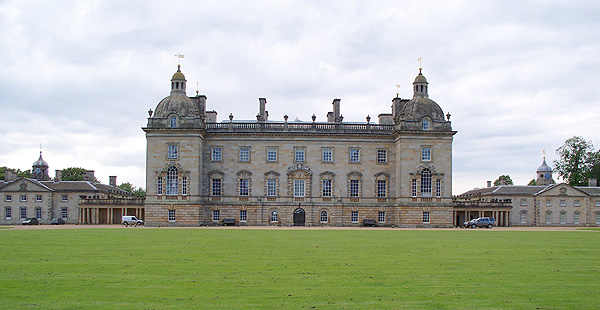
Houghton Hall is one of the grand houses of Norfolk, and was built for Sir Robert Walpole, successful 18th century politician, and known as the 1st British Prime Minister. It seems that no expense was spared in fitting out the house, and it appears in lists of the 10 grandest houses in England. The decor and contents are largely original, though the original paintings were sold off by one of Walpole’s descendants.
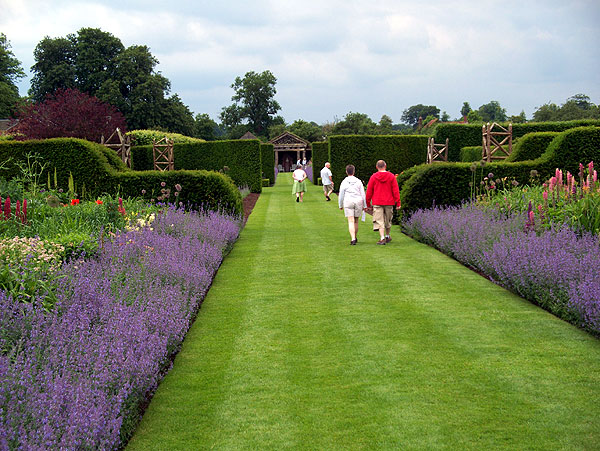
The state rooms are the only rooms on display, and it doesn’t take long to go round (about 1 1/4 hours), leaving the visitor to eke out the rest of his/her half-day visit by looking at the walled gardens, the modern art installations in the grounds, the model soldiers and other exhibits in the stable block, or going around the state rooms again. The state rooms are very ornate and impressive (sorry, no interior photos here).
Modern visitors enter by the tradesmen’s entrance at the back. The original grand entrance stairs at front and back were removed by an eccentric owner, the one now on the west side being a modern replacement. The award-winning walled garden is well worth a visit.
If you are wondering what is or was in the wings, the one nearer the stables was originally the kitchens and is now estate offices, and the other one was an orangery and art gallery and now is mostly used for storage.
Practical notes: As usual, ignore your post-code sat-nav while in the vicinity of the estate. Mine told me to turn right when I could see the entrance gates dead ahead. On leaving the car park later, it took me in a circle around the grounds. The real exit route is not as clearly marked as it might be…
Houghton Revisited
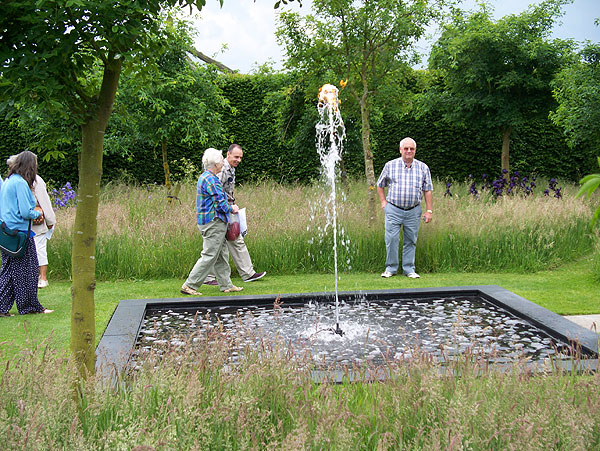
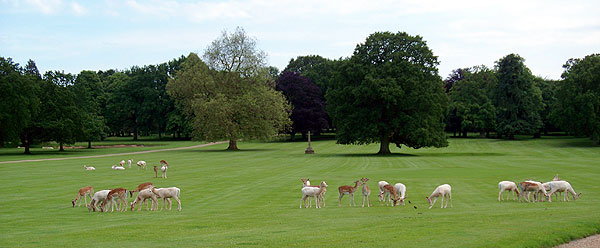
I visited the house again in Oct 2013 for the once in a lifetime exhibition. As well as the fine pictures from the Hermitage, I was able to see the Library (part of the exhibition but not part of the 2012 tour) the Church, and the Palladian Water Tower. The Water Tower is accessible, but is a long hike along an avenue of trees. Yes that fountain is on fire!Walled GardensHoughton, East frontDeer at Houghton
National Trust
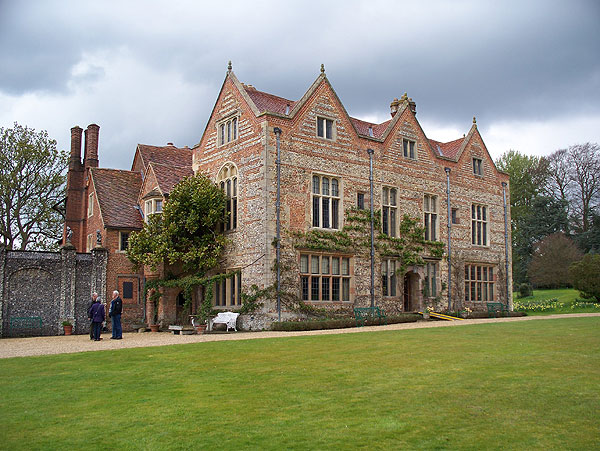
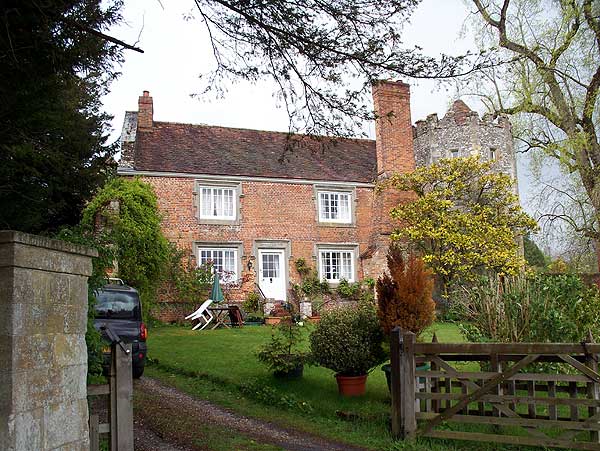
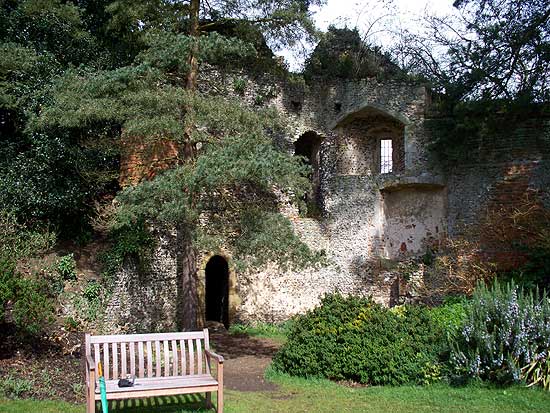
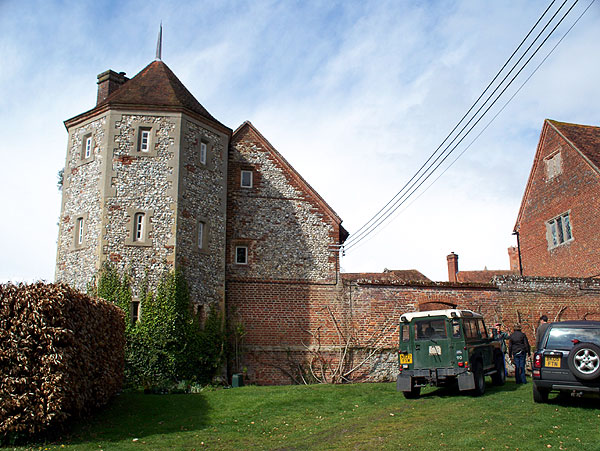
Greys Court is a former family home and estate, in a rural Chilterns setting. The 16th century house and the gardens were home to the Brunner family until recent years. Following the death of the last resident, the National Trust carried out major repairs and refurbishment. Some of the buildings face a central green. There are also a series of walled gardens, some medieval towers, and an old well house enclosing a Tudor donkey wheel.
Most of the rooms are presented as they would have been when the Brunners lived there.
The house interior is worth a visit, and the various buildings in the grounds are also of interest. Younger visitors may be disappointed to discover that the medieval towers are not accessible. Out in the grounds is an ice-house which has a thatched roof instead of the usual vault. The walled gardens will be of interest to garden admirers. Walks are possible in the wider estate. Practical details: For the final approach, follow the brown signs and ignore your Sat-Nav, otherwise you will probably find yourself on a long narrow twisty single track country lane.
A visit here can be paired with a morning visit to nearby Nuffield Place. Dower House (private)North-east TowerSouth-West Tower
National Trust
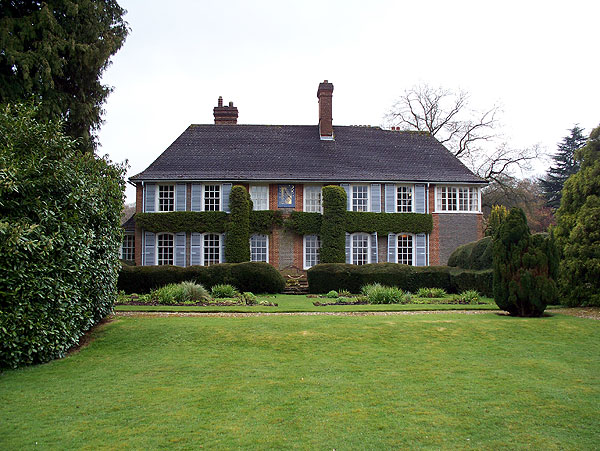
The former home of motor car manufacturer William Morris (Lord Nuffield) came under NT management recently and was first opened by them in April 2012. During his lifetime, Morris was famous for the amount of money he gave away: about £30 million (far more in today’s values.) The house is presented much as Morris left it, with his furniture and fittings. It was originally built in 1914 for a shipping magnate. Morris bought it in 1933 and had it furnished to reflect the tastes of the 1930’s. The gardens were laid out just after WWI. Lord and Lady Nuffield were both keen gardeners.
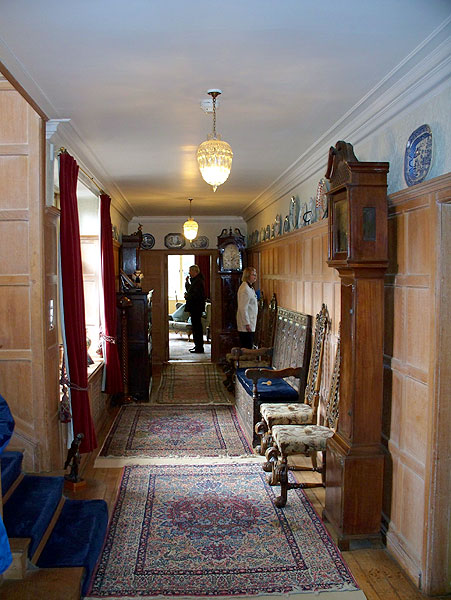
The house is in a rural setting, with paddocks and outbuildings, and with well-kept gardens around the house. By millionaire standards, it is not particularly lavish. (See, for instance, Eltham Palace, built in the same era.) The downstairs rooms are comfortably furnished with period reproduction furniture and a collection of china and other items. Also on show are a radiogram and two early TV sets which no doubt were all top of the range in their day.
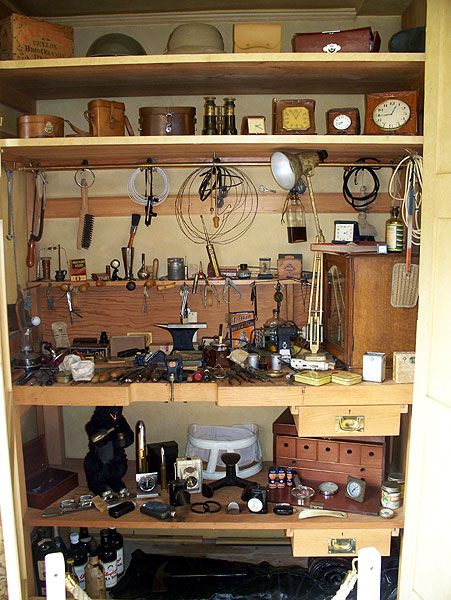
Upstairs, the principal and guest bedrooms are mostly set out as they were in Lord Nuffield’s day. His wardrobe containing a set of tools and other curios is popular with visitors!
Nuffield Place is well worth a visit. Part of the interest lies in finding out about Lord Nuffield and his car company. A visit here can be paired with an afternoon visit to nearby Grays Court (NT). Ground floor corridorTool Cupboard
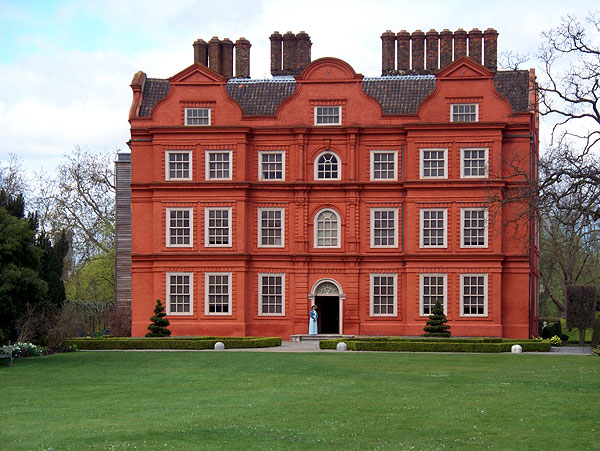
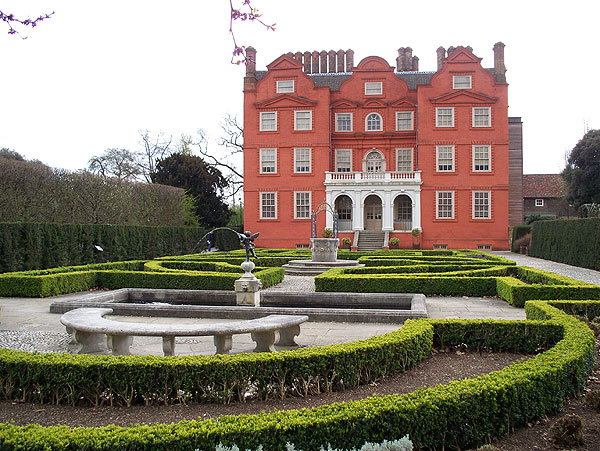
Kew Palace, front The former Royal Palace is now in the care of Historic Royal Palaces, as is Queen Charlotte’s Cottage. Kew Palace was originally built for a prosperous merchant, and later acquired and adapted for Royal use. It became the home of King George III, Queen Charlotte and family. Other buildings and another palace used to stand in the immediate vicinity.
The ground and first floors have been restored and furnished to recreate their appearance when occupied by George III. The third floor can be seen just as it was when abandoned in the 19th century. The Palace makes an interesting visit. It and the Cottage were curated by young ladies in period costume on the day of my visit.
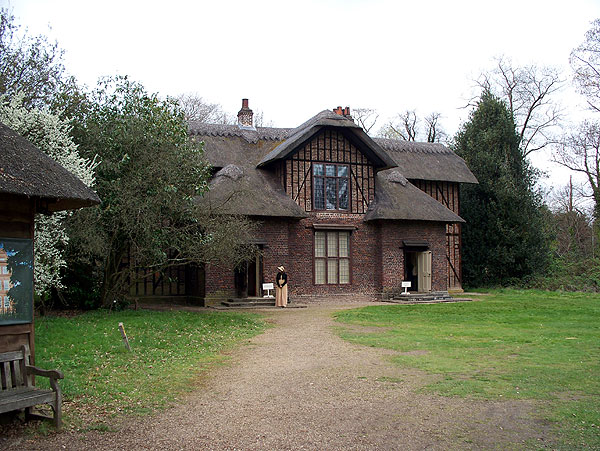
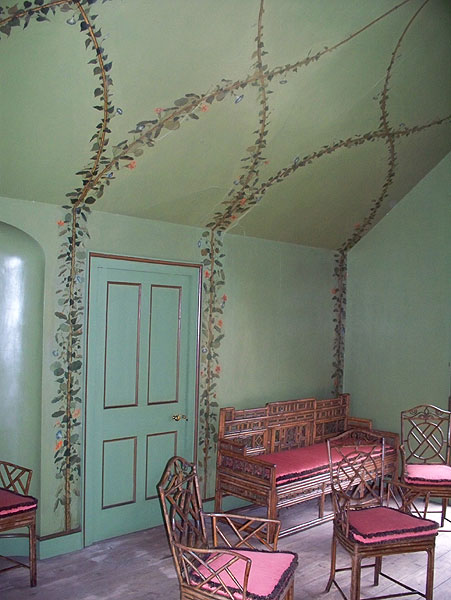
At the other end of the park is Queen Charlotte’s Cottage. This rustic building, once used for Royal picnics, is notable for its size ( similar to a 4-bedroom detatched villa), and its inefficient use of interior space (two large stairwells and only two rooms of any size.)
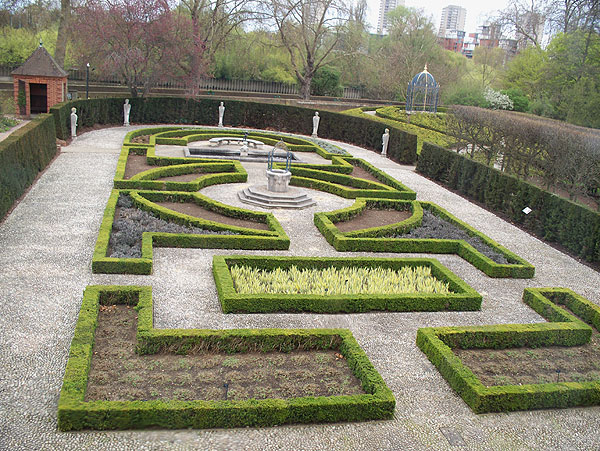
Practical Details: Kew Palace is situated in the north-east part of Kew Gardens. To visit it you need to purchase an admission for the Gardens (not cheap!), then a Palace admission ticket at the welcome suite about 100 metres from the Palace. It is therefore suggested that, unless you like throwing your money about, you allot a whole day to visit both. Queen Charlotte’s Cottage (within the West end of the Gardens)is open weekends during the warmer months. There is no entrance charge for the cottage. Queen's GardenKew Palace - rearQueen Charlotte's CottageCottage Picnic Room
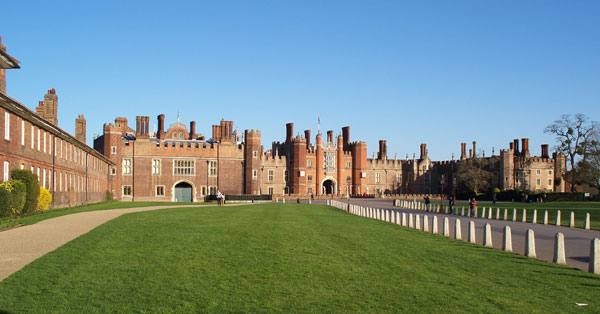
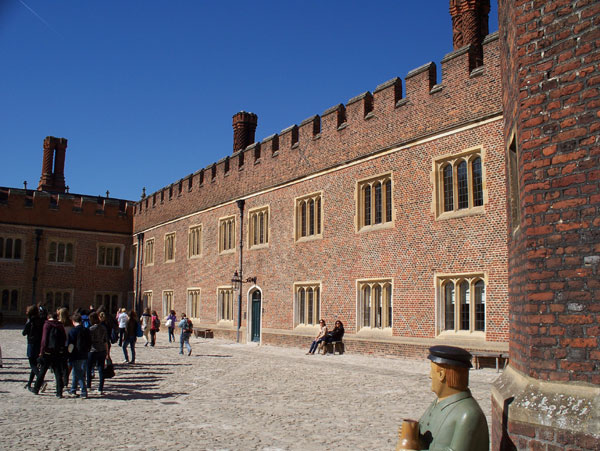
This is one of the Royal Palaces, with the present buildings started by Cardinal Wolsey, extended for Henry VIII, and with a baroque Palace added on for William and Mary, and some further development for the Hanoverians. George II was the last monarch to occupy the Palace, which thereafter was used to provide grace-and favour residences for deserving persons. The residents were typically gentlewomen or widows of men who had provided some distinguished service to the State. The 1000+ rooms available were partitioned up to provide over 50 multi-room apartments.
In the 20th century the phasing out of the grace-and-favour apartments took place for a number of reasons, the foremost being the impracticality of bringing the often crudely adapted apartments up to 20th century standards of heating, plumbing and convenience. Today, large areas have been reclaimed for public access, and the unseen rooms are used for storage, offices and staff accommodation.
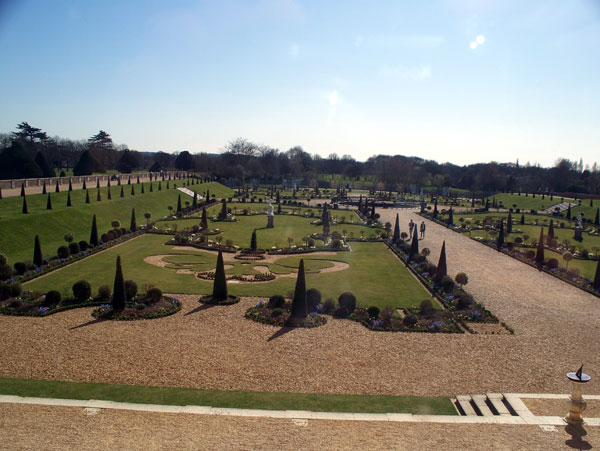
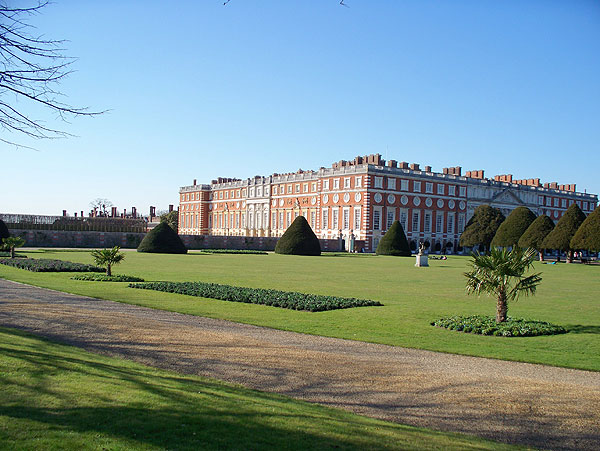
The Palace is big; more of a brick village than a building. The two principal phases of development can be best seen if one stands in the Privy Gardens near the river, where the squarish Baroque block is in front of you and a forest of Tudor chimneys is to your left. The gardens are big too; the best views of the formal gardens can be had by peeking out of windows as you tour the Palace. A canal separates the gardens from the Home Park, but it’s possible to access the Park, where the Long Water stretches off into the far distance, if you have time to tramp around with a map.
Inside, there is a lot to see, and nearly all of it is worth a look. The highlights are Henry VIII’s Great Hall, with its highly carved hammer-beam roof, and the Chapel Royal with its intricate blue and gold ceiling. After that there are the Tudor Kitchens, which have been restored and kitted out to show visitors their original functioning, and the Young Henry VIII exhibition. Then there’s the William III apartments, the Georgian Apartments and other attractions.
Outside, the Privy Garden and Great Fountain Garden should be seen. Then there are the Pond Gardens, Banqueting House and the Great Vine on the river side. On the other side is a large area with the 20th Century Garden, Wilderness, Maze, etc. This latter area is perhaps best taken in as you make your way back to the exit, car park etc at the end of your visit.
Practical Details: There is some car parking (chargeable); an all-day stay will cost several pounds. The Palace is well served by public transport, and if you arrive by rail at Hampton Court station (terminus), finding the nearby Palace is a no-brainer. The HRP website suggests a minimum three-hour visit, but I stayed for about six hours and still did not manage to see everything inside and out.
The only eatery is the Tiltyard Cafe in the grounds. Photography seems to be generally permitted except where they say you can’t, i.e. in the Chapel Royal and the entrances to the few remaining grace-and-favour apartments. Tickets can be pre-booked online, which could save you money and avoid wasting scarce visit time stuck in a lengthy queue in the ticket office.
There is a no-extra-cost tour of the Grace-and-Favour apartments, which is worth catching if you have an hour, as it gets you into one or two spaces not normally open to visitors. The Base CourtPrivy GardensLater Palace
East FrontNational Trust
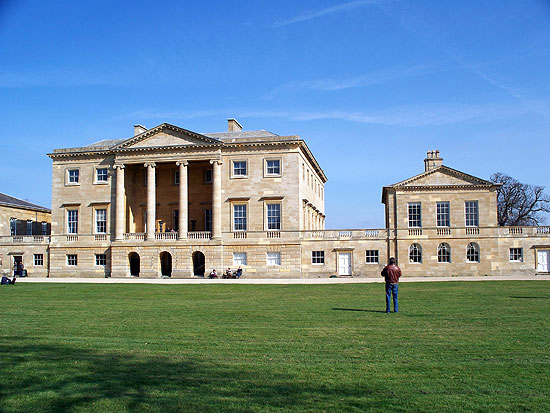
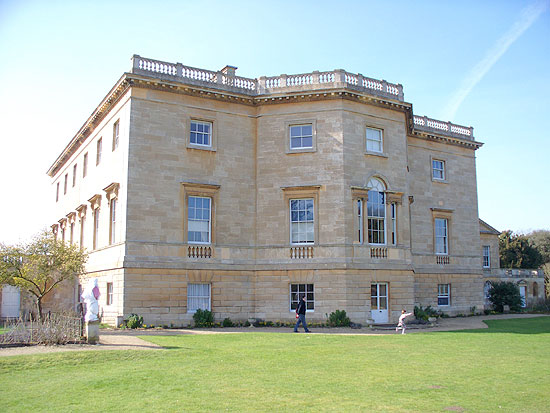
Basildon Park is a Georgian country mansion near Reading. Built for a man who made his fortune in India, it passed through various hands, and when Lord and Lady Iliffe bought it in 1952, it had been unoccupied for forty years except for wartime requisitions, and had escaped demolition but had been stripped of many fittings and decorative features. The Iliffes set about restoring the derelict house to its original grandeur.
Today, a walk from the stable-yard through woodland – part of the park – brings the visitor to the front of the house. The central block is square in plan, with detached service wings tied in by one-storey-high walls which screen service courtyards.
The principal rooms of the main block are on the first floor, with principal bedrooms on the floor above, connected by a grand staircase, a family staircase, and a hidden spiral stair for servants. The ground floor, nowadays occupied by the tea-rooms and function space, was a service area.
The principal rooms on the first floor, the staircase hall, and the principal bedrooms are fully restored and furnished, and well worth seeing. The Old Kitchen in the left wing, though signed, is not open to visitors and seems to be a store or garage. On the other hand, the Iliffe’s 1950’s kitchen in the main house has been restored and opened as an exhibit. Rather more rooms are open to the public than the guidebook (printed 2004) indicates. As well as the 1950’s kitchen these include part of a cloakroom behind the library, and bathrooms and ante-rooms upstairs.
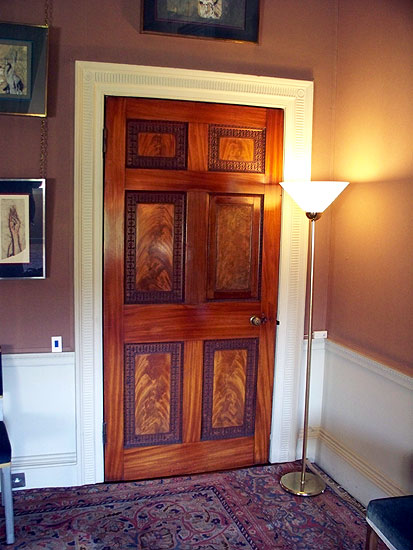
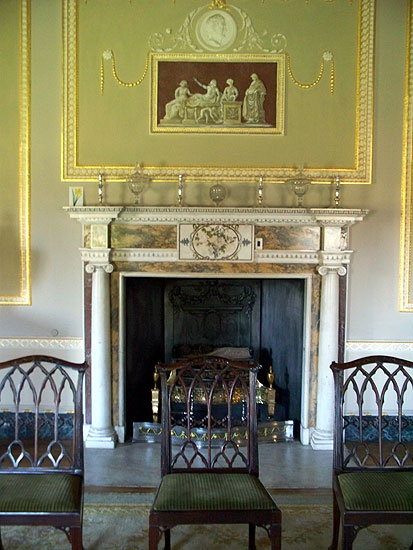
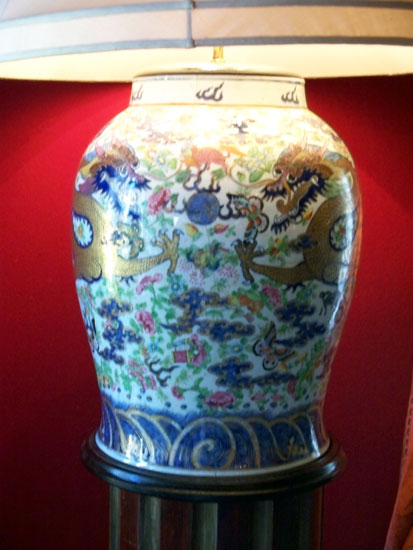
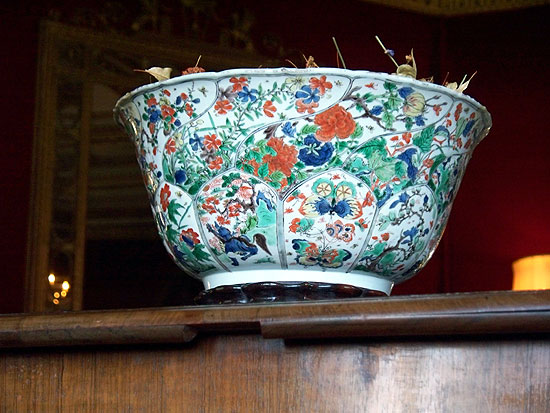
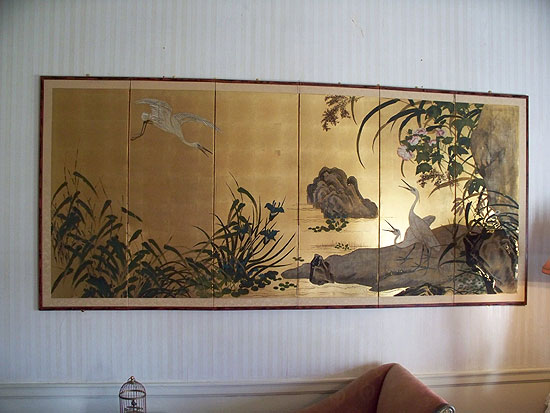
The house is notable for its survival as much as anything. (Visited March 2012) West FrontDoor, Sutherland RoomFireplace, Dining roomChinese vaseChinese bowlJapanese Screen
 Privately owned/HHA