National Trust.
The house is a late eighteenth-century Neo-classical building. The pavilions to each side, and the imposing flight of steps leading up to the entrance front, were added in the 1930’s. The interiors are lavish, with extravagant chandeliers, inlaid and painted Regency and Empire furniture, and mahogany doors. Many noteworthy paintings hang in the house. The more prized contents form part of the Faringdon Collection. A cycle of Burne-Jones paintings, Legend of the Briar Rose, runs around the walls of the saloon.
Outside are extensive gardens and grounds. The entrance, ticket office, walled garden and tea-room lie to the west of the house, and the Pleasure Grounds, with the larger lake and various garden features of interest lie to the east. There is a notable water garden with features leading down to the lake. Frescoes can be found in the archway leading to the (private) outdoor swimming pool, and in the tea-room.
The house interior and Faringdon Collection are well worth seeing, and the gardens provide plenty of scope for sightseeing and walking.
Opening days and dates are somewhat restricted.
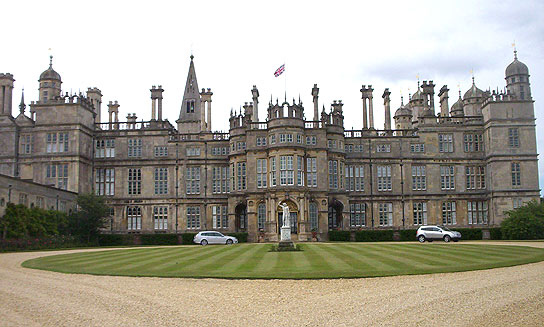
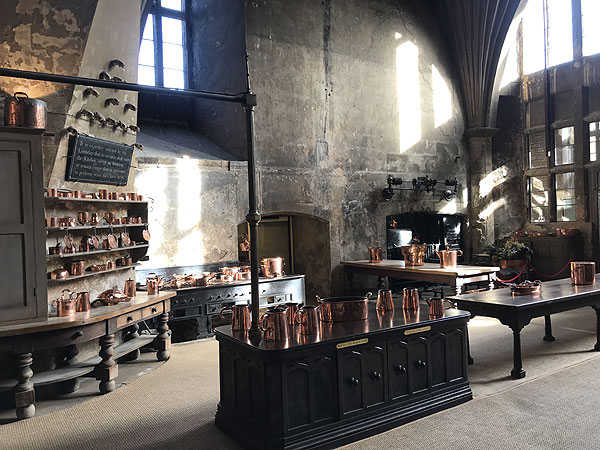
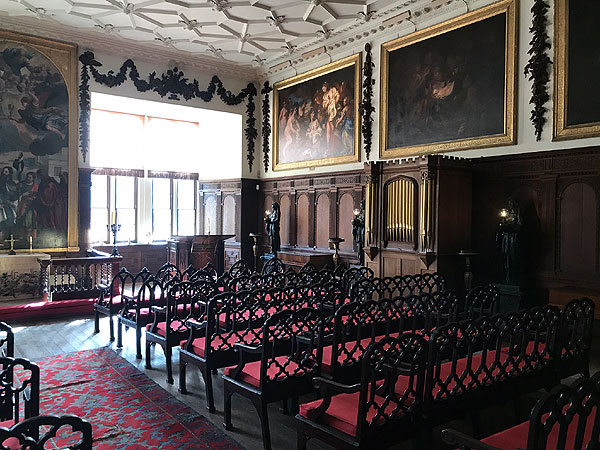
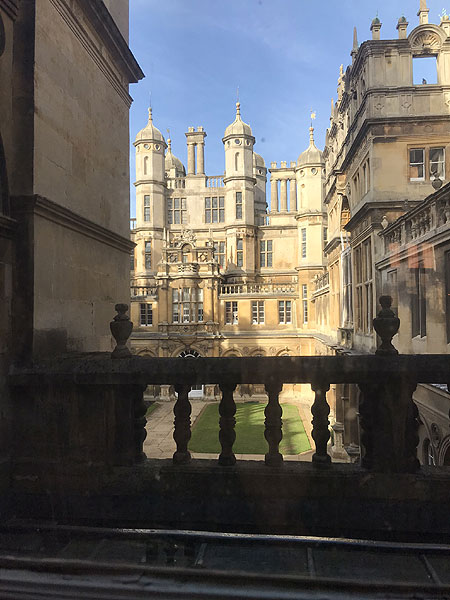
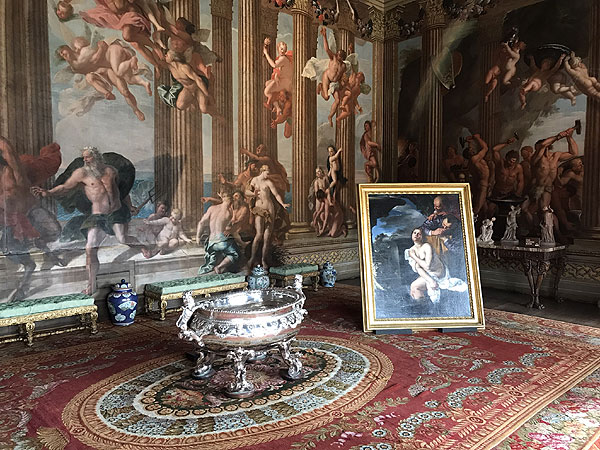
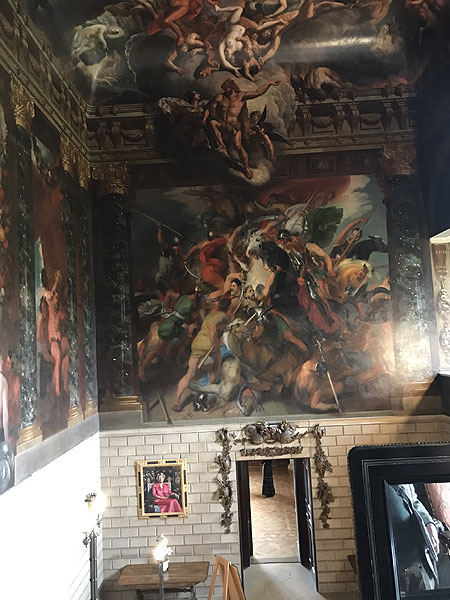
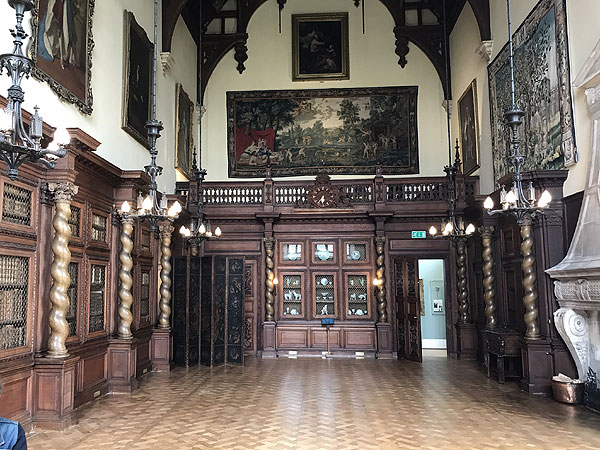
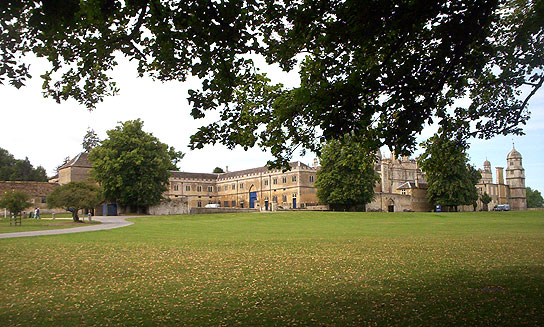
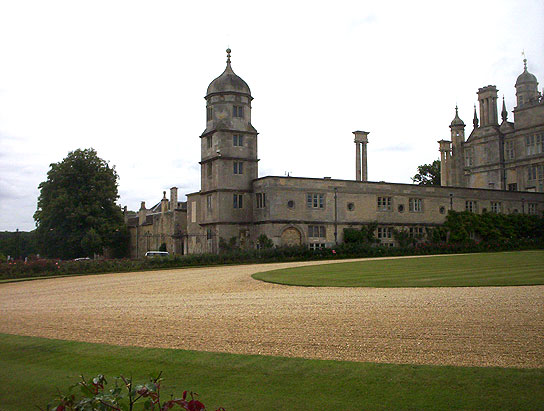
Regarded by many as the finest Elizabethan House in England, Burghley House was built in the 16th Century by William Cecil, the first Lord Burghley, Queen Elizabeth’s Lord High Treasurer. This was one of the Elizabethan “prodigy houses”. The main part of the House has 35 major rooms on the ground and first floors. There are more than 80 lesser rooms and numerous halls, corridors, bathrooms and service areas. The lead roof extends to three quarters of an acre. The historic parkland was laid out by Capability Brown. Now there are some modern visitor attractions in the grounds, including the Gardens of Surprise.
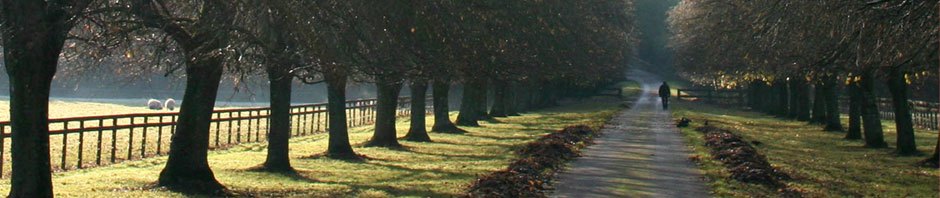
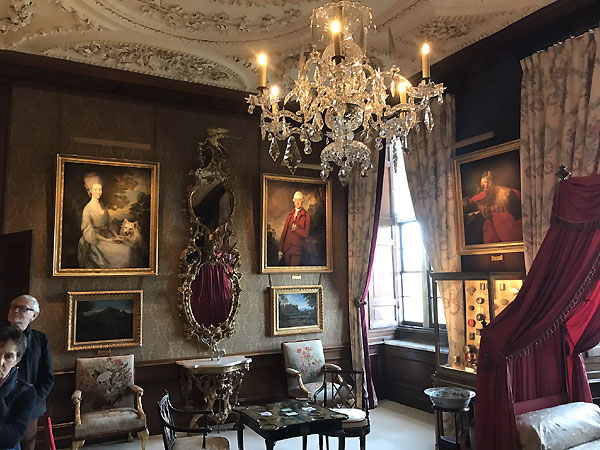
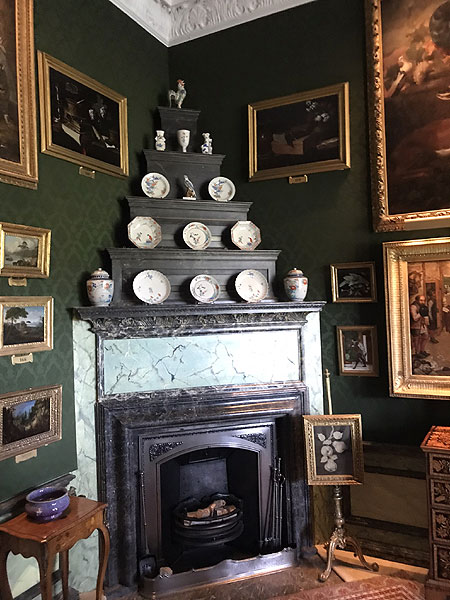
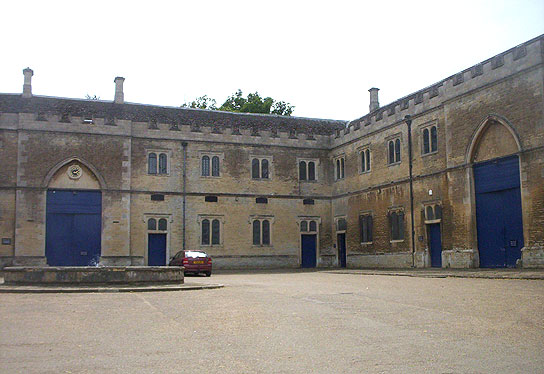
When one arrives in the car park, through the trees one has a quite impressive view of the house. However this is just the stables and the side of the service wing! The house itself as befits one of the Elizabethan “prodigy houses” is very big, on 4 floors, with scores of windows, turrets, chimneys, spires etc. It’s very impressive. Inside there is lots to see, with approx 18 principal rooms on the first floor all equipped with paintings, furniture and a cornucopia of treasures. There are also exhibitions of treasures by the ticket office which are worth a look.
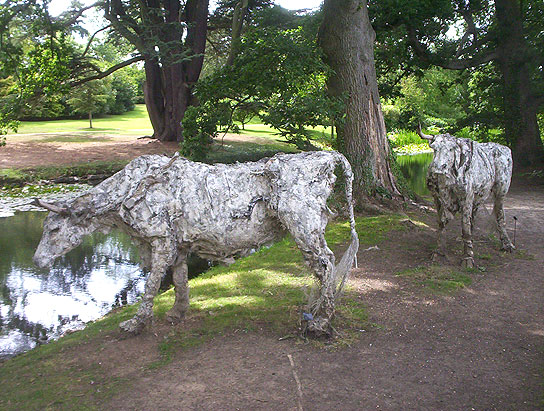
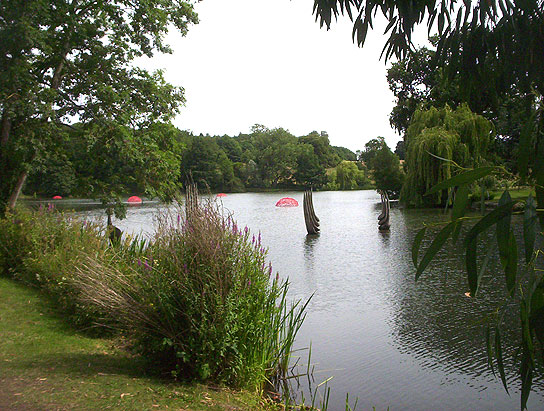
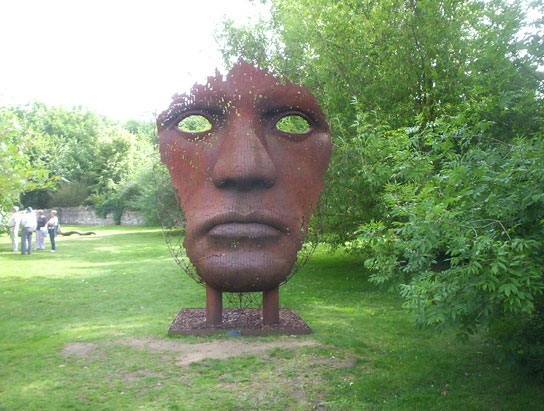
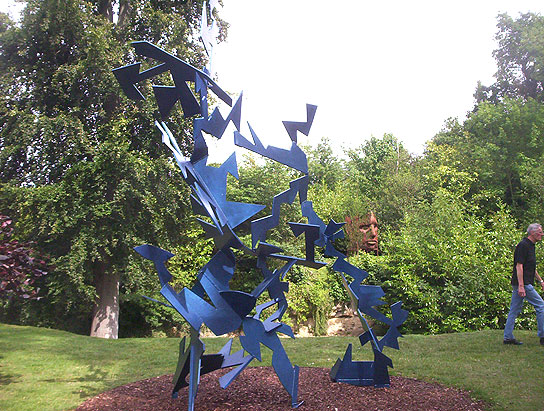
Outside there is a park, and gardens. The “Gardens of Surprise” has quirky water fountains and other features (great for children). I particularly liked the Fire/Air/Water/Earth sculptures where one presses a button and they change shape or (for Fire) emit smoke. Next to that is the Sculpture garden – a large wooded area with exhibits of modern sculpture dispersed through it. The lake had orange things floating in it which I’m almost sure were sculptures. For refreshments, the Orangery restaurant looked expensive but the garden cafe is cheaper.
There is much to see and do at Burghley, so that one could make it an all-day visit.
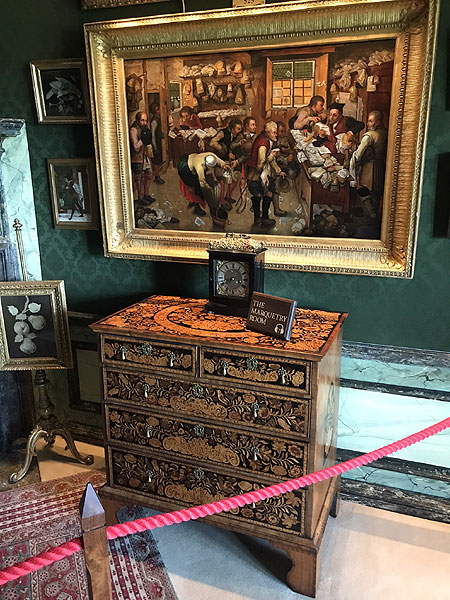
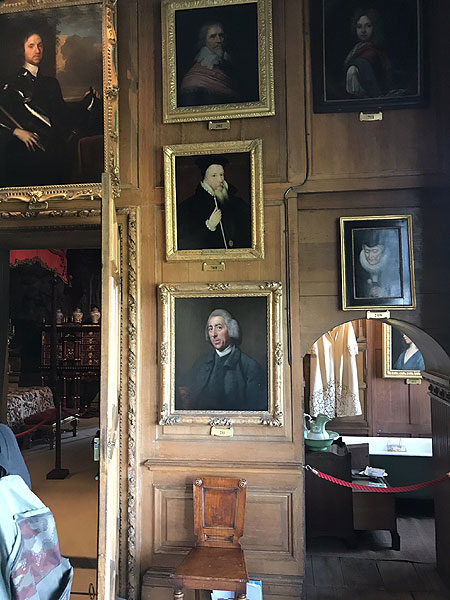
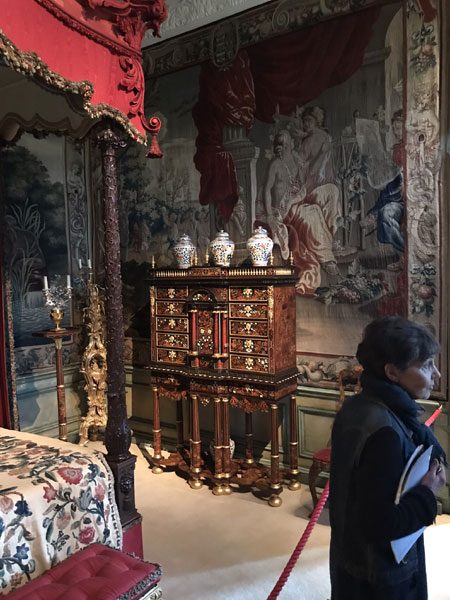
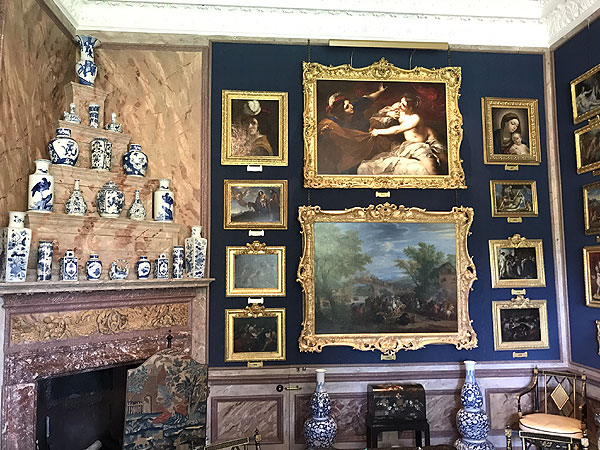
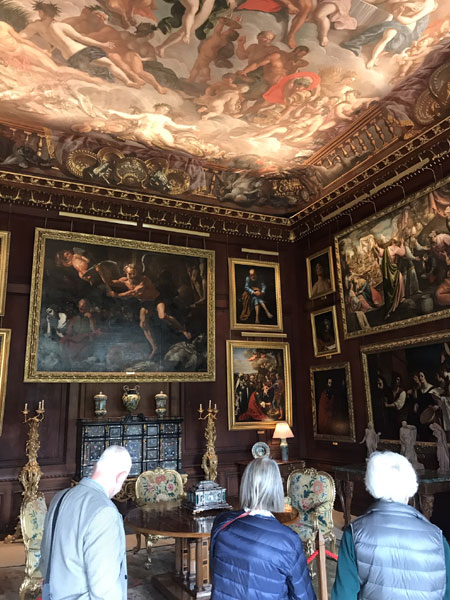
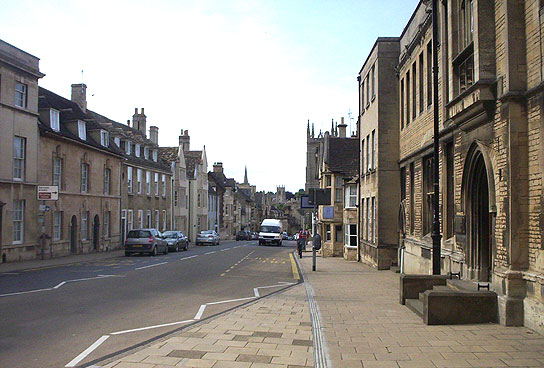
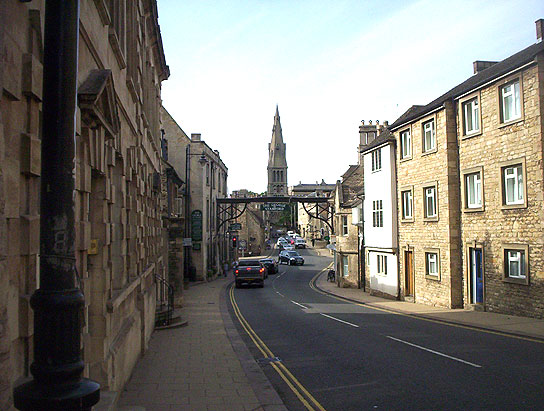
Access to the house is via the main street of the old town of Stamford, where the Classical and Georgian townscape has survived almost unscathed. (Visited 17/07/11) Old KitchenChapelCourtyardBrown Drawing RoomMarquetry RoomMarquetry RoomA famous faceBlue Silk BedroomBlue Silk Dressing RoomGeorge RoomThe Heaven RoomThe Hell StaircaseThe Great Hall Just the service buildings!Service wingFormer StablesPark sculptureLake sculptures!?Park sculpturePark sculptureStamfordStamford
English Heritage.
Apsley House was originally designed and built by Robert Adam between 1771 and 1778 for Baron Apsley. Later, it was owned by Richard Wellesley and then by his younger brother Arthur Wellesley – the Duke of Wellington. Wellington is best known for defeating Napoleon at the Battle of Waterloo, but he was also a major politician, who rose to become Prime Minister in 1828. Apsley House was redesigned to reflect Wellesley’s rising status, and its dazzling interiors are prime examples of British grandeur in the Regency style. Inside Apsley House are many objects relating to the Duke’s life and work, including his art collection, some of it collected on campaign, a giant statue of Napoleon, a huge silver-gilt dining table centerpiece, and a whole room full of trophies donated by grateful nations.
With all that opulence on display, there is plenty to look at inside Apsley House. It’s more of a palace than a house, in fact. The exhibitions in some of the rooms are quite informative about Wellesley’s career.
Hyde Park Corner underground station is adjacent to the house. Don’t even think of trying to go there by car. On the traffic island in front of the house is the Wellington Arch (see separate entry), and an assortment of statues and monuments which are worth a look while you’re there.
While here, I also visited the actual Marble Arch, reached by a bracing walk along the edge of Hyde Park. This three-arch white marble monument is worth a look, but you can’t go inside.
National Trust.
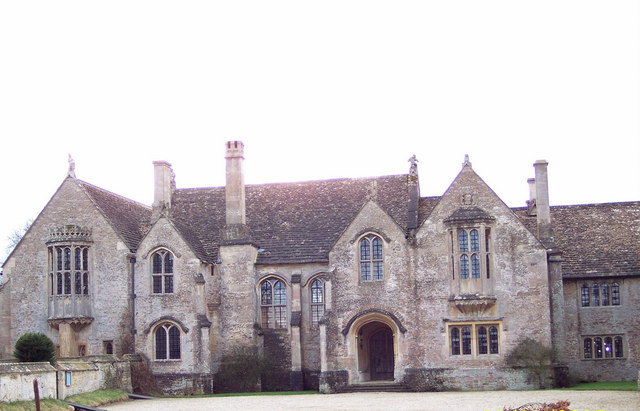
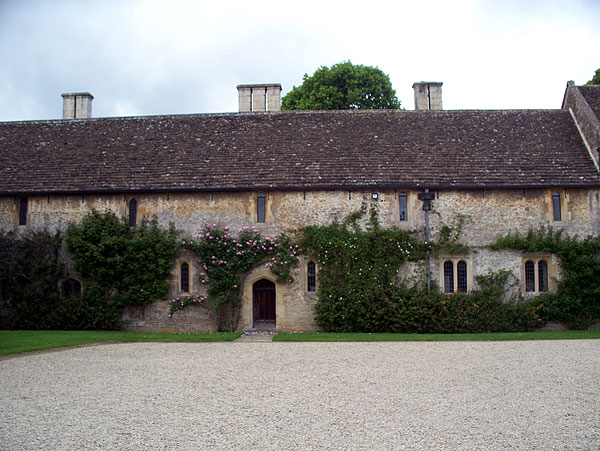
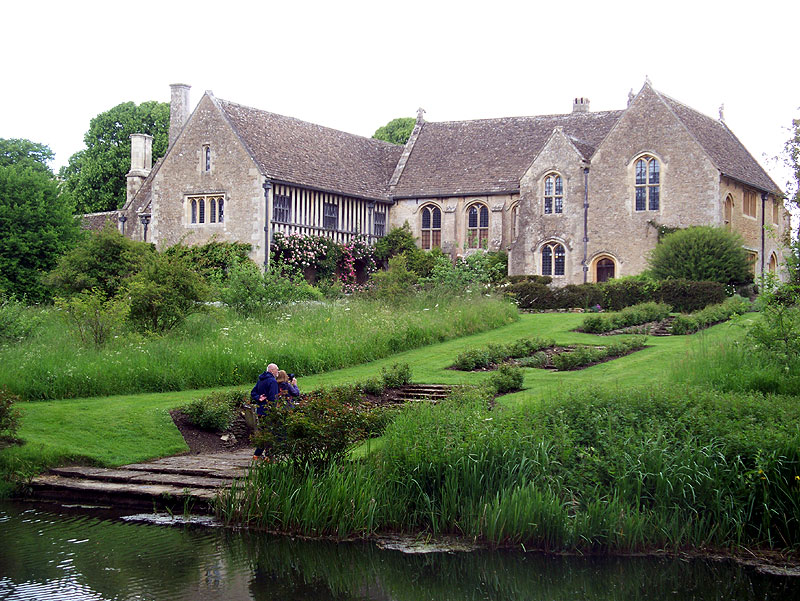
Great Chalfield Manor was built in 1467-80. Following centuries of neglect, which left it in a ruinous and partly demolished state, it was restored in 1905-12 for the Fuller family. A century later, it becomes harder to tell which bits are original and which are reconstructed. The house is furnished with period furniture collected by the Fullers. Outside are moats, lawns, and a working estate.
Inside the house are some interesting features. An ancient mural uncovered in the dining room is thought to be of the first owner, Tropnell. High up in the great hall are heads thought to be medieval caricatures. The garden has two large pieces of topiary with cross-passages, and a summerhouse in one corner.
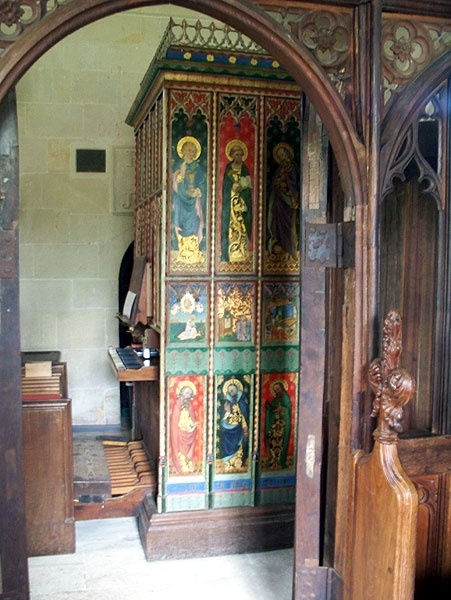
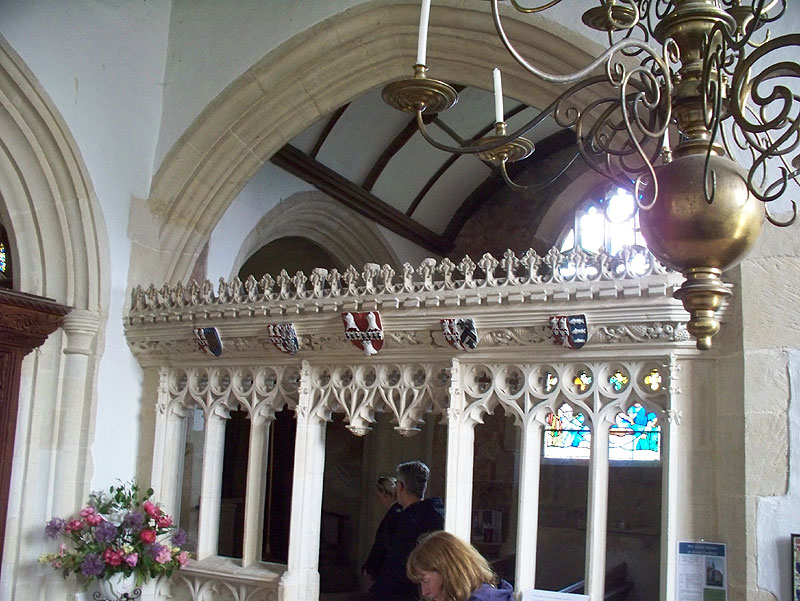
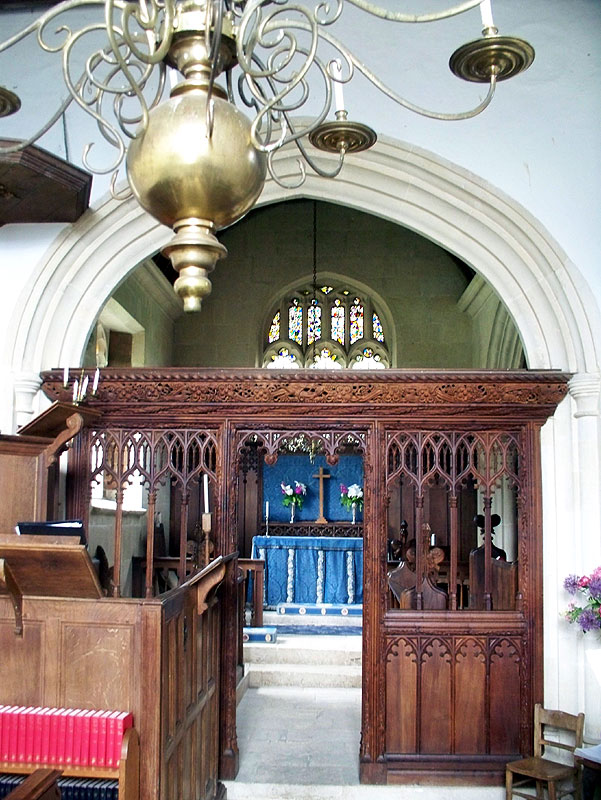
(Picture: Trish Steel – Wikimedia) Private WingGarden frontPanels in churchChurch screenChurch chapel screen
Parts of Chenies Manor date from the 13th century, but the long wing that provides much of the present accomodation was built in the 15th century. Further alterations were made in later centuries. The building is notable externally for the massive chimneys, with their ornamental cut-brick tops. One whole side of the 15th century wing is windowless and dominated externally by massive chimney breasts. The Parish Church is close by.
The Manor has a series of interesting historic interiors, furnished with period furniture. Outside, there are various sections of garden, including a courtyard garden, kitchen garden, Physic garden (herbs), the White garden and a maze. In the gardens is an interesting well-house.
The Manor seems to be a popular location for film shoots. While I was there a crew was setting up in one of the rooms, and also shooting a scene in the box-hedged part of the garden.
Admission to the house is by guided tour.
National Trust.
This unusual house stands high on a spur of the Cotswolds. It was built as a four-storey hunting lodge in c. 1550, but reworked by James Wyatt in the 1790’s. Wyatt also updated a second block added in the late 17th century.
Inside, there are interesting rooms and contents on three floors. Much of what is on display was collected by a late tenant who occupied the house for many years. Some features of the interior date from the Tudor era. There are fine views from the upper windows.
IIRC the basement floor is also partly open.
Outside, there are formal gardens laid out by the late tenant.
I visited Newark Park on a detour after finding that somewhere else at which I had intended to stop was closed that day. However I liked Newark Park and found it an interesting visit.
National Trust.
Osterley Park stands on the site of an Elizabethan mansion which was radically reworked by Robert Adam from 1761 onwards. A grand double portico added by Adam closes the courtyard and provides an imposing entrance. Adam created many grand rooms with décor evoking the world of Greece and Rome. Noteworthy are a grand hall and the Etruscan Dressing Room.
Outside is a large park with trees and a lake.
There is quite a lot to see at Osterley Park.
When I visited, my sat-nav delivered me to a lane leading to a back entrance to the park, but I didn’t have to pay any parking charges there. Official entrance & parking are at Jersey Road. Osterley tube station is a mile from the Park.
National Trust.
This unique Modernist home was designed by architect Erno Goldfinger in 1939 for himself and his family. The house has surprising design details that were groundbreaking at the time and still look fresh today. By comparison, the average estate house of today looks timid and boring. The house also contains the Goldfingers’ impressive collection of modern art, intriguing personal possessions and innovative furniture.
As a fan of good modern architecture, I found the visit most interesting. By the way, the houses at each end of the short terrace were built at the same time but do not belong to the Trust. As I left, I noticed that one of them has an application posted seeking to replace the Goldfinger windows with UPVC. (I hope the planners told this philistine where to get off.)
The terrace with no. 2 does look a bit like a small commercial block, but is not unattractive. Goldfinger had great trouble getting his design passed by the local planners, who wanted something more in keeping with the rest of the street. Unfortunately for their case, the nearest pre-existing Victorian houses are oversized and ugly.
Entry before 3pm is by timed guided tour. An introductory film is shown at regular intervals.
The house is about ¼ mile from Hampstead tube station – No.2 is at the far end of Willow Road. If you have to drive, you might find parking at East Heath Road or at parking meters.
National Trust.
This 17th-century merchant’s house has remained largely unaltered during more than 300 yars of continuous occupation. Inside, there are notable collections of furniture, pictures and porcelain. In almost every room stand early keyboard instruments collected by Major Benton Fletcher. The walled garden has terrace walks framing a lawn and sunken brick-paved rose garden. On the other side of a high wall is an orchard and vegetable garden.
The house and contents are well worth a visit, as is the garden. It’s an easy walk up from Hampstead tube station, through some interesting streets. Driving and parking here looks like a no-no.
National Trust.
Peckover House is a classic Georgian merchant’s house, facing onto the River Nene which runs through Wisbech. The owners, the Peckovers, were staunch Quakers, but ran a successful private bank. Inside the house, the panelled rooms have fine Georgian fireplaces and a wealth of elaborate woodwork and plasterwork by local craftsmen. Relics include a cabinet of curiousities. The spacious two-acre garden extends behind several other properties on the riverfront. Its size comes as something of a surprise – these days a whole housing estate could be crammed into it. It is divided into a number of sections, mostly planted in a Victorian style, and including lawn, wilderness walk, orangery, glasshouses, climbing roses and flower beds.
As Peckover House is now in the town, parking outside the house is time-restricted. Apparently there is free parking at Chapel Road, 273 yards away, but I parked outside the house and had to nip out mid-visit to move my car.