The site, 30 acres in total, was donated by the University of Cambridge. Arcs of white headstones mark the graves of 3,812 American war dead from the Battle of the Atlantic and the strategic air campaign over Europe. A great wall with tablets engraved with the names of the missing commemorates a further 5,127. A lofty memorial chapel has two huge maps, stained-glass windows, and a mosaic ceiling memorial.
There is also a Visitor Building where a staff member can answer questions and escort relatives to grave and memorial locations.
I took my aged mother here for a visit in 2007; she had probably visited it previously with my dad. It’s a sombre place, which you might want to visit if you want to reflect on how many Americans died in WWII fighting from British bases. The American air campaign was founded on the flawed strategy of conducting daylight precision raids without fighter escort, and they suffered huge losses.
Category: South-east
Location
Waddesdon Manor, Bucks.
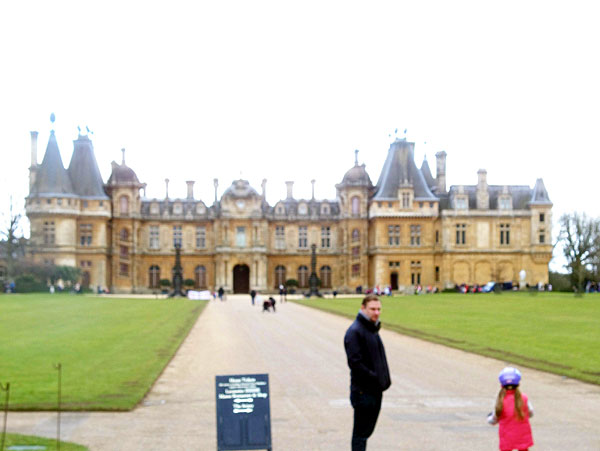 National Trust.
Waddesdon is one of several grand houses built by the Rothschilds (famous Jewish bankers). It was built in 1874-9 for Ferdinand de Rothschild, to a French design, and intentionally resembles a French Renaissance chateau. Ferdinand clearly dreamed of mansard roofs, pinnacles, massive chimneys, dormer windows and staircase towers. The pastiche chateau has similarly ornate French interiors, and Ferdinand was able to salvage panelling from the great Parisian houses demolished by Baron Haussmann to make way for the new boulevards. Needless to say, the furniture is also French. The rooms on the regular tour are full of treasures. The Batchelor’s Wing is not open at weekends, but contains smoking and billiard rooms, and even more treasures.
Outside, there is an entrance to the Rothschild wine cellars, some fine gardens and a wooded park. The formal parterre is to the south, and elsewhere is less formal well-planted parkland, the kind of terrain in which one can get lost trying to find the car park. There is a large 18th century style aviary housing exotic birds from over the world, and the grounds are dotted with contemporary sculptures.
With a total of 45 rooms on display, the visitor should allow enough time to see everything. At least a half-day visit is suggested.
As of Spring 2016, there is a large new hard-standing car-park on level ground, so that visitors no longer park on steep roadsides in the woods nearer to the house. The new car park is 15 minutes’ walk from the house, and free shuttle buses are provided.
Roadside signs and the free map indicate the way to Windmill Hill. This is not primarily a visitor attraction, but is the Rothchilds’ archive and conference centre. The buildings are an attractive set of Modernist structures set on a hilltop, on the site of the former Windmill Hill Dairy Farm, and complete with ornamental pool and modern sculptures, and a flat arch framing the view. The site is well worth a visit to snoop around the exterior and enjoy the architecture.
Stowe House, Bucks
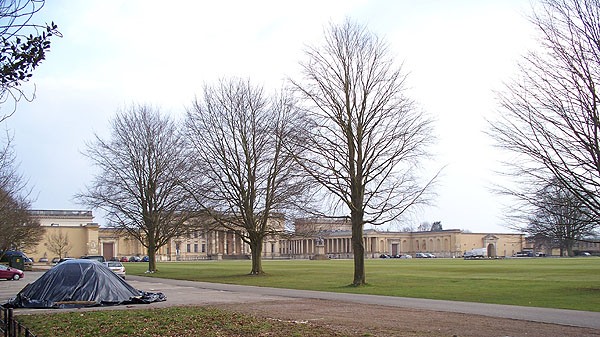
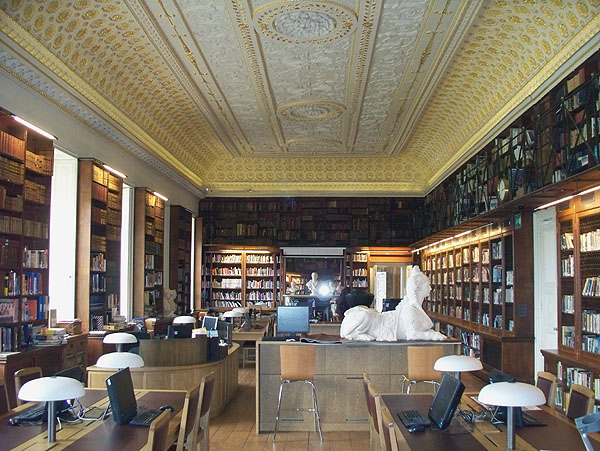
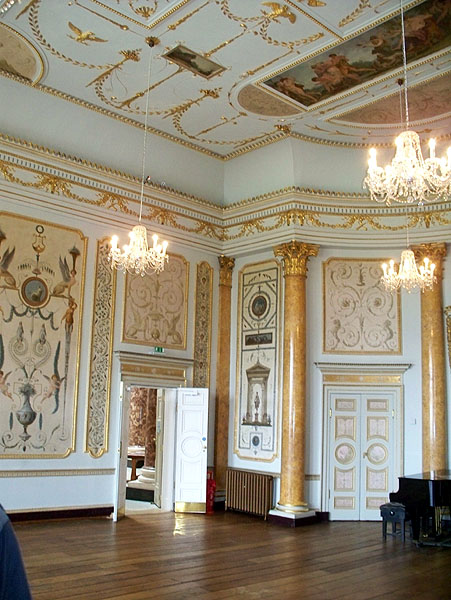
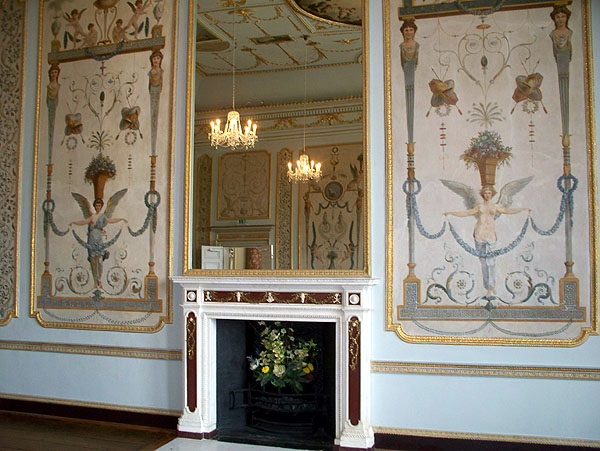
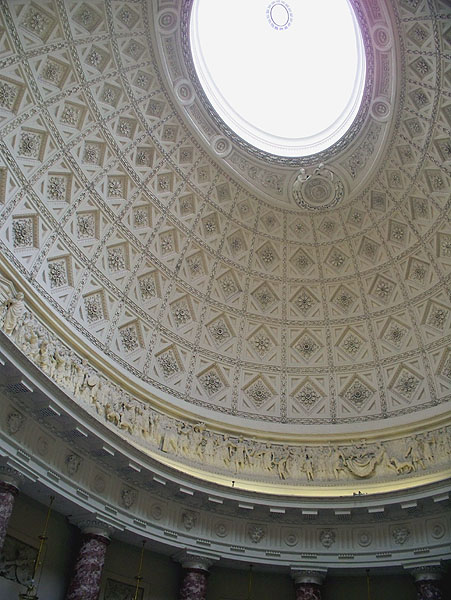
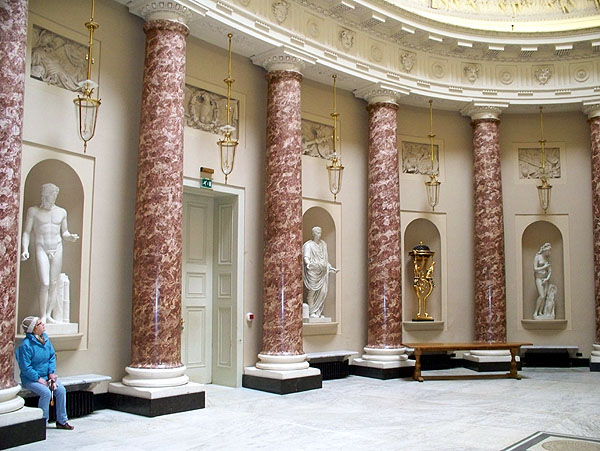
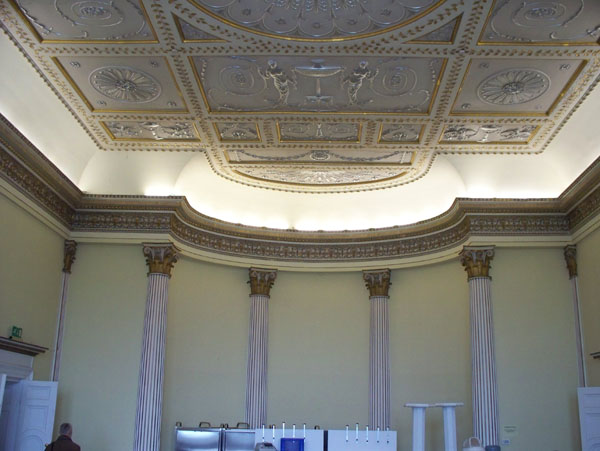
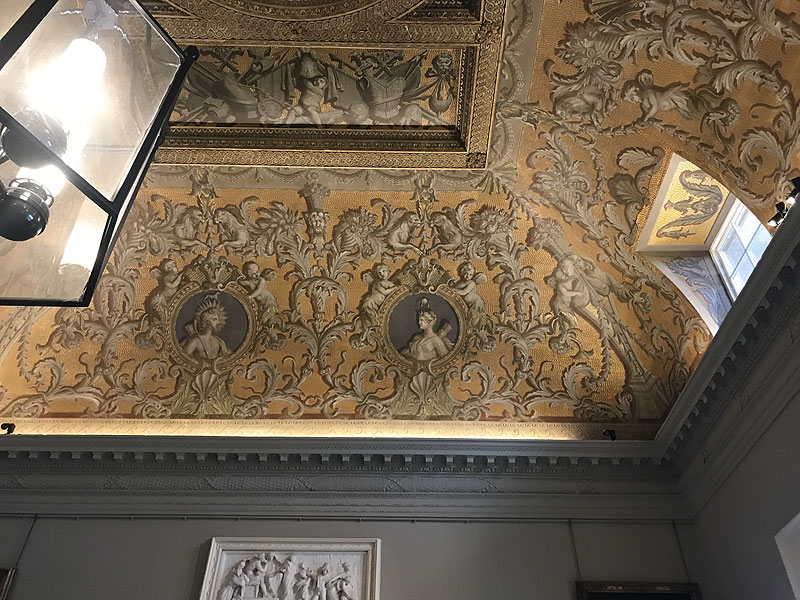
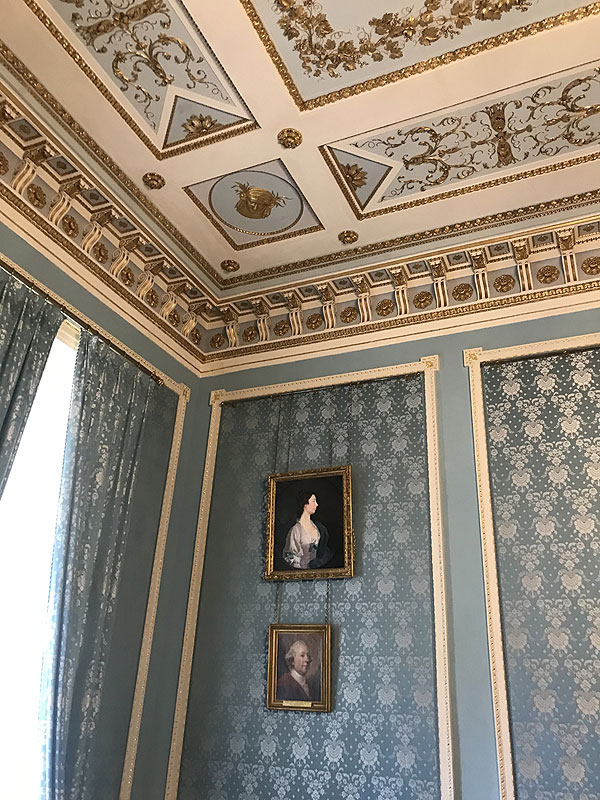
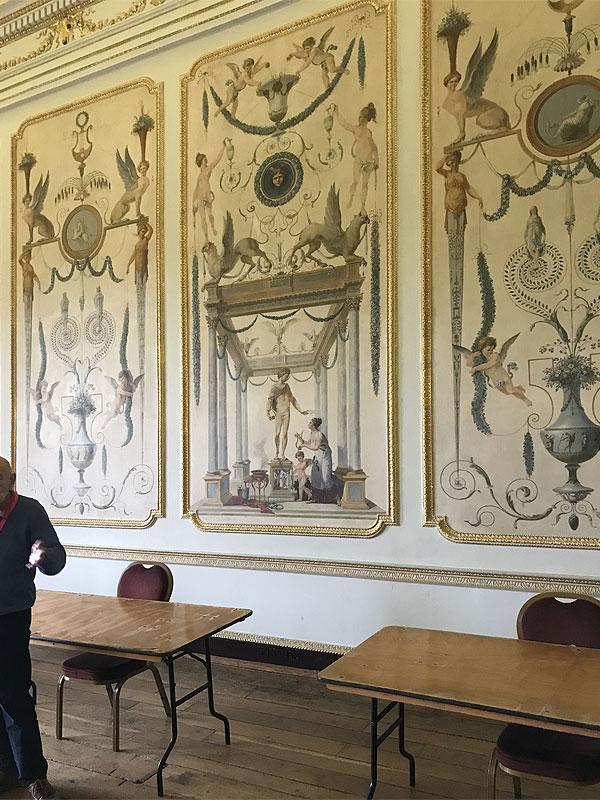
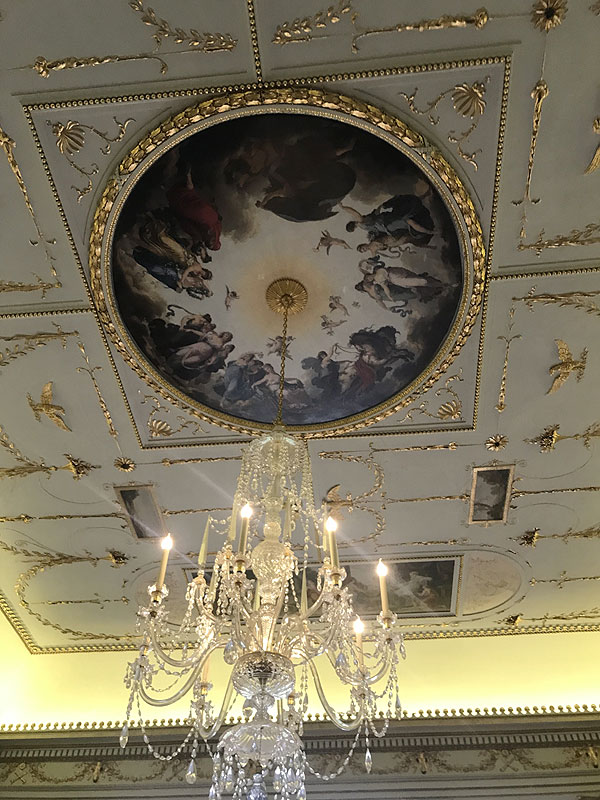
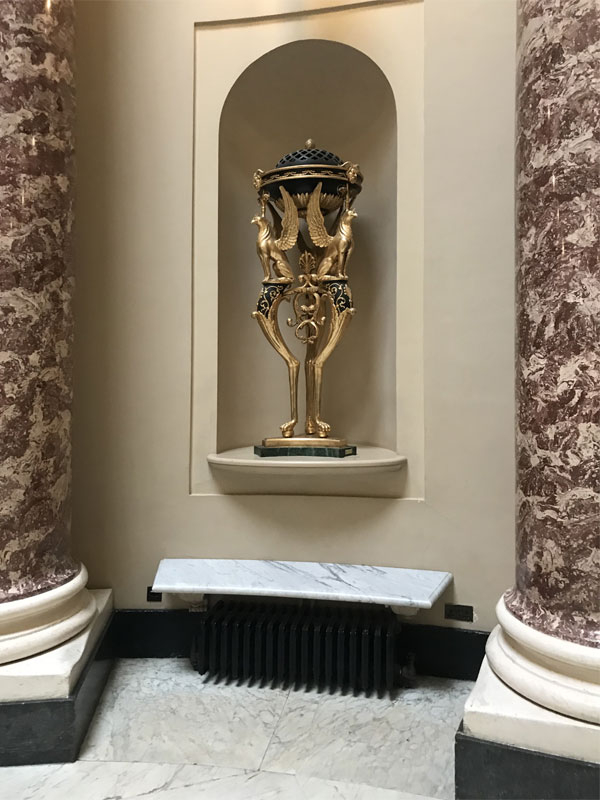
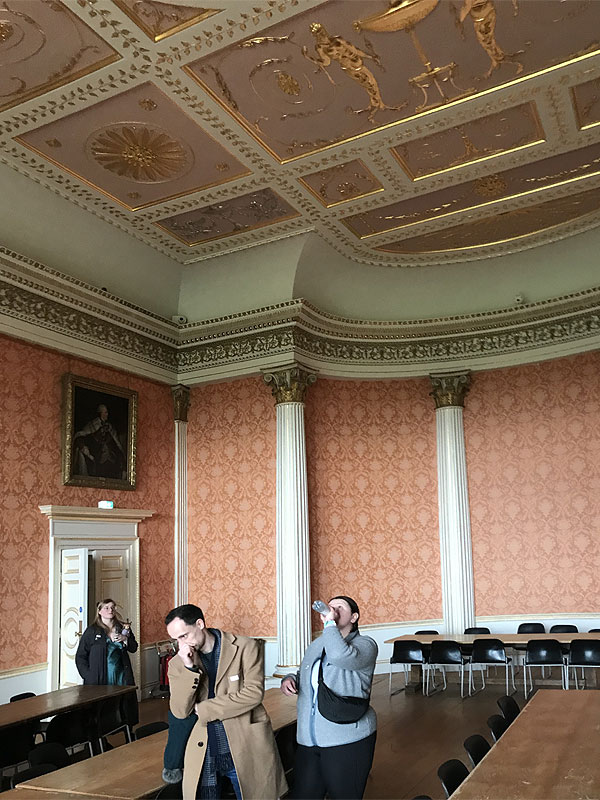
Stowe House nowadays houses a well-known public school, but on most weekdays the house is opened to the public. Visits are managed by the Stowe House Preservation Trust, which has a ‘Visitor Centre’ in the South basement front of the house, just to the left of the grand stairs. Access is by guided tour, with a self-guided option during school holidays. The immense house is built on a palatial scale, and has some magnificent interiors. It is regarded as one of Britain’s finest 18th-century houses. Restoration work continues, the total budget being £40 million (!)
If you are unable to visit on a weekday, you can see the exterior from the National Trust’s Stowe Landscape Gardens, which surround it.
I thought that the central hall with its elliptical ceiling is really impressive, and the other state rooms are worth seeing too.
Please note that Stowe School, the Stowe House Preservation Trust, and the National Trust (who manage the gardens) are all separate organisations. Access to the house for tourists is via the National Trust’s gardens and the National Trust’s New Inn reception complex.
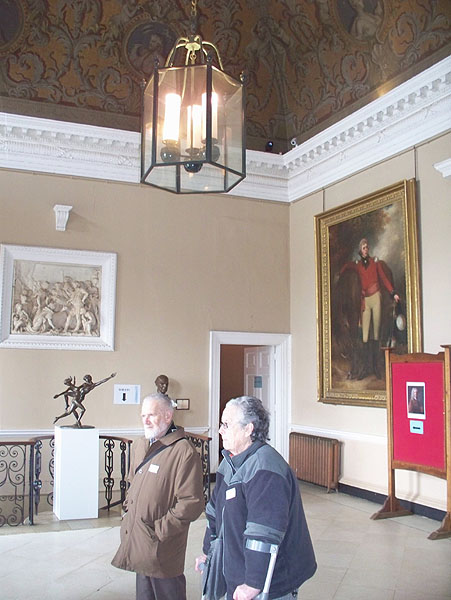
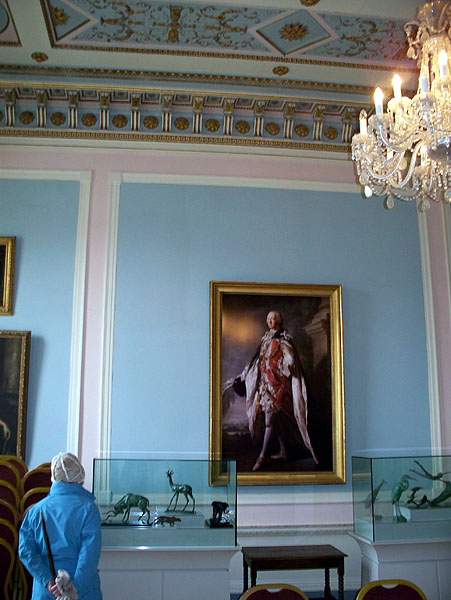
Knebworth House, Herts.
 Private
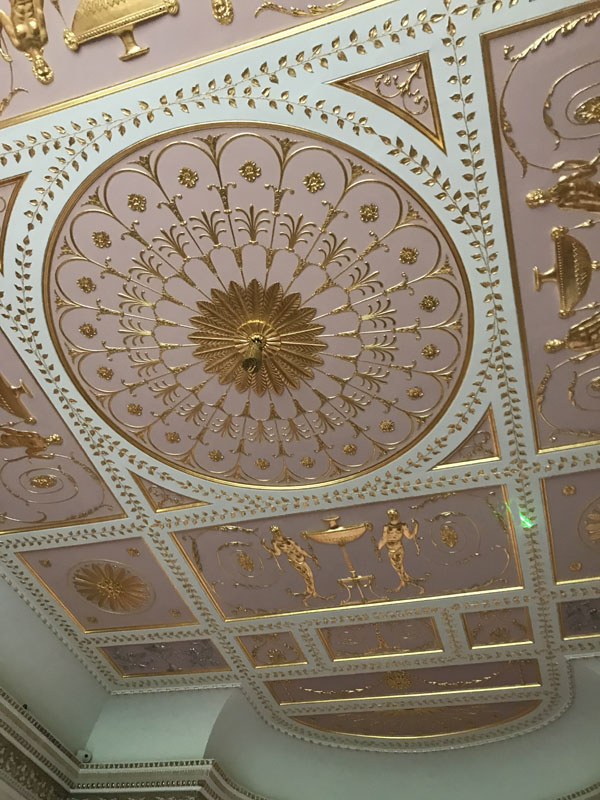
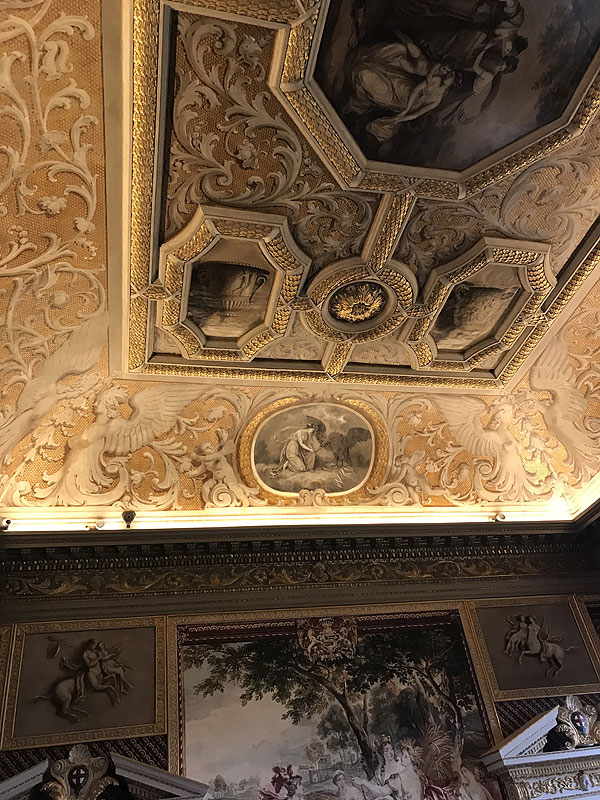
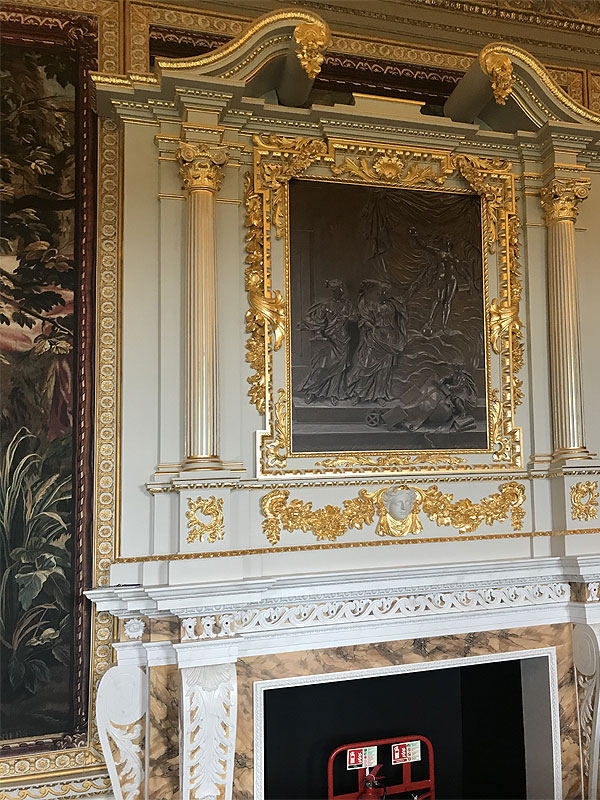
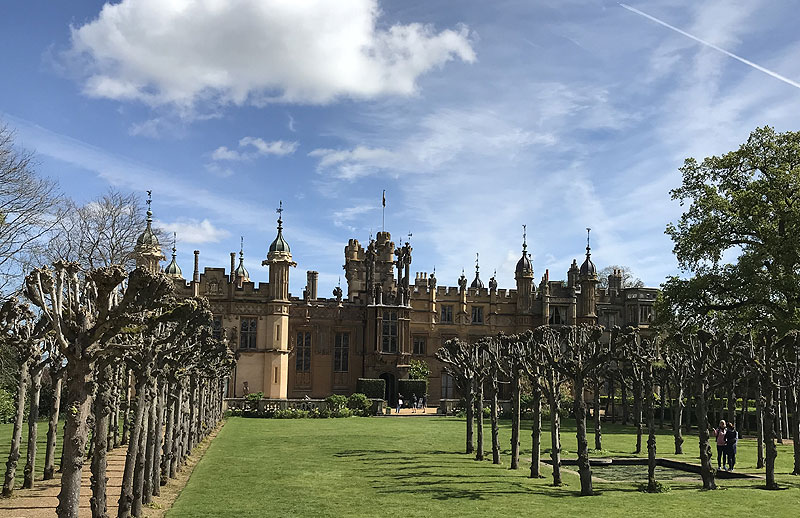
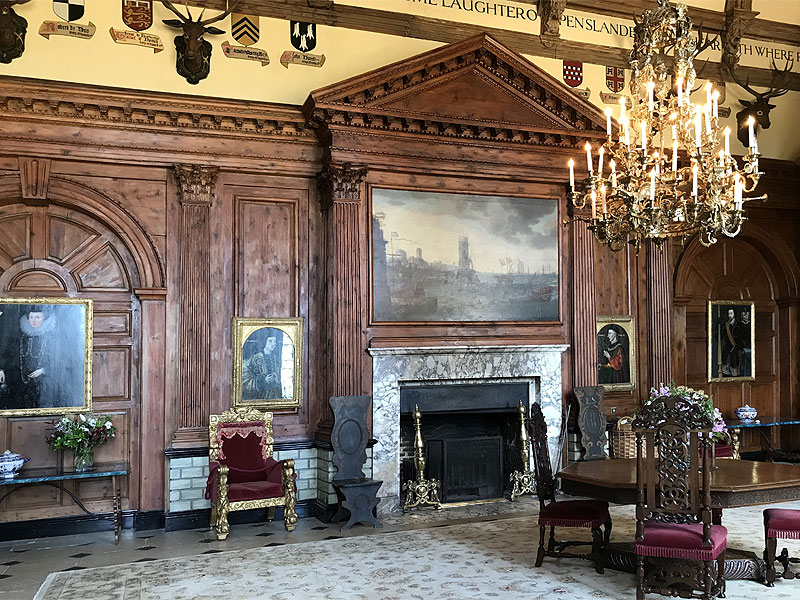
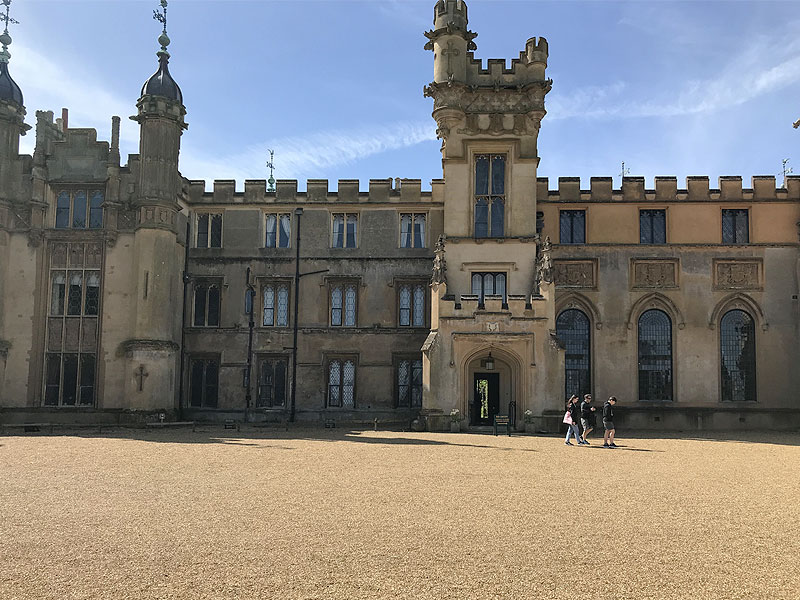
Knebworth House is famous for the rock concerts held in its park, and, by the more discerning, as the home of Victorian novelist Edward Bulwer Lytton – author of the words “The pen is mightier than the sword”. The house is mainly a Victorian Gothic creation, but a Tudor house was on the site before drastic remodelling in the 19th century. A liberal array of fancy domes and turrets are vividly contrasted with carved bats, griffins and grotesque gargoyles. Charles Dickens and Winston Churchill often visited the house.
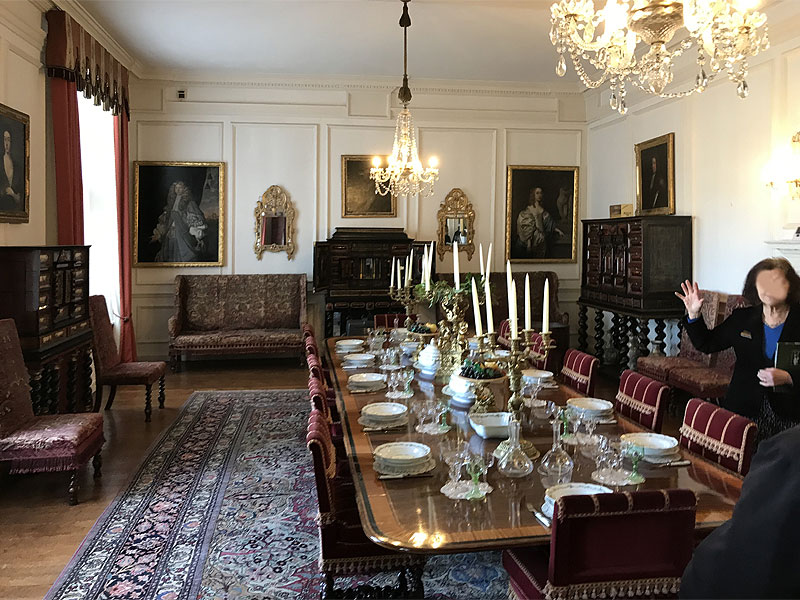
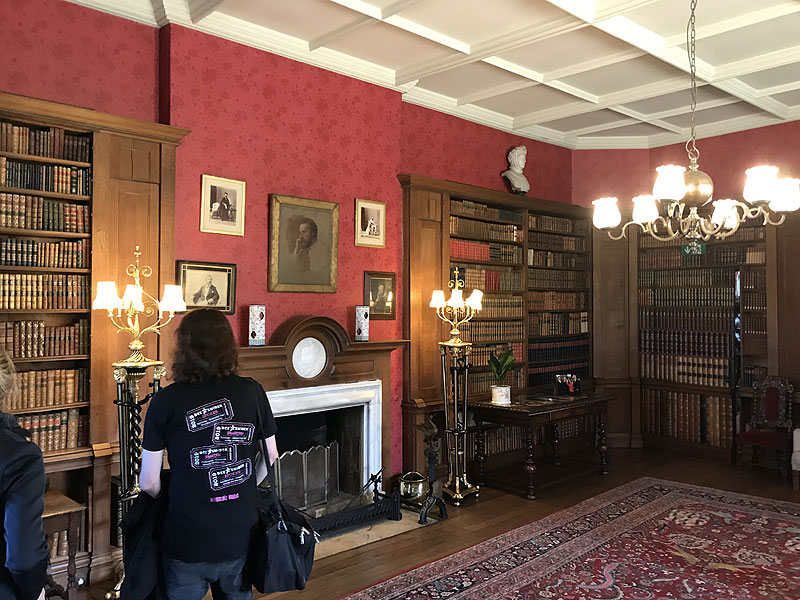
Today’s visitor can see the Banqueting Hall, with its varied 17th century influences and craftsmanship, and other rooms of interest. There are two rooms entirely dedicated to the life and works of Sir Edward Bulwer-Lytton, with several personal knick knacks and mementoes highlighting his colourful character. The state drawing room is distinctly Victorian-Gothic, but other areas, including the dining parlour, are typical of the Edwardian re-styling adopted by Lutyens.
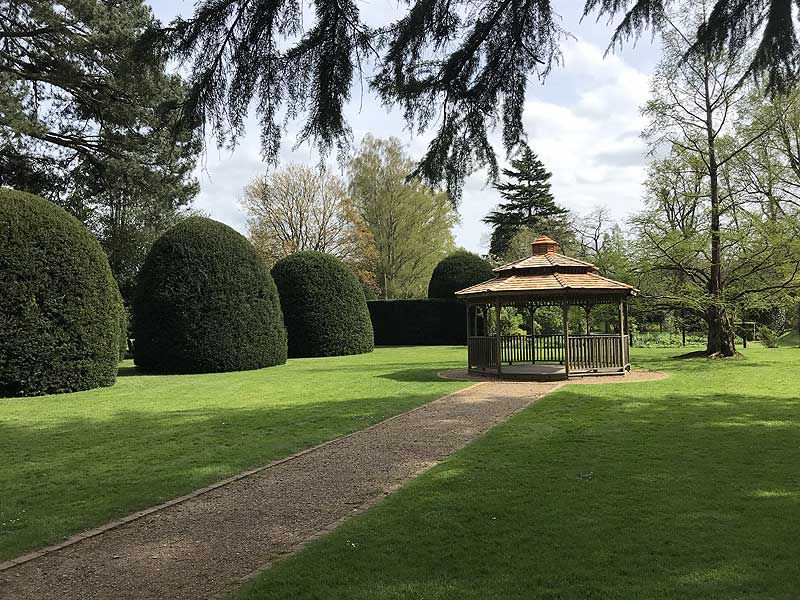
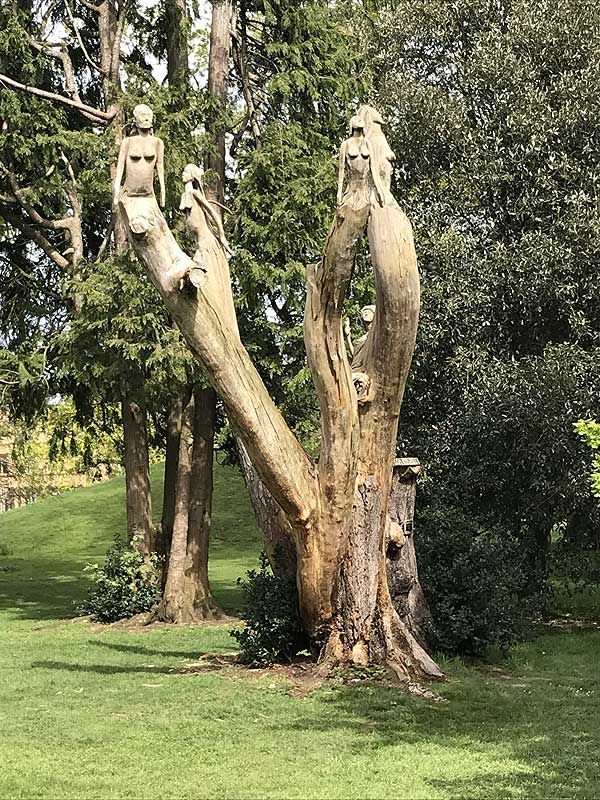
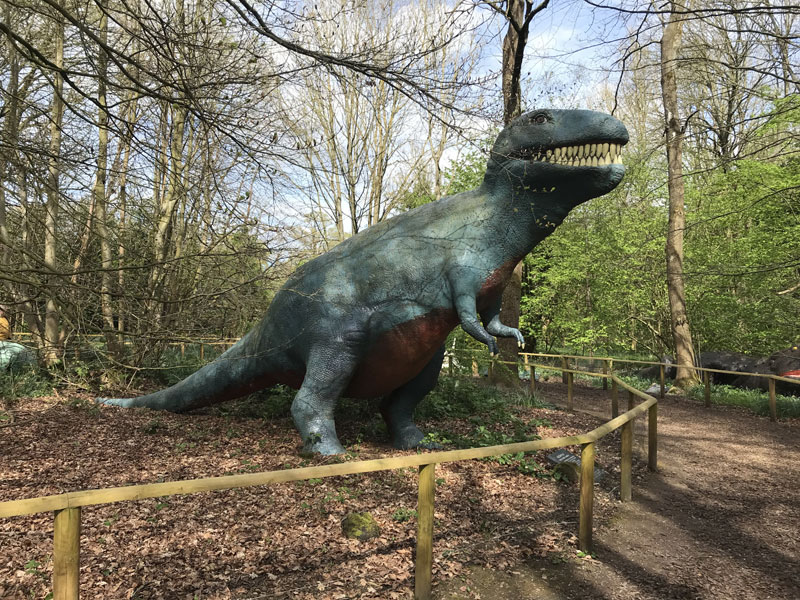
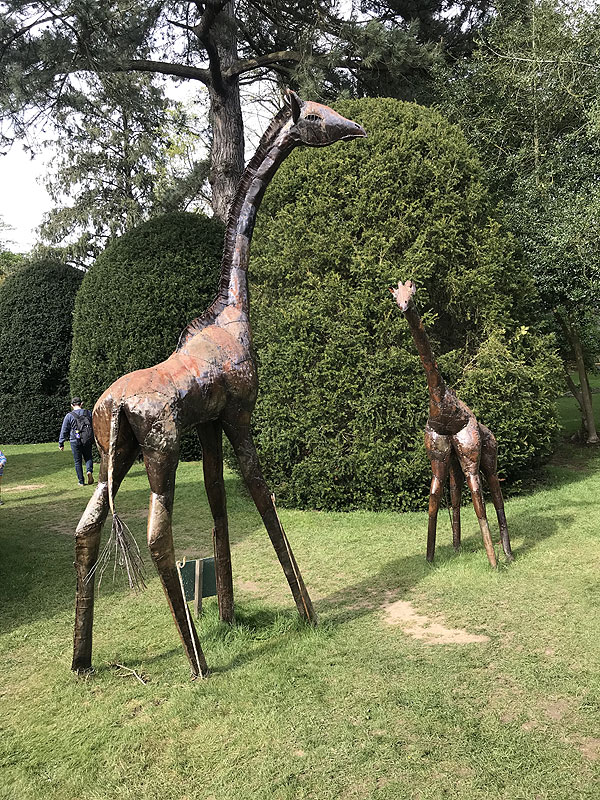
Outside there are 25 acres of gardens, including a walled kitchen garden and a dinosaur trail, and the church, as well as the park famed for its rock concerts. Scattered around the gardens are various large and small sculptures, mainly in wood.
Worth a visit, and you can divert yourself for at least half a day as there is plenty to look at. In my ill-spent youth I lived nearby and attended several rock concerts in the park.
It is worth visiting the exhibition in the couryard, which has memorabilia of the numerous movies filmed in the house and grounds, the rock concerts held in the park, and the family connections with Imperial India.
First visit 2005. All photos 2024.
Chinnor and Princes Risborough Railway
This is one of the more minor preserved railways. Three and a half miles of track runs from Chinnor (the only station) to Thame Junction, in the direction of Princes Risborough. Sunday is the principal operating day, and some trains are steam hauled. Curiously there are no steam locos on the stock list, but they have a 0-6-2 tank on loan (Sept 2011).
Worth a visit if you are nearby visiting other attractions in the area. Once you have ridden on the train there isn’t much to do except ride on it again.
Buckinghamshire Railway Centre
The Centre is a railway museum situated at Quainton station, near Aylesbury. This is primarily a static museum site, though there are short train rides on steaming days. There is quite a lot to look at in various parts of the triangular site, some of it under cover. There are displays in the reception hall, and in the museum across the tracks, and you can also look into the repair shed at the further end of the site. Then there is rolling stock in various states of disrepair, parked in the sidings, with labels. The loco and rolling stock collection is quite large. Look out for the enormous narrow-gauge engine from South Africa.
The admission charge covers everything, including rides on steaming days. The centre also hosts events for vintage road vehicles. Since railway preservation societies have to attract families, they also host “Thomas the Tank Engine” days.
Didcot Railway Centre, Oxfordshire.
This is more of a static museum site, and there is a lot to look at. On the long, roughly triangular site are an engine shed and various displays, and three short train ride tracks, one of them being 7ft broad gauge. There are also stalls and a refreshment room. I recall that on my last visit after two or three hours I’d had enough of being on my feet and went to refuel in the café, while my train fanatic friend continued poking around the engine shed for another half hour. The admission charge includes everything, including train rides on steaming days. A modern railway runs alongside the site, so one can from time to time see a 21st century train swish past an early 20th century train pushed by a tank engine.
The site adjoins Didcot Station, so if you feel that arriving by car to look at old trains is a bit silly, you can arrive by train from the north, east, or west.
Wimpole Hall & Estate, Cambs.
Toddington Manor, Beds.
Private – non current.
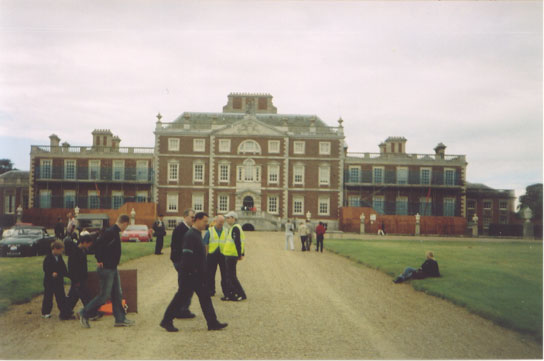
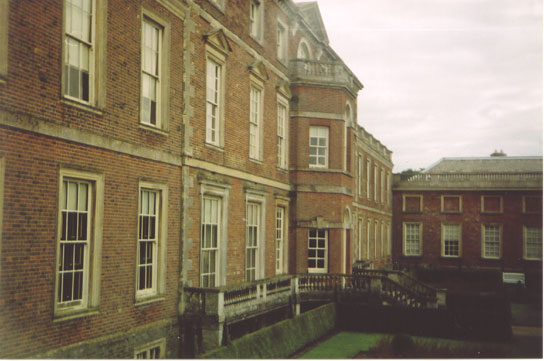
The manor has a long history, and parts date from the Tudor period. The building used to be much bigger (see Wikipedia).
The gardens were open to the public on limited dates, and when I went a few years ago a tractor collection and other agricultural things were also on display. The gardens (with lake) are quite worth seeing. The house is not open to the public.
Toddington Manor is of special interest to me as until recently it was owned by Sir Neville Bowman-Shaw, who was the MD of Boss Trucks Ltd, where I used to work, and which went bust in 1994. I lost my job, while Sir Neville continued to lord it over Toddington Manor.
The estate was sold, asking price £6.5M. The tractor collection was apparently sold at auction.
The estate agent’s brochure gave a surprising amount of detail.
Ascott, Bucks
 National Trust
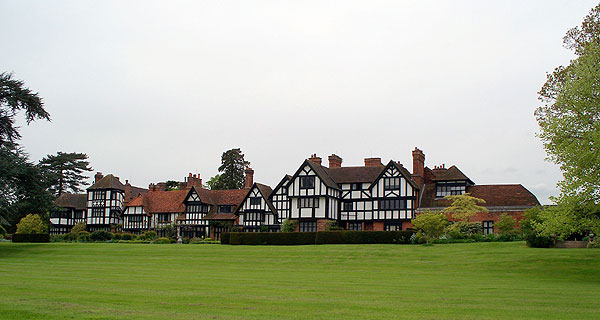
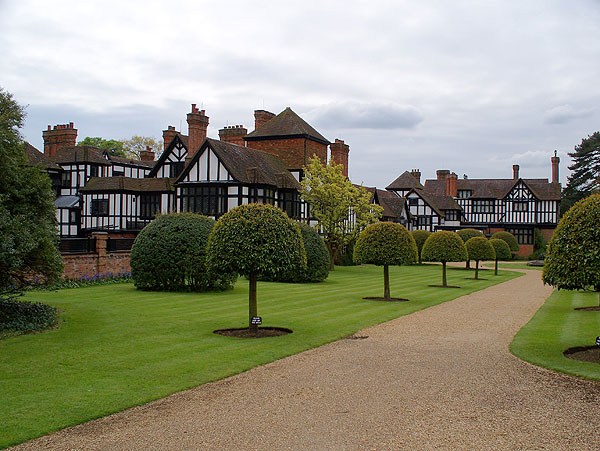
This is one of the NT properties nearest to my house, but prior to May 2012, I’d only been there twice in 27 years. The building was a Jacobean farmhouse remodelled towards the end of the 19th century for the de Rothschilds. Inside is a collection of paintings, fine furniture and porcelain. Outside are gardens.
Ascott is perhaps of more specialist interest than some of the other NT properties. The house, which looks Tudor but was actually built in the nineteenth century, is of no particular interest. The interior was last remodelled in the 1930’s, when a redundant wing was also demolished. The de Rothschilds, who still use the house, own some of the contents. The contents include fine paintings by Hogarth, Gainsborough, Andrea del Sarto and Stubbs. There is also a little-known Turner, and many paintings by Dutch masters. The Porcelain Room and adjacent rooms house a large collection of Chinese porcelain.
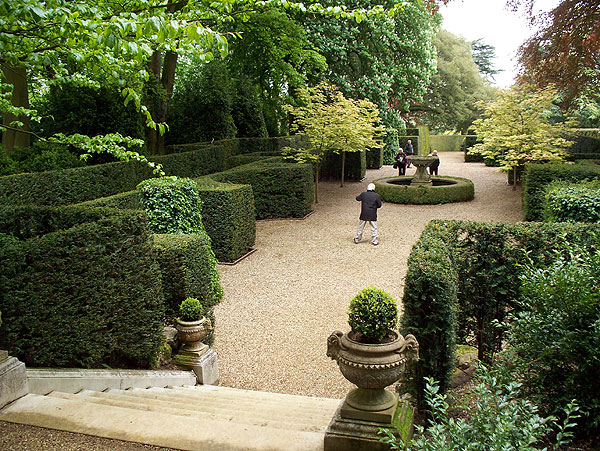
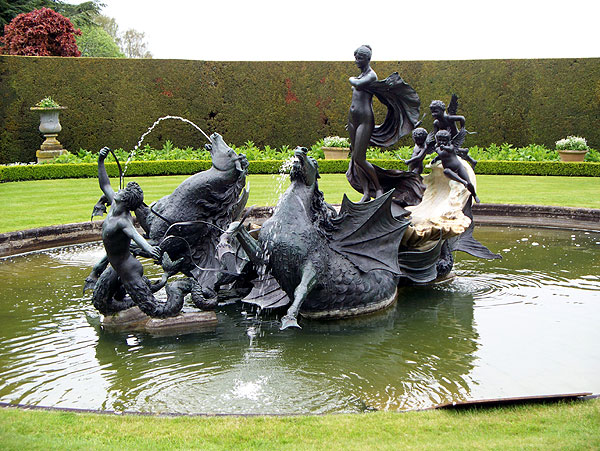
The gardens are rather fine and include an unusual topiary sundial, an impressive Venus Fountain, and a lake. The gardens are best visited by proceeding clockwise, starting at the near end of the house.
I confess that on two previous visits I didn’t find Ascott particularly interesting. Garden buffs should enjoy the gardens. If you are interested in painting or ceramics, then visit the collections. The house is near a main road and parking is free. There is no tea-room or shop.
While I was in the house I noted an older gentleman with an upper-class accent talking about an art sale he had visited. I later realised that he looked rather like the photo of Sir Evelyn de Rothschild in the guidebook…