Kenwood, London

English Heritage.
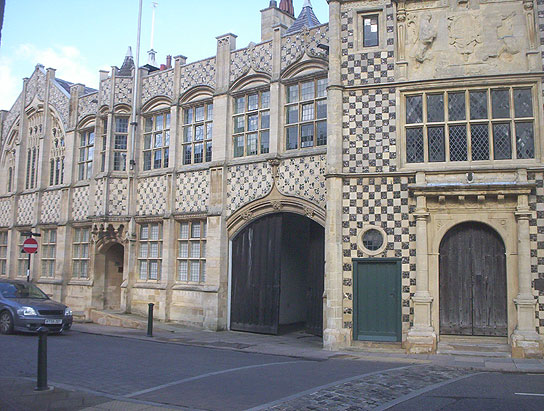
Kenwood was remodelled by Robert Adam between 1764 and 1779 into a majestic villa for the judge, Lord Mansfield. In 1927 Lord Iveagh bequested Kenwood to the nation, along with a collection of pictures. The Iveagh Bequest includes important paintings by many great artists, including Rembrandt, Vermeer, Turner, Reynolds and Gainsborough. Upstairs is the Suffolk Collection of portraits, notable for the costumes depicted. The Kenwood interiors are also worthy of note.

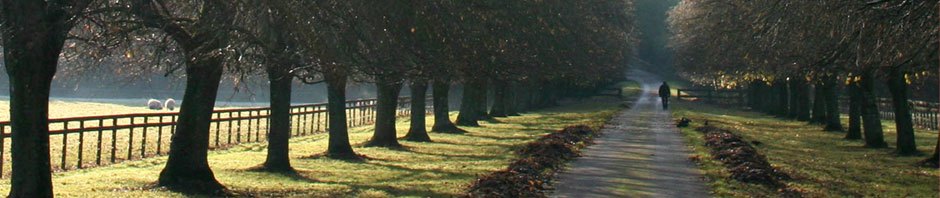
I didn’t have a lot of time to enjoy Kenwood before it shut but I did manage to look at the pictures, which include some famous and impressive works. Surrounding the house is some pleasant leafy parkland.

Admission to Kenwood is free to all.
Bus 210 stops near Kenwood.
If you are planning a 3-in-1 day visiting Fenton House, 2 Willow Road, and Kenwood, don’t try walking across the Heath – it takes too long for the purpose and it is too difficult to find one’s way. A taxi might be quickest. Or use Bus 210.
Eltham Palace, London

House and grounds
English Heritage.

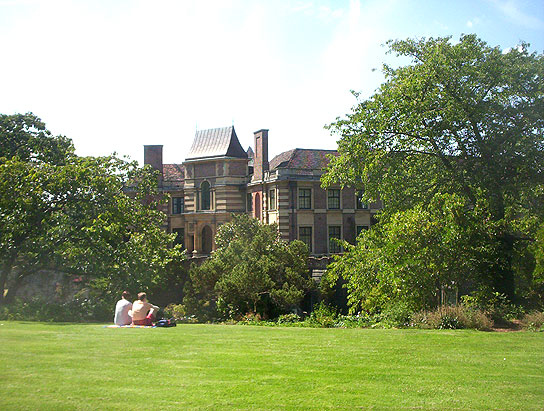
There was a royal palace on the site, but all that remains is the great hall (much restored) which is incorporated into the 1935 Art Deco mansion. The Courtaulds bought a 99 year lease and demolished some old buildings (mostly not really old or interesting) before building their state-of-the-art Art Deco mansion.

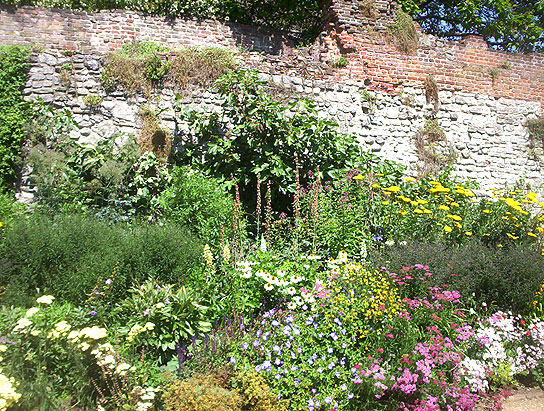
It appears that no expense was spared – it’s big, and the lady liked gold plated bath taps. The Courtaulds only enjoyed their house for about 8 years, before the war and persistent near misses from sundry German munitions caused them to move to Scotland. They never returned, and the house was leased to the Army education service, who used it for half a century. English Heritage have now restored the house to its 1935 appearance, using reproductions where items had disappeared. The principal rooms, with walls and ceilings in Art Deco styles with lots of wood veneer panelling, and some inlaid marquetry pictures, are well worth seeing. There are also extensive gardens, which have been restored to something like the 1930’s appearance (but minus the swimming pool and squash court). Medieval remains can be seen in the grounds. The original 1930’s outbuildings, greenhouses, etc are around the EH car park, outside the ticketed area and a little way off the pedestrian access.

The house and gardens are well worth a visit. Not to be missed if you are a fan of Art Deco style.
I travelled here by train.

Garden
Garden
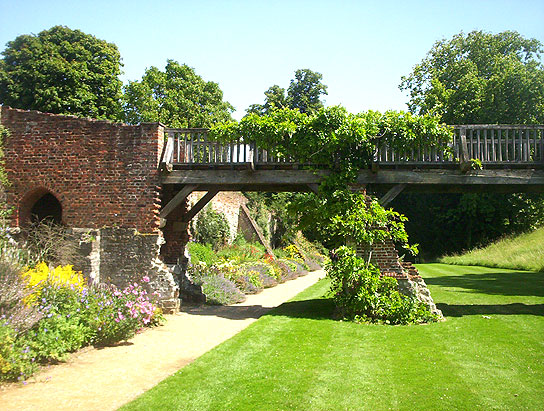
Garden with bridge
Garden

Chiswick House and Gardens, London

English Heritage.
This Roman-style Palladian villa was built for the third Earl of Burlington in the 18th century, and designed as a grand pavilion for entertaining friends and displaying art. It is considered an outstanding example of an early Palladian villa in England. Inside, it has some sumptuous interiors in the central hall and upstairs, and a collection of art. The house as seen today is stripped of any service rooms. The original ones were in the old Jacobean house, long demolished, and the replacements, attached at each side, were in use after the house was gifted to the public, but demolished sometime after WWII.
The extensive gardens are also considered of national importance. They contain walkways and vistas, and features such as a long lake, a cascade, a conservatory, walled gardens, Ionic temple, etc.

The house is well worth a visit. Externally it is an attractive building, and inside there are some impressive restored interiors, some fine paintings, and some exhibitions to look at. It is notable that there are no service rooms at all, apart from a cellar. While the surviving part was lived in at one time, it was built as a pavilion. The gardens are vast, and one can tramp around for some time finding fresh things to look at. I travelled by train.

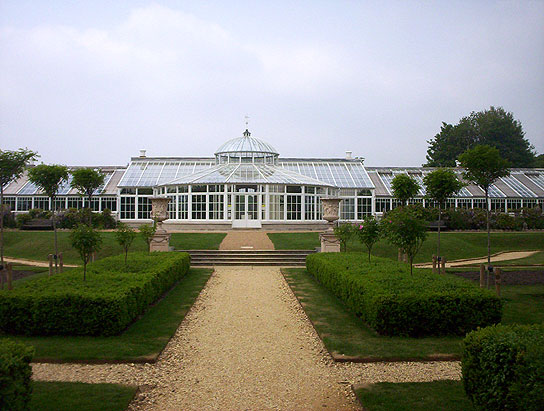
Conservatory and grounds
Conservatory

Apsley House, London

English Heritage.
Apsley House was originally designed and built by Robert Adam between 1771 and 1778 for Baron Apsley. Later, it was owned by Richard Wellesley and then by his younger brother Arthur Wellesley – the Duke of Wellington. Wellington is best known for defeating Napoleon at the Battle of Waterloo, but he was also a major politician, who rose to become Prime Minister in 1828. Apsley House was redesigned to reflect Wellesley’s rising status, and its dazzling interiors are prime examples of British grandeur in the Regency style. Inside Apsley House are many objects relating to the Duke’s life and work, including his art collection, some of it collected on campaign, a giant statue of Napoleon, a huge silver-gilt dining table centerpiece, and a whole room full of trophies donated by grateful nations.

With all that opulence on display, there is plenty to look at inside Apsley House. It’s more of a palace than a house, in fact. The exhibitions in some of the rooms are quite informative about Wellesley’s career.

Hyde Park Corner underground station is adjacent to the house. Don’t even think of trying to go there by car. On the traffic island in front of the house is the Wellington Arch (see separate entry), and an assortment of statues and monuments which are worth a look while you’re there.
While here, I also visited the actual Marble Arch, reached by a bracing walk along the edge of Hyde Park. This three-arch white marble monument is worth a look, but you can’t go inside.

Thetford Church of Holy Sephulcre, Norfolk

English Heritage.
This is the only surviving remains in England of a priory of Canons of the Holy Sepulchre, who aided pilgrims to Christ’s tomb. The ruined nave of their 14th century church was later used as a barn.
Sat-nav can take you to Canons Close in a housing estate, where the back of the site is at the end of a short cul-de-sac to the right. If you arrive there, you may as well look, but a better view can be had from the other side, on the A134, where there are one or two interpretation panels. The walls stand to near original height.

Thetford Priory, Norfolk

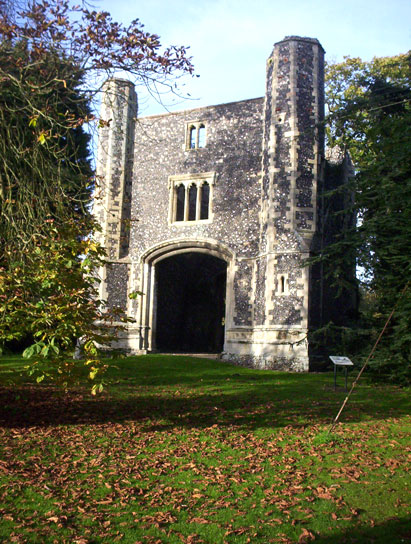
Gatehouse
Gatehouse
English Heritage.
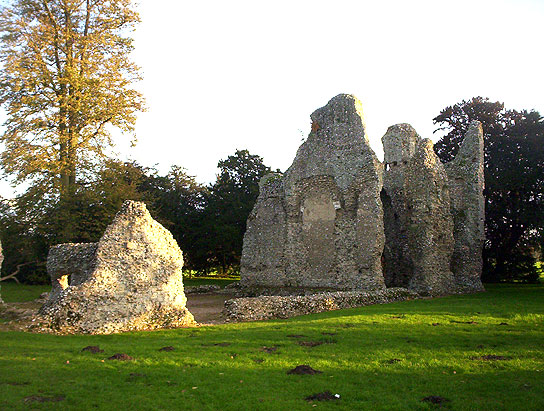
Thetford Priory was founded in the early 12th century and was a burial place for Earls and Dukes of Norfolk, and a magnet for pilgrims. Surviving parts include the lower walls of the church and cloister, and the impressive shell of the prior’s lodging, and, further away from the main site, an almost complete 14th century gatehouse.
The surviving ruins are impressive and quite extensive. A pathway from the main site leads to the gatehouse. The priory site is tucked away behind modern housing and may be awkward to find. Road access is at the S. end of Abbeygate. In the late afternoon, it seems to be a gathering place for the local youth, and when I was about to leave, I found that the lane leading to the car parking area was blocked by the police and a parked car, as the police obliged some scruffy individuals to help them with their inquiries.
Abbey ruins
Abbey ruins

Castle Acre, Norfolk

Archway
Bailey Gate
English Heritage.
There are three separate attractions in Castle Acre, but as one would hardly travel to look at one without checking the other two, I’ll deal with all three here.
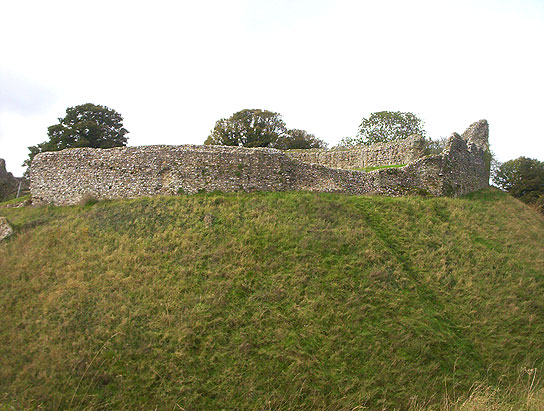
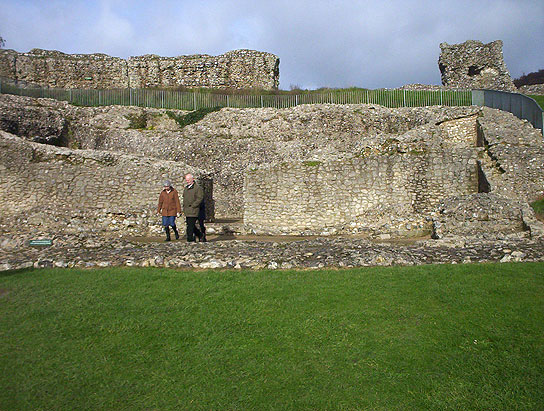
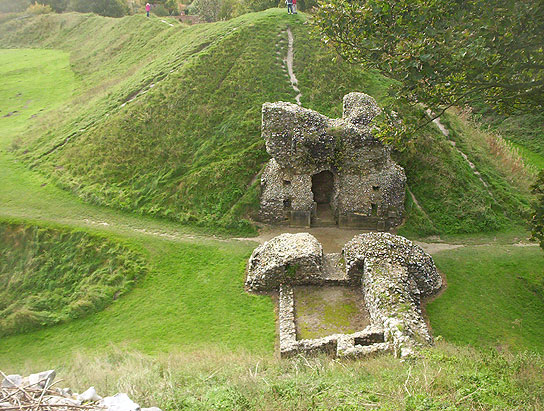
Castle Acre Castle: Founded in the 11th century as a stone built country house, it was progressively converted into a strong keep, defended by stone walls and surrounded by immense earthworks. The castle is now much ruined but the scale of the earthworks and baileys is impressive.
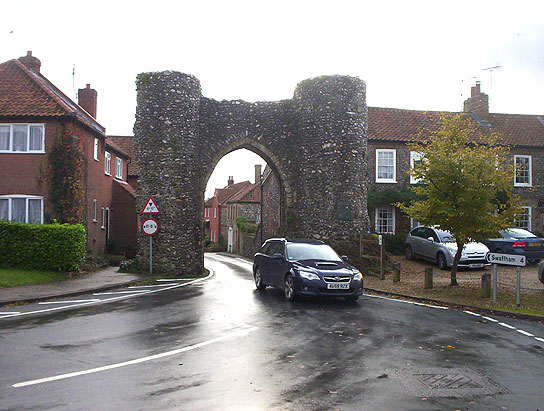
Castle Acre Village and Bailey Gate: At the same time that the castle was being fortified, a planned town was being built alongside, protected by earthwork defences and stone gatehouses. The north or Bailey Gate still survives, with the village street running between its towers. The village streets have some older buildings, and the ancient street layout can still be traced.
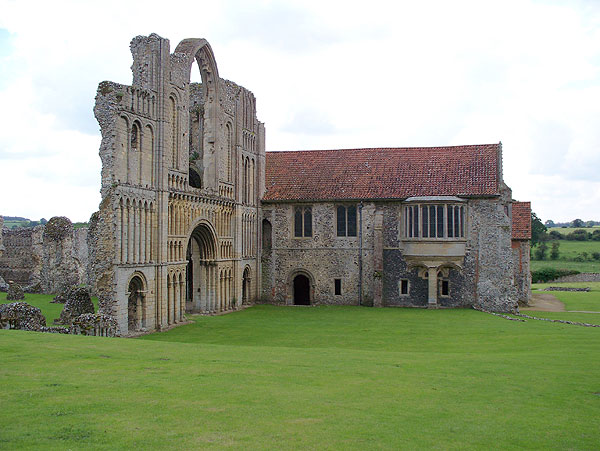
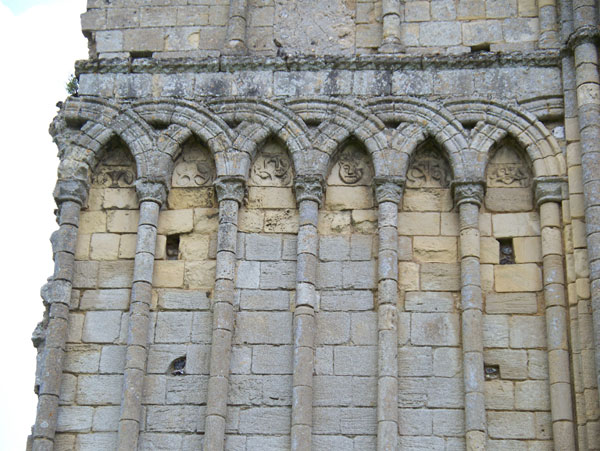
Castle Acre Priory: This is one of the largest and best preserved monastic sites in England, founded around 1090. The remains of the church have interlocking round arches. The west range of accommodation is virtually complete and full roofed, and includes a chamber sumptously revamped in Tudor times. There is a lot to look at, including exhibitions.
If you visit the EH Castle Acre Priory website, you can download maps and walking routes for the Priory and the castle and town.
Update 2012: The Priory is well worth a visit of an hour or two. A free audio guide is available which is almost too verbose at times – you should probably listen to the first two items before leaving the Visitor Centre. It is clear that the buildings were very fine before they were stripped of cut stone and other valuable materials at the Dissolution. Most of the West Front with its carved stone still survives. The Prior’s lodgings which formed a useful residence after the Dissolution are still roofed and relatively complete. The Priory is about ¼ mile west of the village – turn left on exiting uphill at the Bailey Gate.
Castle mound
Castle mound
Castle remains
Castle remains
Castle gatehouse remains
Castle Gatehouse remains
West front & lodgings
West front detail
West front detail

Castle Rising, Norfolk

Castle English Heritage.
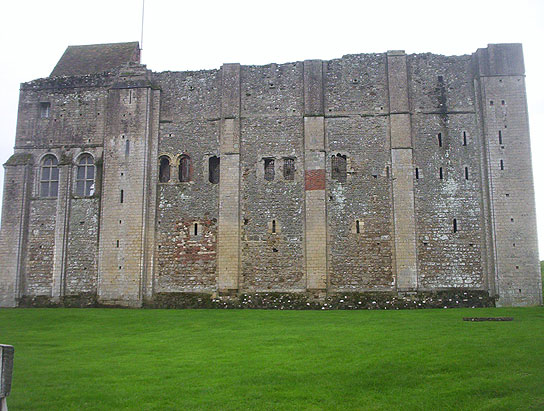
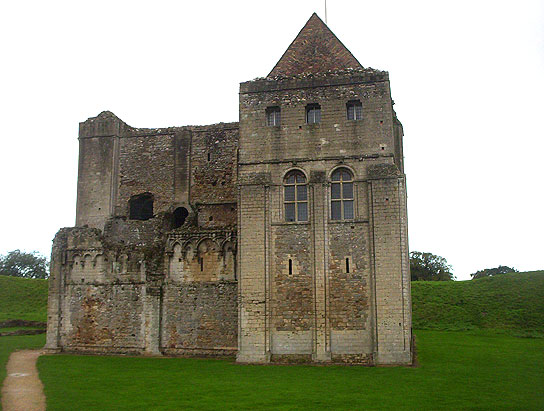
This is one of the most important twelfth-century castles to survive in England. A great square keep is surrounded by an oval earthwork, pierced by a gatehouse. A ruined church is half-buried in the surrounding earthwork. The external stonework is quite ornate, suggesting that the castle was built to impress more than to be defended against siege.
Parts of the castle are still roofed and can be visited, and other sections can be accessed by passages built into the thick walls. The Great Hall and Great Chamber have lost their roofs and floors.
An interesting and relatively complete castle, worth the effort of visiting it. Audio guide available.
If you have come a long way and want something else to do, the interesting riverside town of King’s Lynn is nearby.

Castle
Castle
Old buildings in street, King's Lynn
King's Lynn street

Hound Tor Medieval Village, Devon

English Heritage.
This deserted medieval village comprises four thirteenth century stone farmsteads, which were probably abandoned in the 15th century. Walls survive to a height of about 3 feet, marking out the outline of various structures.
This is quite an interesting site to find and visit. You will need a detailed local map. If you park by the minor road that runs to the west, the village is more or less behind Hound Tor, so you have to climb the Tor or skirt around it till you see the remains. Distance about 1000 yards. Walking boots and stout trousers are recommended, as there may be dense vegetation in places.

Burgh Castle, Norfolk

English Heritage.
This is a Roman “Saxon Shore” fort in countryside near Yarmouth, and close to the River Waveney. Three walls and various towers stand to near their original height, the fourth wall having collapsed into the river centuries ago.
Both the size of the site and the degree of preservation of the wall and towers are quite impressive. It’s worth seeking it out if you are in the area. There is no charge for visiting. Visitors should find somewhere to park near the church, and follow the signed footpath.